Interdependence

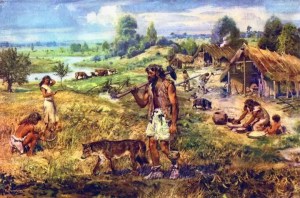
David Suzuki, the Canadian geneticist and environmentalist, argues that when homo sapiens evolved in Africa approximately 150 000 years ago,   their survival  as hunters and gatherers depended on an intimate knowledge of nature, of the cycle of the seasons and the movement of animals.   

10 000 years ago mankind discovered how to cultivate crops and the consequent agricultural revolution led to the first  permanent settlements, thus ending the nomadic life style for many.  As a parenthesis, agriculture was probably the discovery of women who spent the day doing chores around camp while the menfolk were out hunting.

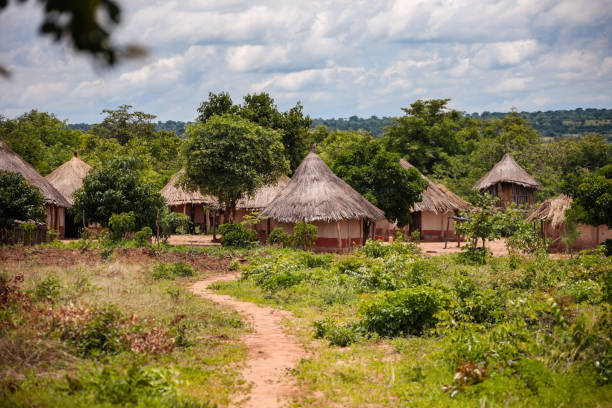
By 1900 there were 14 cities with populations of one million or more in a global population of 1.5 billion; the majority of the population lived in small towns and villages of between 150 and 200 people.   Fast forward 100 years and the  world population increased fourfold as the number of cities in excess of one million people surpassed 400.  As numbers increased so does our personal sense of space diminish.  As children, our grandparents probably ranged safely throughout the neighborhood, our parents round the block, and the current younger generation is often confined to the back yard.   As long as there is a park somewhere close they have no need to think of nature; indeed Suzuki points out that the average Canadian child spends eight minutes a day outdoors and cannot identify five plants in his backyard, compared to six hours indoors in front of a television, computer or cell phone screen on which he can identify more than 100 company logos. 

There is one error in this line of thinking and I am as guilty of it as anyone.  And that is to think that nature is somewhere outside, and in particular that it is outside of us. 

Writing in the January/February, 2014, edition of Orion, Anthony Doerr suggests that “… ‘Nature’ is not some elfin, rejuvenating spa that provides ‘Me’ with a daily dose of fresh oxygen, mental health and organic broccoli. Increasingly the science of microbiology is showing that we carry ‘Nature’ with us everywhere we go.  From the moment we emerge from the womb we are colonized, seized and occupied by other entities.”

He cites as examples that the microbiome in our mouths is so dense that if we decided to name one organism each second it would take fifty life times to name them all. We have ten times more bacterial cells than human cells and as many as 100 trillion microbes in our gut, without which we would die. 

To which I would add that the water we drink and the air we breath has been in existence, essentially unchanged, for literally millions of years.  With every sip, with every breath, we are taking  in particles that were absorbed by the first land mammals, never mind the dinosaurs or the apes that were to become hominids. 

And we know that the gut of a honey bee can contain in excess of 3 million unicellular parasites we call nosema. That is beyond my capacity to imagine – the notion of angels dancing on the head of a pin is easier to envisage. 

We are inextricable linked to our ancestors and our neighbors, whether the latter be a honey bee, an earthworm or a lady bug.  And as such we are biologically interdependent. Even though more of us live in cities than ever before, we are all co-existing with nature.  As Anthony Doerr writes, “In truth, no matter how far ‘Inside’ we go, the ‘Outside’ is always with us.” 

When children ask David Suzuki what they can do to save the world, his answer invariably is that the world is not in trouble. We’re in trouble, but not the world. Famously, if pollinating insects disappeared mankind would be severely challenged to survive.  If mankind disappeared the insects and the world would be just fine, thank you. 

David Suzuki continues, “If you want to look to the future, environmentalism isn’t a discipline or a specialty like being a dentist or an artist or a musician. Environmentalism is a way of seeing our place in the world and seeing our inter-relationship with the biosphere. And we need everybody to see the world that way. So I tell young kids, follow your heart, but whatever your activity is, if you’re a dancer or a musician or an athlete, see that your activity is made possible by good old Mother Nature, and treat her with more respect.”

 If each of us has the power to change just one thing – ourselves – and if the Outside and the Inside are ineluctably intertwined, then respecting and celebrating the Inside must impact on the Outside. If we are going to save the pollinators, first we have to save ourselves.  

And that perhaps is another take on the zen of beekeeping.  The beekeeper and his or her  girls are interconnected at a deep level, and it’s not confined to when we are suited up with smoker lit and hive tool in hand.

A Winter Cluster

There are an estimated 20-30 million families of insects on the earth at present which is about 85% of all of the world’s species.  Many have not yet been given scientific names – in a good year taxonomists describe at most 2,000 insect genera, meaning it will take 10,000 years to name the 20 million species as yet unlabelled.

The  900,000 known insect species, which is three times as many as all other animal species together, are grouped in about 30 orders, depending upon the classification used. The largest order is Coleoptera (beetles) followed by Lepidoptera (moths and butterflies) and Hymenoptera (wasps, ants and bees.)

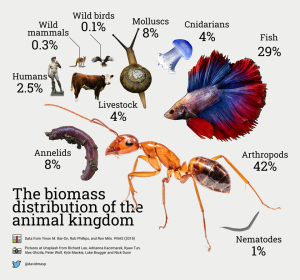
Insects have the largest biomass of the terrestrial animals – at any time there are an estimated 10 quintillion individual insects alive, which works out at more than 200 million insects for each human on the planet, or 300 pounds of insects for every pound of us. By comparison, only about 4 000 of the known animal classifications are mammals, mankind being one of them. There are more species of dragonflies than mammals and almost as many kinds of cockroaches, 9 000 species of birds and almost twice as many categories of butterflies.

Recent research on the loss of flying biomass suggests that the above numbers have reached their peak and are currently declining rapidly, for reasons discussed in a subsequent reflection.  Despite this loss we step on thousands of insects every time we walk outdoors;  in an oak forest, for example,  the number of arthropods* in leaf litter averages 9,759 per square foot and there are more than 425 million soil and litter arthropods per acre in Pennsylvania.  

Nor are they confined to the soil.  The number of insects floating and flying through the air is phenomenal. P. A. Glick calculated that a cubic mile of air positioned 50 feet above the ground contains an average of 25 million insects and other arthropods.  As one wag observed, “If God loves anything (S)he loves insects!”

There are at least 20 000 species of bees across the globe of which 4000 are found in North America.   In the harsher northern climes most insects die in the fall, leaving either a queen or eggs to continue the species in the spring.  Honey bees of European heritage however, compared to recent African imports, have learned to survive the winter by clustering around stored food sources and maintaining a steady temperature by vibrating their thorax muscles.  This gives them a significant advantage in that fully developed adults emerge in the spring ready to take advantage of the first pollen and nectar sources.

I too cluster over winter, not so much physically as mentally.  “Winter,”  writes Gunther Hauk, “is a time to go inward, to study, reflect and contemplate,  deepening our understanding of the Earth’s wonders and our mission on it.  This inwardness, trained and practiced at mid-winter’s beckoning, will show its harvest in the months to come, when outward activity challenges our strengthened will, our heightened understanding.”

Strength comes in the quietness and the stillness, light is found in the darkness, renewal is nurtured in the tranquility and energy is stored ready to explode (like the bees) in the spring.  It is a time to reflect back, to plan ahead and to begin to access  those myriad of ideas that  have yet to be named and described.

*Arthropods, which make up the overwhelming majority of insects, are defined by an exoskeleton, a body divided into distinct parts, jointed legs and appendages, and bilateral symmetry.

A Dot on the Page

If this page in front of you represents all of the knowledge that is available  today, how much of it do you know?  For me, the period at the end of this sentence is probably too big to  represent accurately the range of my knowledge.

To make it  more confounding, the volume of that knowledge is expanding exponentially (by some estimates it doubles every 84 days) so the period becomes increasingly smaller by comparison, and increasingly less significant.   Indeed, according to the futurist Ray Kurzweil, the technological revolution (whereby technology doubles in power each year and declines in size and cost) will lead to diacritical growth to the point that the amount of knowledge will have increased one billion-fold by 2049.  That is beyond my ability to imagine. 

For much of my life I was passionate about history, in particular European and African history, and that ardor gradually enlarged to include education in general.  (As an aside, my degree, with majors in history and geography, did not include so much as one course in North American history.)  I soon realized that if I taught only what I knew,  I was confining students to one miniscule period on a large page, a drop of water amid the ocean of knowledge.   The challenge of the educator (as compared to the teacher) is to arouse students’ curiosity to the point that they begin to explore the  water for themselves and that they find something about which they feel passionate and someone about whom they feel passionately to share it with.  In the words of the Jewish proverb, “Confine not your children to your own learning, for they are of a different generation.” 

When we teach students what to think rather than how to think (and standardized tests can all too easily reinforce the former – what is referred to in some countries as ‘the tyranny of the test’)  we are drumming our knowledge into them rather than having them develop the mental skills they will need long after they have left our care.  After all, the word ‘education’ comes from educare which means to draw forth, not to pour in.

Am I saying that there is no room for basic, fundamental knowledge? Absolutely not, as long as that is not all there is.   And even at some of the best institutions of learning in this country there is evidence that the scales weigh more heavily in favor of the what rather than the how

And then in 2002 I discovered honey bees, or perhaps they discovered me.  Gradually another dot on the page came into focus.  It was a new area to explore.  I had  enjoyed biology at school and always had an affinity for nature, but never before had there been this invitation to jump into the deep end of a scientific field and get gloriously wet.   

Gradually the dots began to connect themselves, patterns emerged, a ‘network of learning’ manifested itself that was enticing and rewarding.  The content was new to me but the principles (analysis, synthesis, evaluation and application) were the same, and the skills that I had tried to develop in others could be applied to this new droplet of glistening water. 

The rewards are never ending and, like blowing up a balloon, the more air that is introduced the greater the surface area that is exposed to the unknown.  It is not overwhelming; in fact the challenge is appropriate.  Besides jig saws I also enjoy doing sudokus and crosswords … but not if they’re easy.  If they are it is simply busy work, no more than rote memory using the lower order thinking skills (recall and comprehension.)  To be satisfying there is a need to be extended, to be stretched and challenged.  There is nothing quite so fulfilling as reaching an apparent impasse and using the higher order thinking skills to move past it.

The same applies to keeping honey bees.  At first I was satisfied just to learn, to keep them alive over winter, to find the queen and read a frame.  Now the joy comes from choosing to extend myself, essentially by reading, by listening, and by attending good conferences and rubbing shoulders with others who are similarly inspired. 

The bees have been great teachers about life, both mine and theirs. 

Checkers, Chess, Computers … and Bees

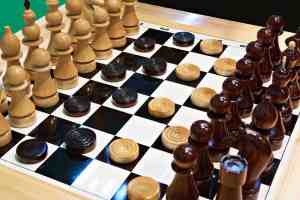
In 2007 a computer ‘solved’ checkers by going through every possible move to determine the optimal game.  By comparison, the number of possible moves in a chess game is staggering, more than the number of atoms in the universe, according to D.T. Max writing in the March 21, 2011, edition of The New Yorker.  And the number of atoms in the universe?  1080 .  Or consider that in a game of Texas Hold’em with nine players there are more than 600 quintillion possible combinations of the 52 cards. A quintillion? 1018

Observe a bee hive.  There are approximately 70 000 cells in a fully drawn out, ten frame deep, with 60 000 bees and different varieties of pollen and nectar in various stages of dehydration.  Add a queen who, if well mated, may have in excess of 10 million sperm from as many as 20 drones, each of whom adds specific genetic attributes to the semen stored in the spermatheca.

Just as pieces on a chess board have their designated moves, so of course worker bees have their designated roles as they go through their six weeks of life in the summer. 

Yet another variable is that on September 15, 2009, the 50 millionth chemical was formally registered with whomever registers such things, and that a study by Chris Mullen together with Jim and Maryann Frazier at Penn State in 2010 discovered in excess of 70 different chemicals in bee hives of which 46 were pesticides, including DDT.  These compounds come from sources such as industrial pollution, consumer goods like automobiles, agricultural chemicals, genetically engineered organisms and even chemicals that some beekeepers use to control mites.

When chemicals are evaluated for toxicity they are studied in isolation. When the breakdown products of chemicals interact they can synergize and become more toxic and more long lasting than the original chemical itself – sometimes  a thousand times more so, and that is no exaggeration. Thus a cocktail of small doses of several chemicals, each acting on its own, can combine to have significant biological effects that none of the chemicals would have on its own. 

Equally, in some instances, the products of one chemical can neutralize those of another, reducing toxicity.

Realistically, as Ross Conrad has made clear,  no chemical is going to be thoroughly tested for safety either to humans or insects before being marketed.  Consider that to test the synergistic actions of just 1 000 toxic chemicals in combinations of five chemicals each would involve testing over eight trillion chemicals.  At one million per year it would take 8 000 years to complete such a study. 

Yet we market hundreds of new chemicals every year and honey bees have the potential to come into contact with thousands of man-made chemicals every day.   How on earth did this happen?  How did we create a world so toxic that it’s natural capacity for self-renewal has been threatened?

Cells, workers, drones, queens, sperm, pollen, nectar, chemicals … no wonder two colonies are never the same.   In the same New Yorker article, Max writes that  “A computer never makes a mistake in a chess game with six or fewer pieces on the board.”  If a colony could exist with only six bees it might be more predictable. 

Our Anthropocene World

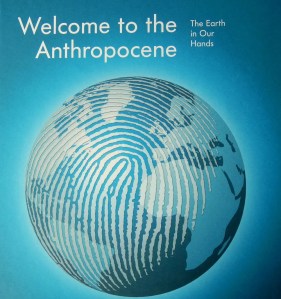
According to economic historian Gregory Clark, in the 3600 years between 1800 BC and 1800 AD there was minimal, if any, improvement in material conditions in Europe and Asia.  Then came the Industrial Revolution.  Driven by the explosive energy of coal, oil and natural gas, it inaugurated an unprecedented two century wave of prosperity that today  we are calling the Anthropocene Age, a geologic chronological term for an epoch in which human activities have had a significant global impact on the earth’s ecosystems.  Indeed we now believe we can not only change but can control our environment for the benefit of human kind. 

Kirk Webster cites the Japanese farmer and writer, Masanobu Fukuoka : “Farming (or in our case beekeeping)  is the cultivation of better human beings.” In other words the ‘big idea’ of successful beekeeping (as compared to bee-having) is to leave the land better than one found it, with greater fertility and productivity caused by more efficient pollination in a toxic free environment.

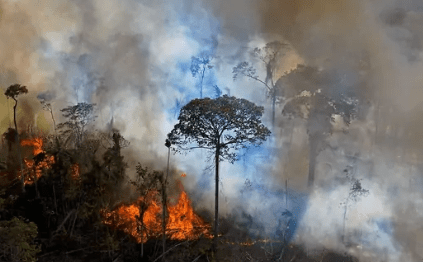
Unfortunately this is foreign to our Anthropocene culture of exhausting a resource in the belief that we will find more, of farming for money rather than for the long term vitality of the soil or for the purity of the water and air,  of using chemicals to increase productivity and kill ‘weeds’ as well as the insects on which our long term food source depends.  

It is this culture which has, for the first time in 10 000 years of civilization,  put our long term survival on this planet at risk, not to mention the quality of life we take for granted.  This is the culture of more, of faster, of personal ambition and sensation and novelty, none of which one finds in a bee hive.  The bees remind us not only that there are other ways of being that pre-date humans  by millions of years but also that everything is connected and we lose that connection at our peril. 

We hear often that the future of planet earth as we know it is in jeopardy.  I would suggest that it is the future of humankind which is threatened.  Expressed as a percentage humans have been present for less than .0001% of the earth’s existence and if we were to disappear both the earth and the bees would do just fine. Or in a dramatic analogy devised by Edward Wilson, the relationship of our earth to the size of the universe is equivalent to the second segment of the antenna of an aphid to the state of New Jersey.  Sadly if the earth were to disappear the universe would not notice. 

A honey bee colony is both a superorganism and a eusocial unit.  Each bee is programmed to be specialized in one task at any one time, but the bees together are exceptional – so highly coordinated that they resemble the cells and tissues of one larger organism.  Again, according to Edward O. Wilson, of the millions of species in this world, twenty are currently classified as eusocial, which means that they rear their brood across many generations (one queen can comfortably birth six generations in a year) and there is division of labor in that the same bees tend to the queen, raise the young, forage for food and look after the nest. 

Of those twenty eusocial species one is mankind and another is the honey bee. Most of the others are ants and termites.

As a hobbyist beekeeper I don’t easily get bored; the constant joy comes from seeing the incredible beauty of life in finite detail.  The perpetual challenge is twofold – not to be overwhelmed by the amazing complexity and diversity of the Apis world, and to string together all of the roles and functions evident in a colony so that they make sense.  It is like doing a jigsaw that results in a beautiful image which cannot be seen by looking at any of the pieces in isolation  or like  a continuous game of 3-D chess in which there are an innumerable number of moves at many different levels.  A competent  beekeeper is one who can read a frame, understand the choices he or she can make at that particular time and integrate those actions with the natural instinct of the bees so that the continuity of the hive is ensured.  

If our planet is one gigantic bee hive then none of us is a queen bee; rather each of us is a pollinator and just as the work of the honey bees is to extend life,  both of the colony and of the plants they depend on,  so do we have a responsibility to keep cross-pollinating our ideas, our values and our behaviors for the long term survival of a better world.  

The Neolithic Revolution

For centuries the conventional wisdom has been that after 150 000 years as hunter-gatherers, humankind discovered both agriculture in the form of cultivated grasses (wheat, rice, corn and barley, for example) and the domestication of animals, not least the cow and the pig. Cereals, still today the staple of human diet, allowed for population growth, the birth of cities, the development of states and the rise of complex societies. 

These discoveries 12 000 years ago, called the Neolithic Revolution, were the beginning of civilization and they happened in at least four different parts of the world, all river valleys, virtually simultaneously.  In this way, so the story goes,  we were saved from a grim, nasty, disease-ridden, barbaric  existence.

Drawing on contemporary archaeological research, James C. Scott challenges this interpretation in Against the Grain : A Deep History of Earliest States.  Focusing on Mesopotamia, he disputes that agriculture and permanent settlement happened concurrently; rather there was a 4 000 year gap separating the domestication of grains and animals from the agrarian economies based on them.  Our ancestors, he argues, evidently took a long hard look at the possibilities of agriculture before adopting it wholesale, and they could do that because of the abundance of fish, animals and migratory birds traveling along the river routes.  With such a diverse web of food sources, why rely on just one source that was liable to fail?

Indeed the archaeological record shows that for 2 000 years at least, life for agriculturists was much harder than it was for hunter-gatherers. They lived in small bands without social grouping or hierarchy and their bones show signs of dietary stress : they were shorter, more sickly, with high mortality levels.  Diseases crossed the species as newly domesticated animals lived in close proximity to humans – even today, in some rural areas of Europe, families sleep with the livestock for winter warmth. 

What led to the birth of the first states, Scott argues, after some four millennia  of agricultural experimentation, was cereals in that they had a long growing season and were thus easy to tax.  Whereas agriculture involved division of labor, including slaves captured by war,  tax collection required hierarchies, specialization and writing.  For the first 500 years after its invention in Mesopotamia writing was used entirely for bookkeeping. Grain was the root of state formation.

Jared Diamond has called the Neolithic Revolution ‘the worst mistake in human history,” citing war, slavery, epidemics,  oppression by an elite minority and the frequent implosion of early states.   Early settled communities were, in Scott’s opinion, ‘a disaster for most of the people who lived through it’, and until the C17th AD most of the world’s population was rural, living beyond the grasp of the state. In other words we have lived in rural communities  for 99.98% of our existence as a human species. Those like Thoreau who seek an exit strategy from modernism attract a fascination that seems endless.

The argument, in a nutshell, is that the life of our early ancestors was not so grim and our modern life is not so great. The suggestion that mankind was saved by civilization is further challenged  by James Suzman who spent two years studying two groups of Bushmen (sometimes called Khoisan or San) in the Kalahari Desert. The first group has retained significant control over their traditional lands where they still practice the hunter-gatherer lifestyle that has been theirs for 150 000 years; the second group had been relocated from their traditional lands into more modern ways of living. The first group spends 17 hours a week hunting and gathering food, 19 hours on domestic labor, with a daily caloric intake of 2300 calories.  The comparative figures for the US are 40 hours of work in the office and 36 in the home.  This Bushman group does not accumulate surpluses and shares everything equally.  Hierarchy, trading for profit and material inequality are not tolerated and Suzman describes social mores designed to maintain a ferocious egalitarianism. 

The second group is, like so many Native American communities,  displaced, unhappy, victimized as a work force and addicted to alcohol  in particular. As in Mesopotamia, it appears that non-state people are better fed and work less without the need to adopt the drudgery of agricultural labor and state organization .

The above is a simplified version of a complex theses (James Scott is 80 years old and, after at least seven previous books, this one, at 300 pages, is his magnum opus.) His thesis is mindful of a colony of honey bees, not least in terms of the two groups of Bushmen.  Bees are gatherers rather than hunters (the latter is the preserve of wasps and hornets) and yes, many of them accumulate surpluses because, unlike the Bushmen, they have to survive a food-less winter during which a new generation is born.  Interestingly most African bees, eg. Apis.mellifera scutellata, do not store much honey; rather they quickly disperse (as compared to abscond or swarm) and make maximum use of meager resources that are available year round. 

Bees within a colony share everything, materials such as wax comb are built and used by the community and are essential to the continued life form, and the concept of hierarchy (eg, a ‘queen’) is one that we have imposed on them, the supposed monarch being in reality a superb ovipositor who has neither maternal instincts nor an inclination to rule. 

A honey bees colony  is an example of a successful gatherer community, every action of which is designed to ascertain the long  term survival of the species in the strongest form possible. 

James Scott does not support the notion of the noble savage – the life of a peasant farmer was not easy and no one would choose to go back to that lifestyle – nor is it an argument for the abolition of all state control.  We live in a culture of inequality and envy  which can lead to frustration, anger and, much too often, violence, compared to a more egalitarian life style, abundant in its own right but without excess and competitive acquisition.  The honey bee, who is defensive rather than aggressive, who responds only when her livelihood is genuinely threatened, provides both a reminder and a model.

If I had to choose my ideal dinner guests the list would include a Mesopotamian hunter-gatherer, a modern day Bushman and a verbose honey bee, each for their intimate knowledge of the environment and the natural resources available within it, and their awareness of the need for humility, community and cooperation if our growth over the last 8 000 years is to be sustained.

And Is There Still Honey For Tea?

A Cottage in the Cotswolds

(A modernized  version of The Old Vicarage Grantchester by Rupert Brooke, 1912 )

Close your eyes and think of spring :
Swallows swooping on the wing,
Cherry blossom pink and white,
Nesting birds a cheerful sight. 
Mountain mint in hedge’s shade, 
Bluebells carpet woodland glade,
Dappled sunlight warms and cheers, 
Fresh green leaves with dew-drop tears.

Picture  balmy summer day :
Buzz of bees and smell of hay,
Apples ripening on the trees, 
Butterflies flutter on the breeze.
Poppies nodding in the corn, 
Bright red jewels to greet the morn,
Tiny field mice scamper here …
Kestrel gives them cause for fear

Now let autumn come to mind 
And all around you you will find
Berries, fruit on bush and tree, 
Feasts for creatures wild and free.
Squirrel seeks the nuts she’ll need
When winter comes with icy speed.
Snuffling ground hog cannot stay,  
He seeks a winter hideaway

Ope’ your eyes and change the scene : 
No sign of things which once had been.
There is a pallor in the air, 
The fruit trees everywhere are bare.
No bluebird’s song, no blackbird's trill, 
The woods and fields are sad and still.
The flowers are gone, the grass is bare,
There’s desolation everywhere.

In vain small hungry creatures search 
For food, where starving sparrows perch 
No nuts or berries as before;
Gone is Nature’s lavish store.
Our tables too hold Spartan fare
Without the bees’ industrious care;
We did not save the little bee…
Can there be honey still for tea ?

A Summer of Biblical Proportions

Some strange things happened early in August, 2012.  Large numbers of colonies swarmed (two of mine left their respective hives in the space of a week and I captured a third on September 5th, which is very late in the season) and there were several reports from neighboring  beekeepers of bees absconding, of colonies being testy to the point of showing the traits of Africanized bees (following the beekeeper for 50 yards to his vehicle and trying to get inside the cab as he took off his veil, for example) of large infestations of wax moth and, in some cases, of beekeepers losing one third of their hives during the last two weeks of the month. 

Certainly we had some very hot days with high humidity which presumably are as trying for the bees as they are for us.   And a dearth of nectar.  As a side bar, the bees seem to be able to anticipate the seasons and know that their survival is dependent upon building up stores in the next two months.  And yet no bee, except perhaps for the queen, has lived through a full year.  How do they know what is coming?  Is it an intuitive reaction to the length of daylight hours? 

Or is it possibly something larger than this?  In an article filed in The Associated Press on August 11th,  2012, Karl Ritter used the phrase, “It’s been a summer of near biblical climatic havoc across the planet.” On the same day in the local newspaper there were references to 

  • An island of ice more than four times the size of Manhattan that had broken away from a glacier in Greenland and is drifting across the Arctic Ocean towards major shipping lanes and Canadian off shore platforms.  Apparently there is enough freshwater locked up in this island to  keep the Hudson River running for more than two years.
  • Major floods in Asia with 80% of the Swat Valley underwater and 20 million people displaced.
  • 600 Chinese dying  in floods. 
  • 1250 wild fires that have destroyed 20% of Russia’s wheat crops and which threaten to release radioactive particles that have settled in the soil of Chernobyl.

There were forecasts of the fifth heat wave of the season (defined as five consecutive days with a heat index in excess of 95o) and our neck of the woods recorded only 1/2” of rain during the entire month.

The US Department of Agriculture  has been cited as forecasting that 40% of America’s fruit and vegetables will be imported in three years time,  mostly from China, and twice in the documentary Vanishing of the Bees, Dave Hackenburg projects that  within a decade all of America’s fruit and vegetables will be imported. The movie highlights the growing acres of monoculture which are so fatal for honey bees and the logic behind the statements is, that rather than diversify our crops we will import those food sources that otherwise need bees to pollinate them. 

No one  has yet been able to calculate the long term effects of this.  For example, there is a current movement towards including more fruit and vegetables in the average diet, most of which begin with a honey bee.  Less bees, less fruits and veggies.  There are widespread implications for public health with associated increased medical costs.

Similarly we know that as the numbers of hives available to pollinate the almond crop in California decreased, colonies were imported by the  plane-load from Australia, beginning in 2008.  These shipments soon ended in the face of the risk of imported viruses, parasites and diseases, but nowhere was there the suggestion that we might reduce the size of the almond crop to suit the resources available.  When it comes to almonds v honey bees, almonds (ie. $$) are the winner.  It says much about our priorities.

John Terlazzo points out that one can get a sense of a civilization’s priorities by the nature of the dominant buildings.  Thus the pyramids of Egypt, the Acropolis of Greece, the Pantheon of Rome, the Gothic cathedrals of the Middle Ages, the Renaissance castles and palaces of the Loire Valley  … and the commercial skyscrapers or Golden M of contemporary times.

If honey bees are our proverbial canaries in the coal mine, can they sense a larger pattern or trend or is it all coincidental?  Was August of 2012 the new reality or just a unique 31 days?  Whatever the answer it seems that  for many of us  supplemental feeding of the bees in the fall has become even more vital.

Albert Einstein famously argued that it is not possible to solve  problems with the mindset that created them.   We cannot wait for the agrichemical industry to resolve the problems facing the bees.  Rather, as Michael Pollen says in Vanishing of the Bees, each of us votes three times a day with our fork.   As with the anti-smoking movement, ultimately the solution is more likely to come from informed consumers than it is from Washington DC.


A Prayer for the Bees

We call on you, o winged spirit of sweetnesss.

         Teach us the ways of transformation and renewal,

                  the path from nectar to honey, 

                           from pollen to paternity.

Teach us to taste the essence of each place at which we alight

      as we continue the cycle of creation and delight. 

Teach us the ways of hope, reminding us

     that what seems impossible may not yet be in sight.

Dance us ever closer to the wisdom hidden within beauty 

      and the beauty hidden within wisdom.

Grant us passion and productivity,

      flight and sunlight, 

            cooperation with our fellow hive mates

                  and sharpened strength to defend our home. 

May we ever spiral outward from our hearts,

      searching for what we need

            and return home once again 

                  bringing the bounty of nature and the blessings of life. 

We ask this in the name of all species on this planet we call home.

Murahwa’s Hill

Khoisan
Khoisan Rock Art, Drakensburg Mountains.

/In his book Lost Child in the Woods Richard Louv uses the term ‘nature deficit disorder’ to describe how children today are increasingly disconnected from the natural world.  Beekeeping seems to be an interest which most of us discover in our later years and the question becomes are we yearning for something that we know intuitively we have lost or are we using the bees to re-connect with a childhood memory of the natural world?  Certainly the concept of nature can be  romanticized and perhaps many new beekeepers discontinue their interest when those idyllic impressions are disturbed by reality. 

In my case, as a white boy growing up in a British colony at the height of the imperial experience, I had immense freedom together with race-based privileges which I took for granted. There were no restrictions as to where I could go, where I could walk or climb or ride.  And many weekends were spent clambering over the rocks and slopes of Murahwa’s Hill.   I had no fear of the troops of vervet monkeys and chacma baboons which roamed the hill named after Chief Murahwa of the Manyika people, nor of the leopard which my father would hear at night with it’s characteristic cough.

“Did you hear the leopard last night?” he would ask occasionally.  I never did.

I remember only getting a rush of adrenalin as the rufus colored nightjars, which lay superbly camouflaged in the granite outcrops until the last possible moment, would fly up from under my feet in a flurry of feathers.

One day I climbed down a short fissure below the summit to a small, precarious ledge and found a faint but definite Bushman  rock painting.  I sat in wonderment, gazing over the valley in which the town nestled, awe struck at the thought of perhaps being the first person for more than a thousand years to see this beautiful example of Khoisan stone age art.  On later visits I would stand on the summit, waving to the houses below trying to attract my parents’ attention, or, sitting on the ledge, I would use a mirror to reflect the sunlight on to our house in the hope that someone would notice, much as we did in class when we used the glass on our watches to flash onto the ceiling, or more daringly, into the teacher’s eyes,  wondering whether he would notice (and we were taught almost exclusively by men.)

It became a ritual to sit on that ledge at noon,  eating the sandwiches my mother had prepared, looking over the town.

On another visit, and not far from the ledge but on the east side of the summit, facing towards the BaVumba mountains and the Portuguese colony of Mocambique, I stumbled across an old wall of stone between two huge granite boulders that seemed to block the entrance to a cave.  Over the next few weeks, enlisting the help of some friends, I tore away some of the rocks, rolling them carelessly down the mountainside, a dangerous and senseless act of destruction for which we were later, and quite correctly, chastised by the local representative of the Historical Monuments Commission when a small group of museum authorities inspected the find.

Several weeks of such despoliation uncovered a hole large enough to squirm into, encountering the strong odor of either a leopard and/or of dassie guano.  Dassie was the local name for rock rabbit, or hyrax, which lived in the crevices and was the favorite food of a pair of black eagles who nested on the adjacent hill.  Dassie droppings were thick and rich in the cave and on one occasion I filled a jute bag and took it back for my father’s compost heap, a gift he much appreciated,.

Confident that the noise and activity would have long frightened away the leopard (and confident too of the animal’s notorious shyness and secretiveness) I wriggled forward.  Later came the realization that the leopard did occasionally occupy the cave, gaining access though a small opening in the jumble of collapsed rocks in the roof.

It is difficult today, more than 50 years later,  to recall the feelings of a young man entering a dark, dry space; I suspect I was intent on discovering the main purpose of the vault behind the wall.  I had convinced myself that it was a burial site and that the vague shapes which were semi-lit by the peripheries of the beam of the flashlight were skulls resting on a ledge in the cave wall.  Digging away the compacted soil behind the stone wall had exposed small, tunneled smoothen passages that left ridges and curves much like old bones; they were probably the passages of white ants which had long since departed.

I remember too being struck by how smooth the walls were, convinced that this was the result of thousands of pairs of human hands brushing past; it was more likely to have been the result of water erosion over thousands of years. 

What I did find were the remnants of old, clay pots, typical of the Bantu, Shona-speaking, Iron-age people indigenous to the area.  This was evidence enough that this was a refuge site to which the local Manyika would flee when they were attacked by the stronger Ndebele; the pots were used to store grain for such desperate times of need.  

On one occasion, and it is no longer clear exactly which part of the chronology this fits into, I had come down from the hill in the late afternoon.  My father confirmed that I had indeed eaten my lunch on the ledge as usual and asked if I realized that the leopard had, for a short moment, been standing on the summit above me as I ate.  Apparently he had noticed the distinctive cat-like silhouette, particularly the long, upward curing tail as it appeared briefly above me, looked out over the valley, and disappeared.

On reflection that was a monumental moment in my life.  Sitting on a rock that had attracted a man  from prehistory, marveling at the pictorial dimensions of his spirit  and unknowingly sharing the view with one of the wild’s most noble, most untamed creatures, I was an integral part of the natural world.  It is at such moments that a young man gets his first  glimpse of the holy grail and which can later be rekindled in passions such as beekeeping.