Home

Late Bloomers

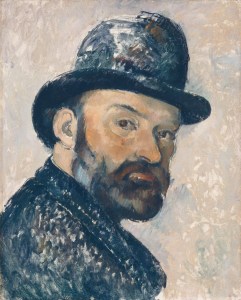
Paul Cézanne always knew he wanted to be an artist.  At his father’s urgings, he entered law  school in his home town of Aix-en-Provence in the south of France, but after two years, aged 22, he withdrew and went to Paris to pursue his artistic dreams. Rejected by the École des Beaux-Arts, he returned home to work as a clerk in his father’s bank. 

He returned to Paris the next year, was rejected yet again by the École, and his paintings were turned down every year by the Salon de Paris until 1882, when he was 43 years of age.  None of his work was put on display until he was 56, when he had his first one man show. Two years later, 1897, a piece was bought by a museum in Berlin, and in 1899, when he was 60 years old, his work finally started to sell.  He died seven years later. 

A year after his death a retrospective of his work was mounted in Paris and he was recognized as one of the founders of modern art. “Cézanne is the father of  us all,” Matisse and Picasso declared.  

Cézanne’s art, misunderstood and discredited by the public during most of his life, challenged all the conventional values of painting in the 19th century because of his insistence on personal expression and on the integrity of the painting itself, regardless of subject matter.

This story is told by David Brooks in a recent article in The Atlantic in which he seeks to understand those who make their mark later in life, whether it be Copernicus, Morgan Freeman, Isak Dinesen, Julia Childs, Charles Darwin, Winston Churchill, Alfred Hitchcock, Colonel Sanders and a host of others. Space does not allow elaboration of each one; suffice to say that Churchill was mistrusted as a political rebel and outlier until 1940, when he became Prime Minister at the age of 66, Juliet Childs enrolled in a French cooking school aged 37, and Colonel Sanders invented the recipe for Kentucky Fried Chicken aged 62.

Society today is structured to promote and reward early bloomers. By the age of 18 most of us have been pigeon-holed by grades and SAT scores, some zoom to prestigious academic launching plans and some, such as  Bill Gates, Marl Zuckerberg, Elon Musk, Taylor Swift, Michael Jordan and Lebron James, take other routes.

But there are also successful late bloomers; indeed the average age at which Nobel Prize winners made their crucial discoveries is 44, which means that approximately half of them did so well into the second act of their lives.  In essence, they focus not on the finished product so much as on the process of learning itself.  They see their lives as a process of trial and error so that the quality of their work peaks as they age. 

In Late Bloomers, Rich Karlgaard teases out the traits that distinguish early from late bloomers. Most of our schools and work places, for example,  are based on extrinsic motivation  – work hard and you will be rewarded with good grades, higher salaries and performance bonuses.  Early bloomers are good at meeting external standards, at following other people’s methods and at pursing goals determined by others.  Late bloomers, by comparison, are bad at being what has been called ‘excellent sheep.’  They often feel unfulfilled at school or work and can be contrary if not rebellious.  Winston Churchill  reflected that “Where my reason, imagination or interest were not engaged, I would not or I could not learn.”

Our culture encourages people to specialize early – concentrate on one thing and get really good, really fast. Late bloomers, by comparison, need a variety of experiences even if it means frequently changing jobs and developing a reputation for inconsistency or unreliability.  But this is when they are developing what has been labeled ‘diverse curiosity,’ the benefits of which become evident once he or she draws on the breadth of their knowledge to put discordant ideas together in new ways.

Late bloomers teach themselves – they enjoy the cognitive process (Leonardo da Vinci is the poster child) and being too old for the traditional educational system, nor wanting the restrictions built into it, they become fascinated and absorbed by the pleasures of concentrated, voluntary efforts in which they are free to plot their own course and to change their minds and their objectives without recrimination.   And to this they bring their life experience, otherwise called wisdom, in particular the ability to see things from multiple points of view and to sustain the tension that often exists between them. 

Finally, late bloomers never cross the finish line and relax. Age does not diminish their curiosity; “They are seeking.  They are striving.  They are in it with all their heart,” to cite David Brooks.

Honey bees clearly are not late bloomers!   Each bee follows a genetically driven master plan that determines their development and their role in the bigger society,   Similarly, in the African society with which I grew up, the social norm was ‘to keep down with the Jones’s.”  As one tribal elder said to me, “If one blade of grass grows higher than the others, we cut it down.” With significant credibility given to the power of spiritual forces, the credo was each individual is born with a talent with which to serve society, but to exceed that is a sign of a malevolent force.   Initially this presented a significant challenge for European-trained teachers in some African countries.  I recall a District Commissioner describing the traditional belief that tribal people accumulate knowledge as they age, that they do so at the same rate, hence the significant respect given to elders who, because of their age, were also the most knowledgable.  Recognizing differences in students, or trying to stimulate them through grades, initially proved counter-cultural and unsuccessful.  

And a thousand years of western civilization was not much different.  From the fall of Rome to the Renaissance was a millennia of remarkable conformity.  The life of the common man in 500 AD was little different to that of his successors one thousand years later. The purpose of art, for example, was to glorify God, and works consisted almost entirely either of moral pieces warning of the dangers of sin, or of depictions of biblical figures and events invariably set in contemporary times. For me, this is why Leonardo’s Mona Lisa is so revolutionary  For the first time in a millennium, a major artist had painted a woman in her natural beauty and enchantment, without traditional Christian artifacts.  It was a celebration of humanity set in the harshness of  the natural world.  And in terms of late bloomers, the exact date  of the painting is unknown, but Leonardo seems to have started work on the Mona Lisa when he was in his early 50’s, and continued work on it or various editing of it, until he was in his mid 60’s.  Late bloomers are seldom fully satisfied “”They are seeking.  They are striving.”

None of this is to denigrate those (and there are many) who focus on one issue, for example keeping honey bees, and find satisfaction in a particular method that works well for them without any need to deviate from that.   One of my uncles was a spitfire pilot in the Second World War,  after which he returned to the town and house in which he grew up, never learned to drive a car, and spent his vacations working on his allotment or fishing in the river Exe.  When I first met him, in 1980, he impressed immediately with what is often described as ‘serenity’; he was deeply content and wanted for nothing … and I was a little envious.   

Looking back at my career, I changed schools every seven or eight years whereas many of my colleagues remained (and maybe still are) at the same school for all of their teaching career.  Two things are clear in retrospect.  First, that after seven years I felt I had gained, and offered, all I could from that particular system and needed a change if I was to remain vital.  Secondly, the wide variety of extra-curricular activities that I organized, ranging from evening clubs like Toastmasters or a History Society to three week bike tours in Europe, were not so much stimulating the students, as I thought, but were providing me with the challenges, the inspiration and the fulfillment that I needed.  

As a beekeeper, I am restless, always seeking  stimulation, and enjoying the process a much as the product.  Which brings me to my hypotheses – that many beekeepers are late bloomers whose life experiences have brought them to this hobby.   They are extrinsically motivated, set their own standards, take responsibility for their own enlightenment, enjoy the learning process and the feelings of accomplishment that come with it, and are surprised by the unexpected exposure to a variety of associated issues such as plants and pollination, chemicals in agriculture and their impact on animal life, the amazing society that is the world of a honey bee hive with its relevance to our own community, whether local or national, and indeed, the local impacts and challenges of a changing environment. 

Perhaps it is the constant provocation and challenge provoked by such questions that cause some to stay involved, with the comfortable realization that every answer leads to yet more questions. 

The Paradigm of Separation

“Americans of all ages, all stages in life, and all types of disposition, are forever forming associations.”  Thus wrote Alexis de Tocqueville after he had traveled around the United States almost two hundred years ago, even as his main mission was to study the prisons and penitentiaries on the other side of the Atlantic.  “There are not only commercial and industrial associations in which all take part, but others of a thousand different types  – religious, moral, serious, futile, very general and very limited, immensely large and very minute.”

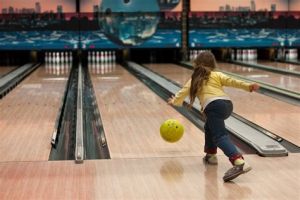
160 years after de Tocqueville published Democracy in America, Robert Putnam, Professor of Public Policy at the Harvard University John F. Kennedy School of Government, released an essay which he later enlarged into book form – Bowling Alone : The Collapse and Revival of American Community. Many traditional civic, social and fraternal organizations, typified by bowling leagues , he argued, had undergone a massive decline in membership even as the number of people bowling had increased dramatically. It was the leagues that brought together different peoples from different backgrounds and cultures to share in a common purpose.  As Beau Breslin wrote recently in an article in The Fulcrum, “There is commonality in beer, frames and ugly shoes.” 

In 1967, 2% of Americans admitted to no religious affiliation; now that number is 30%.  It was places of worship that grounded Americans in a collective morality.  No longer. Union membership is down (10 per cent across the nation in 2024) as is involvement in professional associations like the American Medical Association and the American Bar Association. Increasingly, Americans no longer believe that ‘associations’ merit their time.  

Curiously, voter participation has remained steady, actually increasing in presidential elections in this century.  But there is a twist : polarized electors are galvanized by hatred. They are energized not so much by the appeal of a candidate so much as by a deep dislike of the other. Anger at your partisan enemy might get you to the ballot box, but it will not get you to the bowling alley, nor to a beekeepers’ meeting. 

The first county beekeepers meeting I attended in 2002 was poorly attended, and records show that was the norm. But with all the the public attention consigned to the plight of the honey bee by Colony Collapse Disorder, enrollment in beekeeping classes soared as did attendance at meetings.  That trend was, in my observation, already in decline five years ago, made worse by COVID and which has continued since the pandemic.  It is one of the ways in which we have not yet recovered from the forced isolation of 2020 and 2021.  It distresses me that, for the last two years if not longer, our local beekeeping association has organized some good meetings with prominent speakers, and the attendance has been minimal – perhaps 20 per cent of the total  membership.  That was not the case ten years ago, when we had to change venues because the turnout regularly exceeded the limit imposed by the fire code. 

Talking to PSBA President, Mark Gingrich, he suggested that during COVID many associations held their meetings via Zoom, and many who continued to offer that option after the pandemic are re-thinking the practice precisely because it encourages the isolation that denies the meaning of our collective lives.  

It has further implications.  As John Miller explains in the July issue of the American Bee Journal, the Bee Informed Project has ceased to operate because its research and the immense data trove that it accumulated was not supported by sufficient paying beekeepers who valued their services.  

In You Are The Happiness You Seek, published two years ago, the English philosopher and author, Robert Spira, argues that there are essentially two models for civilization.  “The first  is one in which the ideas and attitudes of individuals are informed by an understanding of the relationship to the whole, and their activities and relationships are the means by which this understanding is expressed in society.

“The second model is one in which individuals overlook their relationship to the whole and, as a result, believe and feel themselves to be discrete, independently existing entities. This is a paradigm of separation that inevitably leads to unhappiness on the inside, conflict on the outside between individuals, communities and nations, and the exploitation and degradation of the earth.”  

As is invariably the case, it is not difficult to determine which of the above is modeled by honey bees. 

History is replete with examples of collapsed civilizations in which individuals neglected their relationship with the whole. We too show signs of disintegration without embracing the remedies to rectify it.  It is like a sick parent who defies, even sabotages, the attempts of caring children who want to help, or the patient diagnosed with a potentially terminal illness who obstinately refuses to take the medicine. 

What is the solution?  Do we wait for an external event to force us back together, like CCD in the case of beekeepers, or do we become proactive?  It is not difficult and there are two things  that each of us can do.  First, there are many times when I have been tempted not to support an activity organized by an association I care about, to stay home rather than go out to an evening meeting.  And yet every time, almost without exception, I am glad afterwards that I went, often for reasons that I could not anticipate. 

Secondly, value those who are willing to give of their time and energy to organize those occasions when community comes together – meetings, picnics, cook outs, presentations, discussion groups – despite the disappointing turn outs. Those numbers too are declining and it is easy for volunteers to get disheartened, even as they are the heart beat of a successful organization. 

So, when offered the choice, not only welcome the opportunity to attend those forums which provide the opportunity to understand others and calibrate our collective moral compass, but make a point of recognizing and honoring those who made it possible.   Show up and give thanks – that is the solution.  We may not be teammates, but we are committed to our league.

Golden Handcuffs

In February I took our dog, Seamus, to the vet for his annual check up.  Ever since the covid pandemic  there has been a sign at the end of each parking space asking owners to call and announce their arrival, and then to wait for a return call summoning them inside.  For safety reasons there was to be no loitering in the waiting area.  What struck me was the assumption by the office staff that everyone carries a cell phone; certainly there was no explanation of what to do in the absence of such a device.  

When did this assumption start?  In 1989, four years before the end of the apartheid regime,  I spent part of a sabbatical teaching in Soweto, the large township south of Johannesburg.  Indeed the word Soweto stands for SOuth WEst TOwnship.) I quickly learned that I could not ask the students (the equivalent of 10th graders ranging in age from 13 to 22) to do homework because most lived in so-called ‘match box’ houses with neither electricity nor indoor plumbing; the idea of students working at home in the evening was not feasible.  

Similarly, when I first taught in the US, in 1991, we could not assume that all students had access to a home computer, nor a few years later that all had access to broadband.  In the space of two years I had transitioned from no electricity at all to questioning broadband access, even if in different geographical locations.  

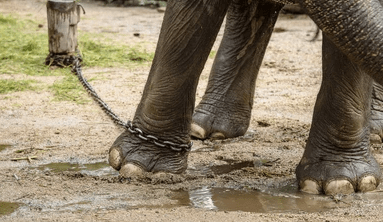
Sadly,  assumptions can deputize as handcuffs.    In parts of Asia for example, young elephants are trained by attaching a short chain to one of their forelegs, which is then tied to a stake that is driven into the ground.  After about year,  the stake alone is put in the ground and the elephants assume that they are constrained by a now-imaginary chain length. 

 It seems to me that we, as beekeepers, are often fettered by chains that exist only in our minds. 

Two examples.  Journal articles seem to assume that it is necessary to feed sugar syrup in the fall, and again in the late winter.  As I understand it, feeding sugar was developed in post-war Canada, when sugar was cheap and honey expensive.  The motivation was solely economic – remove and sell all of the honey and replace it with white sugar. Curiously the effects on the health of the bees were and are seldom questioned.  An advertisement for HiveAlive in the August issue of Bee Culture states that “The ideal  carbohydrate for bees is their own honey …” and confirms that not only is the nutritional profile of sugar not as good as honey but it lacks the antibacterial and antifungal properties naturally found in honey.   It should be no surprise that research in labs such as that of Dr. Gene Robinson has shown that bees fed sugar syrup in the autumn  might emerge from the winter in greater numbers but they are smaller in size, lighter in weight and, critically, their immune system has been compromised.    Are we unwittingly creating a hive environment that favors the mites in that the bees are less well equipped to defend themselves?

The ad mentioned above is promoting the use of additives to the sugar syrup.  That is a band aid compared to leaving more honey on the hives for the bees.  And if one does need to feed , why not use honey itself, either still capped in the frame or in the same manner as one would normally feed sugar syrup?  

To  take this a step further.  After a presentation by Dr. Dave Tarpy at EAS in 2022 on queen losses, the issue arose of the quality of royal jelly.   How does the jelly from nurse bees who are fed sugar syrup differ from those who are  living off their own honey, and how does this impact the larvae of not only queens but  worker and drone brood?  Is this an underling reason for declining queen quality and longevity?  If I understood Dr. Tarpy correctly, this has not as yet been researched but might be examinable in the work done recently by a post-grad student in his laboratory. 

The second example involves screened bottom boards., which were introduced in the 1980’s as a first response to the varroa invasion, on the grounds that the mites would drop off incoming bees, fall through the screen, and be unable to regain access to the colony. We know now, from the work of Dr. Sammy Ramsay in particular, that mites do not fall of incoming bees unless there are so many mites on the bee already that their normal places of attachment are not available and the mites are therefore exposed.   As one researcher revealed,  if one sees a mite on the back of a bee, there are probably 8 mites already securely attached under the abdomen but not visible. 

Besides changing the ventilation flow in a hive (I have yet to come across a feral hive with a screened bottom,) and writing in the same issue of Bee Culture cited above (August, 2023,) Tina Sebestyen points out that a screened bottom board increases mite reproduction because it lowers the humidity,  and mites do better at the lower range of humidity which the bees maintain in the hive.  

Hive Mind, an article by Sam Knight in the Aug 28, 2023, issue of The New Yorker, cites Dr. Tom Seeley : “As I see it, most of the problems of honey bee health are rooted in the standard practices of beekeeping, which are used by nearly all beekeepers … In the United States, beekeepers are taught only what we might call the industrial form of beekeeping.  And that’s where I would say, ‘No, there is a choice here between how you want to relate to an organism who life, in a way, you have under your control.” 

Thus I am perturbed when writers mention without qualification the use of sugar syrup and screened bottom boards. These two in combination increase the odds in favor of the mites and make a difficult position even worse for the bees.   Like the elephants’ chain, there is minimal connection to  reality but the illusion is kept alive in many introductory bee classes and in articles in reputable bee journals. 

A Richness of Heart

In a tribute to the late T.J.Carr, published in the ABJ of May, 2024,  Amy  Owen cites him as saying that “The best part of beekeeping is the people you meet.”

Consider two scenarios.  In the first, eyes are clouded by smoke and a veil, ears are awash with the complex sounds produced by thousands of little bodies in action, nostrils flood with complex odors and pheromones, and limbs and neck wrestle with boxes and frames glued together by propolis, not to mention the sheer weight of a super of honey. 

In the second,  eyes are blinded  by a blend of floodlights and blurry bodywork,  eardrums are drenched in the whirring noise of 1,000 mechanical horses, nostrils are stained with the stench of burning brake ducts, and limbs and neck wrestle relentlessly with immense gravitational force.

The first is obvious; the second describes a  Formula 1 car driver at full throttle,  an  intense sensory experience during which a driver can suffer motion sickness, light-headedness, vision glitches, and  can lose up to 6 pounds in two hours of split- making decision making behind the  wheel.  Both experiences are physically draining and emotionally; both are intense in their own particular ways. 

Unlike many beekeepers, a F1 driver never races alone.  He or she is constantly  accompanied by the guidance of a softly-spoken ally at the other end of the team radio system, aiming to maximize the team’s final outcome. 

That voice belongs to the race engineer.

Weather changes, tyre wear, gear shift advice and details about rivals’ tactics – such are the technical information passed from the race engineer to the driver. But most important are the human-centered skills by which the engineer quells the driver’s concerns and emotions so that both  are free to operate entirely in the present, to the point that their faith and trust in each other develops into one the most intimate relationships in professional sport. 

There is almost always at least one generation between a driver and his race engineer; they often come from completely different parts of the world and do not share a first language. A big effort to understand each other’s backgrounds, personalities and motivations is key to building a successful relationship.  Usually this mutuality  develops in a series of meetings in a non-professional environment in which each shares the normal things in life  – hobbies, family, education – so as to better understand each other’s lives, values and culture, and thus develop  elevated levels of empathy and emotional intelligence.  After all, drivers literally put their lives in the hands of their race engineers whenever they take to the track.  

Yet they don’t always have the luxury of a full winter of interaction and preparation. When now-triple world champion Max Verstappen was first promoted to the Red Bull team mid-season in 2016, race engineer Gianpiero Lambiase had only a few days notice to mould an 18-year-old who combined  supreme talent with a blunt disposition.   Their relationship was an immediate success (the fact that Lambiase had experience working with multiple drivers before Max was a critical factor) and  Verstappen became the youngest race winner in Formula 1 history, finishing first on his debut at the Spanish Grand Prix. 

The role of the race engineer is one of mentor, with high stakes in times of incredible pressure, all under public scrutiny.   The stakes of mentoring are not normally so high, nor the scrutiny so public.  The five year old granddaughter of a friend, for example, spent five days at home with her teacher-to-be before she started her first year at a local Montessori school, such was the school’s recognition that understanding “each other’s backgrounds, personalities and motivations is key to building a successful relationship.”  In the Montessori system, because the teacher had class advance together, that relationship stretched over eight years. 

Over some 42 years in the classroom I learned that time spent developing relationships was never wasted.  With experience and confidence, I spent the first week getting to know the students a little better, and encouraging them to get to know me.   My colleagues often felt that a busy curriculum did not allow them such a luxury; in my experience, the quality of the learning that followed more than compensated for the loss of formal teaching time.   Curiously it is something that teachers of younger grades do really well, yet decreases as students age, even though the latter are dealing desperately with issues of identity and are searching, even if unconsciously, for some kind of mentorship. 

Clearly there are different ways of mentoring a new beekeeper.  Some may choose consciously to develop a relationship early in the process, perhaps by initiating an e-mail conversation enquiring as to how the mentee became interested in managing honey bees, what his or her objectives are, are there any other related hobbies or interests, is there a spouse or children who might be interested, what is he or she most fearful of and most excited about? Others may recognize and celebrate the relationship as it develops, or even suggest a different mentor if one feels that the absence of affinity is hindering the learning process.  In the words of the 13th century Persian poet, Rumi, “The amount of light in a room depends on the number of windows.” 

And clearly one can survive without such a relationship – neither the instructor of the first bee class I took nor my first mentor would list either communication or empathy among their strong suits – yet I survived, partly because I had both passion and persistence and took responsibility for my own learning.  I have also been a mentor to a few beekeepers in which we  developed a relationship that went beyond the how’s and to’s of bee management; it became a mutually beneficial interaction, despite the generation gap, and I got as much out of it as I was able to offer. 

Besides our name, our personal story is the most individual thing we possess.  Both symbolize our uniqueness and our humanity, and we are more open and vulnerable to those who recognize this, whether by listening or by asking the right questions. In the words of one successful race engineer : “Increasingly you realize that it is the human side where most of the competitive edges come from in Formula 1. You realize it is all about the people.”  And as expressed by another engineer, “In Formula 1, as in all our lives, the magic of the most special relationships will always remain unique.”

In the July, 2024, issue of Bee Culture, Diane Wellons describes how bees and beekeepers helped her though several years of major health challenges.  “Each season presents a new circle of friends to mix with the old circle,” she writes, “and my circle just keeps growing. There is a richness of heart to this hobby, this association, that I did not anticipate.” 

Surely T.J. Carr would have agreed.

Slow Productivity

During the roughly 300,000 years that Homo sapiens wandered the earth, nature dictated the rhythms of their daily activities as they hunted and gathered.  And the relationship between work and the seasons became even more distinct after the development of agriculture –  planting and harvesting in the spring and fall  with the objective of an excess that was essential for winter survival.  

That relationship and dependency ended some 300 years ago with the Industrial Revolution and its increasingly urbanized population.   Not only were workers in the mills and factories, as well as in the offices,  protected from the worst of the weather,  but with the  capital incentive there was a clear  relationship between time, effort and reward.  The more hours the factory was in operation,  the more productive it was – the intensity of the work was regardless of the season.  Initially that fervency was from 8 am to 6 pm six days a week, until labor unions compelled  regulatory innovations like a 40 hour week over 5 days with a standard of minimal pay.  Ironically, today, with the techno-computer revolution, and because we can work from anywhere, many of us are working longer hours than did our grandparents but in better surroundings. 

But what is meant by productivity?  We tend to measure it in terms of numbers and profits, which is a bar that keeps rising ever higher and requires increasing busyness – faster responses to e-mails and chats, more meetings, more tasks, more hours.  What is missing from the equation is quality. 

An example is Boeing.    A report into the company’s safety culture by an expert panel after two recent accidents found a “disconnect” between senior management and regular staff, with the latter being hesitant  to report problems for fear of retaliation.  Multiple employees interviewed by the panel stated that the pressure from management came in the form of increased production at the expense of quality. 

One only has to read Charles Dickens to realize just how miserable life was in the mills and factories.  Cal Newport , an associate professor of computer science at Georgetown University and the author of Slow Productivity: The Lost Art of Accomplishment Without Burnout, argues this form of work is also ineffective. “The process of producing value with the human brain … cannot be forced into a regular, unvarying schedule. Intense periods of cognition must be followed by quieter periods of mental rejuvenation. Energized creative breakthroughs must be supported by the slower incubation of new ideas.”

He  cites the work habits of many successful creative people outside the traditional work place (eg. Georgia O’Keefe, Lin Manuel Miranda, Marie Curie and John McPhee) for whom taking time off or varying the pace of their efforts was not just about relaxation or escape but also about improving the quality of their output over time.

The disruptions of the coronavirus pandemic allowed some workers, no longer committed to an office regime, to  discover for themselves more radical ways of organizing their work life, such as fully remote positions and four-day workweeks.  First, we need to recognize this is more difficult for those involved in essentially manual occupations, and secondly, some jobs can’t support long breaks from intensity – the host of a weekly podcast cannot easily take breaks from releasing new episodes, for example.  Thirdly, there have long been examples of this concept on a grand scale. In academia, for example, professors are typically offered a semester free from teaching responsibilities roughly once every seven years, an idea borrowed from Jewish Scripture, which commanded that one leaves one’s farm fields fallow one year out of every seven. The idea is that the sabbatical will be used to refresh oneself and explore new ideas in one’s field. In a corporate setting, this might translate as rewarding work on particularly hard projects with mini-sabbaticals, perhaps two to four weeks long, during which one is freed from attending meetings or working on difficult tasks.

I was fortunate to experience two sabbaticals, each of which radically changed not only my professional life but my personal relationships as well. 

Smaller-scale variations in effort can equally make a difference. If an episode of a podcast is published on Friday, maybe the following Monday is kept clear of appointments, allowing a slower start each week to better balance out a more harried end. At first this might feel as though one is ‘wasting time’ on Mondays, but what is being gained is a more sustainable pace that sidesteps burnout and keeps quality high.

For those steeped in the virtual-factory mind-set, Cal Newport argues, these seasonality strategies might be unsettling. “In the industrial context that shapes so much of how we currently think about work, the game played between employer and employee is zero-sum: time not spent busy is revenue lost. But in the knowledge sector … extracting value from the human brain is not something that can be regularized like installing a steering wheel on a Model T.   Introducing more variation into the pacing of our work is not a concession made to labor but a smart recognition of how to produce the best results over time … It’s the grinding regularity of manufacturing that’s the outlier, not our instinctual attraction to a more natural pace of work.”

Again, as is so often the case, honey bees offer us a model of an ‘instinctual attraction to a more natural pace of work.’  They are superbly adapted to the seasons, namely  colony build-up in the late winter,  colony reproduction in the spring,  food collection and storage in the summer, and preparation for winter survival in the fall. 

In the first bee class that I took, more than 25 years ago, it was stated categorically that it was the length of daylight time that determined a colony’s behavior.  Thus, for example, outside of the tropics, it was the increasing length of daylight in late January which prompted a queen to start laying after the winter recess.  Unfortunately environmental degradation is making this less simple, not least the correlation between warming temperatures and blooming plants, which has significant implications for the bees,   A study released last month by Washington State University showed that, with warmer autumns, forager bees are working longer than had been the case – something we have all witnessed.  The consequence is that with the disintegration of their wings these winter bees are dying earlier, to the point that models suggest that by early February there will not be sufficient numbers to maintain the new brood, and colonies will collapse.(1)

Wayne Esias  using NASA satellite photos of foliage cover, showed that, in Maryland,  over the space of 40 years, the onset of leaf emergence in early spring had advanced by  28 days.  Consequently many colonies have not reached their ideal numbers of bees and brood at the onset of the pollen, and later the nectar, flows. (2) 

The three principles of ‘slow productivity,’ as defined by Cal Newport, are 

  • do fewer things;
  • work at a natural pace;
  • obsess over quality.

That is what honey bees, and pollinators in general, do instinctively, and is another lesson as we struggle to find an equilibrium in a world that changes more rapidly than we can understand. 

 (1)  https://news.wsu.edu/press-release/2024/03/25/honey-bees-at-risk-for-colony-collapse-from-longer-warmer-fall-seasons/?

 (2)   https://www.researchgate.net/publication/241431221_Honey_Bees_Satellites_and_Climate_Change

Pollination Writ Large

A friend and colleague was verbally assaulted recently when, at a social gathering,  she mentioned being a beekeeper. The accusation was that, by keeping honey bees, a non-native species, she was depriving other native pollinators from access to increasingly limited natural resources.

Honey bees, because they are ‘managed’, are easy targets for which a distinct minority of Americans (0.4 per cent of the population)  can be held responsible. Indeed there is a growing public movement against honey bees, possibly a swing of the pendulum after the media attention provoked by CCD.    It  seems this antagonism was prompted in part by a misinterpretation of the mission of the Xerces Society – that the society’s focus on native bees and pollinators is seen as an attack on honey bees, with the assumption that the latter impact the health and habitat of the former. An example is the website of a company called MeliBio, which promotes the new product called “Mellody, a plant based honey made without bees.”  The company claims that “the commercial production of honey is destroying the biodiversity of our planet and wiping out the native bee population.” Their solution to this blatantly fear-based accusation is a man-made mixture of fructose, glucose, water and glycolic acid, together with plant extracts and flavorings.  Incidentally, according to an article by James Naeger in the March issue of ABJ, which I strongly recommend, the cost of a 12 ounce jar of Mellody honey, including shipping, was $43.

Certainly, in a world of dwindling natural resources, competition between honey and feral bees is real.   It is also much disputed.   There is research which suggests that, under certain conditions, in deprived habitats in particular, honey bees may reduce available forage for native pollinators, with implications for the health and viability of the latter.  There is also compelling evidence to show that honey and native bees can thrive together, or that there is no observable impact of honey bees on other pollinators.  When asked this question directly at EAS in Ithaca in 2021, David Tarpy ’s response was that in a healthy environment, honey bees can co-exist with other pollinators to the mutual benefit of all.   For example, Ross Conrad, writing in the February issue of Bee Culture, points out that many of our native pollinators will forage in weather that otherwise keeps honey bees in their hives, and that the different lengths of the proboscises of pollinators (those of the honey bee are relatively short) causes them to work different flower sources.

Rather than eliminating or proscribing certain pollinators, the focus, as is so often the case,  needs to be on the environment. After all, as Becky Masterman and Bridget Mendel write in the same issue of Bee Culture, the nectar and pollen-bearing flowers that are not available to  honey bees are also missing for native bees. 

Pollinators, any and all of them, are simply the messengers.   For example, one consequence of the dominant use of pesticides and fossil fuels in the US is demonstrated by Masterman and Mendel  in a graph that plots US honey production v total honey imported (Bee Culture, Feb 2024.)  Between 1991 and 2021,  American honey production declined by 41 per cent.  Imported honey, by comparison rose by 520 per cent.  In 2021, the amount of imported honey was four times greater than that produced internally, compared to 1991 when imported honey was less then half of that produced locally. This dramatic change cannot be explained solely by honey bees,  who have been on this continent for some 400 years while the decline in native pollinators is a more recent phenomenon coinciding with the significant loss of a wide variety of insect pollinators across the globe. 

Similarly, Ron Phipps, in the March issue of American Bee Journal, describes how, between 2020 and 2022, US honey production declined by 15%, the number of colonies declined by 9 per cent, and productivity per hive decline from 54 to 47 lbs/hive.  A recent report in the American Honey Producers Association newsletter indicated that honey yields in the US have been declining since the 1990’s and found that, besides climate change, the decline was “connected with herbicide application and land use changes which result in fewer conservation programs which support pollinators.”   Not just honey bees, note, but all pollinators. 

To cite Ross Conrad again, “The real source of the decline in native pollinators is you and I.  Between our use of pesticides like neonicotinoids, and our addiction to fossil fuels … it is humankind that is the actual cause of the decline in native pollinators, not the honey bee.”     To put it bluntly, the human species is the most successful invasive species our planet has ever seen. Habitat loss is the prime driver of the loss of pollinator  species (cutting down trees to build a housing complex and then naming the streets after the trees that have disappeared, doesn’t cut it!)  and all pollinators are negatively affected by pesticide, herbicide and fungicide use, pollution, climate change, diseases and parasites.     

Instead of focusing on unsubstantiated competition between pollinators, our focus needs to be  on a healthy environmental policy together with  improved agricultural practices  which promote new and improved habitat that benefit all pollinators. A vital concept in this scenario is that of regenerative agriculture, whereby focusing first and foremost on the quality of the soil, a system’s capacity to support all life is increased.  And it was this panorama which inspired the term regenerative beekeeping

So what can we do at a local level?

First, it is important that our associations are seen to be inclusive rather than exclusive.  This can as simple as making certain that the names of our clubs, as well as the stated aims, include all bees, if not all pollinators.  Hence the “Punxsutawney Beekeepers Club” rather than “Punxsutawney Honey Bee Club” which aims to support and promote either all bees, or, even better, all pollinators.  And our members need to be acutely aware of the reasoning behind the language. After all, we refer to ourselves as ‘beekeepers’ rather than ‘honey bee keepers,’ with the implication that we have an interest in and commitment to bees (and pollination) in general. 

Secondly, we need to organize presentations to our members  about the diverse relationships between honey bees and other pollinators, as well as the vital importance of pollination per se. 

Thirdly we need to support, not least financially, those organizations that are working to improve habitat for all pollinators.  Some  are well represented in Pennsylvania, eg. The Bee and Butterfly Habitat Fund  www.beeandbutterflyfund.org and the Pollinator Stewardship Council @pollinatorstewardshipcouncil.   Both will provide speakers for meetings, if not in person then by Zoom, and the former offers free or greatly reduced seed mixes for landowners to plant high-quality pollinator habitat on 2 or more acres of land.    There are many other such organizations  that individual bee clubs can research for themselves.

And of course, in combination with their hives, we can encourage our members to build or establish suitable habitat for all bees, bats, moths and butterflies including, for example, allowing the leaves of Fall to remain in place over winter in that they create a superb environment for a range of native pollinators.  The argument that garden beds ‘look nice’ without the leaves puts appearance above habitat, as does the use of chemicals in gardens to green up the lawns and kill ‘weeds.’

Again, in the March issue of ABJ, and describing the potential competition evoked by holding the annual conference for the American Beekeeping Federation and the North American Honey Bee Expo at the same time of year, Tina Sebestyen cites a friend as responding that ‘the two conferences serve different types of beekeepers who are attending for different purposes, and both are needed.’  Whence goeth the beekeepers, so goeth the bees. 

.

Pencil and Paper

In January I was forwarded an article from the March, 2023 edition of Science Robotics titled  A Robotic Honeycomb for Interaction with a Honeybee Colony, by  Rafael Barmark et al.  Using the language of the report, it described ‘a robotic system designed to observe and modulate the winter bee cluster using an array of thermal sensors and actuators . The robotic system was able to observe the colony by continuously collecting spatiotemporal thermal profiles of the winter cluster, to modulate the bees’ response to dynamic thermal stimulation, and, after identifying the thermal collapse of a colony, to create a “life-support” mode via its thermal actuators.’ 

In layman’s language, these sensors,  embedded in the comb, not only measure and observe the movement of the winter cluster but, in the case of a weak colony, can be activated  to modulate the temperature in the cells, supposedly to augment their survival. 

This is the culmination, but not the endpoint, of what Randy Oliver calls the 4th Agricultural Revolution.  The first was the invention of agriculture some 12 000 years ago, followed by its industrialization starting in the late 18th century and culminating in the use of the  internal combustion engine in the form of tractors and trucks. The third is what  Randy calls the Green Revolution, which in my estimation started when the Soviets successfully launched a manned space rocket, Sputnik.  Besides emphasizing math and science in schools (often at the cost of art and music) American farmers were encouraged to ‘farm fencerow to fencerow,’ so that the US would be agriculturally self-sufficient; this meant, among other things, that the hedgerows, so vital to birds, insects, animals and wild flowers, were plowed under. Perhaps the best known aspect of the Green Revolution was the production of high yield crops, especially rice and corn, not least in India,  but with it came some significant downsides – a population explosion, heavy use of synthetic fertilizers, cheap labor, heavy use of water and increased use of pesticides, not to mention increased costs which affected many small farmers dearly – and which I described at length in a previous column.

The fourth revolution introduced electronic technology in which Randy includes the internet, Artificial Intelligence, biotechnology, gene editing, robotic labor, precision dispensing of chemicals, vertical farming and alternative energy sources. 

And we cannot expect honey bees to be unaffected by this process. 

On the same day I received the article from Science Robotics, I read Anne Murphy Paul’s description of Charles Darwin’s famous voyage starting in 1831.  The 22 year old,  torn between following a career as a doctor, a parson, or one that allowed for his burgeoning interest in natural history,  received a letter from his former tutor at Cambridge University informing him of a position as a naturalist on a two year expedition aboard the HMS Beagle.  

He had never kept a journal before but began to do so under the influence of the experienced ship’s captain, Robert FitzRoy,  whose naval training had taught him to keep a precise record of everything happening aboard the ship and of every detail of the ocean-going environment. Each day the two men ate lunch together, after which FitzRoy wrote up both the ship’s log and his personal journal. Darwin followed suite : his field notebooks, his scientific journal and his personal diary were updated daily as  the two years of the expedition turned into almost five.   

Recording such data requires close observation of one’s surroundings, the ability to run through a mental checklist of features that might be recorded, and the skill to organize them clearly.   In addition, the process of taking notes in the field requires us to select, discriminate and evaluate (ie. higher order thinking skills) which in turn lead to deeper observation. 

Beekeeping technology is rapidly becoming more copious and more intrusive, yet each of us has access to pen and paper.  When asked, most beekeepers acknowledge the importance of keeping good notes, and yet only a minority actually do so.  It’s like checking for varroa – we know the importance of monthly mite checks,  yet only a few do it.  And taking notes is the first step; what is critical is using that recorded data to make decisions for the benefit of the bees as well as for one’s own professional awareness and development. 

HMS Beagle returned to  Plymouth Sound on October 2, 1836.  Darwin spent the next three years processing  those boxes of note books and another twenty  years discussing and refining his conclusions, until the eventual publication of The Origin of the Species in November, 1859.

With the plethora of technology available today, it is easy to forget that a pencil and a notebook in the hands of a young Charles Darwin were key to developing a theory that would change our perception of the world, even as it did not seem so at the time. 

The Gestalt

If asked to describe a honey bee, you might say that is has three distinct body parts, antennae, six legs, four wings and that it flies.   So if I were to gather from different sources the head, thorax and abdomen of a bee, two antenna, four wings and six legs, and threw them in the air, it would be a honey bee, right?   After all, these are the component parts, and they fly, so why not? 

Descriptive knowing is the way in which we typically delineate and define things – by their various parts  – but thinking we know something because we can describe it is only partly true.  It lacks what is called structural functional organization – the way things are structured so that the parts function as a whole or, as is commonly cited, the whole is greater than the sum of the parts.  There is no adequate word for this in English, so we use the German gestalt, or less commonly, the Greek, logos

Describing the gestalt of a honey bee is not easy, not least because our grasp is intuitive rather than explicit. We need to describe the form and at the same time identify the patterns that make up the gestalt. This is participatory knowing, meaning that our mind conforms with the shape, the form and the behavior of the honey bee;  we develop the same patterns as the bee to the point that the very structure and functioning of our being can be changed. These are those rare brief moments when we feel ‘at one’ with the world. 

Four famous lines from William Blake’s Auguries of Innocence best describe the feeling of gestalt : 

To see a world in a grain of sand

And a heaven in a wild flower;

Hold infinity in the palm of your hand

And eternity in an hour

The left and right hemispheres of the brain are generally recognized as having differing functions.  The right brain is more focused on art and creativity,  on visualizing the whole picture, on seeing itself connected to the larger world, the gestalt.  The left brain is more analytical, methodical, orderly and linear.    We need both but Iain McGilchrist, in The Master and his Emissary : The Divided Brain and the Making of the Western World, argues that the left hemisphere with its focus on function has become so dominant that we are in danger of forgetting everything that makes us human. The left hemisphere, he argues, has grabbed more than its fair share of power resulting in a rigid and bureaucratic obsession with structure, self-interest and a mechanistic view of the world, at an enormous cost to human joy.  Clearly the gestalt emanates from the right hemisphere, the one that we are using increasingly less frequently. 

Why is this significant?   Supposedly, honey bees are the most written about insect in the world, even as I have been unable to find independent confirmation of  this.  Yet the overwhelming majority of this writing is descriptive – in the journals, the scientific periodicals, the newsletters, the books.  We describe the various issues that bees face and how to remedy them.  We examine in detail the genome of the species with all of its implications for bee management.  We describe how to get more honey from a hive, how to help the bees through winter, how to split colonies and introduce new queens … 

And yes, all of this is important – it has to be mastered if one is to manage honey bees successfully  – but too often we stop there. 

A pervasive current topic is ‘the Meaning Crisis,’ a term devised by Dr. John Vervaeke, professor of cognitive science at the University of Toronto.   In a series of podcasts, 48 hours in all, he describes how today’s mental health crisis is the consequence of a deeper cultural historical crisis.   This is evidenced by the increasing numbers of people who feel disconnected from themselves, from each other, from the world, and from a viable and foreseeable future, as expressed in increases in anxiety disorders, depression, despair, and suicide rates. He argues that we need to understand and transform the meaning of our lives, our culture, and our world if we are find a way forward.

How to do it?  Where and how do we find coherence, significance and purpose in our lives and our culture, these being the vital components of meaning?   

For me,  beekeeping is a touchstone of reality.  It provides those vital times when the modern, manufactured world fades into the background and I interact with creatures who not only have a history that is beyond my ability  to comprehend but who stand in defiance of the stresses of a world of greed, envy, and what Professor Vervaeke calls ‘the pornography of affirmation.”  Those precious moment when time slows down, when the patterns in the hive conform with the patterns in my mind, when I am ‘in the flow,’  are not only the ultimate pleasure of beekeeping but also the moments of great awareness and insight.  May every one of us have something in our lives which offer such an interaction.  

 If Ian McGilchrist is correct, an experience of the gestalt, in this case with a colony of honey bees, is a vital step to recovering that critical  balance between knowledge and wisdom, the first of which is  factual and the second experiential.  Such an experience cannot be taught but has to be discovered,  and having encountered it once, the feeling of awe never ends. It is one transcendental way in which I for one can enlarge that continuing search for meaning, can feel connected to the natural world as well as  my fellow like-minded beings, and as such is possibly the ultimate reason why, for some, beekeeping is a life-long passion and reward.  

Sharing Our Toys

On September 26th,  2023, Shawn Fain, the head of the UAW,  stated on a television news program that the average auto worker would have to work for 400 years to earn what the average CEO was paid in one year.  He added that no one is worth 36 million dollars a year, that no one has the right to that kind of annual reimbursement.  Besides wondering how anyone spends that kind of money, unless it is for the benefit of the greater community, I would add that the CEO cannot do his or her job without the workers, whereas the reverse is not the case.

That same day, on the NPR program 1 A,  Jen White  interviewed the Brothers Osborne, (not to be confused with the Osborne Brothers of the 1960’s.)  John and TJ Osborne, who have been performing for some 20 years and have a list of awards including a Grammy, said in part that “We live in a capitalist system – you’ve got to drive, got to go, got to get more and more and more …. and yet, after getting so many things we thought we wanted and needed, it turned out  we had all the things we needed all along.” The more you get, said John, “the less happy you are because you lose perspective.  I have learned more  from my six month old twin daughters than I learned in there last twenty years of my life – how simple life is, how perfect it already is, how to stay present.” 

The freelance writer and investigative journalist, Christopher Ketcham, argues that a basic tenet of western civilization is the idea that economic growth can continue forever on a finite planet. “Illogical as it may be, we hear this deluded fantasy in the decrees of elected officials, in the laments of economists about flagging GDP, in the whirligig of advertising, at the World Bank and on Wall Street, in the prospectuses of globe-spanning corporations and in the halls of the smallest small-town chambers of commerce. Growth is sacrosanct. Growth will bring jobs and income, which allow us entry into the state of grace known as affluence, which permits us to consume more, providing more jobs for more people producing more goods and services so that the all-mighty economy can continue to grow.” 

First expressed as ‘The American Dream,’ it has now gone global not least as a moral imperative in the developing world where, they are told, it will free the poor from deprivation and disease, enrich and educate the women, reduce birth rates, and provide the means to pay for environmental remediation—to clean up what so-called progress has despoiled. This was most evident to me in Nairobi ten years ago with huge roadside billboards of modern American washing machines, even though the majority of the city’s population live in what can only be  described as slums.  Or in Zimbabwe twenty five years ago when we saw a television set in a one roomed house in a small rural village that did not have, and still does not have, electricity. 

Sadly, the American Dream, as expressed in terms of living a better life than did one’s parents, is measured solely in financial and material terms. 

Not as well known as Aldous Huxley’s Brave New World,  or George Orwell’s  Nineteen Eighty Four, is the work of  Aurelio Peccei.  He  had fought for the resistance in Italy, where he had been captured and tortured by the Fascists, and then in industry where, as an executive at Fiat, he began to question the legacy that industrial civilization was leaving its children. His book, The Chasm Ahead, published in 1968, expressed concern about the “suicidal ignorance of the human condition” on a planet of dwindling resources, rampant population growth and material consumption, mounting pollution and waste. In 1970 Peccei connected with a professor of system dynamics at MIT, Dennis Meadows, who had helped design the World3 computer program, and who led a  team of researchers questioning the orthodoxy of growthism.  Using the new gigantic mainframe computer, they emerged two years later with The Limits to Growth. Its message was commonsense : if humans propagate, spread, build, consume, and pollute beyond the limits of our tiny spinning orb, the ultimate result will be a collapse of civilization, which would mean the loss of human life, culture, and capital on a scale unimaginable. The World3 business-as-usual model suggested that the collapse would likely begin around the middle of the 21st century.

This was not what Americans indoctrinated in growthism had been accustomed to hearing—and never had they heard it from PhD.’s marshaling data at one of the world’s citadels of learning.  Not surprisingly, The Limits to Growth was the subject of vicious attacks by the defenders of growthism because it dared to question the viability of the American Dream. It was an affront to the credo of mainstream economics – that the combination of profit and innovation will always save us – and cited as evidence how the Green Revolution and genetically modified organisms had innovated a route around predicted world hunger, and deep drilling had provided access to previously untappable aquifers. 

Over the last decade, Limits has attracted renewed interest from ecologists and economists, using new methodologies to gauge its accuracy. The conclusions ranged form “the alignment of data trends with the LTG dynamics indicates that the early stages of collapse could occur within a decade, or might even be underway,  “ to “ The projections are quite on target. We are not aware of any model made by economists that is as accurate over such a long time span.” 

And if you want a version of what lies ahead as we blunder along with business-as-usual, driven by the false promises of  free markets and individual profits, I would recommend a novella of futuristic science fiction, The Collapse of Western Civilization (2014) by Naomi Oreskes and Erik Conway, historians of science at Harvard and the California Institute of Technology, respectively.  What stuns the future chronicler  is that the smartest scientists in the world, employing the most advanced analytical and technical methods available, had charted the trajectory toward climate doom long before it was a fait accompli.  ”Virtually all agree that the people of Western civilization knew what was happening to them but were unable to stop it,” says the narrator. “Indeed, the most startling aspect of this story is just how much these people knew, and how unable they were to act upon what they knew.”  

The report from COP28 that met in Dubai last month (sub-titled by some as Cop Out or Cash In) suggests that we are not much closer to committing to sustainable global solutions.  

What brought the above to mind was one  of the comments that followed Ketcham’s article. It read, in part, “We need to wind back the social decay of our modern societies, where individuals have become separated, isolated, alienated and purposeless. We need to reconnect with each other to form intentional self-sufficient communities that permit a synergy of our efforts, supporting each other and increasing our chances of survival.”

My first response : he’s describing a colony of honey bees!  This is not to suggest that we should live like bees; rather that there are principles at work in a bee hive that we can emulate.  ie. Biomimicry writ large. As beekeepers, we know the power of the collective society that is ‘the colony’ –  a super-organism of individuals united in common purpose. We know our bees communicate with each other in several ways (and undoubtedly other ways that we don’t yet realize.) We understand the importance of the queen pheromone in giving a colony it’s identity. We know the bees produce enough raw food not only to survive but also to grow, to flourish and to share.  Honey bees work together, share information and identify with a unifying purpose.

The question becomes whether our global society can organize itself to live within its means while providing a peaceful, equitable existence for its people. There  is enough to go around, so long as we all agree not to want too much,  a terrifying notion for those who are entrenched in the free-market capitalist mindset, who have been assured that we will never need to share our piece of the pie provided we just keep on growing the pie.

The industrial revolution escalated the economic differences between classes of society, and some converted their new wealth into power which was then used to protect their privileges and affluence under the justification of the myth of perpetual growth.  ‘A rising tide lifts all ships,’ it was argued,  and recent times have shown this clearly is not the case.  If wealth is to be divided more evenly among a  growing global population, the per capita material affluence of the global north will have to drop.  Can a civilization indoctrinated in selfishness do this?  I fear not.  As Ketcham writes, “It would be a process of social maturation on a scale never before seen. Because in order to retain our humanity in the face of limits, we would have to confront inequality head on.”

Literally, we would rather die than share our toys. 

pastedGraphic.png

Winter on the Susquehanna

With apologies to Henry Wadsworth Longfellow


By the leafless trees of poplar,
Willow, oak and black acacia,
At the entrance of her tree hive
Banked along the Susquehanna,
In the pleasant winter morning,
Wings unfolded, all a-tremor,
A bee (a worker) fanned and waited.

The air was rich with expectation,
All the earth was cold but joyous –
Yuletide, Kwanza, times of gifting,
Lights and colors, food and singing –
As before her, through the sunshine
Passed the girls on cleansing flights,
Released for now from winter cluster,
Gleaming, humming in the sunlight.
Our worker bee was as a lighthouse,
Sending rays of home direction
Should a sister, in her rapture
Need an aisle of home-bent incense.

A female sanctum ( drones are gone)
Feasting on their horde of honey –
Rich and strong, as gifts from Magi :
gold and frankincense and myrrh –
The sentience of every worker
And, hereafter, for their savior,
Their source of life, esprit de corps,
Their genetic core for ever after –
Their mother queen, but not their ruler,

She is waiting for that signal –
Longer days and shorter darkness –
When once again the annual cycle :
Rebirth, expansion, and partition
Precedes the stores of amber honey –
And in this way does life continue.

As go the bees so go their keepers –
Hunkered down in winter climes,
Embracing hours of purple vapors,
Precious sights of sun at sunset,
In the purple mists of evening,
In the regions of the home-wind,
Of the northwest winds of Erie,
Of the southeast isles of Schuylkill
In the woods of Allegheny
Tioga, Pinchot and Bendigo,
In the long and somber evenings
Afore the beauty of the day-dawn
We share the warmth of hearth and fire
We share the music and the stories,
As, with bees, we wait in clusters
For the birth of this new season.

You whose hearts are fresh and simple
Who have faith in love and nature
Who believe that in all ages
Every human heart is human,
That in every bee and keeper
There are longings, yearnings, strivings
For a life of shared fulfillment.
All will add to our enchantment
To the pleasure of the season
For the beauty of the day-dawn
For the pleasure of the morning –
The beginnings of a new day.