Home

The Peterkin Papers

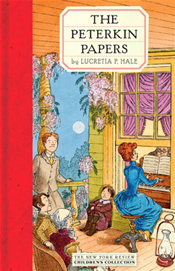
The Peterkin Papers,  written by Lucretia Hale, were familiar to many of our great grandparents and are now accepted as classical children’s literature.  They describe the escapades of a lovable but comically inept, citified clan that possessed ingenuity, resourcefulness and energy without much common sense. They were invariably rescued from their self-imposed dilemmas by ‘the Lady from Philadelphia,’ as indeed happens in the first installment, published in 1867 under the title, The Lady Who Put Salt in Her Coffee, and which can be summarized thus : 

One morning, as Mrs. Peterkin was adding cream to her morning cup of coffee, she realized she had added salt instead of sugar. The taste was awful so the family was summoned, each of whom tasted, looked, wondered … and sat down to think.  

Eventually the eldest son,  Agamemnon, who had been to college, suggested that they seek the advice of the chemist, who, after some persuasion, agreed to come to the house. “First he looked at the coffee, and then stirred it. Then he put in a little chlorate of potassium, and the family tried it all round; but it tasted no better. Then he stirred in a little bichlorate of magnesia. But Mrs. Peterkin didn’t like that. Then he added some tartaric acid and some hypersulphate of lime. But no; it was no better. “I have it!” exclaimed the chemist, “a little ammonia is just the thing!” No, it wasn’t the thing at all.”

“Then he tried, each in turn, some oxalic, cyanic, acetic, phosphoric, chloric, hyperchloric, sulphuric, boracic, silicic, nitric, formic, nitrous nitric, and carbonic acids. Mrs. Peterkin tasted each, and said the flavor was pleasant, but not precisely that of coffee.”  And so he continues –  calcium, aluminum, a little clear bitumen and many more – each of which changed the color; but, according to  Mrs. Peterkin,  “tasted of anything but coffee.”  (Lucretia Hale must have had a lot of fun writing this!)

After further sitting and waiting, the eldest daughter, Elizabeth Eliza, suggested they consult with the herb woman, who also agreed to come to the house where she set a pot on the fire and began to  stir in the different herbs. 

“First she put in a little hop for the bitter. Mrs. Peterkin said it tasted like hop-tea, and not at all like coffee. Then she tried a little flag-root and snakeroot, then some spruce gum, and some caraway and some dill, some rue and rosemary, some sweet marjoram and sour, some oppermint and sappermint, a little spearmint and peppermint, some wild thyme, and some of the other tame time, some tansy and basil, and catnip and valerian, and sassafras, ginger, and pennyroyal. The more the old woman stirred, and the more she put in, the worse it all seemed to taste.”

“So the old woman shook her head, and muttered a few words, and said she must go. She believed the coffee was bewitched.”

It was growing late in the day when Elizabeth Eliza said, “They say that the lady from Philadelphia, who is staying in town, is very wise. Suppose I go and ask her what is best to be done.”  After listening very attentively, the lady from Philadelphia asked, ”Why doesn’t your mother make a fresh cup of coffee?” 

In terms of how we manage honey bees, we have strayed far from the original cup of coffee, adding numerous modifications most of which are designed for the benefit of the beekeeper and few if any of which make the bees any ‘sweeter.’   An example might be the screened bottom board which was first introduced in 1853 as a solution for wax moths, but quickly fell out of favor.  It was re-introduced as the first non-chemical responses to varroa, with the idea that the mites would fall off the bees as they entered the hive, drop through the screen and not be able to climb back into the heart of the colony.  It was estimated to account for about one third of the mites entering a hive. 

We know now, primarily as a result of the work of Dr. Samuel Ramsay,  that mites do not ride on the back of honey bees; indeed if one does see a mite on the thorax of a bee, it suggests that the spaces between the ventral plates are already filled with mites feeding on the fatty lipid tissues.  Normally eight mites can be thus accommodated,  so one that is visible is probably the ninth entering the hive on that particular worker or forager. 

The sliding tray below a screened bottom board may have value as a diagnostic tool, but at what expense?  I have yet to find a feral hive with the equivalent of an open bottom board to  the nest, and have to ask how the temperature and humidity of a hive are impacted when, unlike say a tree, the bottom of the nest is not airtight.  I for one have gone back to a slatted rack which sits on a heavy, well insulated, fully enclosed,  base. 

There are many other examples of such modifications – the size of the entrance and where it is positioned in the nest,  the volume of the nest cavity, the insulation value of the brood boxes, the nature of the foundation,  the spacing between our hives, the role of drones, the more subtle effects of feeding sugar to bees,  the use of chemicals in a hive …

When we start beekeeping, just as when we first come into this world, we accept the current situation as ’normal’, as a base line on which to build.  Our Introduction to Beekeeping classes teach conventional wisdom – called anchoring in that it establishes a firm foundation on which to build – and our mentors mostly reinforce it.  It takes courage or desperation to question the credibility and function of the habitual and the conventional, to challenge the very foundation  of what we perceive as our knowledge but is more likely to be our assumptions. This, for me, is what Tom Seeley is suggesting with his Darwinian Beekeeping concept.  We need to examine the structure and dimensions of a nest in a tree that feral bees have chosen for themselves, and ask which of the many alterations evident in our current hives have proven to be of benefit to the honey bee.  

Nor is Dr. Seeley the only one thinking this way.  Tim Rowe in County Cork, Ireland, and Torben Schiffer in Germany are just two of many others. 
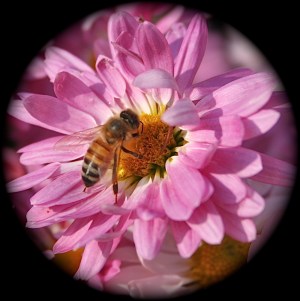
This concept is not unique to honey bees.  There is an intriguing development called Regenerative Agriculture which was inspired by the study of pre-industrial agricultural methods.  Instead of treating soil as in inert matter into which to pour a variety of herbicides, fungicides and chemical fertilizers, regenerative agriculture requires that we rebuild soil organic matter and restore soil biodiversity, with the associated improvements in water quality and carbon retention.  Early results by a handful of practitioners are spectacular and, not coincidentally, both honey and native bees are seen as an integral part of the process.  

So yes, Mrs. Peterkin.  The solution lies neither with the chemist nor the herbalist, but with a little common sense and a fresh cup of coffee.
Perception vs Reality

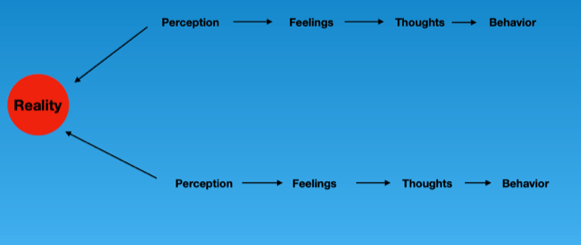
Thirty years ago I was discussing a classroom management issue with an experienced school counsellor.  She pulled out her pad and outlined an interaction model which is still vivid in my memory.

Each of us perceives reality differently based on our personal histories, and those perceptions invoke feelings, which give rise to thoughts, which become behaviors. I don’t know how this would be evaluated by psychologists today but for me there were three major lessons.  First, we cannot change reality, but we can change our perception of reality.  Secondly, feelings precede thoughts, not vice-versa.  And thirdly, if we want to change behavior, we need to change perceptions. 

Two non-honey bee examples.  In the world of alcoholism, an abuser may be  well and truly addicted, evident to all who interact with him or her, but as long as that person is in denial (ie. his or her perception is “I have this under control,”) long term changes in behavior are impossible.  Those who speak at AA meetings open with, “Hi, I’m …. and I’m an alcoholic,” which in all probability is a radically different perception to the one they had before they entered the program. 

I was late into the computer world and these machines have long been items of intimidation for me.  Essentially I use mine as little more than a sophisticated typewriter, and  experience real anxiety when I have to download an app, up-grade a program, or, heaven forbid, contact tech support.  My perceptions were formed in the days of floppy discs when one mistake could erase everything irretrievably, or so I believed.  The (mis)perception led to feelings of anxiety, which led to thoughts of loss, which still restrict my creative ventures on the computer. 

My two step-sons, by comparison,  use theirs for a variety of sophisticated and creative uses, and it is their first  go-to tool, whereas our grandchildren, the eldest of whom is now 12, are fearless and much of what they do on the family computer is beyond my comprehension.  On a recent FaceTime conversation with Nora – a way of staying connected during this time of physical isolation – she caused various icons to move across the screen as we talked (a ‘butterfly’ to settle on her nose, for example)  much to my consternation and distraction but without any break in the conversation on her part. 

Incidentally, I still use a flip phone and don’t posses a smart phone.  My rationale is that I’ve survived for more than seven decades without having a computer on my wrist, and my telephone is specifically for communication purposes.  But in my heart-of-hearts there is probably a deep seated fear of having to interact daily with a complex machine, and, I have to say, with a screen that is much too small for me to read comfortably.  So even today my behavior is determined by perceptions created decades ago, and I rationalize them away. It may also be that I have witnessed far too often the consumate distraction of people on their phones; the preservation of my powers of observation are too precious for me to join their ranks. 

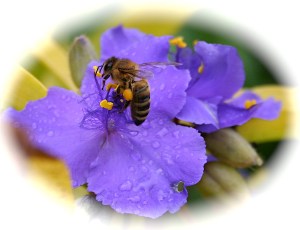
Imagine that the ‘reality’ is a honey bee working a flower for pollen  or nectar.  The perception of one person, based on old messages gotten from well-meaning protectors, is that the bee wants to sting her.  The immediate feeling is fear, the thought is escape, and the behavior is to move away as quickly as possible. 

The second person watching the same flower is acutely aware of both the defensive nature of honey bees and the process of pollination.  Her feelings are of fascination and amazement, her thoughts are of the importance every bee makes  to the quality of our environment, and she draws ever closer to the flower so she can see in greater detail.

The same reality and two different behaviors.   We cannot change the reality of bees and pollination,  but we can change how the public perceives it.  There are two ways to do this, as best I can see. The first is through education, particularly of the younger generation.  I am invariably delighted when, looking at an observation hive with a group of first or second graders, I hear some astute observations.  “How do you know so much about honey bees?” I ask?  “A beekeeper came to our classroom,” invariably is the response. 

Unfortunately we are unlikely to re-educate the older generations  – their paradigm is set.  Going back to the same  observation hive, but this time with adults, some are clearly anxious.  After outlining the behaviors of the bees and describing the purpose of an observation hive, I invite those who were anxious to come closer and witness firsthand what is happening behind the glass. In most cases they laugh anxiously and decline, clearly not convinced. 

There are exceptions of course.  At that first bee class most of the participants are on tenterhooks about their initial interaction with the girls themselves.  The instructor takes the cover off of a hive and some of the students immediately step forward  – they are the ones most likely to continue in the long term.  At the end of the class, when asked about their level of anxiety, most laugh and comment on how much lower it is than when they arrived. 

So we cannot re-educate most of the public but we can change their perception about something else – the wisdom of the bees. One does not have to interact intimately with honey bees themselves to appreciate the fact that they don’t just build hives,  they build communities, using processes that are interactive, harmonious, productive and based on the long term. This was explored by Rudolph Steiner in the 1920’s, by the social psychologist Michael O’Malley in 2010, and of course most famously by Tom Seeley in The Wisdom of the Hive in 1996.  Seeley uses bees to investigate a challenge faced by all highly cooperative groups – how to allocate their members among tasks so that more urgent needs are met before less urgent ones, and of coordinating individual actions into a coherent whole.

So, what was the original classroom issue that initiated this debate?  In 1991 I began teaching at a private boys high school in Baltimore.  One class in particular – relatively small in size and intellectually capable – was proving difficult  to manage, especially in the period immediately after the lunch break.  One Friday, when I found them particularly disrespectful, I packed up my bag five minutes early and walked out of the classroom. This, I thought, would send a message, and it gave me the weekend to come up with an action plan. 

The following Monday I began by commenting on my early departure the previous lesson.  They hadn’t even noticed!  I explained that I felt disregarded and minimized, and they were genuinely shocked.  My perception of the reality was radically different to theirs. I went on to describe how this was our classroom, not mine, and challenged them to work in small groups and come up with their understanding of the ideal learning environment.  I did the same.

By the end of the week we had a covenant of the desired aims and methods of our classroom, with consequences if any part of it was broken.  When it appeared on the classroom wall, signed by all of us, other classes wanted one too.  Overnight this class changed their behavior, I enjoyed my on-going interactions with them, and we were able to explore topics and issues that would have been unthinkable beforehand. 

Culture v Science

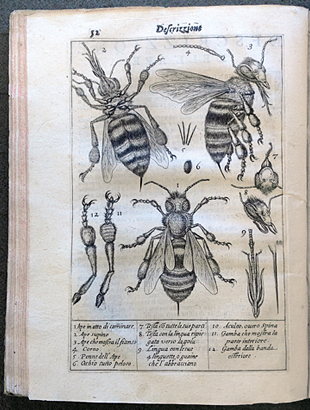
Fransesco Selluti, 1625

In the early twentieth century there was concern among some in England that the earliest  traces of modern man were being found in Africa and Asia, as well as in Germany (Homo neanderthalensis, who looked so modern that it was first hypothesized to be the remains of a Russian cossack who had died pursing Napoleon’s troops on their retreat from Moscow.)   This envy led to an infamous paleoanthropological fraud in which someone, presumably an amateur archaeologist named Charles Dawson, doctored and buried in a gravel bed near the village of Piltsdown in Sussex,  in 1908, a human cranium together with the jaw of an ape, that was then conveniently ‘discovered’ by Dawson himself two years later.  in the face of national  fervor the scientific evidence of the supposed missing link was ignored until 1954, even though Professor Raymond Dart, at the University of the Witwatersrand in South Africa, 29 years earlier,  had identified unequivocally the remains of the Taung Child as a young Australopithecus africanus and the legitimate antecedent of modern man.  

The point is that  culture affects our thinking.  Even scientists are not immune, sometimes looking  for what they want to find or finding what they are looking for, within the wider arc of cultural norms. Let’s ignore for a moment the denial of scientific discoveries in the light of biblical correctness, and look at the names scientists choose to christen their findings. At the time of Aristotle, worker bees were termed ”slaves” because bondage was a cultural norm, and the largest bee in the colony was seen as a ruler, both behaviorally and reproductively. Because Aristotle viewed reproduction as a primarily masculine initiative, he assumed that these bees must be kings, and even after they had been observed laying eggs the name stuck and their femininity went unacknowledged.

The British entomologist Charles Butler, sometimes called the Father of English Beekeeping, was a logician, author and priest besides being an experienced apiarist,  and was among the first to assert that drones are male and the queen female, though he believed worker bees laid eggs.   He was born in the thirty eighth year of the reign of Queen Elizabeth and was 32 years old when she died.   In 1609, six years after her death, he published The Feminine Monarchie; having  lived in the Elizabethan era for 32 years clearly influenced his recognition of the honey bee matriarchy, perceiving the queen as an Amazonian ruler of the hive, much as had been his beloved monarch. 

In the same time period the microscope and its twin, the telescope, were invented.  Legend has it that the principle underlying both was accidentally discovered by children playing in a lens-maker’s shop. Whatever the real story, with the microscope (literally small-look at)  doors were opened to reveal veritable mazes of the minutest detail. 

The first plate of the exoskeleton of a honey bee drawn with the aid of microscope was by Francesco Stelluti in 1625 (ie. 15 years after Galileo first looked at the night sky through a telescope.)  Stelluti was one of the founders of the Accademia dei Lincei, the only academic research institute in Europe at the time. His drawings were beautifully executed, the details are accurate  and the worker bee was shown in greater clarity than ever before, but even so, he had to leave Rome temporarily  in the face of papal hostility to his discoveries.

40 years later Jan Swammerdam,  the Dutch biologist and microscopist who had demonstrated that the various phases during the life of an insect – egg, larva, pupa and adult—are different forms of the same animal, dissected a queen bee and drew her ovaries and oviduct, confirming Butler’s assertion that a colony is a matriarchy but adding the correction that she was the egg-layer. 

The science seemed incontrovertible.  In France Louis Dieudonné had become king in 1643 as Louis XIV, or the Sun King. A member of his court, the Duke de Saint-Simon,  one of the great memoirists of French literature, focused on the last twenty years of Louis’s reign.  In his Memoires, described as “equal proportions of literary genius and insincerity,” he described Louis thus.   “In the midst of other men, his figure, his courage, his grace, his beauty, his grand mien, even the tone of his voice and the majestic and natural charm of all his person, distinguished him till his death as a true King Bee.”

Despite the work of Butler, Stelluti and Swammerdam, to the French royalist a perfect civilization such as that of bees could only be ruled by a male, one of ‘majestic and natural charm.’  The telescope had put the sun at the center of the solar system but 80 years of microscopic study of the queen bee could not penetrate a social environment with deductions that seem obvious to us today. 

The question is, how does culture inhibit our thinking today?  For me, first is the idea that progress is linear, inevitable and necessary, and secondly that science is the key to that advance.  Science is vitally important  – the fight against the corvid virus is a prime example, and indeed differing public reactions to dealing with the virus illustrate graphically the culture/science conflict.   I am not anti-science – far from it, even as we get to witness daily in the US how decisions of the departments of Agriculture, and of the Environment, are driven by politics as much as by science. What is critical is that, like the executive, legislature and judiciary, science is checked and balanced by, and in harmony with,  the natural processes and the integrity and dignity of all living things.  

Two examples come to mind..  First is the increasing presence of thousands (literally) of chemicals in our water, soil, air and food.  If the first chemical doesn’t work, up the dose or try another rather than suggest a change of lifestyle or an all-natural solution.  According to the composer John Cage, “Food provides nourishment: but Americans eat it fully aware that small amounts of poison have been added to improve its appearance and delay its putrefaction.” We have little idea of the long term consequences, yet somehow trust corporate science to come up with a solution that, conveniently, will also make them a lot of money. Indeed, a corporation that knowingly invests in a financially losing proposition, no matter its environmental attributes, can be sued by its shareholders. 

Writing in the New Yorker of April 20, 2020, Jerome Groopman, the Recanati Professor of Immunology at Harvard Medical School and a leading cancer and AIDS researcher, describes how, unlike drugs, medical implants are not required to be tested in clinical trials before being approved by the Federal Department of Agriculture.   Citing the work of David Schneider (The Invention of Surgery) and Jeanne Lenzeer (The Danger Within) he writes, “The medical-device industry has manipulated the societal need for clinical innovation in order to prematurely market products of unproven safety and benefit…  The root of the problem, of course, is money.  In medicine, progress is driven by innovation and, inner society, innovation is driven by profit.”  The implantable-device industry is very lucrative, with operating margins of 25 per cent or higher and an over-all estimated revenue of 136 billion dollars in 2014, some of which was used to finance a powerful lobby in Washington.  Accordingly the courts and legislation have made regulatory oversight mostly expedient if not perfunctory. 

The economist Jeffrey Sachs has focused on the impacts of tropical diseases.  Malaria, for example,  keeps countries poor, and because they are poor the potential market for a vaccine in not sufficiently valuable to warrant drug companies making the huge investment in research that is necessary.  Meanwhile an estimated 219 million people suffered from the disease in 2017 and about 435,000 died. More than 90 percent of the deaths were in Africa (that is almost the same number as those who have died, globally, from covid-19 as of mid-summer)  and over 60 percent were among children under 5.   How would this scenario be different if those 260 000 annual infant deaths were in the more developed world?  Profit trumps humanity. Much of the research that is being done, and the coordination thereof,  is funded largely by private enterprises such as the Bill and Melinda Gates Foundation, which has made the eradication of the disease one of its top priorities.  

 In terms of farming practices, a vital recent development is the concept of regenerative agriculture.  Note, not sustainable agriculture, which by definition means sustaining our current level of disfunction which we know has no long term future; rather regenerating the quality and values of responsible agriculture by starting with the quality of the soil in which most everything is grown. In this sense, what Tom Seeley describes as Darwinian Beekeeping could equally be labelled Regenerative Beekeeping, in that it rejuvenates our concept of honey bee societies and their management based on processes that the bees have evolved over millions of years, rather than what our culture has imposed on them over five thousand years. Both of these scientifically based proposals are meeting resistance from those locked in older cultural norms. 

The second example involves the debate about the use of mechanical drones for pollination, which presumably will allow us to sit back with a clear conscience and watch our pollinating insects go into extinction.  We know that trees are arguably the greatest antidote to climate change.  Without the bees and bats and butterflies, who, pray tell, is going to pollinate the 3 trillion trees world wide (that is 422 trees for each person on this planet) that are not wind pollinated?  These trees cover about 30 percent of the planet’s surface and are our largest bank for carbon storage – an estimated 45 per cent of the total.  We are already cutting them down at the rate of some 15 billion a year, with the highest losses in the tropics where some of the oldest and biggest trees live.  

If we don’t care about the pollinators in our gardens, the creators and sustainers of life,  how can we possibly care about the bigger issues beyond our immediate experience?

Bees and the Pandemic

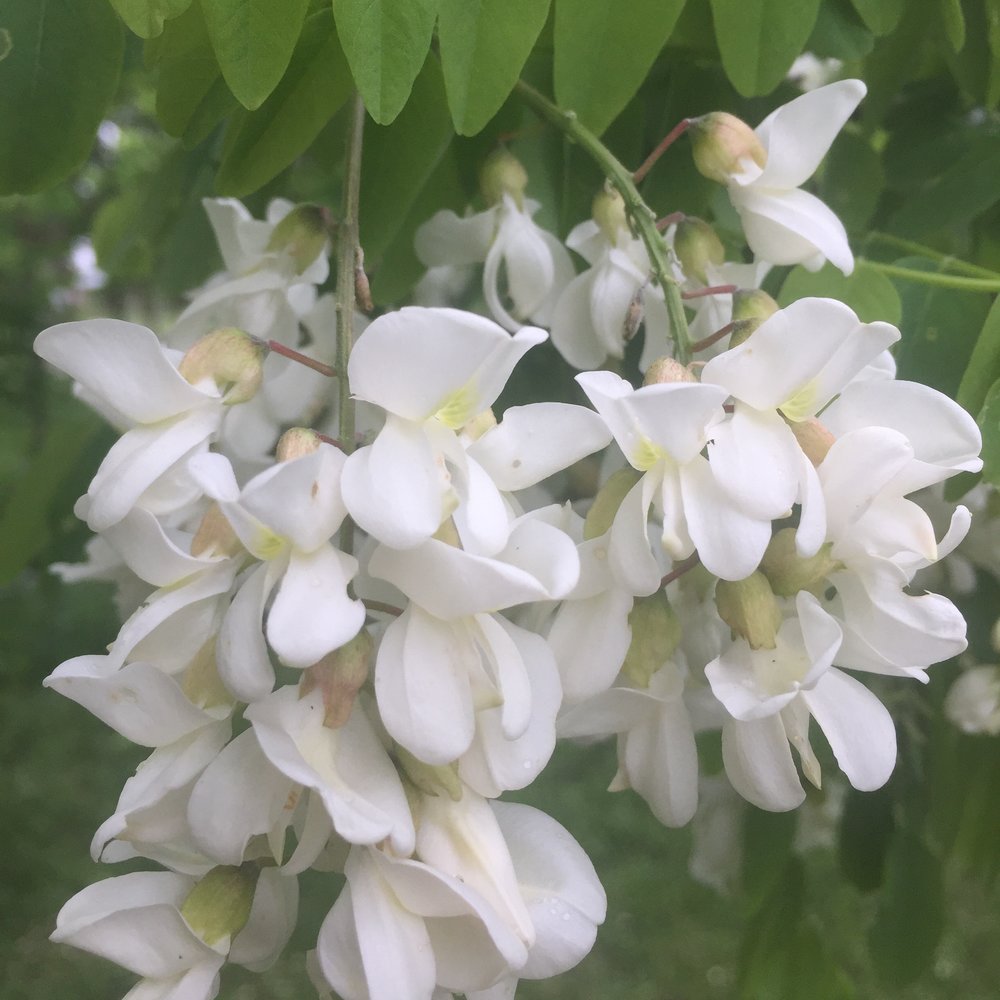
Black Locust blossom

2020 was a good year for honey in south eastern Pennsylvania, the second in a row, which is unusual.  Last year was easy to explain – the strong black locust blossom – but this year is more difficult.  The locust trees barely flowered after a late frost had destroyed the early shoots, the tulip poplars were no better than normal (the bowl-like flowers were blown off their stems in a heavy storm) and white clover was late, in fact blooming after I had extracted.  And the honey is remarkably light in color, which is also curious as to its origins.  But, end of story, I was able to extract in excess of 50 pounds per colony, despite leaving at least a full super per colony for the bees. 

An avid city gardener remarked how plants are flowering in her garden that she had not seen for several years, and flowering profusely at that. And we have noticed a cornucopia of birds in the garden this year – the reduction in noise pollution means we can also hear them better. 

A possible explanation?  Covid-19.   Don’t laugh; don’t condemn me for trying too hard to find a silver lining to the restrictions imposed by the pandemic. My argument is that lockdowns have put a number of insect-harming practices on hold, creating a friendlier world for honey bees. 

With people confined to their homes wildlife has faced less human disturbance, especially traffic with its associated pollution.  In Israel, wild boar are venturing further into the city of Haifa than before, dolphins are increasingly braving the Bosphorous that is normally a busy shipping route, and Venetians are seeing the bottom of the canals for the first time in years. 

One of the biggest environmental impacts of the global shutdown has been the significant reduction of traffic on the roads – down by 60 per cent in May in the US. 

Less fumes from cars on the road affects the bees’ ability  to forage.  According to a 2016 study at the University of London, pollutants break down the scent molecules emitted by plants, thus air pollution substantially reduces the strength and longevity of floral scents.  The same study showed that ozone concentrations of 60 parts per billion, which the US Environmental Protection Agency classes as ‘low’, are enough to cause chemical changes that confuse bees and prevent them from foraging efficiently, prompting them to have to fly  further to find nectar, pollen and propolis.

“In a world with less air pollution, bees can make shorter and more profitable ‘shopping trips’, and this may help them rear more young,” argues Mark Brown, professor of Evolutionary Ecology at Royal Holloway, University of London.

Fewer cars on the roads means other benefits for insects too. The number of bee deaths declines as car journeys decrease. A 2015 study by Canadian researchers estimated that 24 billion bees and wasps are killed by vehicles on roads across North America every year.  That is equivalent to one out of every 75 bees in the managed hives in the US.

And as local authorities are tightening their purse strings, many have stopped maintaining road verges, which consequently have turned into lush habitats. “This unexpected profusion of flowers may well be another benefit for bees, with the unexpected food they provide boosting bee populations,” Brown suggests.

In Rome, Italy, where there are an estimated 1 000 to 2 000 urban hives, a beekeeper noted that his bees “have been more numerous and healthy, and those are indications of the nutrition they’ve been getting.” Tests showed that the bees have been sampling 150 different flowers in the area, compared with the 100 varieties seen before the lockdown, and the quality of their honey has visibly improved. 

While things could temporarily be looking up for the wild bee, travel restrictions have hampered conservationists’ efforts to gather data on how they are doing. Typically, large insect surveys are carried out by scientists every spring. But the UK’s Bumblebee Conservation Trust has suspended its BeeWalks – monthly surveys by volunteers to count the number of bumblebees across the country.  Instead, ecologists and conservation groups have called on the wider public to help them gather scientific data during this time.  In April, the number of counts submitted online was more than double that received in April  last year. People are not only enjoying the opportunity to do something structured with their time but the data covers a much wider area than scientists usually reach.

It’s not all positive. According to Jeff Pettis, president of Apimondia, commercial beekeepers in Canada and many European countries depend heavily on seasonal workers and on importing queens to replenish their colonies. British beekeepers, for example, get many of their queens from Italy, and  since airplane flights have been grounded they are being driven across the continent.  “If beekeepers can’t find the labour to produce honey,” Jeff Pettis suggests, “the colonies will get congested.”  That means earlier swarming, making management difficult.  And in the US the relocation of colonies too California for almond pollination has taken longer this year as some drivers have been required to self-quarantine when crossing state borders.

The  hope is that increased awareness and engagement with bees could be a boon for conservation. But, like all environmental changes, any long-term benefits will depend on these changes being carried forward as lockdowns lift. For some, like leaving verges wild, the change may not be hard to maintain. For others, like keeping traffic volumes low, the changes need to be more systematic.  One discovery that Gill Perkins, CEO of the Bumblebee Conservation Trust, anticipates carrying forward, is people’s reconnection with nature. “They are beginning to realize how their mental health and well-being are supported by nature … I hope that remains after lockdown.

Covid-19 is one of three pandemics – the others are racism and environmental destruction. There are essentially two ways we can go. As Gianna Pomata, a retired professor at the Institute of the History of Medicine at Johns Hopkins, points out, and unlike Europe, the corona virus in the US, rather than stimulating new creative ways of thinking, has strengthened the more stereotypical and irrational ways of reasoning with respect to poisonous partisanship, governmental incompetence, disrespect for science and the fraying of community bonds. The second way is that, for the first time in history, the majority of scientists world-wide are focused on the same problem, and it’s starting to pay dividends. If we get a vaccine within 12 months it will be the quickest vaccine ever developed — by several years. There is an important caveat of course –  vaccines don’t save people, vaccinations do –  so once we have the former, the tasks of manufacturing and distributing it become imperative.  Even so, what if the relevant global resources were united and focused on racism and climate change as well, and within 12 months we had universally agreed solutions which we then were able to distribute …? We might just flourish in the same ways honey bees have these past six months. 

Tis the Night Before Christmas

Tis the night before Christmas (or is it the ‘eve’?

What’s politc’ly correct? Don’t know what to believe.) 

Tis the EVE before Christmas and all through the yard

The bees are at rest after working so hard.


The workers are clustered, the queen in their midst;

The drones are departed (I bet they were p….d.)

The honey is stored, egg-laying’s on hold;

Tis only the ‘keeper whose out in the cold …

Well, she and some mice, who are very frustrated

Though feelings of mice are much overrated.


It’s been a hard year - covid and all -

hand washing and masks,  and missing y’all

At our last meeting, the state of the bees, 

Visiting speakers and desperate pleas

For help at the Fair,  for talks to some classes, 

For demos of hives to young lads and their lasses …

(Not wanting to raise the ire  of the masses

I' ve avoided a word that rhymes with grasses.)


Socially distancing?  Not for the girls 

Who live tight in the hives with the queen amidst whirls

Of  aromas and resin, nectar and honey,

Clustered up tight, prudent and chummy;

Pollen and brood, sweet scented propolis 

All that I know of the winterized hive is …

…leave them alone, trust in the bees

They’ve known how to survive over millions of years.

Not only survive, but so I have heard, 

They do it so gently not a leaf is disturbed.


Through the winter we sit, our hearts in our mouths,

Are the bees still OK or will they go south?

Do they have enough food?  Will they survive?

Can they keep all that snow from colding the hive?

Oh what I would give for a quick cleansing flight

Just to have a few ladies back in my sight

And know they are safely back in their home

With their bowels all clean … but enough of this tome.


It’s OK to worry, it’s OK to moan

When your hands are frigid and you’re chilled to the bone.

It’s time for some dreams of two twenty one

Of covid-19 all over and done;

Of beekeeper meets,   friendship, and plenty

Of girls in the hives, of warmth of the sun,

Of hive tools  and smokers and oodles of fun…


Enough of  this pretentious and  pompous mailing, 

Sent with warm wishes and none of the wailing;

But a tip of the veil to all in the county -

Beekeeping friends who share in the bounty

Of fellowship, caring  and mutual affection 

For the bees in our lives, our shared attraction. 


Before I conclude this festive-time letter

Let me remind you next year will be better!

A wing and a prayer and plenty of trust –

That’s all that is left so finally I must

Get under the blankets and turn out the light –

MERRY  Christmas  to  all  and  to  each  a  good night. 

                                                                                                            Apis m Shakesbeere

Tugs and Tankers

Two stories that somehow seem appropriate as winter approaches when we, as beekeepers, spend time reflecting on the season past and the year that is yet to come. 

In October a book group of mainly medical men chose Our Green Cathedral for their monthly book choice and invited me to attend.  One of those present, Jay Jackson, a retired OBGYN doc, photographer and wine connoisseur, was sufficiently intrigued to ask to visit my apiary.  After the requisite walk through the hives we joined Mary in the kitchen for a cup of tea, during which Jay recounted an analogy he shares with the college students in his photography classes.

Many of us spend the first part of our lives ‘standing on one leg’ as we struggle to make a living, master our profession and raise a family.   And, to refer back to a previous post, our fluid brains respond positively to challenges requiring energy, analysis and application.  

If we are fortunate, we discover a ‘second’ leg – an interest which becomes a passion – and realize that when we stand on both we are not only more balanced but we can start to walk, one step at a time, and progress down paths  previously unanticipated.  For Jay that second leg was photography.  For Mary, a family physician, it was art, poetry and reading.  In both cases, their first leg was scientific, right brained; the second was creative, left brained.  

Robert and Michele Root-Bernstein, researchers at Michigan State University, in their study of the avocational interests of Nobel Prize winners in Economics, Peace, Literature and Science, argue that arts and crafts foster scientific creativity. Indeed Nobel laureates have about three times more creative, imaginative outlets than the general U.S. public. There are many examples : Madame Curie and long distance cycling, Nikola Tesla and pigeons, Enrico Fermi and tennis, Erwin Schrodinger and dollhouse furniture, and famously Einstein and the violin. After Einstein had performed for a violin maestro (I believe it was Jascha Heifetz) he asked for feedback.  “It was relatively good,” the virtuoso is said to have replied.

I wonder if, for many of us, beekeeping is that second leg which offers a sense of balance and unrealized fulfillment.   Certainly in my case it has taken me down roads I could not have imagined twenty years ago.  And unlike Jay and Mary,  the mainstream of my career was first history, particularly the teaching thereof, which is an art  form, and secondly group dynamics and the part they plan in effective learning.  Beekeeping has a more scientific element  to it, as well as an intimate contact with the natural world, and I find quiet delight, in my more crystallized years, of marrying the various parts. 

Writing of which, I guess that for many of us a successful marriage is when our one leg is wedded to that of another person in such a way as to bring a sense of equilibrium as well as of confidence and assertiveness in a partnership that take us down paths we would not walk alone. 

The second story began on July 31 when Mary had a pacemaker installed.  There was a minor complication and she ended up spending two nights in the hospital, which provided the opportunity to observe her interactions with the doctors and nursing staff. 

There seemed to be two genres of each.  Some doctors would enter the room, address Mary directly, stand by the bed looking down at her, interrupt as she told her history, give their opinion and, with one hand on the door handle, ask if there were any questions.  The impression was they were the authority, they were in charge, and they were busy. It didn’t help that in two instances they were tall, white men.   

The second kind would come into the room, address Mary as ‘Doctor Barnes’ out of respect for their mutual knowledge bases, shake hands with everyone in the room, draw up a chair next to the bed so they were at eye level with the patient, listen without interruption to the history and ask clarifying questions only at the end, muse openly on various courses of treatment with input from Mary, check that others in the room understood, asked if we, the visitors, had questions, and only then stand up and move towards the door, acknowledging again who was present in support of the patient. The impression was that this was a collaborative team effort, with the doctor as an informed facilitator and everyone bringing something of value to the table. 

Remarkably, one of the best examples of the latter was in the Emergency Room, which is where one would most expect the abrupt, fast-moving, decisive physician, which I have no doubt he could be if the occasion so warranted. Instead, in the absence of an immediate emergency, he was quiet, deliberate, discursive and unhurried. It was a startling example of what Hersey and Blanchard label Situation Leadership, in which one’s leadership style is not fixed in stone but is responsive to what they label the ‘maturity’ of the followers, ie. a combination of the ability to complete the task at hand and the quality of the relationship between leader and followers.  As such it can range from laissez faire/delegating (eg. facilitating a group of experts who have convened to discuss a new item of research) to authoritarian/ telling (eg. training a new hiree on a  new task.)

Maturity in this sense has nothing to do with age.  A child, for example, may be mature at riding a tricycle but immature when confronted with a bicycle. How her parents handle the instructions for each needs to be diametrically different.  To be authoritarian when she picks up the trike might result in indifference; to be laissez faire when she is anxious about the bike might result in frustration. 

Thus a new beekeeper requires a different type of leadership and instruction from one who has ten years under his or her belt.  This is one of the challenges faced at club meetings when there can be a wide range of competence and confidence in the room, all seeking some kind of fulfillment. 

Like the doctors, the nurses were notably proficient.  Some would enter the room quietly, take the vital signs, check the IV, and leave.  Others would do exactly the same, but chatted continuously, explaining what they were doing, asking how the patient was feeling and if there was any thing he/she could bring for the rest of us,  describing what the weather was like outside … 

There was no difference in the tasks they did; the distinction lay in how they did them. The second seemed to see the patient as an integral part of the process. 

Beekeepers with small apiaries have a distinct advantage compared with the larger commercial operations.  It is like the comparison between an oil tanker and a  tug boat.  The largest example of the former is the Knock Nevis, which takes 5.5 miles to stop with a turning circle in excess  of two miles and 15 minutes to turn 180 degrees.  The Edward J. Morgan, by comparison, a  modern ocean-going tug boat, can go from 13 knots forward to 13 knots in reverse in 15 seconds, and can pivot 360 degrees within her own length.

My thought then, is how do we approach a colony of honey bees? Do we see ourselves as a large vessel set on a predetermined path, reluctant to slow down or change course, make decisions based on our preconceived perceptions of what is good for the colony (or the corporation) … in other words, exercise a top-down, one way, authoritarian management style in which we have the power and jurisdiction?

Or do we approach slowly and gently, spending significant time observing the entrance to the hive before so much as lighting the smoker?   We know, for example, that pollen coming into the hive indicates the presence of larvae in the brood area that need to be fed, and we can distinguish between returning foragers and robbing behaviors.  Heinrich Storch, in At the Hive Entrance, suggests for example that bees with swollen abdomens rushing into the hive are water carriers and that an increased need for water indicates an increase in egg laying.  Or that foragers arriving at the colony a little below the hive entrance, so that they have to fly upwards as they approach, are laden with nectar.  My first mentor, on approaching a hive, would spend at least a minute looking intently at the ground in front of the hive entrance; it was he who first showed me a dead bee with her orange proboscis extended, a sign of a toxic kill. 

Do we listen to the colony before removing the outer cover and adding smoke, and note how that sound changes as we continue with the inspection?  Do we talk to the bees as we work, consciously harmonizing with what they are telling us?  My worst experiences resulted from ignoring an ominous change in the music of the hive because I was hurried and wanted to get everything done in one session.  

Do we take time to ‘read’ the frames and make decisions based on our observations,  even if they are contrary to what we had anticipated?  In other words, do we see the girls, our patients, as essential parts of the process and are we willing to maneuver adeptly in response to the situation?

I recall many years ago hearing two examples of a visit to a family physician.  In the first instance,  the doctor is very confident, diagnoses the ailment quickly and prescribes a treatment.  In the second case, the doctor suggests that there may be more than one cause of the illness and he or she cannot be certain of what is paramount, suggests an initial plan of action with a follow-up plan if it is not successful, and arranges for a consequent visit if needed.  

The point was that we like the first doctor, because of the confidence exhibited, but the second is probably a better practitioner.  In the same way the oil tanker has its place on the ocean’s seaways, but it’s the tugboat that does the fine tuning as the former departs from and arrives at a harbor.

Hierarchy Under Stress

In an interview on NPR in 2016,  Shankar Vedanta explained that what we learn early in life is embedded in our brains, citing as examples how we acquire a language or learn to ski.  He described new research by Laura van Berkel at the University of Kansas that applies this rationale to our attitudes toward fairness. Most of our early relationships are hierarchical, typically parent/child or teacher/student, but as we grow older many of us  learn to think of relationships in more egalitarian terms;  marriage as a partnership between equals is a good example.   

For most of us childhood was not a democracy; the traits of self-responsibility and self-reliance had to be learned with increasing maturity.  And it is not an easy transition. As Shelley Berman observed, we teach reading, writing and math by having children do them; we teach democracy by lecture. 

If the things we learn first are entrenched in the brain, then hierarchical ways of thinking underly most of our thought processes. 

Shankar continued by applying this to public policy. For example, someone who wants a more egalitarian world will find income inequality bothersome,  whereas others might be more satisfied with a stratified society divided into high-status and low-status people based on income.  Van Berkel’s theory is that for many of us hierarchical thinking comes more easily and automatically, whereas egalitarian thinking requires more effort, just as speaking one’s first language comes more naturally than speaking a second language.

To test this hypothesis, and under the assumption that when people are drunk they are less inhibited and tend to reveal hidden attitudes, Laura  stood outside bars in downtown Lawrence, Kansas, inviting people to answer survey questions designed to reveal leanings toward  hierarchy or equality, and then asked them to blow into a breathalyzer. 

The findings were twofold.  The first, not surprisingly, was that the higher the blood alcohol content, the more people gravitated towards hierarchy and power; the second was that ideology did not affect the outcome. Both liberals and conservatives endorsed hierarchies when they were drunk, and the more drunk they became the more they stepped away from egalitarianism.

A follow-up experiment involved a game in which people were asked to divide resources.  The finding?  – when people are distracted or under time pressure, they tend to fall back on primary ways of thinking and support hierarchical systems. In this particular instance,  people given less time to think were more likely to divide the resources unfairly and to endorse existing hierarchies.

For me, there were two different conclusions, one of which involved honey bees.  The first is that, in stressful times such as the present, it  is tempting to forego equality in favor of hierarchy, not least in the belief that the powerful and the strong will provide leadership and protection.  As a civilization we’ve experienced this kind of social Darwinism many times before.  For example, in 1795 the French accepted Napoleon Bonaparte as a proven strong and ruthless leader who would rescue them from the hardship and chaos of six years of revolution. And in the stressful times of the First World War and the depression that followed it, not least in Russia and Germany, the electorate was prepared to exchange liberty for security.  The public voted for men (and they were all men) who promised to keep them safe even if it meant infringing on their freedoms.  An intriguing question is how and why 19th century Germany, the country of Mozart, Beethoven, Goethe, Schubert, Mendelssohn and Brahms became the twentieth century country of Hitler, Himmler, Goering and Goebbels. 

Because of the prevailing cultural norms, a colony of honey bees was initially seen as a hierarchy ruled by a king. Only in 1586 was it recognized that the head of the honey bee colony is a female. Six years after Queen Elizabeth I died, her beekeeper, Charles Butler, published The Feminine Monarchie (1609) in which the bees are described as loyal to the queen, refusing any type of anarchy or oligarchy, and laboring incessantly for the good of the commonwealth. It was a description of the ideal Elizabethan society, assuming an all-powerful feminine ruler, and with hindsight was an interesting precursor to the turmoil of the English Civil War. 

Perhaps the 19th and 20th century struggles for a more egalitarian society, as expressed in realms such as gender, civil and sexual rights, were necessary before we could see the queen bee not as a matriarch but as a superb ovipositor without maternal or controlling instincts.  We realize increasingly that a colony is a complex decision-making organism with much of the initiative coming from the workers, and the queen responding to the environment they create. 

So the question becomes, do the bees revert to a more hierarchical behavior as stress in the colony increases?  I’m not certain there is a definitive answer to this but surveillance of an observation hive suggests not.  The workers seem to understand that the survival of the queen is critical for the continuation of the colony and, in my observation, as the number of bees diminish, the queen is protected, groomed and fed until the last minute.  No one bee, worker or queen, seems to be acting for her own particular survival, none seems to assume that she is superior to any other.  The workers are not making decisions for their own self-benefit but for the long term survival of the colony. 

Similarly the decision to swarm is high stress for a colony.  Their future depends on it, they only have one chance at getting it right, and they have to do so within a definitive and restrictive timeline.  There is no leader, no arbitrary  decision maker; rather an egalitarian process that has been honed over millions of years is honored despite the immense pressure.  

I have yet to hear anyone say, “The more I study honey bees the more I realize how dumb they really are.” On the contrary, we are invariably amazed at the intricacy of their lives, not least the sensitive relationship between the individual and the community, and as such they remain a source of wonder and inspiration. 

Functional Bees

In June Mary and I attended a family wedding in a Redwood forest south of San Francisco, and treated ourselves to three days on the Monterey peninsular beforehand.  We drove down the spectacular highway alongside the Big Sur and, at a lunch stop overlooking the ocean, Mary observed that the bride-to-be had been fortunate to grow up in an area that was beautiful and healthy, and in a family that was functional. 

We tried to take a break from politics but could not avoid references to the increasing levels of anger and division in the American populace, divided as it is along political lines.  My sense is that those tenacious feelings are fueled by what is perceived to be the hypocrisy and self interest of our elected representatives, the discord between their words and actions, between their stated values and manifest practices, not least at the national level.

We know only too well how crucial a healthy environment is to the vigor, fitness and survival of a colony of honey bees.  I would suggest too that a colony is a functional family.  According to James Bradshaw, the characteristics of such a family include the desire to cooperate and to fight fair so that differences can be negotiated; the clear communication which reflects a mutual respect for the dignity of others; levels of trust which are created by honesty; the recognition of differences and the uniqueness of each person; roles that are open and flexible, allowing for spontaneity without shame or judgement; ensuring that the needs of all are met; and working communally to resolve problems.

It is not difficult to see these traits in a  healthy honey bee colony.  The swarming process, for example, demonstrates the ability of the bees to negotiate differences in terms of finding a new nest site, and to do so under the life-threatening pressures of time and weather, and perhaps even of humans who feel sufficiently threatened by this natural process to arm themselves with a spray can filled with chemicals designed to kill wasps.  And the scout bees  seem not have an ego – if their choice of nest site is not strongly supported by their colleagues, they investigate instead those sites that do have greater endorsement, thus stream-lining the process.  Forager bees communicate physically in ways we know only too well, but so do the retinue of worker bees surrounding the queens, as does the larvae, emitting pheromones  when they need to be fed or capped.  The roles filled by a honey bee in her short life time are flexible, depending on the needs of the community and the available resources, and each individual seems to understand that there is dignity in work and that ultimately it is the survival of the colony which is the highest priority. 

A functional family does not mean that there are no strong emotions; rather that they are expressed constructively and with mutual respect.   The bees can be angry and defensive when their home and children are threatened, as would we, and which is appropriate. The little book, “At the Hive Entrance,” by Professor H. Storch, first published in German in 1985,  describes how much a beekeeper can learn by observing the bees on the landing board and listening to the different sounds coming from the hive, to the point that in many cases it is not necessary to open the hive to discover what is happening inside. 

Beginning in the eighteenth century we believed that we can, and that we have, surmounted the rules of nature.  The bees remind us what we lost and what we have yet still to learn, not only in terms of our contact with the real world but also in terms of our effectiveness in a close communal setting.  As a reminder,  Bradshaw asserts that 98 per cent of American families are dysfunctional … and the other 2 per cent are liars!  

Growing up I believed that my future life would be spent in the country of my youth, surrounded by friends and family.  Fate intervened in the form of a civil war and gradually our community dispersed to the point that today my sisters and brother live on different continents, and most of my school colleagues and friends live in South Africa, Australia and England, with none that I know of here in the United States. 

I guess we absconded.

Mary, by contrast, is still in contact with many of her school-girl friends, and in July she visited one of them, Maggie, from her high school days,  when the latter came from Portland, OR, for the annual family vacation on the eastern shore.  Maggie’s beloved partner died a year ago and she described to Mary the feeling of loss that still remains.  She has a  wide circle of caring friends, two sons with grandchildren, good neighbors, but what she desperately misses, especially in the afternoons and evenings, is the physical presence of that special someone with whom to talk things over, to share plans and ideas with, dreams and disappointments. 

As best I recall it was the paleoanthropologist, Richard Leakey,  who best promoted the idea that mankind developed because we learned to cooperate, rather than because we became efficient killers. It is a theme that runs through much of his writing and is summarized in his final published work, The Origin of Humankind –  the power of numbers, working in unison, not only proved transformative, but led to features such as social organization, the development of language, art and culture, and human consciousness.  

It is a story of man the communicator rather than man the murderer. Cooperation was more potent than competition, Leakey argued, even as collaboration and teamwork made mankind more competitive.  

It is not a hypothesis that is universally accepted, yet we can agree that communities, by their very nature, contain a diversity of opinion, ideas, and knowledge that an individual does not encounter alone. The synergy that evolves amid a tumult of ideas can be inspirational as well as a challenge to reconsider what one knows and to think creatively.  It feels good to contribute positively to a group, and to be acknowledged as a valuable societal member, recognizing that everyone benefits from worthwhile contributions.  One can share skills, gain from the skills of others, and in those inevitable  difficult times, be surrounded by others who understand what you  are feeling. 

In the essay, Apples and Honey, published in Listening to the Bees, (2018) Mark Winston, after explaining why it is important that many different species of wild bee participate in apple pollination, besides honey bees, writes, “It is similar with human societies : it’s through the cross-fertilization of ideas and talents that we express our best communal selves.  We derive strength and wisdom from our mutual visions, just as the applies are improved by the visits of diverse bees to set fruit.”

Ronnie Janoff-Bulman, writing in Shattered Assumptions, (1992) argues that there are three beliefs essential for a healthy core self : the world is benevolent, the world is meaningful, and the self is worthy.   Too reach our highest cultural potential, he suggests, we need to believe that the world is a good place, that we ourselves are good, and that our lives make sense somehow, that they are not just random chaos. I would add that these necessary convictions are more sustainable in shared community.

The original human groups, perhaps some 60 000 years ago, were concerned primarily with enhancing their chances of survival.  The men would coordinate to  protect the tribe  from carnivores and would allocate roles when hunting for meat; the women would stay in the camp, raising the next generation and providing the emotional and nutritional needs of the family.     “It takes a village …”    

A progressive civilization witnessed the peripatetic gatherings of ancient Greek philosophers, the French salons of the Enlightenment, and the groups that gather to discuss a shared passion, such as managing honey bees. My guess is that most of us have experienced the affirmation, if not joy, that can come from associating with ‘cool beekeepers’ at a local or state meeting, and whereas we might attend initially out of a sense of curiosity, many of us consciously commit to becoming an integral part of this community of shared energy and enthusiasm, with both the individual and communal rewards, not to mention enjoyment and sense of fun that results from collaboration, clear communication, a strong work ethic and social responsibility … as in a bee hive. 

I have known a number of people, friends and family alike, who were left bereaved, and my hope for them was that they would recover gradually and gently from the unimaginable grief.  I did not understand the on-going loneliness that say, my step-mother endured after the death of my father, and because I did not understand it (nor was she able to speak of it, although in retrospect there were hints,) I did nothing to ease it.  Although no words can take away the pain, saying nothing at all makes it worse.

Important as community is, it cannot compensate for the intimacy that comes with sharing one’s life for many years with a beloved. It’s a complex interaction. Just as a honey bee cannot survive for more than 24 hours without her community, so we need the balance between personal endearment and the support and stimulation of a wider fraternity. 

Brain Power

Too often the public views honey as no more than a sweetener, on a par with maple and agave syrup.  There is little awareness of the value of local, raw honey,  or the prevalence of impurities in imported honey.  It is easy to think we beekeepers are alone in our concerns, and perhaps there is a lesson to be learned from another product that invariably is taken for granted. 

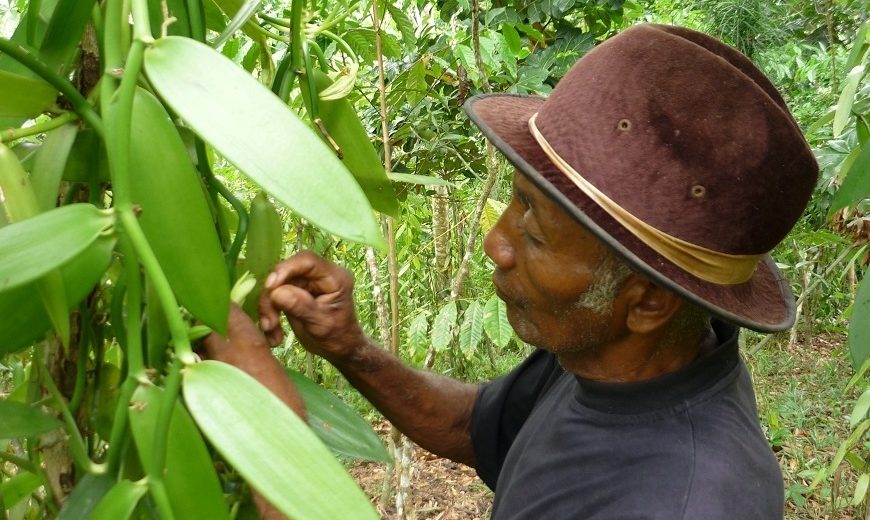
Vanilla is an orchid native to Mexico, which today is only a minor producer, having been overtaken by Madagascar and Indonesia in the 1960s. The combination of high humidity, shade, and moderate temperatures at the forest shore line is perfect for growing vanilla on these latter two islands.  It grows as a clinging vine, reaching lengths of up to 300ft; the pale white orchids bloom for just one day each year and the flower is fertile for only 8 to 12 hours after it blooms.  The initial challenge was that outside of Mexico, no fruit, in the form of vanilla beans, was produced. Horticulturists eventually discovered that the pollen on a vanilla orchid flower is inaccessible to most insects, including honey bees; only the small Melipona bee, which is peculiar to  Mexico, was able to reach the pollen and hence to fertilize the flowers. 

According to Nancy Kacungira , on the BBC web-site, an enslaved boy named Edmond Albius, on the island of Réunion which is a northerly neighbor of Madagascar,  invented a painstaking way of pollinating by hand.  Using a sharp, thin stick, he lifted the fragile membrane between the male and female parts of the flower and  then pushed one into the other, thus facilitating pollination. This was, and still is, the necessary process for every single flower on every vine to produce the fruit – pods filled with thousands of the tiny black seeds we eventually see, for example, in high-quality vanilla ice cream.  

Dates and vanilla are the only major crops today that are almost entirely hand pollinated.

Madagascan vanilla farmers have to check their plants every morning – to miss the fertilization window for a flower, or to damage the plant, is to lose out on precious pods.  It takes approximately  250 blossoms pollinated by hand to produce 1 pound of cured beans, which are worth about $200, a hefty sum in a country where the average annual per capita income is $1,500.

It takes  nine months for the vanilla pods to mature, after which they are harvested. The still-green beans start to ferment quickly, so buyers must be found fast. Small farmers typically sell green pods to middlemen who gather large amounts to sell to local exporters.  An industry flush with cash attracts unscrupulous new entrants, many of whom pay advances even before the farmers have planted any vines, who in turn end up having to steal from others to fulfill the orders.  To deter theft, the farmers are stamping their names, or sometimes serial numbers, on to individual pods while they’re still on the vine. Even when the pods are dried, the markings are legible.

The robberies are often violent, with dozens of murders in Madagascar linked to vanilla and little protection or investigation from the police  Some growers have taken the law into their own hands – in one village, a machete-wielding crowd descended on five suspected gangsters, hacking and stabbing them to death.

There is an environmental impact too as vanilla prices soar. Increasingly more of the 

forest coastline this being burnt so that vanilla can be planted. Inside the forest, home to endangered lemurs, trees are cut down that will take hundreds of years to re-grow. 

Plants, insects and animals that relied on a delicate balance start to disappear, and lemurs will no longer have a vital food source A fragile ecosystem is being badly damaged to cater for global demand.

Analogies to the honey bee industry, the violence aside,  are evident – Chinese pear growers pollinating by hand; proposals to use mechanical drone pollinators; the length of  time needed to produce a crop; the relatively  low price for the product related to the work involved; middle men who import and mix different strains; increasing  hive thefts to the point that some beekeepers are inserting computer chips in their hives; and the degradation of a pollinator-friendly environmental system.  Whereas the price of honey is relatively stagnant, the 80 000 vanilla growers are making more money than before but their small plots produce limited amounts of beans. It is the middlemen and the exporters who are raking in the big money.

But here is the kicker.   If you’re eating something vanilla-flavoured or smelling something vanilla-scented, it’s probably artificial. As they work their way upward through the chain, vanilla pods become increasingly expensive (earlier this year the price of vanilla per pound was higher than silver,) the quality is not any better, and vanilla options were removed from many European menus for ice cream, creme brulées, cup cakes and candles.  This at a time when more customers are wanting to eat authentic food and shying away from chemicals and lab-produced substitutes. Scientists have been making synthetic vanillin – the compound that gives vanilla its aroma – since the 19th century, extracting it  from coal, tar, rice bran, wood pulp and even cow dung. Today, the vast majority of synthetic vanillin comes from petrochemicals and can be twenty times cheaper than the real thing.

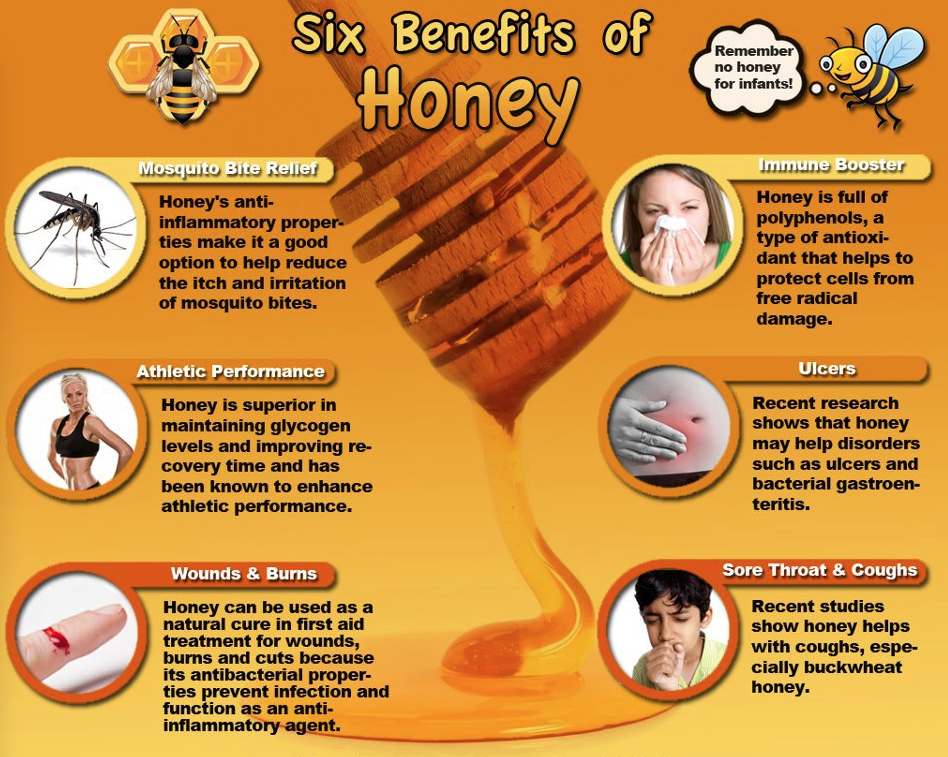
Beekeepers are familiar with undeclared synthetic substances in honey, especially that which is imported.  As a sweetener, adulterated honey is lamentable although not critical, but if honey is to be advocated as a health food, product integrity is critical.  Raw honey can be promoted for weight management, as a natural energy source, as an antioxidant powerhouse, to promote restorative sleep, as a wound and ulcer healer, a diabetic aid, a natural cough syrup and as a possible counter to pollen allergies. Most important of all, and  the ultimate selling point, is that honey is the most potent brain food of all and is an integral part of the critical evolutionary steps that helped define our species. 

In a TED talk  titled Hunter-gatherers, Human Diet, and Our Capacity for Cooperation, Alyssa Crittenden, a nutritional anthropologist at the University of Nevada, Las Vegas, outlines the findings from  her fourteen year long study of the pre-agricultural, nomadic Hazda people in Tanzania.  For example, she recounts how men interact with the honeyguide bird as it leads them to a feral honey bee nest and sits on a nearby branch as the honey hunters scramble up a baobab tree, using burning embers to retrieve comb honey.   Most striking to her was the excitement of the children as they anticipated, and then shared, the rich food source as it was brought back to camp.  She realized that, “‘Every foraging population for which were have data targets honey.  Every ape species eats honey.  It’s nutritionally rich.  It’s highly preferred.”  Honey is the highest ranked food for the Hazda, and makes up more than 15 percent of their daily calories.  To convert that into modern terms, and if we accept that 2250 calories indicate a modern healthy, balanced, daily diet, then based on the Hazda example, 335 of our calories should come from honey, which is equivalent to a little over 5 tablespoons, or 110 grams, per diem.

In his remarkable new book, Buzz : The Nature and Necessity of Bees, Thor Hanson explains in some detail how for centuries it was assumed that the natural counterpart of the honeyguide was the honey badger, that the two worked in tandem, until it was realized that the latter is nocturnal and the hours of their respective foraging barely overlap.  Hanson describes the now accepted theory that the honeyguide and early hominids co-evolved some three million years ago, and that honey, collected and shared as the Hazda still do,  played a critical evolutionary role in helping to define our species. 

“The brain is an obligate glucose consumer,” Alyssa explained to Thor. Because the brain burns energy for both neurotransmission as well as cell function, it can consume up to 20 percent of our daily energy requirements even as it weights only 2 percent of our body weight. It demands all that power in the form of glucose, and no natural food contains more glucose in a pure, digestible form, than honey – one third is pure glucose, with the balance being fructose.  It is the most energy-rich food in nature, Alyssa stresses, and there may be a connection between the typical sweet tooth of children and a craving for honey to feed their active, hungry growing bones and brains.

If one lines up the skulls of hominids over the last three million years, from Lucy (Australopithecus africanus) to modern humans (Homo sapiens sapiens) one is struck by the rapidly expanding brain case (an increase of 250 per cent in all,) the retraction of the lower jaw and a reduction in the size of the teeth. Most theories for brain expansion credit increased meat consumption through hunting, the use of tools to gather and prepare new food sources, and the control of fire.  Alyssa argues that early humans could not have afforded the metabolic expanse of larger brains without an accompanying boost in calories, and that honey needs to be added to the hypothesis. After all, hunting would have increased exposure to feral bee nests, the new tools would have facilitated the collection of the honey therein, and the control of fire would have provided the smoke necessary to calm the bees.   Add to that the additional proteins and further micronutrients provided by larvae and pollen taken from the feral hives, and we have a formidable nutritional stimulant. 

The challenge, of course, is material evidence, and the expectation is that studies of prehistoric dental plaque will turn up traces of honey from each of the key points in our evolutionary history. 

So yes, today we have a more extensive choice of food, not least sweeteners, but honey must not be relegated to  evolutionary history.  It is a potent brain food as relevant today as it was three million years ago, and we need to promote it as such. 

The Hot War .2

Many of us have experienced an increased awareness of the natural world through the activities of honey bees – what is in bloom and when, the response of plants to daily and seasonal temperatures and rainfall, the flow of nectar and pollen at differing times of the year,  what flora attracts honey bees, the reaction of bees to environmental toxins – and while most of us began managing honey bees for a variety of personal reasons, what keeps many of us involved is a fascination with this amazing superorganism and it’s interaction with the immediate environment.

But honey bees also invoke a larger perspective.  I for one had a rather simple, even romantic, view of agriculture. One of the few things that humankind has in common is the need for food and water; indeed it was the discovery of agriculture some 10 000 years ago that was the trigger for the development of civilization.  For more than 95 per cent of that time, farming respected and adhered to the inherent laws of nature, in the same way that beekeeping was initially more about the needs of the bees than it was of the beekeeper.  Farms were limited in size, dependent on what could be managed well by the farmer and family.  A variety of crops with a healthy mix of domesticated animals (which supplied the necessary fertilizers)  were determined by the local natural resources, climate, geology, geography and local cultural norms.  

My pre-beekeeping view of the industrial revolution could be summed up as economically advantageous and socially divisive; there was little awareness of a post-industrial agriculture characterized by 5000+ acre farms with monocultures that ignore the law of interdependence with the natural environment.  A classic example is ripping out orange trees in California, an area with major water  issues, to plant almonds trees which require some 35 gallons of water per tree but provide a higher immediate financial return.   Monocultures necessitate massive amounts of chemicals in order to protect the nature-estranged, weakened crops from being overtaken by insects, fungi, and bacteria.  In the case of genetically altered, factory-farmed animals, the adverse effects are masked by administering daily rations of antibiotics.  According to a recent EPA report,  the US  administers 1400 tons of pesticides per day nation-wide.  No wonder a headline in the New York Times in November last year read, The Insect Apocalypse is Here.  

The core of agriculture, as well as of culture, depends on the basic act of cultivating, of caring, of nurturing.  Modern farming is almost exclusively based on extracting, manipulating and controlling, aspects which seem to be overtaking our lives, our economy, and even our politics at a rapidly increasing rate.  As early as 1924 Rudolf Steiner warned that “(U)nder the influence of our modern philosophy of materialism, it is agriculture – believe it or not – that has deviated furthest from any truly rational principles. Indeed, not many people know that during the last few decades the agricultural products on which our life depends have degenerated extremely rapidly.” Today, the explosion of the ‘supplements’ industry is an obvious sign that our food is not providing what we need in terms of nutrition and nourishment, with immense implications for public health. 

In October, 2017, in Europe, the Krefelder study revealed that over the last three decades 75% of all flying insects, as measured by mass not by numbers,  have disappeared. In Germany, 41% of 560 species of native bees are on the endangered list or already extinct.  In the US, the Xerxes Society estimates that 28% of all North American bumblebees are facing some degree of riskof extinction and we don’t have accurate numbers for the 4000+ species of native bees.  And in the last two weeks there have been dire reports of the future of birds and trees in Europe. 

“We have a global mass extinction at a speed not achieved since the time of the dinosaurs”, said Andreas Segerer in February 2019, head of the ecological state collection in Munich. But there is a huge difference between the extinction of dinosaurs and the extinction of insects : unlike the former, the latter play a fundamental role in providing healthy ecological  edifices.  

At Apimondia last month in Montréal it was intriguing to note how frequently the term ‘climate change’ appeared in the presentations (of which here were 364 in all) without any qualification – no ifs, ands or buts. Peter Rosenkranz   from the University of Hohenheim in Germany observed, almost as an aside, that southern Germany no longer expects snow in winter. 

Agri-culture has been replaced by agri-industry, on the altar of which the care of the land, the animals, the water and the air is sacrificed. We too are part of this surrender, accepting without question cheap, mass-produced food, not asking why, in the US for example, why there are more people in prisons than on farms, or why nationwide the farmer suicide rate is more than double that of veterans.

None of this would have been in my consciousness without the honey bee. 

Over my life I’ve seen some enormous changes. After the Birmingham (Alabama) bombing, for example.  After Selma, after  Vietnam and Mai Lai, after  Nixon and Watergate, after the Soweto Riots.  The demolition of the Berlin Wall, the release of Mandela and the collapse of the USSR happened within five years of one another.   The civil revolution that followed the genocide in Rwanda occurred parallel to the changing verdict on the connection between the use of tobacco and lung cancer, and more recently, the use of glyphosate and cancer.  The pendulum can swing suddenly. The public can change its mind.

Not only is beekeeping a gateway drug but beekeepers are the gatekeepers of a new vision.  Our responsibility is to tell the story that the honey bees tell us.  As with Edward Murrow in 1940, reporting the truth is the only basis for any moral authority.  Colony Collapse Disorder in 2006 was a demonstration of how reporting the truth about toxic house disorder  can be energizing. 

With no silver bullet, what do we do? We can be activists in our individual capacity, by supporting the farmers and nurseries who grow food or grow plants organically or biodynamically. But, argues Bill Moyers, we must also cooperate as kindred spirits on a mission of public service. We must create partnerships to share resources. We must challenge those in power to act in the public interest. We must keep the whole picture in mind and connect the dots for those not privileged to hear bee-speak.  We must look every day at photographs of our children and grandchildren, to be reminded of the stakes.

We will not be alone.  Who would have thought that, in 2019,  a company making meat-free burgers could be worth almost $4 billion; that the world’s most powerful oil cartel would brand four million striking students as the ‘greatest threat’ to the oil industry;  that climate change would become a key issue for Democratic candidates in the 2020 presidential election, or that a 16 year old Swedish girl would lecture a rapt US Congress on their lack of initiative and responsibility? 

Just as Brexit and the Ukraine-gate are currently preoccupying the media in Britain and the USA respectively, neither is worth a hill of beans, so to speak, if Mother Earth is no longer habitable by humans.  (The bees, of course, don’t care one way or the other.  Without us they will be just fine.) 

There is no doubt that a real change in course will be highly disruptive of our conventional way of life, but if we fail to heed the message there will no longer be a normal way of life left.  In the first scenario, we will be in charge; in the second one future generations will suffer the consequences of our neglect.  

“The worst lies are the lies we tell ourselves,” wrote Richard Bach, author of Jonathan Livingstone Seagull.  “We live in denial of what we do, even what we think. We do this because we’re afraid.”