Musings on Honey Bees, the Environment and Ourselves
Author: Jeremy
I have spent some 75 years living and working in England,Rhodesia/Zimbabwe, South Africa and the USA, with many opportunities to learn from beekeepers in a v variety of African and European countries in between . An educator by profession, with a focus on history and group dynamics, the honey bees chose me in 2002, despite which, like many beekeepers, I lost my first two hives over winter. In 2009 I was asked by the editor of the PSBA to write a column for the monthly newsletter, which she labelled "Jeremy's Corner"; 14 years later is still continues. A rather eclectic style of content and vision developed, and these posts are based mostly on those essays. Meanwhile I was fortunate to be honored as York County's Beekeeper of there Year in 2013, and similarly for Pennsylvania in 2018.
In January I was forwarded an article from the March, 2023 edition of Science Robotics titled A Robotic Honeycomb for Interaction with a Honeybee Colony, by Rafael Barmark et al. Using the language of the report, it described ‘a robotic system designed to observe and modulate the winter bee cluster using an array of thermal sensors and actuators . The robotic system was able to observe the colony by continuously collecting spatiotemporal thermal profiles of the winter cluster, to modulate the bees’ response to dynamic thermal stimulation, and, after identifying the thermal collapse of a colony, to create a “life-support” mode via its thermal actuators.’
In layman’s language, these sensors, embedded in the comb, not only measure and observe the movement of the winter cluster but, in the case of a weak colony, can be activated to modulate the temperature in the cells, supposedly to augment their survival.
This is the culmination, but not the endpoint, of what Randy Oliver calls the 4th Agricultural Revolution. The first was the invention of agriculture some 12 000 years ago, followed by its industrialization starting in the late 18th century and culminating in the use of the internal combustion engine in the form of tractors and trucks. The third is what Randy calls the Green Revolution, which in my estimation started when the Soviets successfully launched a manned space rocket, Sputnik. Besides emphasizing math and science in schools (often at the cost of art and music) American farmers were encouraged to ‘farm fencerow to fencerow,’ so that the US would be agriculturally self-sufficient; this meant, among other things, that the hedgerows, so vital to birds, insects, animals and wild flowers, were plowed under. Perhaps the best known aspect of the Green Revolution was the production of high yield crops, especially rice and corn, not least in India, but with it came some significant downsides – a population explosion, heavy use of synthetic fertilizers, cheap labor, heavy use of water and increased use of pesticides, not to mention increased costs which affected many small farmers dearly – and which I described at length in a previous column.
The fourth revolution introduced electronic technology in which Randy includes the internet, Artificial Intelligence, biotechnology, gene editing, robotic labor, precision dispensing of chemicals, vertical farming and alternative energy sources.
And we cannot expect honey bees to be unaffected by this process.
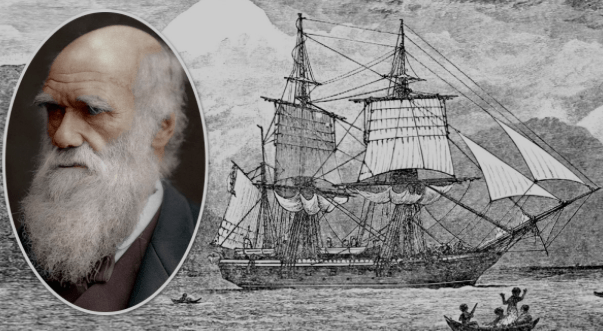
On the same day I received the article from Science Robotics, I read Anne Murphy Paul’s description of Charles Darwin’s famous voyage starting in 1831. The 22 year old, torn between following a career as a doctor, a parson, or one that allowed for his burgeoning interest in natural history, received a letter from his former tutor at Cambridge University informing him of a position as a naturalist on a two year expedition aboard the HMS Beagle.
He had never kept a journal before but began to do so under the influence of the experienced ship’s captain, Robert FitzRoy, whose naval training had taught him to keep a precise record of everything happening aboard the ship and of every detail of the ocean-going environment. Each day the two men ate lunch together, after which FitzRoy wrote up both the ship’s log and his personal journal. Darwin followed suite : his field notebooks, his scientific journal and his personal diary were updated daily as the two years of the expedition turned into almost five.
Recording such data requires close observation of one’s surroundings, the ability to run through a mental checklist of features that might be recorded, and the skill to organize them clearly. In addition, the process of taking notes in the field requires us to select, discriminate and evaluate (ie. higher order thinking skills) which in turn lead to deeper observation.
Beekeeping technology is rapidly becoming more copious and more intrusive, yet each of us has access to pen and paper. When asked, most beekeepers acknowledge the importance of keeping good notes, and yet only a minority actually do so. It’s like checking for varroa – we know the importance of monthly mite checks, yet only a few do it. And taking notes is the first step; what is critical is using that recorded data to make decisions for the benefit of the bees as well as for one’s own professional awareness and development.
HMS Beagle returned to Plymouth Sound on October 2, 1836. Darwin spent the next three years processing those boxes of note books and another twenty years discussing and refining his conclusions, until the eventual publication of The Origin of the Species in November, 1859.
With the plethora of technology available today, it is easy to forget that a pencil and a notebook in the hands of a young Charles Darwin were key to developing a theory that would change our perception of the world, even as it did not seem so at the time.
If asked to describe a honey bee, you might say that is has three distinct body parts, antennae, six legs, four wings and that it flies. So if I were to gather from different sources the head, thorax and abdomen of a bee, two antenna, four wings and six legs, and threw them in the air, it would be a honey bee, right? After all, these are the component parts, and they fly, so why not?
Descriptive knowing is the way in which we typically delineate and define things – by their various parts – but thinking we know something because we can describe it is only partly true. It lacks what is called structural functional organization – the way things are structured so that the parts function as a whole or, as is commonly cited, the whole is greater than the sum of the parts. There is no adequate word for this in English, so we use the German gestalt, or less commonly, the Greek, logos.
Describing the gestalt of a honey bee is not easy, not least because our grasp is intuitive rather than explicit. We need to describe the form and at the same time identify the patterns that make up the gestalt. This is participatory knowing, meaning that our mind conforms with the shape, the form and the behavior of the honey bee; we develop the same patterns as the bee to the point that the very structure and functioning of our being can be changed. These are those rare brief moments when we feel ‘at one’ with the world.
Four famous lines from William Blake’s Auguries of Innocence best describe the feeling of gestalt :
To see a world in a grain of sand
And a heaven in a wild flower;
Hold infinity in the palm of your hand
And eternity in an hour
The left and right hemispheres of the brain are generally recognized as having differing functions. The right brain is more focused on art and creativity, on visualizing the whole picture, on seeing itself connected to the larger world, the gestalt. The left brain is more analytical, methodical, orderly and linear. We need both but Iain McGilchrist, in The Master and his Emissary : The Divided Brain and the Making of the Western World, argues that the left hemisphere with its focus on function has become so dominant that we are in danger of forgetting everything that makes us human. The left hemisphere, he argues, has grabbed more than its fair share of power resulting in a rigid and bureaucratic obsession with structure, self-interest and a mechanistic view of the world, at an enormous cost to human joy. Clearly the gestalt emanates from the right hemisphere, the one that we are using increasingly less frequently.
Why is this significant? Supposedly, honey bees are the most written about insect in the world, even as I have been unable to find independent confirmation of this. Yet the overwhelming majority of this writing is descriptive – in the journals, the scientific periodicals, the newsletters, the books. We describe the various issues that bees face and how to remedy them. We examine in detail the genome of the species with all of its implications for bee management. We describe how to get more honey from a hive, how to help the bees through winter, how to split colonies and introduce new queens …
And yes, all of this is important – it has to be mastered if one is to manage honey bees successfully – but too often we stop there.
A pervasive current topic is ‘the Meaning Crisis,’ a term devised by Dr. John Vervaeke, professor of cognitive science at the University of Toronto. In a series of podcasts, 48 hours in all, he describes how today’s mental health crisis is the consequence of a deeper cultural historical crisis. This is evidenced by the increasing numbers of people who feel disconnected from themselves, from each other, from the world, and from a viable and foreseeable future, as expressed in increases in anxiety disorders, depression, despair, and suicide rates. He argues that we need to understand and transform the meaning of our lives, our culture, and our world if we are find a way forward.
How to do it? Where and how do we find coherence, significance and purpose in our lives and our culture, these being the vital components of meaning?
For me, beekeeping is a touchstone of reality. It provides those vital times when the modern, manufactured world fades into the background and I interact with creatures who not only have a history that is beyond my ability to comprehend but who stand in defiance of the stresses of a world of greed, envy, and what Professor Vervaeke calls ‘the pornography of affirmation.” Those precious moment when time slows down, when the patterns in the hive conform with the patterns in my mind, when I am ‘in the flow,’ are not only the ultimate pleasure of beekeeping but also the moments of great awareness and insight. May every one of us have something in our lives which offer such an interaction.
If Ian McGilchrist is correct, an experience of the gestalt, in this case with a colony of honey bees, is a vital step to recovering that critical balance between knowledge and wisdom, the first of which is factual and the second experiential. Such an experience cannot be taught but has to be discovered, and having encountered it once, the feeling of awe never ends. It is one transcendental way in which I for one can enlarge that continuing search for meaning, can feel connected to the natural world as well as my fellow like-minded beings, and as such is possibly the ultimate reason why, for some, beekeeping is a life-long passion and reward.
On September 26th, 2023, Shawn Fain, the head of the UAW, stated on a television news program that the average auto worker would have to work for 400 years to earn what the average CEO was paid in one year. He added that no one is worth 36 million dollars a year, that no one has the right to that kind of annual reimbursement. Besides wondering how anyone spends that kind of money, unless it is for the benefit of the greater community, I would add that the CEO cannot do his or her job without the workers, whereas the reverse is not the case.
That same day, on the NPR program 1 A, Jen White interviewed the Brothers Osborne, (not to be confused with the Osborne Brothers of the 1960’s.) John and TJ Osborne, who have been performing for some 20 years and have a list of awards including a Grammy, said in part that “We live in a capitalist system – you’ve got to drive, got to go, got to get more and more and more …. and yet, after getting so many things we thought we wanted and needed, it turned out we had all the things we needed all along.” The more you get, said John, “the less happy you are because you lose perspective. I have learned more from my six month old twin daughters than I learned in there last twenty years of my life – how simple life is, how perfect it already is, how to stay present.”
The freelance writer and investigative journalist, Christopher Ketcham, argues that a basic tenet of western civilization is the idea that economic growth can continue forever on a finite planet. “Illogical as it may be, we hear this deluded fantasy in the decrees of elected officials, in the laments of economists about flagging GDP, in the whirligig of advertising, at the World Bank and on Wall Street, in the prospectuses of globe-spanning corporations and in the halls of the smallest small-town chambers of commerce. Growth is sacrosanct. Growth will bring jobs and income, which allow us entry into the state of grace known as affluence, which permits us to consume more, providing more jobs for more people producing more goods and services so that the all-mighty economy can continue to grow.”
First expressed as ‘The American Dream,’ it has now gone global not least as a moral imperative in the developing world where, they are told, it will free the poor from deprivation and disease, enrich and educate the women, reduce birth rates, and provide the means to pay for environmental remediation—to clean up what so-called progress has despoiled. This was most evident to me in Nairobi ten years ago with huge roadside billboards of modern American washing machines, even though the majority of the city’s population live in what can only be described as slums. Or in Zimbabwe twenty five years ago when we saw a television set in a one roomed house in a small rural village that did not have, and still does not have, electricity.
Sadly, the American Dream, as expressed in terms of living a better life than did one’s parents, is measured solely in financial and material terms.
Not as well known as Aldous Huxley’s Brave New World, or George Orwell’s Nineteen Eighty Four, is the work of Aurelio Peccei. He had fought for the resistance in Italy, where he had been captured and tortured by the Fascists, and then in industry where, as an executive at Fiat, he began to question the legacy that industrial civilization was leaving its children. His book, The Chasm Ahead, published in 1968, expressed concern about the “suicidal ignorance of the human condition” on a planet of dwindling resources, rampant population growth and material consumption, mounting pollution and waste. In 1970 Peccei connected with a professor of system dynamics at MIT, Dennis Meadows, who had helped design the World3 computer program, and who led a team of researchers questioning the orthodoxy of growthism. Using the new gigantic mainframe computer, they emerged two years later with The Limits to Growth. Its message was commonsense : if humans propagate, spread, build, consume, and pollute beyond the limits of our tiny spinning orb, the ultimate result will be a collapse of civilization, which would mean the loss of human life, culture, and capital on a scale unimaginable. The World3 business-as-usual model suggested that the collapse would likely begin around the middle of the 21st century.
This was not what Americans indoctrinated in growthism had been accustomed to hearing—and never had they heard it from PhD.’s marshaling data at one of the world’s citadels of learning. Not surprisingly, The Limits to Growth was the subject of vicious attacks by the defenders of growthism because it dared to question the viability of the American Dream. It was an affront to the credo of mainstream economics – that the combination of profit and innovation will always save us – and cited as evidence how the Green Revolution and genetically modified organisms had innovated a route around predicted world hunger, and deep drilling had provided access to previously untappable aquifers.
Over the last decade, Limits has attracted renewed interest from ecologists and economists, using new methodologies to gauge its accuracy. The conclusions ranged form “the alignment of data trends with the LTG dynamics indicates that the early stages of collapse could occur within a decade, or might even be underway, “ to “ The projections are quite on target. We are not aware of any model made by economists that is as accurate over such a long time span.”
And if you want a version of what lies ahead as we blunder along with business-as-usual, driven by the false promises of free markets and individual profits, I would recommend a novella of futuristic science fiction, The Collapse of Western Civilization (2014) by Naomi Oreskes and Erik Conway, historians of science at Harvard and the California Institute of Technology, respectively. What stuns the future chronicler is that the smartest scientists in the world, employing the most advanced analytical and technical methods available, had charted the trajectory toward climate doom long before it was a fait accompli. ”Virtually all agree that the people of Western civilization knew what was happening to them but were unable to stop it,” says the narrator. “Indeed, the most startling aspect of this story is just how much these people knew, and how unable they were to act upon what they knew.”
The report from COP28 that met in Dubai last month (sub-titled by some as Cop Out or Cash In) suggests that we are not much closer to committing to sustainable global solutions.
What brought the above to mind was one of the comments that followed Ketcham’s article. It read, in part, “We need to wind back the social decay of our modern societies, where individuals have become separated, isolated, alienated and purposeless. We need to reconnect with each other to form intentional self-sufficient communities that permit a synergy of our efforts, supporting each other and increasing our chances of survival.”
My first response : he’s describing a colony of honey bees! This is not to suggest that we should live like bees; rather that there are principles at work in a bee hive that we can emulate. ie. Biomimicry writ large. As beekeepers, we know the power of the collective society that is ‘the colony’ – a super-organism of individuals united in common purpose. We know our bees communicate with each other in several ways (and undoubtedly other ways that we don’t yet realize.) We understand the importance of the queen pheromone in giving a colony it’s identity. We know the bees produce enough raw food not only to survive but also to grow, to flourish and to share. Honey bees work together, share information and identify with a unifying purpose.
The question becomes whether our global society can organize itself to live within its means while providing a peaceful, equitable existence for its people. There is enough to go around, so long as we all agree not to want too much, a terrifying notion for those who are entrenched in the free-market capitalist mindset, who have been assured that we will never need to share our piece of the pie provided we just keep on growing the pie.
The industrial revolution escalated the economic differences between classes of society, and some converted their new wealth into power which was then used to protect their privileges and affluence under the justification of the myth of perpetual growth. ‘A rising tide lifts all ships,’ it was argued, and recent times have shown this clearly is not the case. If wealth is to be divided more evenly among a growing global population, the per capita material affluence of the global north will have to drop. Can a civilization indoctrinated in selfishness do this? I fear not. As Ketcham writes, “It would be a process of social maturation on a scale never before seen. Because in order to retain our humanity in the face of limits, we would have to confront inequality head on.”
Literally, we would rather die than share our toys.
By the leafless trees of poplar, Willow, oak and black acacia, At the entrance of her tree hive Banked along the Susquehanna, In the pleasant winter morning, Wings unfolded, all a-tremor, A bee (a worker) fanned and waited.
The air was rich with expectation, All the earth was cold but joyous – Yuletide, Kwanza, times of gifting, Lights and colors, food and singing – As before her, through the sunshine Passed the girls on cleansing flights, Released for now from winter cluster, Gleaming, humming in the sunlight. Our worker bee was as a lighthouse, Sending rays of home direction Should a sister, in her rapture Need an aisle of home-bent incense.
A female sanctum ( drones are gone) Feasting on their horde of honey – Rich and strong, as gifts from Magi : gold and frankincense and myrrh – The sentience of every worker And, hereafter, for their savior, Their source of life, esprit de corps, Their genetic core for ever after – Their mother queen, but not their ruler,
She is waiting for that signal – Longer days and shorter darkness – When once again the annual cycle : Rebirth, expansion, and partition Precedes the stores of amber honey – And in this way does life continue.
As go the bees so go their keepers – Hunkered down in winter climes, Embracing hours of purple vapors, Precious sights of sun at sunset, In the purple mists of evening, In the regions of the home-wind, Of the northwest winds of Erie, Of the southeast isles of Schuylkill In the woods of Allegheny Tioga, Pinchot and Bendigo, In the long and somber evenings Afore the beauty of the day-dawn We share the warmth of hearth and fire We share the music and the stories, As, with bees, we wait in clusters For the birth of this new season.
You whose hearts are fresh and simple Who have faith in love and nature Who believe that in all ages Every human heart is human, That in every bee and keeper There are longings, yearnings, strivings For a life of shared fulfillment. All will add to our enchantment To the pleasure of the season For the beauty of the day-dawn For the pleasure of the morning – The beginnings of a new day.
In October of 2002, John Allen Muhammed and his nephew, Lee Boyd Malvo, terrorized the Washington DC neighborhood with a series of random sniper attacks, eventually killing 10 people. At the site of the first shooting, a gas station, a white van was seen racing from the scene of the crime. It was assumed to be the vehicle used by the shooters and for several weeks, as many readers will remember, police road blocks nation-wide focused on white vans.
At one of the crime scenes investigators found a magazine clip with fingerprints on it. These were subsequently identified as belonging to Lee Malvo, who was known to associate with John Muhammad, who, in turn, had purchased a former police car, a blue Chevrolet Caprice, one month previously. The vehicle was spotted parked at an Interstate rest stop in Maryland and the two suspects were arrested.
The significance of this story is that on three occasions the blue Caprice had been stopped at police road blocks and allowed to proceed. Why? Because the misconception of the white van so colored the perception of both the police and the public that they could not objectively see what was in front of them.
Broadly speaking there are two types of beekeepers, what I am choosing to call Programmed and Reactive. The first is typical of new and commercial beekeepers. Most of the former are looking for an annual cycle in which certain actions are required on all colonies at specific times. Thus, for example, if they believe that it is customary to switch boxes in the spring, they will switch all boxes, irrespective of the position of the brood or the strength of the colony. If they believe that most beekeepers replace queens annually, they will replace their queens irrespective of how well she is performing. If they believe it is necessary to treat for varroa late in the summer, all colonies will get treated irrespective of whether the bees are themselves controlling the mites or not. Hence the term ‘Programmed.’
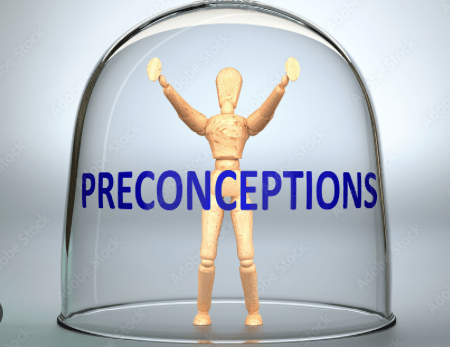
The point is that they are so focused on a particular manipulation that they cannot see what else is happening in the hive. Preconceptions outweigh reality. “Just tell me what to do and when to do it,” is a request I receive from many who are new to this wonderful hobby. In response it is important to explain what the options are, and the reasons for choosing one option over another.
In the case of commercial beekeepers, as Charles Linder makes clear in a recent series in The American Bee Journal, most are acutely aware of the conditions of their colonies but the sheer size of the operation and the pressures of time and profit minimize their choices.
With good mentoring, confidence, and experience of both the annual life cycle of a colony and the biology of a honey bee, most new beekeepers become more responsive to the needs of particular hives. Thus, for example, they might question whether it is really necessary to switch boxes, and if so, which ones. They will evaluate each queen before making a decision to replace her, and will complete a mite test on each colony before deciding if and when to treat.
They have a tool box of management strategies at their disposal, with the confidence and experience to use them. They react to, are respectful of, and are guided by, the bees, rather than imposing themselves on their charges. Hence the term Reactive.
Certainly there are some beekeepers who never move from program to reaction, and I don’t know why. Certainly it has nothing to do with intelligence as we traditionally understand it.
Proud as I am of my powers of observation, I can be as willfully blind as anyone. David Papke and I meet several times a month over a cup of coffee to discuss honey bees, review journal articles, and share stories and experiences. In mid-September I arrived five minutes early at the Village Coffee Shop in Shrewsbury and, not seeing David’s silver-colored truck, assumed that I was first there, only to see him seated at one of the tables as I entered. On this occasion he had driven the white sedan, which was only two bays away from where I had parked. Yet based on my presumptions it was effectively invisible. My expectations outweighed reality.
The same happens when I am looking for a particular can or package in the pantry based on my preconception of what it looks like. When I summon Mary for help, she points out that it is right in front of my nose but in a different looking container.
This autumn Mary has been making a delicious sauce from our apple drops. Last night I remarked on how well the sauce complimented the rest of the dinner. “Jeremy dear,” she replied,”That’s mashed potatoes, not apple sauce.” Only then did I taste the potatoes.
There are many reasons why some people become committed to managing honey bees. For me, a significant one is the constant challenge of reading a hive and then reacting appropriately. It is like a living Sudoku puzzle or an animated crossword. The parameters may be the same each time but the specifics are unique, neither can be solved based on preconceptions, and the sense of satisfaction when one responds successfully never diminishes.
I began keeping honey bees in 2004, two years before the discovery of Colony Collapse Disorder. I recall vividly Dave Hackenberg describing, at a PSBA conference, his discovery of dead-outs in his Florida apiaries, and how later meetings were preoccupied with news of the latest losses and potential causes.
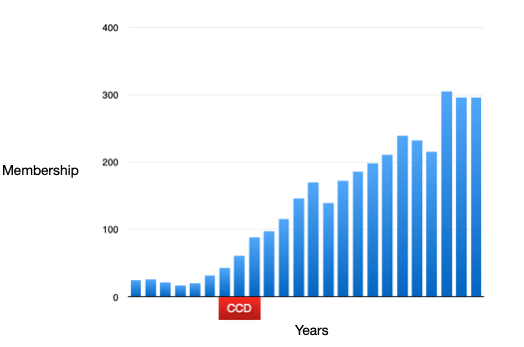
With the benefit of hindsight this was the start of the ‘Save the Honey Bees’ campaign as the public responded enthusiastically to a media barrage based on a mixture of fact, fiction and scare tactics, labelled by one writer as ‘bee wash.’ Always willing to help in a crisis, individuals assumed that the best way to help the bees was to start some hives, and they did so in ever increasing numbers, as seen, for example, in the membership of the York County Beekeepers’ Association from 2000 to 2023 (by comparison, the average membership for the twentieth century was 35.) My guess is that most beekeeping organizations show a similar trend.
Synchronistically, three articles made their way to print in the last week of August this year – one in The New Yorker, one in Beekeeping (a British publication) and one in the New York Times. Their theme is the same: not only have many people bought bees without the knowledge to look after them (the prime example was an e-mail I received several years ago from a lady explaining that she had just purchased a honey bee queen on e-bay and asking “What do I do now?”) but the numbers of managed bees has risen to a level that threatens wild pollinators, which are equally important to a healthy, balanced environment. Essentially, we can intervene to house, feed and reproduce the former whereas the latter depend on natural forage and habitat for their survival.
Urban areas in particular have been promoted as a ‘safe haven’ for honey bees with varied year-round forage and fewer pesticides than in rural areas with its industrialized agriculture. It is not that simple. For example, according to Richard Glassborow, Chair of Greater London BKA, in London, England, where colony numbers have doubled in the last 10 years, there is an impressive 47% of green space, but it is mainly grass. There are 3.8 million gardens, many of which are hard surfaced. GLBKA’s research indicates that in an urban area like London, 3 colonies per square kilometer is reasonable in relation to the needs of other pollinators (which coverts to 8 colonies per square mile, or one colony per 80 acres,) but problems of forage availability are exacerbated by the uneven distribution of those colonies – some areas are densely populated with 50 colonies per square km. Consequently, London bees are fed sugar syrup all year around, which equates to factory farming. Congestion not only brings problems of disease spread but also raises the ethical question of just what is in that very expensive honey sold and served in London shops and restaurants.
The desire to help honey bees by starting a hive is well-intentioned but misguided; we need a more balanced message to encourage a focus on measures that support the welfare of all pollinators. To turn this tide requires a change of narrative.
In 2016 Mary and I met Gorazd Trusnovec, in Ljubljana, the capital of Slovenia. As the founder and sole employee of an organization which translates as “Rent-a-Hive,” he places bee hives in available spaces, including on hotel roofs, which is where we met him. In the last seven years his sales pitch has changed : “If you overcrowd any space with honey bees there is a competition for natural resources, and since bees have the largest numbers they push out other pollinators, which actually harms biodiversity. I would say that the best thing you could do for honey bees right now is not take up beekeeping.”
Self with Gorazd Trusnovec (right) on the roof of the Hotel Park, Ljubljana, 2016
That’s a jarring message, not least because of the widespread and now deeply rooted belief that the global population of honey bees has been running dangerously low for more than a decade. “(CCD) was the first time that a large number of people started talking about pollinators, which was great,” says Scott Hoffman Black, executive director of the Xerces Society for Invertebrate Conservation in Portland, Oregon. “The downside was that there was no nuance. All anyone heard was that bees were declining, and so I should get a hive.” The fact is that there are now more honey bees on the planet than there have ever been in human history. Figures from the Food and Agriculture Organization of the United Nations show that the number of bee hives around the world has risen by 26 percent in the last decade, from 81 million to 102 million, but other pollinators are declining. The decline in the US, from almost 6 million hives in 1940 to less than 3 million today, is explained in part by the unique emphasis on commercial operations : there is a shortage of beekeepers willing to replace the large producers as they retire.
Still, the save-the-bees narrative persists, its longevity stemming from confusion about what kind of bees actually need to be rescued. There are more than 20,000 species of wild bees in the world, and most people remain unaware of their existence and importance, in part because they don’t produce honey and in part because they are all but invisible, living in ground nests and cavities like hollow tree trunks. But they are indispensable pollinators of plants, flowers and crops, in particular those that are not cultivated; for example, the many species of indigenous trees that are vital in moderating climate change.
Asking people to dial down their enthusiasm isn’t easy. Honey bees are the celebrities of the insect world, a source of fascination since ancient times, admired for their efficient social structure and referenced in nearly every world religion. Yet there are ways in which it can be done and the time might be ripe for action. As a matter of necessity rather than of choice, we are in the process of reacquainting ourselves with nature. The current global climate crisis is increasing our awareness of the importance, fragility and power of the natural world, which in turn provides an opportunity to promote more accurate information about pollinators and pollination in general.
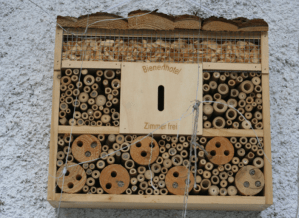
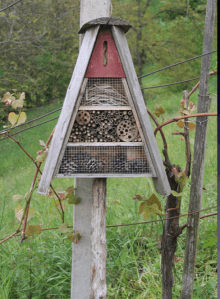
To help the bees one does not have to start a hive so much as plant a pollinator-friendly garden which, besides deliberate plant choices, is less reliant on chemicals and includes ‘pollinator hotels’ for non honey bee species.
And those who do decide to start a colony might be encouraged to investigate the concept of Natural, Darwinian or Regenerative beekeeping, which has an increasing number of proponents. Gareth John, a retired agricultural ecologist in Oxford, England, argues that natural beekeepers are the radical dissenters of apiculture. They believe that mainstream beekeeping, like most human-centered interactions with the natural world, has lost its way, and that an alternative path requires the unlearning and dismantling of almost two centuries of bee husbandry, invoking resistance from those who are invested in the current system.
Natural beekeepers, in their enthusiasm if not sense of self-righteousness, are akin to the first owners of a Toyota Prius almost twenty years ago (of which I was one.) Not only do they treasure the bees for their own sake—like a goldfinch that nests in the yard—but, like many visionaries, they have an evangelical spirit, as if they have stumbled on a great secret. They defer to the bees for guidance and often speak of the colony in somewhat spiritual tones, as a single, sentient organism that has evolved in parallel to mammals like us. Yet their fervor and ardor should not impede the veracity of their message.
A Bee Hotel
In the words of Roger Patterson, who maintains dave-cushman.net, one of the better sources of apiculture information, “Lots of things are changing. People are changing. The bees are changing. The environment’s changing.” If nothing else, I would hope that, in the coming year, the challenges and opportunities presented by these changes are the topic of an on-going conversation at every level of local state and national beekeeping organizations, and that we can promote a new vision with a new media onslaught to which the public can respond as enthusiastically as it did to CCD seventeen years ago.
Lars Chittka’s Mind of a Bee, and Stephen Buchmann’s What a Bee Knows: Exploring the Thoughts, Memories and Personalities of Bees”, examine the question of sentience in plants and animals, an issue made more complex by the challenge of understanding minds that process information in ways profoundly different from our own, as described by Ed Yong in An Immense World. Perhaps the critical question was posed two hundred years ago by Jeremy Bentham: “The question is not can they reason. Nor can they talk. But can they suffer?”
In place of a nervous system, plants have a chemical pathway in the form of glutamate, a neurotransmitter at the point of leaf separation. Furthermore, plants having their leaves nibbled on by a herbivore can release volatile organic compounds through interconnected root systems to the point that nearby plants release antifeedant molecules, thus making their own leaves unappealing to the herbivore, thereby preventing over-feeding in any one area. In her remarkable book, Wildscape, Nancy Lawson describes on the one hand how, in Iran, marigolds and salvias growing next to a busy highway had elevated levels of stress hormones, and on the other hand, in Israel, a species of primrose as able to increase the sweetness of its nectar in the presence of bees’ wingbeats.
Clearly plants physiologically can distinguish between stimuli, but whether this sensation is pain or pleasure as we understand it remains an open question.
Many animals, including us, are vertebrates with similar nervous systems and the capacity to remember, the latter quality often termed instinct because we do not have the ability to probe the emotional state of these sentient beings. Lars Chittka, a professor in sensory and behavioral ecology at Queen Mary University of London, argues that bees have remarkable cognitive abilities which not only make them profoundly smart with distinct personalities, but allow them to recognize flowers and human faces, exhibit basic emotions, count, use simple tools, solve problems, and learn by observing others. They may even possess consciousness.
What made the headlines was Chittka’s experiment to determine if bees could learn to avoid predators purely as an adaptive response. The experiment employed a robotic crab spider that lurked in flowers, briefly grabbing a bee and then releasing it unharmed. After that negative experience, the bees learned to scan the laboratory’s flowers to make sure they were spider-free before landing. But much to Chittka’s surprise, some bees also seemed to exhibit what he describes as a kind of post-traumatic stress disorder. “The bees not only showed predator avoidance but they also showed false alarm behavior,” he wrote. “After scanning a perfectly safe flower, they rejected it and flew away, seeing a threat where there was none.”
Buchmann and Chittka also argue for bees’ self-awareness and emotions, including their ability to suffer, meeting Jeremy Bentham’s minimum parameter for sentience. This could have significant implications for agriculture. Previous research has focused on the role of bees in crop pollination, but the work being pioneered by Chittka’s colleague, Stephen Buchmann, currently an adjunct professor in the Entomology and Ecology and Evolutionary Biology departments at the University of Arizona in Tucson, could force an ethical reckoning with how honey bees are treated.
In the US, commercially managed bees are considered livestock by the Department of Agriculture and are treated as a workhorse for food production, just as cattle in feedlots serve the beef industry. Because a bee’s brain is so tiny the assumption was that there could not be much going on in something so small and with so few neurons. Insects were considered to be semi-robotic, with no capacity to feel pain or to experience suffering. Instead, writes Buchmann, “Bees are self-aware, they’re sentient, and they possibly have a primitive form of consciousness.” This raises practical and existential quandaries. Can large-scale agriculture practices continue without causing bees to suffer, and is the dominant western culture even capable of accepting that the tiniest of creatures have feelings, too? “We are blasting bees with huge amounts of agri-chemicals and destroying their natural foraging habitats,” says Buchmann. “Once people accept that bees are sentient and can suffer, I think attitudes will change.”
it is only in the last decade that research technology has become sophisticated enough to analyze the neurobiology of the bee brain. Two examples. A recent study (May, 2023) at the University of Sheffield in Yorkshire, England, was designed to discover how honey bees excel at quick decision-making. They are the only pollinators that must get enough food for themselves as well as harvest large amounts of pollen and nectar to support their colony, which means memorizing the landscape, evaluating flower options and making quick decisions in a constantly changing environment. Chittka likens it to shopping in a grocery store, where you are rushing up and down aisles comparing products for the best deals and keeping a mental account before you return to the product you ultimately decide to buy.
The task of the Sheffield group was to study how this might apply to improving artificial intelligence systems and devices – the aim was to ‘develop skilled machines that can think like bees,’ according the the study leader, Dr MaBouDi. 20 bees were trained to recognize five different colored flowers – blue flowers contained sugar syrup, green flowers contained bitter tonic water and the remaining colors sometimes had glucose. The bees were then released into a custom-built garden where flowers contained only distilled water to see how they performed.
The experiment found they made a bee-line for flowers they thought would have food – landing there in an average of 0.6 seconds, which is faster than another other animal – and were just as quick to avoid flowers they thought would not have food. Next, MaBouDi et al. developed a computational model which could faithfully replicate the pattern of decisions exhibited by the bees, while also being plausible biologically. This approach offered insights into how a small brain could execute such complex choices ‘in the moment’, and the type of neural circuits that would be required. “What we’ve done in this study is reveal the underlying mechanisms which drive these remarkable decision-making capabilities. We can now use these to design better, more robust and risk-averse robots and autonomous machines that can think like bees – some of the most efficient navigators in the natural world,” according to Dr MaBouDi.
Secondly, Chittka and Buchmann studied bee behavior in response to fluctuations in the feel-good neurotransmitters, dopamine and serotonin. Mood-regulating chemicals increased when bees received a surprise reward of sucrose, similar to when humans enjoy a sweet treat. The improved mood led bees to have more enthusiasm for foraging compared with bees who received no reward. Alternatively, when bees were shaken in a tube or otherwise put in an anxiety-producing situation, dopamine and serotonin decreased. Buchmann reports in his book that studies have discovered bee brains “have their own internal opioid pleasure centers”.
Such findings have forced some to reconsider how bees are treated in a laboratory setting. Chittka says he would not run a traumatic experiment like the crab spider test today, but that he did not know such an outcome was possible back then. While Chittka now only conducts experiments he considers “ethically defensible,” this is not the case for others in his field, particularly when it comes to research on farming and pesticides. Part of the problem is that there are no animal welfare laws here in the United States protecting insects – or any invertebrates – in a lab setting, unlike mice and other mammals. Indeed, experiments are deliberately designed to stress and kill bees in order to figure out how much the insects can tolerate in the fields. “Many of my colleagues do invasive neuroscience experiments where bees have electrodes implanted into various body parts without any form of anesthesia,” Chittka says. “The current carefree situation that [invertebrate] researchers live in with no legal framework needs to be re-evaluated.”
In the US, the untold numbers of bees killed for scientific research pales in comparison with the number that die while pollinating mass-produced crops, particularly almonds. But finding a way to mass-produce crops while reducing pain and suffering for bees is a daunting undertaking. If vegetarians and vegans who avoid eating animals for ethical reasons were to apply the same standards to foods pollinated by bees, they would have very little on their plates.
Commercial pollination is also big business. The California almond industry rakes in more than $11bn a year and is the third-most-profitable commodity in the state. While some agricultural operations have tried to improve the survival rate for bees by reducing pesticide use and planting more diverse forage beyond a single crop, a California startup called BeeHero is among the first commercial pollination services to directly address the issue of animal welfare. The company uses electronic sensors that are placed in hives to monitor the sounds and tonal vibrations of the colony, which BeeHero says reflect the bees’ emotional state. “There is a throb or hum to a colony that is similar to a human heartbeat,” says Huw Evans, head of innovation for BeeHero. which is pollinating approximately 100,000 acres of California almond groves. “Our sensors feel that hum the way a doctor hears a patient’s heartbeat with a stethoscope.” The data from the sensors is collected and analyzed for any variations that could indicateharms being caused by the surrounding environment.
Both Buchmann and Chittka say they have been profoundly changed by their discoveries of emotion-like states in bees. The mysterious, alien mind of a bee fills them with a sense of wonder as well as a conviction that creatures without a backbone have rights, too. “These unique minds, regardless of how much they may differ from our own, have as much justification to exist as we do,” says Chittka. “It is a wholly new aspect of how weird and wonderful the world is around us.”
So how likely is the unveiling of these ‘unique minds’, of our increasing awareness of sentience not only in honey bees but probably in all animals, likely to change our attitudes and behavior towards them? To come back to Stephen Buchmann’s statement, “Once people accept that bees are sentient and can suffer, I think attitudes will change.” Based on our current behavior as well as our history, I’m not holding my breath. Here are three examples from the thousands that I might have chosen; two are historical, one is current.
In the first few hours of July 1, 1916, in the Battle of the Somme on the Western Front of the First World War, the British Army suffered more than 57 000 casualties, with almost 20 000 dead, the bloodiest day in its history. Their commander, Field Marshall Douglas Haig, whose statue today dominates Whitehall in London, had sent the flower of British youth to death and mutilation, yet neither in his public manner nor his private diaries did he show a trace of awareness of or regret for the human suffering he had caused.
Most Americans are familiar first, with the ‘forty acres and a mule’ story, the promise General Sherman made to newly freed slaves at the end of the Civil War, only to have it reversed by Andrew Johnson after Lincoln’s assassination, and secondly with the 368 treaties signed with Native American tribes, often coerced, often broken. And yet here is an account of which we are probably less familiar. In 1918, when American soldiers returned from Europe, they were welcomed as heroes, and Congress voted to award them a bonus of $1.25 for day they had served overseas, to be paid in 1945. But in 1932, in the middle of the Great Depression, some 15000 penniless veterans camped on the Mall to petition for their bonuses. One month after the Senate refused to pass the appropriate bill President Hoover ordered the army to clear the encampment. Using tanks, police, cavalry, fixed bayonets and tear gas, a force led by General Douglas MacArthur did so … and the veterans never received their payments.
Dr. Bessel van der Kolk, author of The Body Keeps Score : Brain, Mind and Body in the Healing of Trauma, writes that “(R)esearch by the Centers for Disease Control and Prevention has shown that one in five Americans was sexually molested as a child; one in four was beaten by a parent to the point of a mark being left on their body; and one in three couples engage in physical violence. A quarter of us grew up with alcoholic relatives, and one out of eight witnessed their mother being beaten or hit … For every American soldier who serves in a war zone abroad there are ten children who are molested in their own homes.”
If we, as a ‘civilized’ people, are willing to molest and beat our children and spouses, often under the influence of alcohol, to dismiss mass annihilation in front of enemy artillery, and to deny veterans what they had been promised, what chances do honey bees have without a voice to express their suffering? If we are arrogant enough to call ourselves “wise” (as per the sapiens in Homo sapiens) then we should be wise enough to watch, listen to, learn from and empathize with these animals who have been there, done that, but don’t wear their feelings on little t-shirts.
My background is in European and African history, and in education. In my years of high school and graduate work I was never required to take so much as one course in US history; instead we came across the US obliquely. The American Rebellion, for example, (as it was called) while studying the reign of George III; Woodrow Wilson’s role at the Treaty of Versailles; Truman and the two atomic bombs in the context of the Second World War; and Americans in Vietnam during the Cold War. I guess many Americans have done the same with unwanted gaps in their education, perhaps as regards Africa, South America, the Middle East and the Far East.
I am reasonably well traveled, by circumstance as much as by choice, and am acutely aware not only that most readers are intelligent, highly distractible, able to stop reading at any time, do not necessarily care about this month’s topic, and know more about a multitude of things in a wide range of fields than do I.
The question is how to get such readers to care about something that they would otherwise not pay heed. Spoiler alert : the answer is stories.
History, after all, is a story. Often reduced to dates and events, it is the saga of humanity, of how we have related to each other, to ideas and to power, over time. In essence, it is the story of complex relationships with the elements of failure and success, of joy and frustration, of quests and mysteries.
It has been suggested that when I come up with a bee topic for any particular month, I look for a ‘hook’ (often history-related) on which to hang it. In fact the reverse is mostly true. While being exposed to a concept or event, I realize that there is a connection to the world of the honey bee. Last month it was George Mitchell’s comment that “It was 700 days of failure and one day of success” that led first to the association with Socrates, and secondly to the concepts of the Socratic method, induced confusion, and their application to the learning process as experienced by a beekeeper.
The opening story has another function: as a local beekeeper shared with me, it aroused his curiosity along the lines of, “I wonder how Jeremy can possibly make this story relevant to honey bees?”
Here is a current example. For the first week of July Mary and I were in County Donegal, Ireland. We had lunch and dinners in pubs, as well as mid-morning and mid-afternoon teas in small cafes, of which there were a proliferation. I was struck not only by the absence of fast food outlets (granted, Donegal is one of the most rural of Ireland’s counties) but also by the leisurely time in which local people ate and the sociality of the meals (which perhaps is the difference between a pub and a bar.) Frequently we struck up a conversation with those at a nearby table, or watched the inter-table visiting between customers who clearly knew each other.
In the first week after our return to PA we went out for lunch. The meal I ordered came with two sides, which I didn’t need When I declined both, the gentleman behind the register said in some amazement, “But why don’t you want them? They’re free!”. The insinuation was that I had to have them simply because they were free, whether I wanted them or not.
These events in combination prompted a recall of the Slow Food Movement, and to question if and how it relates to beekeeping.
The former was founded by Carlo Petrini, a journalist and gourmet, 34 years ago. Having studied at Berkeley and getting a taste of the university’s famed counterculture, he returned to his home town of Bra in Piedmont, Italy, which to his concern had been infiltrated by American culture. He was incensed when, in 1986, McDonald’s announced it was building a Golden Arches in Rome, adjacent to the Spanish Steps in Piazza di Spagna. Would it threaten the traditional food culture of Rome – local trattorias and osterias, the dining establishments of the working class? As a means of protest he organized a festival of cooking and eating titled Slow Food, with an accompanying Manifesto proclaiming that food is the joy and heart of life, and that it is threatened by the trend to commodify, industrialize and destroy its essence, which is Taste, with a capital T. In the twentieth century, modeled on industry, the machine and profit, speed became both our unit of measurement and our shackles. We are willing victims of a fast life that assails us in our homes, fractures our customs and threatens our environment with a tempo that propels us down the road to stress, tension and anxiety. Food is a matter of necessary calories, absorbed as we rush out the door or drive to the next appointment, rather than a source of conscious pleasure and community.
Petrini’s initiative piggy-backed on the organic food movement as well as the more generic trends towards individuality, sensuality and rebellion. As the movement grew, Carlo added slow food conventions, feasts and seminars and an international conference in Paris. Today, Slow Food has in excess of 150,000 members and is active in more than 150 countries.
In 2004, Slow Food co-founded the University of Gastronomic Sciences in Pollenzo, Italy, which offers undergraduate and master degrees in food studies, and in 2008, the University of New Hampshire, inspired by a visit from Petrini, launched the first U.S.-based “Eco-Gastronomy” major in 2008. Today there are more than 170 chapters and 2,000 food communities in the United States.
Is there merit in the concept of Slow Backyard Beekeeping, with an emphasis on the rich varieties and aromas, rhythms and tempos, cadences and inflections, wisdom and experience, of the bee hive? After all, the honey bee is the key to so much of our sustenance, both body and soul. With Slow Beekeeping the emphasis moves from how to manipulate a hive as quickly as possible to the zen of beekeeping by which we consciously exercise patience and observation, thought and reflection, wonderment and awe, through significant connection with the natural world. I have been one to stress the need to keep a hive open for as short a time as possible, in terms of minimum disturbance to the bees, and I wonder if the decorum with which it is opened is as important as the time.
Honey, rather than simply a resource for the bees and for us, becomes the United Nations of the food world in its infinite global variety, the closest we can get to tasting the energy of the sun though the miracle of photosynthesis, a complex product of the evolution and adaptability of plants, the joy and heart of life And we cherish the Taste (with a capital T.)
Beekeeping and honey reveal our history – ‘the story of complex relationships, with the elements of failure and success, of joy and frustration, of quests and mysteries’ – if only we can take the time to slow down, reflect and rejoice in our privileged position as guardians of the honey bee.
Two scenarios share a common theme, despite being separated by distance and time. In the first, an elderly man walks to the public square where he questions young men on esoteric matters such as the nature of justice. In the second, reflecting on what was possibly the major achievement of his life, a venerable diplomat says, “It was 700 days of failure and one day of success.”
The first is Socrates in the agora of Athens almost 2500 years ago, as described by his student, Plato. In Plato’s early dialogues, confusion is considered to be the beginning of genuine enquiry, rather than a disagreeable feeling and a waste of precious time. With their assumptions challenged, the young Greeks were left in a state of confusion which, in Socrates’ eyes, was the first indispensable step of any true enquiry into the truth : ‘[Having] been reduced to the perplexity of realizing that he did not know … he will go on and discover something.’
The second is Senator George Mitchell in April of this year, describing the two year process that led up to the Good Friday Agreement of 1998, which brought an end two decades of sectarian conflict in Northern Ireland. Known as ‘The Troubles,’ during which 3600 people died and countless more were seriously injured, Protestants (or Unionists) fought to keep Northern Ireland part of the United Kingdom while Catholics (or Republicans) wanted to be part of the Republic of Ireland. George Mitchell, a former senator from Maine and Clinton’s ambassador to Ireland, served as chairman of the Northern Ireland peace talks which brokered the historic agreement.
What did he do for those 700 days? On the surface, very little. He did not socialize with either side nor did not he speak much in public. What he did do was listen, and by doing so he honored the state of national confusion without offering preconceived solutions, eventually establishing trust with both sides. As he later said, “I tried very hard to be fair and nonpartisan. I’d had experience — six years as majority leader of the U.S. Senate gives you some practice in trying to bring people together – and so while there was considerable opposition to my serving as chairman at the outset, by the time we finished, we were all very friendly and we’ve remained personal friends really for the rest of [our] lives …”
In a seminal paper published in APA PsycNet in 2003, the psychologists Paul Rozin and Adam Cohen asked college students to observe facial expressions and describe the emotion being expressed, as well as the facial movements involved. To their surprise, the most common descriptor was confusion, even though it is not a category in standard taxonomies of emotion, let alone part of the set of basic emotions recognised by psychologists. The question then became: what is the nature of confusion and what is its use?
Most of us encounter confusion on a daily basis, ranging from trying to make sense of an unexpected piece of national news to understanding the reasons for an inter-family quarrel. The world is an inherently and increasingly confusing place, not least in the post-truth era where fake news is ubiquitous : increasingly we encounter statements and problems that do not make immediate sense because they do not fit with previous patterns we have experienced. Overcoming this results in real learning.
New beekeepers tend to believe the answers lie essentially in memorization or rote learning. After all, that is how many of us got through school. Some, for example, in an early inspection, will encounter stimuli that are new and unexpectedly confusing, to the point that his or her ability to make sense of them using current knowledge is low. The consequent frustration can decrease motivation to the point of giving up altogether. Too big a piece of the puzzle is missing and it feels that the game is not worth the strain. This is what researchers call ‘hopeless confusion’.
Complex learning tasks require both a solid knowledge base and the confidence and ability to apply that knowledge for diagnosis and possible solutions. In such instances confusion can act as a motivator. As an aside, how often do we deliberately allow for confusion in our school classrooms (as compared to chaos) even though the learning from successfully solving a challenging problem can be deeply rewarding? Because of my background, I would add that the history of this country is confusing, and we simplify it at our peril.
Consider, for example, a new beekeeper who, inspecting a hive, finds she cannot see eggs. Her knowledge base tells her why the presence of eggs is important; now she has to apply that knowledge to determine why they might be absent – perhaps she just can’t see them, or the queen is not laying, in which case why, or there is a brood break because of recent swarming, or the bees are in the process of superseding the queen. Amid this uncertainty she can adjust the inspection in a way that will help identify the likely cause which in turn will lead to appropriate solutions, ranging from doing nothing and coming back in a week’s time, to initiating enquiries for a new queen. And in the best case scenario, she will have access to a mentor who can help connect her observations with potential responses.
Nor is this confined to new beekeepers. For example, I have a colony that did well last year, came through the winter strong, yet had a mite count of 12 in early April and 18 in late May. My intent was to remove the queen, treat the mites once all the brood had emerged, and add a new queen with better genetics. Yet, despite three searches, I cannot find her. The bees are calm, which suggests they are queen-right, and there are neither eggs nor signs of a virgin, such as a queen cell from which she has emerged. I know what to do – add a frame with one-day-old larvae and, after three days, check to see if the workers are building queen cells around one or more of them; what I don’t know is why the colony is in this state.
Similarly a colleague and neighbor had significant swarming from his hives last year, continuing this spring with 21 swarms from 12 hives. It doesn’t seem to be an issue of the environment providing excess resources (his apiary and mine are less than a bee-mile apart,) nor is it likely all of his queens have a high tendency towards swarming. Is it a management issue? If so the answer in not immediately apparent, and he is approaching it rigorously, asking valid questions and making good notes, including graphical representations of the relationship between temperature, rainfall and swarms in his apiary.
So he and I are confused, and happily so, the recognition of which is motivating a deeper kind of enquiry with more thorough information-processing, and without trying to hasten a conclusion. An eventual solution will increase the chances of overcoming the next obstacle not by working harder so much as by working differently. The proviso is the 85 % rule – the optimal degree of difficulty to heighten focus without leading to a sense of helplessness, is a task in which learners succeed 85% of the time.
Research in neuroscience shows that encountering a problem while learning a new skill such as beekeeping enhances neuroplasticity in our brains, which make us more alert, focused and cognitively active. My guess is that most experienced beekeepers can relate to this process, in particular the feeling of being more focused, more aware, more alive, when working with honey bees. Enhanced neuroplasticity is why retirees are frequently advised to take up a new hobby or interest, and might be why many beekeepers turn to this hobby later in their lives.
But I don’t want to stop here. I want to argue that there should be legitimate confusion on a much larger scale. Nicola Broadbear, the director of Bees for Development, writing in the Spring, 2023, issue of the Natural Bee Husbandry magazine, suggests that “(P)eriods don’t become defined by the styles for which they are known until long after they have ended, and maybe the past fifty years will be regarded as the beekeeping crazy era, when it was thought that we could keep honey bee colonies in sub-standard housing, shift them from place to place, reduce the range and abundance of available flora, stop them reproducing normally, take away all their honey and feed them white sugar instead, treat them with chemicals, and we then complained that they became sick and died!”
Reframing confusion as a positive and valuable feeling invites us to rethink some of our accepted practices. In our current world, information, data and pre-made solutions are so readily available at the tip of our fingers that we deprive ourselves of opportunities to enhance our brain plasticity by contemplating possible answers of our own. Instead of trying to come up with hypotheses for our questions, we put our brains on pause while we type in the question for Uncle Google and wait for the answer to be delivered on our phones. To cite Vidya Rajan (again) in a personal e-mail, “. So much information, but so little thinking/rumination because information just “is there”. No analysis, no inference, no hypotheses. Just answers. Boom.”
And yes, clearly there are times when confusion is inappropriate – I don’t want the pilot flying my plane, nor the surgeon about to operate, to be confused; my guess is that it was the hours of training with different unexpected scenarios that allowed Sully Sullenberger to execute an emergency landing of US Airways Flight 1549 on the Hudson River, in January of 2009, in which all 155 passengers and crew survived.
How might Socrates and George Mitchell approach ‘the bee problem’? I imagine the former would ask persistent and demanding questions prompting us to examine what we have come to take for granted, until we were open to questioning the issues raised by Nicola above – the structure of a modern hive, the mass transportation of bees, the lack of natural resources, feeding sugar and exposure to chemicals. George Mitchell, by comparison, might gain the trust of the various sides involved, from commercial beekeepers to hobbyists, agribusiness to small gardeners, until he judged that exposure to opposing points had motivated sufficient empathy on all sides so as to prompt a higher level of focus and an increased probability of success.
My expectation is that when you read above the request to students by Rozin and Cohen to observe facial expressions, and that the most common description was confusion, your immediate impression was that this was a negative. In fact it was a positive. Productive confusion triggers us to think more deeply and to avoid premature closure, despite the frustration. Contrary as this is to current cultural trends which promise immediate gratification, confusion is an indication that our brain is preparing to focus more deeply, to process more thoroughly, and thus offer us a better chance at learning something valuable. I for one am grateful, first, that honey bees frequently invite me to learn something valuable (‘beekeeping is a gateway drug!’) and secondly, for friends who allow for that confusion by encouraging my ownership of the thinking process rather than offering unsolicited advice and premature conclusions.
On May 6 the former Prince of Wales was crowned, “Charles III, by the grace of God, of the United Kingdom of Great Britain and Northern Ireland and of his other Realms and Territories King, Head of the Commonwealth and Defender of the Faith.”
I hope someone told the bees, reassuring them that this is not a return to a previous era when the colony too was headed by a ‘king.’
Despite its emphasis on facts and objectivity, the world of science is not free from personal and societal biases. One example is how the names scientists choose to christen their findings often reflect the society in which they live. What we now call “worker bees” for example, were once termed “slaves” because they were named at a time when slavery was common and acceptable. A more recent example is the inherent bias which has prevented dietitians from seriously considering data that ice cream might be weight-reducing
Aristotle, student of Plato and a man of remarkable intellect – the Isaac Newton or Albert Einstein of his times – compiled the multi-volumed History of Animals in the middle of the 4th C BCE, and it remained the accepted word on animal biology in Europe until the early seventeenth century. But Ancient Greek society had some strong opinions about women, viewing them primarily as property, so when Aristotle witnessed a society consisting almost entirely of women it is understandable why he assumed the ‘queen’ bees were male and called them kings.
These gender biases were so ingrained that it took a change in western society 2000 years later for the possibility of a female ruler to compute. The work which popularized the idea was The Feminine Monarchy, by Charles Butler, published in 1609 when the author was 49 years old. The fact that he was interested in bees, that he lived under a female monarch (Queen Elizabeth I) for the first 43 years of his life, that there were other powerful women in Europe (eg. Elizabeth’s half-sister, Mary I, Marie and Catherine de Medici, Isabella of Castille, Mary Tudor of France, Mary Queen of Scots, Margaret and Elisabeth of Valois, Anne of Denmark, and the various consorts of Henry VIII) meant that society was primed to accept the role of a female leader – even as, twenty years before Butler, the Spanish beekeeper, Luis Mendez de Torres, had labelled her the maestro, or mistress, and as such, the source of all the bees in a colony. Within a generation, Jan Swammerdam proved this anatomically when, after dissection and under a microscope, he described eggs in the abdomens of queen bees.
The first irony is that today, in the developed world, most of our human equivalents of worker bees live at a level that Elizabeth I or her father, Henry VIII, would have envied. As Brian Watson explains in Headed into the Abyss, surrounded by comfort and wanting for little, we have more than enough to eat, have control over our physical comforts including temperature and humidity, might have more than one home, more than one car and more than one annual vacation, and we can buy almost anything we need at the touch of a button, all supported by an endless supply of light, power, fuel and energy.
By comparison, millions of our fellow worker bees, and not only in the less developed countries, fight every day just to stay alive. Food and water supplies are unreliable, the air is polluted, life-threatening infections and diseases are omnipresent with minimal access to health care … it sounds like a neglected colony of bees heavily infested with mites.
The second irony is that this queen does not rule. Curiously, five hundred years before The Feminine Monarchy was published, the Anglo-Saxons were using the term ‘bee mother,’ recognizing her primarily as a superb ovipositor even as they did not realize the extent to which she is controlled by the workers. But because we anthropomorphize the natural world it was easy to impose the hierarchy of the seventeenth century society on the honey bee colony, with a queen at the apex of the pyramid ruling over her loyal subjects. This societally imposed misconception obscured for more than two centuries the reality of a society in which there is no hierarchy, no strata, no absolute ruler; this is in contrast to our world with its vast disparity of lifestyles in which some act as if we live on a planet of infinite resources to which they are more than entitled while just as many are fighting abject poverty and denied the most basic of human rights. To steal a phrase from Vidya Rajan, writing about fecundity in India in particular, “the poor are one fistful of rice away from starvation.”
Meanwhile the ‘perfect storm’ continues to build – an inability by many to accept that our planet exists in a delicate balance with finite resources, a capitalist model that rewards short term profits despite the long term costs, instant global communication that unendingly promotes a consumer mentality and measures growth accordingly, a political model committed to short term, extravagant promises and unable to plan long term, increased emphasis on the individual at the expense of community, a global population that is estimated to reach 10 billion in 25 years time, and a populace which feels disempowered and thus unwilling to accept personal responsibility for its actions.
Meanwhile the honey bee colony, unseen and unappreciated by most of us, continues to offer an alternative model in an increasingly challenging environment. The queen may not be surrounded by the pomp and ceremony that accompanies Charles III, nor is her ‘coronation’ extravagant and costly, but she has one overarching attribute : she may not be the leader of the colony but she is in control of its destiny.






 Our Green Cathedral