Thinking Like a Tree

This the third in a series of four with the brain as the focus. 
Two sentences in David Haskell’s remarkable book, The Song of Trees, invite comparisons with honey bee colonies.  “Plant architecture is not a haphazard affair but is the result of constant assessment and adjustment as conditions change … Even though it lacks a nervous system, a tree’s cells are awash  in hormones, proteins and signaling molecules whose coordination allows the plant to sense and respond to its surroundings.” 

Twigs, for examples, sense the luminosity of their particular location on the tree and grow accordingly.  The cells in the breathing spore of a fir tree integrate information about the state of the needle’s internal environment, and open or close the pores to admit either gases or release water vapor. 

When such processes run through animal nerves we call them behavior and thought. So is a tree, or a plant, despite its lack of nerve cells, a behaving and thinking creature?  Indeed the proteins that vertebrate creatures, including ourselves, use to create the electrical gradients that excite our nerves are closely related to the proteins in plant cells that create similar electrical reactions.  

Plants of course have no brain to coordinate these signals, so their thinking is diffuse, located in the connections between cells, even as those connections happen at a rate 20 000 times slower than in a mammal.

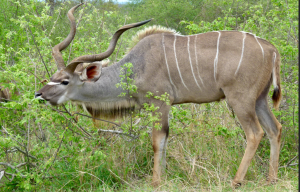
Plants, like honey bees, also remember.  When kudu antelope in southern Africa browse on trees, it was noted not only that the trees subsequent growth was heavily defended by unpalatable resins, like a nervous bee that has encountered a spider on a flower, but also that the kudu avoided browsing on adjacent trees in favor of those a little more distant.  It was as if the tree under attack had been communicating with its immediate neighbors and giving them time to mount a defense, a response which the tree can ‘remember’ for future such attacks.  

Indeed, root tips interact with bacteria (roots provide bacteria with sugars and in turn the bacteria protect the root from attack, buffer it from changes in salt concentrations, and stimulate growth,) and very much in the news of late, with fungi. Nearly ninety percent of all plant species form below-ground units with fungi in which sugars and minerals are exchanged in the form of chemical signals that travel through the fungus, carrying messages about attacking insects and animals, among other things.  “A street market” is the analogy Haskell uses to describe the soil.  

It it not difficult to substitute bee colony for forest in Haskell’s summary : “It is not just the tree that thinks but the forest. The common life has a mind. To claim that forests ‘think’ is not an anthropomorphism.  A forest’s thoughts emerge from a living network of relationships, not from a human-like brain. … A forest’s intelligence therefore emerges from many kinds of interlinked clusters of thought.  Nerves and brains are one part, but only one part, of the forest’s mind.”

Individual honey bees have a brain and a nervous system.  We talk often of their cognitive abilities – we know they can communicate, remember and change their behavior in response to the environment.   A bee hive is a veritable ‘street market.’  Indeed we take it for granted that honey bees can think.  In the November issue of ABJ, Tina Sebestyen writes that “Even subclinical levels of DWV in bees can cause impaired cognitive function …,” and Tom Seeley, describing the steps in the evolution of the buzz-run signal,  states that  “… (the bees) receive  the information it provides to improve their decision making.” (My italics.)  My guess is that most subscribers of ABJ read these descriptions without giving them a second thought (pun intended.) Indeed honey bees do have a cognitive process, even as Randy Oliver stresses in the December issue of ABJ, “their  tiny brains have limited capacity for deep analysis and thinking, much less human concepts of morality.” 

According to the American Psychological Association, the term cognition includes all forms of knowing and awareness, such as perceiving, conceiving, remembering, reasoning, judging, imagining, and problem solving, all of which the individual honey bee can do.  It is interesting that this definition  does not include the word conscious, in that the cognitive behaviors of a bee are innate rather than conscious.   Rather than thinking, in the human sense, honey bees respond to information innately in two distinct ways, as explained by Tom Seeley in Piping Hot Bees.  The first is via signals which have been refined by natural selection over evolutionary time so that one bee provides another with clear and accurate information. An example would be a bee using the waggle dance to indicate the location of a food source. 

The second, and more subtle,  is via cues, which provide information incidentally rather than intentionally. An example of a cue is how long it might take a nectar forager to find a receiver bee willing to offload her nectar, which in turn helps her decide whether or not she should perform a waggle dance. 

According to Jurgen Tautz, there are essentially three ways to obtain knowledge : instinctual knowledge, embedded in the genome, is inherited;  some learning is gained by experience, which can then be communicated. For example, a forager has an innate sense of color (preferring blue and yellow;) can learn from experience as she makes different trips to a floral source, and can then communicate what she has learned via the waggle dance. 

Or, slightly more complex, a honey bee does not have an innate knowledge of all possible flower forms; instead she has the ability to learn the visual and olfactory clues that make up a flower’s character.  A single experience with a particular odor can be learned, and subsequently used to discriminate against other odors with 90 per cent efficiency.  After two or three interactions, the efficiency becomes 100 per cent.   Shape and color take a little longer to learn, but together they form the basis of flower fidelity. 

So yes, honey bees have cognitive functions and can make decisions, not consciously but by processes honed over millions of years in a social context of cooperation and altruism, qualities that are as vital today as they have ever been as we search for  an ethos of solidarity with all organic life, as described so wonderfully by Keith Delaplane in his recent and final publication, Honey Bee Social Evolution.

If individual honey bees have a brain,  a nervous system and cognitive functions,  the question then arises, what are the equivalents in the superorganism?  More next month.
Pollination Writ Large

A friend and colleague was verbally assaulted recently when, at a social gathering,  she mentioned being a beekeeper. The accusation was that, by keeping honey bees, a non-native species, she was depriving other native pollinators from access to increasingly limited natural resources.

Honey bees, because they are ‘managed’, are easy targets for which a distinct minority of Americans (0.4 per cent of the population)  can be held responsible. Indeed there is a growing public movement against honey bees, possibly a swing of the pendulum after the media attention provoked by CCD.    It  seems this antagonism was prompted in part by a misinterpretation of the mission of the Xerces Society – that the society’s focus on native bees and pollinators is seen as an attack on honey bees, with the assumption that the latter impact the health and habitat of the former. An example is the website of a company called MeliBio, which promotes the new product called “Mellody, a plant based honey made without bees.”  The company claims that “the commercial production of honey is destroying the biodiversity of our planet and wiping out the native bee population.” Their solution to this blatantly fear-based accusation is a man-made mixture of fructose, glucose, water and glycolic acid, together with plant extracts and flavorings.  Incidentally, according to an article by James Naeger in the March issue of ABJ, which I strongly recommend, the cost of a 12 ounce jar of Mellody honey, including shipping, was $43.

Certainly, in a world of dwindling natural resources, competition between honey and feral bees is real.   It is also much disputed.   There is research which suggests that, under certain conditions, in deprived habitats in particular, honey bees may reduce available forage for native pollinators, with implications for the health and viability of the latter.  There is also compelling evidence to show that honey and native bees can thrive together, or that there is no observable impact of honey bees on other pollinators.  When asked this question directly at EAS in Ithaca in 2021, David Tarpy ’s response was that in a healthy environment, honey bees can co-exist with other pollinators to the mutual benefit of all.   For example, Ross Conrad, writing in the February issue of Bee Culture, points out that many of our native pollinators will forage in weather that otherwise keeps honey bees in their hives, and that the different lengths of the proboscises of pollinators (those of the honey bee are relatively short) causes them to work different flower sources.

Rather than eliminating or proscribing certain pollinators, the focus, as is so often the case,  needs to be on the environment. After all, as Becky Masterman and Bridget Mendel write in the same issue of Bee Culture, the nectar and pollen-bearing flowers that are not available to  honey bees are also missing for native bees. 

Pollinators, any and all of them, are simply the messengers.   For example, one consequence of the dominant use of pesticides and fossil fuels in the US is demonstrated by Masterman and Mendel  in a graph that plots US honey production v total honey imported (Bee Culture, Feb 2024.)  Between 1991 and 2021,  American honey production declined by 41 per cent.  Imported honey, by comparison rose by 520 per cent.  In 2021, the amount of imported honey was four times greater than that produced internally, compared to 1991 when imported honey was less then half of that produced locally. This dramatic change cannot be explained solely by honey bees,  who have been on this continent for some 400 years while the decline in native pollinators is a more recent phenomenon coinciding with the significant loss of a wide variety of insect pollinators across the globe. 

Similarly, Ron Phipps, in the March issue of American Bee Journal, describes how, between 2020 and 2022, US honey production declined by 15%, the number of colonies declined by 9 per cent, and productivity per hive decline from 54 to 47 lbs/hive.  A recent report in the American Honey Producers Association newsletter indicated that honey yields in the US have been declining since the 1990’s and found that, besides climate change, the decline was “connected with herbicide application and land use changes which result in fewer conservation programs which support pollinators.”   Not just honey bees, note, but all pollinators. 

To cite Ross Conrad again, “The real source of the decline in native pollinators is you and I.  Between our use of pesticides like neonicotinoids, and our addiction to fossil fuels … it is humankind that is the actual cause of the decline in native pollinators, not the honey bee.”     To put it bluntly, the human species is the most successful invasive species our planet has ever seen. Habitat loss is the prime driver of the loss of pollinator  species (cutting down trees to build a housing complex and then naming the streets after the trees that have disappeared, doesn’t cut it!)  and all pollinators are negatively affected by pesticide, herbicide and fungicide use, pollution, climate change, diseases and parasites.     

Instead of focusing on unsubstantiated competition between pollinators, our focus needs to be  on a healthy environmental policy together with  improved agricultural practices  which promote new and improved habitat that benefit all pollinators. A vital concept in this scenario is that of regenerative agriculture, whereby focusing first and foremost on the quality of the soil, a system’s capacity to support all life is increased.  And it was this panorama which inspired the term regenerative beekeeping

So what can we do at a local level?

First, it is important that our associations are seen to be inclusive rather than exclusive.  This can as simple as making certain that the names of our clubs, as well as the stated aims, include all bees, if not all pollinators.  Hence the “Punxsutawney Beekeepers Club” rather than “Punxsutawney Honey Bee Club” which aims to support and promote either all bees, or, even better, all pollinators.  And our members need to be acutely aware of the reasoning behind the language. After all, we refer to ourselves as ‘beekeepers’ rather than ‘honey bee keepers,’ with the implication that we have an interest in and commitment to bees (and pollination) in general. 

Secondly, we need to organize presentations to our members  about the diverse relationships between honey bees and other pollinators, as well as the vital importance of pollination per se. 

Thirdly we need to support, not least financially, those organizations that are working to improve habitat for all pollinators.  Some  are well represented in Pennsylvania, eg. The Bee and Butterfly Habitat Fund  www.beeandbutterflyfund.org and the Pollinator Stewardship Council @pollinatorstewardshipcouncil.   Both will provide speakers for meetings, if not in person then by Zoom, and the former offers free or greatly reduced seed mixes for landowners to plant high-quality pollinator habitat on 2 or more acres of land.    There are many other such organizations  that individual bee clubs can research for themselves.

And of course, in combination with their hives, we can encourage our members to build or establish suitable habitat for all bees, bats, moths and butterflies including, for example, allowing the leaves of Fall to remain in place over winter in that they create a superb environment for a range of native pollinators.  The argument that garden beds ‘look nice’ without the leaves puts appearance above habitat, as does the use of chemicals in gardens to green up the lawns and kill ‘weeds.’

Again, in the March issue of ABJ, and describing the potential competition evoked by holding the annual conference for the American Beekeeping Federation and the North American Honey Bee Expo at the same time of year, Tina Sebestyen cites a friend as responding that ‘the two conferences serve different types of beekeepers who are attending for different purposes, and both are needed.’  Whence goeth the beekeepers, so goeth the bees. 

.

Winter on the Susquehanna

With apologies to Henry Wadsworth Longfellow


By the leafless trees of poplar,
Willow, oak and black acacia,
At the entrance of her tree hive
Banked along the Susquehanna,
In the pleasant winter morning,
Wings unfolded, all a-tremor,
A bee (a worker) fanned and waited.

The air was rich with expectation,
All the earth was cold but joyous –
Yuletide, Kwanza, times of gifting,
Lights and colors, food and singing –
As before her, through the sunshine
Passed the girls on cleansing flights,
Released for now from winter cluster,
Gleaming, humming in the sunlight.
Our worker bee was as a lighthouse,
Sending rays of home direction
Should a sister, in her rapture
Need an aisle of home-bent incense.

A female sanctum ( drones are gone)
Feasting on their horde of honey –
Rich and strong, as gifts from Magi :
gold and frankincense and myrrh –
The sentience of every worker
And, hereafter, for their savior,
Their source of life, esprit de corps,
Their genetic core for ever after –
Their mother queen, but not their ruler,

She is waiting for that signal –
Longer days and shorter darkness –
When once again the annual cycle :
Rebirth, expansion, and partition
Precedes the stores of amber honey –
And in this way does life continue.

As go the bees so go their keepers –
Hunkered down in winter climes,
Embracing hours of purple vapors,
Precious sights of sun at sunset,
In the purple mists of evening,
In the regions of the home-wind,
Of the northwest winds of Erie,
Of the southeast isles of Schuylkill
In the woods of Allegheny
Tioga, Pinchot and Bendigo,
In the long and somber evenings
Afore the beauty of the day-dawn
We share the warmth of hearth and fire
We share the music and the stories,
As, with bees, we wait in clusters
For the birth of this new season.

You whose hearts are fresh and simple
Who have faith in love and nature
Who believe that in all ages
Every human heart is human,
That in every bee and keeper
There are longings, yearnings, strivings
For a life of shared fulfillment.
All will add to our enchantment
To the pleasure of the season
For the beauty of the day-dawn
For the pleasure of the morning –
The beginnings of a new day.