Jakob von Uexküll, born into an aristocratic family in Estonia in 1864, lost most of his wealth by expropriation during the Russian Revolution. Aged 53 and needing to support himself, he took a job as professor of biology at the University of Hamburg where he became particularly interested in how living beings perceive their surroundings. He developed the concept of Umwelt (literally, in German, environment) meaning not so much one’s blanket surroundings so much as those aspects that an animal can sense and experience. By contrast, the Umgebung would be those same surroundings as seen from the particular perspective of a human observer.
He describes, for example, the tick. “(T)his eyeless animal finds the way to her watchpoint [at the top of a tall blade of grass] with the help of only its skin’s general sensitivity to light. The approach of her prey becomes apparent to this blind and deaf bandit only through her sense of smell. The odor of butyric acid, which emanates from the sebaceous follicles of all mammals, works on the tick as a signal that causes her to abandon her post (on top of the blade of grass/bush) and fall blindly downward toward her prey. If she is fortunate enough to fall on something warm (which she perceives by means of an organ sensible to a precise temperature) then she has attained her prey, the warm-blooded animal, and thereafter needs only the help of her sense of touch to find the least hairy spot possible and embed herself up to her head in the cutaneous tissue of her prey. She can now slowly suck up a stream of warm blood.”
Thus the Umwelt of the tick is reduced to only three carriers of significance: the odor of butyric acid which emanates from the sebaceous mammalian follicles the temperature of 37 C. degrees corresponding to the blood of all mammals, and the hairiness of mammals.
In his most recent book, An Immense World : How Animal Senses Reveal the Hidden World Around Us,Ed Yong explains that “Every Umwelt is limited; it just doesn’t feel that way. Each one feels all encompassing to those who experience it. Our Umwelt is all we know and so we easily mistake it for all there is to know. This is an illusion shared by every creature.”
Take bats as another example, particularly pertinent after a recent encounter with a wounded bat which ‘screamed’ at me as I tried to capture and release it from our kitchen. Bats are one of only two animal groups that have perfected the skill of echolocation; the other is toothed whales such as dolphins, orcas and sperm whales.
Related to body size, the pulses emitted by bats are higher and louder than those from whales because high-pitched sounds quickly lose energy in air and thus must be strong enough to return audible echoes. To avoid deafening themselves, bats contracts the muscles in their ears in time with their calls, opening them in time to receive the echo. And because each echo is a snapshot in time bats must send out their pulses quickly to detect fast-moving insects – consider that some species of bats can catch as many as 1200 mosquitos an hour, which is more than their own body weight in a night. With their fast moving vocal muscles (the fastest in any known mammal) emitting as many as 200 pulses per second, and a nervous system so sensitive that, in total darkness, it can differentiate the time between the release of the pulse and receiving the echo by one millionth of a second, a bat is much more precise at detecting the position of an insect than we are.
The point is that it is impossible for humans to imagine using echolocation to navigate, to sense danger or to find our food, and thus impossible to imagine the reality of life as a bat. The closest I can come is the auto sonar system which warns of another vehicle coming too close, but even that is far from a bat’s world. The one that I rescued in the house wasn’t screaming at me, it wasn’t an aggressive display despite the surprisingly long teeth; the bat was sending out pulses to determine the Umwelt, in this case me, whereas I perceived it in terms of the Umgebung, or a mindset based on my human experiences. What seemed to me to be screaming in fear was the bat’s echolocation observed up close.
The issue of whether or not the bat had rabies is a different but very real matter.
Of all the species, humans alone (as best we know) possess the ability to appreciate the Umwelten of other sensory beings. But there is a critical difference between appreciating and experiencing – it is impossible for us to experience life as a honey bee. I doubt it is even truly imaginable to us. We don’t have the super sensitive antennae, the responses to pheromones, the close association with the super organism, the devotion to the survival of the species, a fragmented vision that includes infrared light, a navigational system based on the sun, the ability to work closely in the dark, the ability to fly or to create our own ambient temperature … Their Umwelt is so foreign to us as to be inaccessible, not matter how hard we try. Technology can recreate some of the specifics but to deny our own Umwelt and immerse ourselves fully in the sensate experience of the honey bee is inconceivable.
Rather than simply appreciate, we barrage different animals with stimuli and language of our own making, thereby forcing them to live in our own Umwelt and perpetuating an era of biological annihilation. We project our experiences and expectations, our Umgebung, on to the honey bee, not least by anthropomorphizing our observations and describing the behavior of a honey bee in human terms. It can be as obvious as Jerry Seinfeld’s Bee Movie, or illustrated comic segments in the journals, or, less obvious, using human emotions like happy, angry and content to describe bees or their colony. The use of smoke does not make bees think that the forest is on fire, the loss of a queen does not make the bees sad, worker bees do not have a maternal instinct towards the larvae they feed.
To avoid such anthropomorphism is not easy, yet a first step is to question the conditions we have forced on to honey bees as we attempt to manage them and instead to examine more closely, a la Tom Seeley, the criteria they develop for themselves. Instead of requiring them to live in our world, lets try being more sensitive to theirs. We will never fully do it but we are the only animal that can try. This availing of ourselves to perspectives beyond our own is a profound gift which comes with a heavy responsibility. “As the only species that can come close to understanding other Umwelten,” Yong urges, “but also the species most responsible for destroying those sensory realms, it falls on us to marshal our empathy and ingenuity to protect other creatures and their unique ways of experiencing our shared world.”
Incidentally, when Adolf Hitler was a demagogue and before he became a tyrant, Jakob von Uexküll held hopes that Nazism might bring an end to the expansion of communism and the democratization of German society, for which he had an aristocratic antipathy. By the autumn of 1933 he had rejected the way in which his work was being used to justify Nazi policy and ideology, describing racial discrimination against Jews as “the worst kind of barbarism,” and henceforward tried to avoid political issues, much as it often proved impossible. He died on the Isle of Capri as the Second World War came to an end, aged 79.
In 1949 Karl von Frisch and his wife, Margarete, visited the United States for two months as guests of a number of Ivy League schools, and it proved to be a journey of mutual admiration. Karl gave a number of talks, including his discovery of the language of the bee dances, and he was by all accounts a superb speaker. He in turn was impressed by the country’s abundance, especially in the light of the dark backdrop of post-war recovery in Austria and Germany, and the sense of progress and optimism exuded by the people. According to his biographer, Tania Munz, writing in The Dancing Bees, Karl saw a washing machine for the first time, and “a machine that could be filled in the evening with ground coffee and water and then set to begin brewing early in the morning. When the coffee finished dripping into the carafe the device doubled as an alarm clock and woke its lucky owners to the smell of fresh coffee.”
Certainly there was a prevailing sense in America that scientific advances had not only won the war against the Axis powers and Japan but were improving exponentially the daily lives of its citizens. With few exceptions, that optimism suppressed any thought of the risks and costs that came with such advances, and when concerns were expressed, many industries mobilized aggressively, and often dishonestly, to counter them.
I offer three stories as evidence, the first of which is that of DDT. Developed in 1939 and initially used during World War II to clear malaria-causing insects from South Pacific islands for American soldiers, DDT was effective in that it killed hundreds of different types of insects rather than targeting only one or two. In 1948, the Nobel Prize in Physiology or Medicine was awarded to a Swiss scientist, Paul Müller, “for his discovery of the high efficiency of DDT as a contact poison against several arthropods.”
Meanwhile Rachel Carson, a Pennsylvania native, well educated and a former marine biologist with the U.S. Fish and Wildlife Service, received a letter from a friend who was concerned about the numbers of birds dying on Cape Cod as a result of DDT spraying. When her investigative articles were rejected by a number of magazines she spent four years writing the book that would become Silent Spring, detailing the process by which DDT entered the food chain and led to cancer and genetic damage. She ended with an appeal for further study before making any decisions with potential environmental impacts.
The book was first published 50 years ago this month and serialized in The New Yorker in 1962, initiating calls from readers for governmental action. In response the pesticide manufacturing companies devoted three million dollars (in today’s money) to discredit Carson, an attack spearhead by E. Bruce Harrison, who will feature in next month’s column. An attempt to sue the publisher to stop publication of the book failed. One executive for the American Cyanamid Company complained that “If man were to faithfully follow the teachings of Miss Carson, we would return to the Dark Ages, and the insects and diseases and vermin would once again inherit the earth.” Monsanto produced a parody of Silent Spring titled “A Desolate Year,” claiming that disease and famine would run amok in a world where pesticides had been banned. In a 1963 editorial entitled “The Myth of the ‘Pesticide Menace’” published in The Saturday Evening Post, a former science editor, Edwin Diamond, raised rhetorical questions such as why “an industrialist or a scientist…would poison our food and water — the same food and water he himself eats and drinks?”
Many of the attacks, we now know, came from biostitutes – scientists who were rewarded handsomely by the chemical companies to write occasional articles casting doubt on Rachel herself and her work. Her integrity and her sanity were questioned; she was called ‘radical, unscientific, disloyal, and hysterical.’ In Time, for example, her argument was called ‘unfair, one-sided, and hysterically overemphatic,’ and she was claimed to have a ‘mystical attachment to the balance of nature.’ Some even questioned why she, an unmarried woman, would be concerned about genetics! The campaign against the book had an unintended effect: sales had reached one million by the time she died.
Eminent scientists rose to her defense and President Kennedy ordered the President’s Science Advisory Committee to examine the issue, leading to Carson’s eventual vindication. In 1980, President Carter posthumously awarded her the Presidential Medal of Freedom.
Sadly, in 1961 she had been diagnosed with malignant breast cancer which had metastasized and which she kept a secret, knowing that the companies would use it against her. Rachel died in 1964 without seeing the fruits of her actions. In 1970, the Environmental Protection Agency was formed and two years later DDT was banned. And the dialogue had shifted; the question was no longer if pesticides were dangerous, but rather, which ones.
In Silent Spring Rachel had described how DDT remained in the environment even after rainfall, a claim confirmed by a PSU research team that confirmed the presence of DDT in our soils almost 40 years after it had been banned. In 2007 samples collected from honey bee colonies affected by CCD showed 87 different pesticides found in the wax. The average was 9 pesticides per sample and they ranged across the chemical spectrum of every category and type. Last month at EAS In Ithaca, NY, Scott McArt mentioned that 17 insecticides and 10 pesticides were found in the apple blossoms of New York orchards, 20 in California almond orchards, and 35 in New England’s blueberry fields. And, he added, there is a synergy between fungicides and pesticides – the former interfere with the detoxification process as enzymes in the bee gut break down the toxins.
Rachel Carson’s research and her fears were well founded.
Second story. In 2011 a report on CBS confirmed public suspicions that for fifty years tobacco companies had known that cigarette smoke contained cancer-causing particles. This places the industry’s initial awareness at the same time as Rachel was writing Silent Spring.
The CBS report focused on a study published in the September 27, 2011, issue ofNicotine & Tobacco Research, in which UCLA researchers had examined dozens of internal tobacco industry documents made public after a 1998 court case. “They knew that the cigarette smoke was radioactive (as early as 1959) and that it could potentially result in cancer, and they deliberately kept that information under wraps,” wrote the study’s author Dr. Hrayr S. Karagueuzian, professor of cardiology at UCLA’s cardiovascular research laboratory. “We show here that the industry used misleading statements to obfuscate the hazard of ionizing alpha particles to the lungs of smokers and, more importantly, banned any and all publication on tobacco smoke radioactivity.”
The radioactive particle in question – polonium-210 – is found in all commercially available cigarettes and inhaled directly into a smoker’s lungs. An independent study by the UCLA researchers found the radioactive particles could cause between 120 and 140 deaths for every 1,000 smokers over a 25-year period. “We used to think that only the chemicals in the cigarettes were causing lung cancer,” Karagueuzian said, but the research suggested these radioactive particles were targeting “hot spots” in the lungs to cause cancer.
Their study outlined how the tobacco industry was also concerned by polonium-210 and went so far as to study the potential lung damage from radiation exposure.The industry could have removed this radiation through techniques discovered decades previously but chose not to, on the grounds partly that they would be “costly and dangerous for the environment,” but mainly, according to Karagueuzian, that the tobacco industry was concerned such techniques would make the absorption of nicotine by the brain more difficult, depriving smokers of the addictive nicotine
Indeed David Sutton, a spokesperson for Philip Morris, confirmed onABC News that the public health community had known about this particle for some time, justifying it on the grounds that “… polonium 210 is a naturally occurring element found in the air, soil, and water and therefore can be found in plants, including tobacco.” The FDA was not convinced – the resultant Family Smoking Prevention and Tobacco Control Act gave it the power to remove harmful substances, with the exception of nicotine, from tobacco.
It’s an old lawyer’s mantra that when losing the argument, attack the person. When E. Bruce Harrison labeled Rachel Carson as ‘radical, unscientific, disloyal, and hysterical,’ what was he saying? That it was radical to put the health and well-being of the soil, water, air and all life ahead of a company’s bottom line? That her methods were unscientific because they conflicted with the results of company-employed scientists who were being well paid to promote the welfare of the industry? That she was disloyal because she was incorruptible and refused to bend to industrial pressure? And she was hysterical because she was a woman!
It is comforting to know that the ultimate victory was for science and public health in the face of corporate profits, but the damage that was done in the meantime, both to the environment and to individuals world wide, is incalculable. Nor, as the tobacco story shows, did the chemical industry learn any kind of ethical lesson from this experience.
The third, most recent, and possibly the most outrageous, of the three stories has long term consequences for us as well as for the bees.
Thirty years ago, E Bruce Harrison, widely acknowledged as the father of environmental Public Relations, addressed a room full of business leaders in Washington, DC. At stake was a large contract with the Global Climate Coalition (GCC) which represented the oil, coal, auto, utilities, steel and rail industries; the pitch was for a communications partner who could persuade the public that global warming, as it was then labeled, was not a significant issue, even though these respective industries had done enough of their homework to know that climate change was real and escalating.
The GCC had been formed in 1989 as a forum for members to exchange information and to lobby policy makers against actions to limit fossil fuel emissions. Initially it saw little cause for alarm – President George HW Bush was a former oilman and his message on climate was the the same as that of the GCC : there would be no mandatory fossil fuel reductions.
But that changed in 1992. First, in June, at the Earth Summit in Rio de Janeiro, the international community created a framework for climate action. Secondly, in November, the presidential election brought environmentalist Al Gore to the White House as vice-president. Clearly the new administration would attempt to regulate fossil fuels and the Coalition, recognizing that it needed strategic PR communications, put out a bid for a public relations contractor.
The details of that 1992 meeting are revealed in a three part documentary titled Big Oil v the World. Drawing on thousands or recently revealed documents, it was first shown on Front Line on April 22nd, 2022 – Earth Day
Sixty years earlier E. Bruce Harrison had spearheaded the attack on Rachel Carson’s Silent Spring and his PR company, founded in 1973, had discredited research on the toxicity of pesticides on behalf of the chemical industry and on the effects of smoking on human health on behalf of the tobacco companies.
Harrison reminded his new team that he had taken the lead in opposing tougher emissions standards for car makers by reframing the issue. The same tactics would help beat climate regulation – persuade the public that the scientific facts were not settled and that policy makers needed to consider how action on climate change would, in the GCC’s view, negatively impact American jobs, trade and prices. The strategy of fear-based misinformation was implemented through an extensive media campaign, everything from placing quotes and pitching opinion pieces to direct contacts with journalists. “A lot of reporters were assigned to write stories,” one of the team members later explained, “and they were struggling with the complexity of the issue. So I would write backgrounders so reporters could read them and get up to speed.” And the press provided a willing platform. One of those assigned to write ‘counter perspectives that were not in the mainstream’ later said, “Journalists were actually actively looking for the contrarians. It was really feeding an appetite that was already there.”
Within a year Harrison’s firm claimed to have secured more than 500 specific mentions in the media. The ‘scientific uncertainty’ caused some in Congress to pause on advocating new initiatives, and one of the environmental activists later wrote, “What the geniuses of the PR firms who work for these big fossil fuel companies know is that truth has nothing to do with who wins the argument. If you say something enough times, people will begin to believe it.”
In 1995, Harrison wrote that the “GCC has successfully turned the tide on press coverage of global climate change science, effectively countering the eco-catastrophe message and asserting the lack of scientific consensus on global warming.” Thus was laid the groundwork for the biggest campaign to date – opposing international efforts at Kyoto, Japan, in 1997, to negotiate emissions reductions. There was a consensus among scientists that human-caused warming was now detectable but 44% of US respondents to a Gallup poll believed scientists were divided. With the political arena poisoned by public antipathy, Congress never implemented the Kyoto Accords. It was a major victory for the industry coalition.
In the same year Harrison sold his firm and the GCC began to disintegrate as some members grew uncomfortable with its hard line. But the tactics, the playbook, and the message of doubt were now embedded and would outlive their creators. Three decades on, the consequences are all around us. According to Al Gore “It is the moral equivalent of a war crime. It is, in many ways, the most serious crime of the post-World War Two era, anywhere in the world.”
How different would our world be today if we had addressed the issue openly and impartially at the outset?
If there is one statement that most typifies the opposing horns of this dilemma it is that from an executive of the American Cyanamid Company : “If man were to faithfully follow the teachings of Miss Carson, we would return to the Dark Ages, and the insects and diseases and vermin would once again inherit the earth.” The implication is that Rachel Carson’s moderate, well-researched appeal for further study before making any decisions with potential environmental impacts was radical, irresponsible and doom-laden. Her suggestion that exercising reasonable caution with chemicals, that putting first the health and well-being of humanity and of our natural resources, would reinstate ‘the Dark Ages,’ is insulting to all those who have been damaged by their indiscriminate use. Yet this is the power of the profit motive, this is the impact of short term quarterly performances to satisfy shareholder expectations in the absence of long term rewards. The indifference of many to our fellow creatures on this earth, human and otherwise, as well as what we will do for money, is shameful, even knowing that the truth will out eventually. As Dave Goulson writes in Silent Earth, with three million tons of pesticides going into the global environment every year, some of which are thousands of times more toxic to insects than any that existed in 1962, “(Rachel Carson) would weep to see how much worse it has become.”
Nor do we often see abusive corporations and industries held accountable, even as there are exceptions such as judicial rulings against some of the tobacco giants (a large sum levied against the companies) including Juul e-cigarettes last month, and glyphosate manufacturers (large sums in favor of individual law suits.) The amounts
might have been reduced on appeal but they were not overturned.
These contemptuous behaviors are significant for beekeepers, not only because of their impact on our charges but also because a honey bee community offers a stark contrast of environmentally responsible behavior. Everything in the colony is motivated by the survival of the super-organism in as strong and as healthy a form as possible, and they utilize the surrounding resources in ways that not only facilitates healthy reproduction but in such a manner that not so much as a leaf is harmed.
And what of the two men featured in the opening paragraphs of these two essays? Karl von Frisch was professor of Zoology at the University of Munich when Hitler came to power in 1933. In an effort to purge government of Jews ‘and other undesirables’, and based on an abuse of science, the Nazi government required all civil servants to provide proof of their Aryan descent. In 1940, and after months of searching, the Nazi office for genealogical research found that his maternal grandmother had been of Jewish descent, even though her parents had converted to Catholicism three years before she was born, presumably to secure a better future for their family in a society that was primarily Christian. Von Frisch, a practicing Christian all of his life, was a declared ‘a Quarter Jew’ because Nazi ‘science’ was based exclusively on blood, no matter how distant, rather than on cultural heritage or religious belief, no matter how genuine.
The personal threats and trials he faced during the Second World War make for depressing reading, and he continued his research only because he convinced his connections in the Nazi hierarchy that his research on honey bees was vital for the agricultural effort needed to support the front line troops. When he visited the US three years after the end of the war, he was welcomed by most as one of the ‘good’ Germans (again, a term from the times,) one whose life had been devoted to science in its most pure and thorough form. As he said in one of his Ivy League lectures, “A bee’s life is like magic well : the more you draw from it, the more it fills with water.”
And what of Bruce Harrison, who died last year aged 88 and who’s life was devoted to denying scientific authenticity? In 2003 a sub-genus of mosquito was named Bruceharrisonius. Anyone who has been locked in a small dark room with a mosquito knows just how irritating such a small critter can be.
Writing in Astrophysics for People in a Hurry, Neil deGrasse Tyson explains that sodium is a poisonous, reactive metal that can be cut with a butter knife, and chlorine is a smelly, deadly gas, yet when added together they make sodium chloride, a harmless, biologically essential compound better known as table salt. Hydrogen, he argues, is an explosive gas while oxygen promotes violent combustion, yet the two combined make liquid water which puts out fires.
We know that bees wax absorbs chemicals from the air – research at Penn State a decade ago year identified 78 different chemicals in bee hives of which 46 were pesticides, including DDT. The sources vary from industrial pollution, consumer goods like automobiles, agricultural chemicals and genetically engineered organisms, to chemicals that some beekeepers use to control mites.
When chemicals are evaluated for toxicity by regulatory agencies they are studied in isolation and only their lethal rather than sub-lethal effects are evaluated. When the breakdown products of chemicals interact they can be more toxic and more long lasting than the original chemical itself – sometimes thousands of times more so, and that is no exaggeration. This is the power of synergy : a cocktail of small doses of several chemicals, each acting on its own, can combine to have significant biological effects that none of the chemicals would have by itself.
Waiting in Bee Culture almost ten years ago, Ross Conrad pointed out that realistically few chemical combinations are going to be thoroughly tested for safety either to humans or insects before being marketed. Consider that to test the synergistic actions of just 1 000 toxic chemicals in combinations of five chemicals each would involve testing over eight trillion chemicals and, at one million per year, would take 8 000 years to complete.
Similarly, according to BBC Radio 4’s Inside Science program earlier this year, an analysis of 90 studies found that agricultural pesticides sold ready-mixed into ‘cocktails’ can kill twice as many bees. “Exposure to multiple pesticides is the norm, not the exception,” said Dr Harry Siviter, from the University of Texas at Austin, who led the study. “If you have a honeybee colony exposed to one pesticide that kills 10% of the bees and another pesticide that kills another 10%, you would expect, if those effects were additive, for 20% of the bees to be killed,” he said. But a synergistic effect can produce 30-40% mortality.”
Just how many chemicals are we talking about? In his most recent book, Silent Earth; Averting the Insect Apocalypse, published in September, David Goulson states that each year we manufacture 144 000 different chemicals weighing some 30 million tons. Add to this the literally hundreds of new chemicals marketed every year and honey bees clearly have the potential to come into contact with a potpourri of man-made chemicals every day. But it’s not only quantity that matters; it is also quality, and in particular toxicity.
David Goulson shows that in 1945 DDT was applied at a rate of 4500 grams per acre, whereas the rate for neonicotinoids is 25 grams per acre. But because the latter are about 7 000 times more toxic to bees than the former, whereas 1 gram of DDT could kill about 37 000 honey bees, 10 grams of neonicotinoids can kill 250 millionbees. And let’s not forget that all insects are killed, most of whom are beneficial to agriculture.
And it is not only honey bees; humans too, come into contact with those chemicals daily and we have little idea as to the impact this exposure has on the human life form either short or long term. An example was included in a NPR program, One A, on July 26th of this year, about declining birth rates. In 1960, the sperm count in males was 90 million sperm per milliliter. Last year it was 47 million, ie. a little less than half, and it is rapidly reaching 40 million at which point conception becomes difficult. The main reason, besides life style and obesity, is exposure to chemicals, which the body confuses with hormones. Most alarming is that these chemicals are present in the womb and can impact the following three generations!
How on earth did this happen? How did we create a world so toxic that it’s natural capacity for self-renewal has been exceeded?
Most immediate, as we prepare our colonies for winter, is a study from New Zealand which examined how different food sources have differing influences on the digestive tracts of bees. The worst was sugar syrup, made even more so if yeast or malt was added. So what is the synergy when we add pollen patties that contain yeast or malt at the same time as feeding sugar syrup?
I would suggest that we simply don’t know, and fear that we are playing a honey bee version of Russian Roulette.
In the early 1930’s the recently widowed Louisa Durrell took her family of five from India via England to Corfu, the latter a Greek island in the Adriatic Sea. Two of those siblings, Gerald and Larry, became prolific writers, better known in Europe than in the US, (we read My Family and Other Animals in High School much as Americans read Catcher in the Rye) although the recent Masterpiece Theatre series, The Durrell’s in Corfu, is making a dent in that omission. As best I recall Jerry never wrote about honey bees directly, although we can look at another of his stories to guess what he might have written …
“One day I found two queens in a hive. I was enraptured by this discovery even as we now know it is not uncommon, and I decided to smuggle one of the two into the house and up to my bedroom until I could introduce her into a queenless colony. With infinite care I maneuvered her into a matchbox, added some worker bees for company, and then hurried to the villa. It was rather unfortunate that just as I entered the door lunch should be served, so I placed the matchbox carefully on the mantlepiece in the drawing-room, slightly ajar so the bees could get some air, made my way to the dining room and joined the family for the meal. Dawdling over my food, feeding Roger the dog surreptitiously under the table and listening to the family arguing, I completely forgot about my prisoners. At last, elder brother Larry, having finished, fetched his cigarettes from the drawing-room, and lying back in his chair he put one in his mouth and picked up the matchbox he had brought. Oblivious to my impending doom I watched him interestedly as, still talking glibly, he opened the matchbox.
I maintain to this day that the bees meant no harm. After all, they are defensive rather than aggressive but they were agitated and a trifle annoyed at being shut up in a matchbox and so they seized the first opportunity to escape. They climbed out of the box with great rapidity on to the back Larry’s hand. Not quite certain what to do next, the queen paused at the same time as Larry glanced down to see what it was, and from that moment things got increasingly confused.
Larry uttered a roar of fright that made Lugaretzia, in the kitchen, drop a plate and brought Roger out from beneath the table, barking wildly. With a flick of his hand Larry sent the unfortunate queen flying down the table, and she landed halfway between sister Margo and brother Leslie. Thoroughly enraged at this undignified treatment, the queen flew towards Leslie who leaped to his feet and flicked out desperately with his napkin, sending the queen towards Margo, who let out a scream that any railway engine would have been proud to produce. Mother, completely bewildered by this sudden and rapid change from peace to chaos, put on her glasses and peered down the table to see what was causing the pandemonium at the same time as Margo, in a vain attempt to stop the queen’s advance, hurled a glass of water at it. The shower missed Her Highness completely but successfully drenched mother who, not being able to stand cold water, promptly lost her breath and sat gasping at the end of the table, unable even to protest.
The queen had sought cover under Leslie’s plate, the attendants were trying to get out of the windows, and Roger the dog, mystified by all the panic but determined to do his share, ran round and round the room, barking hysterically.
“It’s that bloody boy again,” bellowed Larry, referring to me.
“All we need is a book,” roared Leslie. “Don’t panic. Hit it with a book.”
“What on earth’s the matter with you all?” Mother kept imploring, mopping her glasses.
“It’s that bloody boy. He’ll kill the lot of us.Look at the table – knee-deep in bees.”
“Stop screeching and get a book, for God’s sake. You’re worse than the dog. Shut up, Roger.”
“By the grace of God, I wasn’t bitten”
“Actually,” I said hesitantly, “bees don’t bite, they sting.”
“Oh, shut up and give me a book.”
“But just how did the bees get on the table, dear?”
“That bloody boy. Every matchbox in the house is a death trap.”
“Hit it with your knife … your knife. Go on, hit it.”
Since no one had bothered to explain things to him, Roger was under the mistaken impression that the family was being attacked, and that it was his duty to defend us. As Lugaretzia, in the kitchen, was the only stranger among us, he came to the logical conclusion that she must be the responsible party, so he bit her in the ankle. That did not exactly help matters.
By the time order had been restored, and after an impassioned plea on my part, backed up by Mother, Leslie’s suggestion that the whole lot be slaughtered was squashed. While the family, still simmering with rage and fright, retired to the drawing-room, I found the queen and returned her to the matchbox, accompanied by the attendants who were beating themselves against the glass window panes.
Roger and I spent the afternoon outside, for I felt it would be prudent to allow the family to have a siesta before seeing them again.
The results of this incident were numerous. Larry developed a phobia about matchboxes and opened them with the utmost caution, a handkerchief wrapped around his hand. Lugaretzia limped around the house for weeks after the bite had healed, her ankle enveloped in yards of bandage, which she took off every morning as she brought in the tea to show us how the scars were getting on.
But from my point of view, the worst repercussion was that Mother decided I was running wild again, and that it was high time I received a little more education.
“A man found the cocoon of a butterfly. One day a small opening appeared. He sat and watched the butterfly for several hours as it struggled to force its body through that little hole. Then it seemed to stop making any progress. It appeared as if it had gotten as far as it could and could go no further. So the man decided to help the butterfly. He took a pair of scissors and snipped off the remaining bit of the cocoon. The butterfly then emerged easily. But it had a swollen body and small shriveled wings.
“The man continued to watch the butterfly because he expected that, at any moment, the wings would enlarge and expand to be able to support the body, which would contract in time. Neither happened! In fact, the butterfly spent the rest of its life crawling around with a swollen body and shriveled wings. It never was able to fly.
“What the man in his kindness and haste did not understand was that the restricting cocoon and the struggle required for the butterfly to get through the tiny opening were nature’s way of forcing fluid from the body of the butterfly into its wings so that it would be ready for flight once it achieved its freedom from the cocoon.
“Sometimes struggles are exactly what we need in our life. If we were allowed to go through our life without any obstacles, it would cripple us. We would not be as strong as we could have been. And we could never fly. So have a nice day and struggle a little.”
The author of the above is unknown, although a version appears in Niklos Kazantzkis’ Zorba the Greek, in which a man uses his warm breath to hasten the emergence of a butterfly whose wings never unfurl and which dies in his hand.
The physician, psychologist, author, inventor and philosopher, Edward de Bono, also the originator of the term lateral thinking and proponent of teaching thinking as a subject in schools, devised a number of non-competitive games to demonstrate the critical thought process. One of them involves three bottles, four knives and a glass of water. The task is to create a platform above the bottles strong enough to hold the glass of water, in which no part of any knife touches the ground, each bottle is further than a knife’s length from any other bottle, and the water is not directly above any of the bottles.
I would pose this challenge to my graduate group dynamics classes, inviting them to solve it as a group. All kinds of learning styles were in evidence, all kinds of group interactions, but the key was that, after a while and as tension mounted, I would offer a clue to the solution. Some, out of frustration, would say yes; others would decline and want to persevere. I went with the latter.
Finally, once a solution was reached, the question became, did the group members wish they had accepted the offer of help? Every time, and without exception, the response was an unanimous ‘no.’ There was a satisfaction that came with having struggled successfully, with having wrestled their way to a solution, and with having done it as a group.
When I first began this fascinating hobby of beekeeping, and partly out of ignorance, partly out of over-enthusiasm, I threw myself into the deep end, reading demanding literature and going to conferences not only locally but, for example, Apimondia in Montpellier, France. There was much that I did not understand but the learning curve was rapid and rewarding as each part of the puzzle found a place in the larger picture. Even today, looking back at my notes from Apimondia in 2009, there is invariably something significant which I did not fully comprehend at the time.
Frequently new beekeepers will lament that they do not understand beekeeping terminology and concepts, that the information can be contradictory, that some of the topics at meetings are above their heads. For me this is not a bad thing, nor should we talk down to them. It’s part of the struggle from which will come meaningful understanding, a real sense of satisfaction and perhaps even ownership of the learning process. Ultimately the question is, what represents a meaningful challenge, how do we motivate those who accept the challenge, and how do we acknowledge them once they are successful, if indeed external validation is necessary?
As a teacher I was creative and energetic; what I lacked at any time in my 42 year career was a mentor who would encourage me to set boundaries, help me set priorities and better manage my time. The result was burn-out. I frequently wondered why my job cycle was seven years and now the reason is more clear. Having not been able to name it made it impossible for me to recognize it in others and mentor them appropriately.
As a school administrator I believed that one of the gifts we can give students is to let them rub shoulders with talented people, whether as peers, teachers or guides, even as I never had such a person in my professional life. I knew something was missing but was never able to identify it and, in effect, travelled extensively looking for it.
Realizing this deficit in retrospect reinforces my belief that beekeepers of all ages and experiences benefit immensely from a good mentor, especially if the latter knows when to stand back and when to intervene, when to stay close and when to let go.
For the caterpillar, the end of the larval stage may well look like a death rather than a gateway to life reinvented, provided that well-meaning onlookers do not try to hasten the natural process. For us the question might be, what is that precious substance that, when encouraged to move in the right direction, makes us ready for flight?
The Man once invited the Lion to be his guest, according to John Newman’s modern fable, and received him with princely hospitality. “The Lion had the run of a magnificent palace, in which there were many things to admire. Various subjects were represented in the fine specimens of sculpture and painting by the great masters, but the most prominent was of the Lion himself. As the Man led him from one apartment to another, he pointed out the homage which these art works paid to the importance of the Lion tribe.
“There was however one remarkable feature in all of them, to which the Man, out of politeness, said nothing. On one point all of the paintings and sculptures agreed : the man was always victorious and the lion was always overcome.
“When the Lion had finished the tour, the Man asked how what he thought of the splendors he had seen. The Lion did full justice to the riches and the wonder, but, he added, “Lions would have fared better had they been the artists.”
Historians paint on a broad canvas, ranging from religious and civil wars, rebirths and reforms, laws and constitutions, rebellions and revolutions, parliaments and monarchies, liberalism and autocracy, to heroes and villains, steam and nuclear power, and local and global conflicts. Yet none of these would be recorded if honey bees held the brush, even as research out of the Universities of Oxford and London is recording mounting evidence that insects can experience a remarkable range of feelings. They can literally buzz with delight at pleasant surprises or sink into depression when bad things happen that are out of their control. They can be optimistic, cynical or frightened, and respond to pain just as any mammal does.
The focus of our hypothetical six legged archivist would most likely be exclusively on the environment. The first canvas might have depicted man’s controlled use of fire, perhaps 400 000 years ago, and the revolution in agriculture 10 000 years ago, in that both had an immediate effect on the daily lives of feral colonies. (As a matter of perspective, the first of the above represents less than 1% of the total existence of honey bees in their current form.) The first depiction of modern times might reflect the mechanization of production using coal, water and steam, the despoilation of pristine areas of the countryside, and the abandonment of rural hives as cottagers moved to the new factories in the burgeoning cities.
An observant bee might even have recorded how, in the soot-soiled cities of the industrial English midlands, peppered moths evolved a tone darker in color and thus blended in better with the newly blackened tree trunks. And even though lighter colored moths prevailed once the air grew more clear and lighter, our artist might have expressed concern that the basic tenets of industrial capitalism – unending progress and growth – were at odds with a balanced, robust, vigorous environment. Invariably this is more evident to the victims than to the perpetrators, who resort to subterfuge to continue their pursuit of riches, not least by defining economic value in terms of private property and private gain rather than in terms of communal health, environmental resilience and collective well being.
The Achilles heel of modern economies is the exponential nature of modern growth. Economists consider a healthy growth rate to be three per cent, which provides a doubling in output every 23 years. That’s absurd. Imagine the economy of the US or the UK with 16 times the output in 100 years time, or 5000 times in 300 years. That might be why, as Kate Raworth points out in Doughnut Economics, the one diagram in economic theory that is difficult to find is the one that depicts the long-term path of GDP growth. It also describes the limitations of the term ‘sustainability’ – how can we argue in favor of say, sustaining our current agricultural system knowing that it is leading to global desolation?
The second industrial revolution used electric power to create mass production, the third used electronics and information technology to automate production and now a digital revolution is fusing technologies to blur the lines between the physical, digital, and biological spheres at a speed that is without historical precedent. I for one cannot keep up with the constant changes in digital technology yet I see enough to realize that, scientific marvel as it is, the speed of its growth has outpaced the necessary educational, moral and civic sensibilities to make it a solely admirable force in our civilization. Convenient as they may be, I choose not to place these hi-tech intruders into the homes of the bees; rather both they and I practice voluntary simplicity.
To cite David Goulson in Silent Earth : Averting the Insect Apocalypse, “Do we always have to look for a technical solution to the problems we create, when a simple, natural solution is staring us in the face? We have wonderfully efficient pollinators already. Let’s look after them rather than plan for their demise.”
Comparing our current culture and society with the pre-industrial world, our bee chronicler might observe that apparently the soul has no place in a technocratic society. The communal has been shattered. The concept of the common good has been decimated. Greed is celebrated. The individual is god. The celluloid image is reality. Artistic and intellectual forces are belittled. The basest lusts are celebrated as forms of identity and self-expression, and progress is defined exclusively in terms of material advancement. As Nick Offerman writes in Where the Deer and the Antelope Play, “… (I)n modern-day America we have been encouraged more and more to be the opposite of neighborly, because there is arguably no demonstrable financial benefit to acting warmly towards our fellow humans. We have been taught it is a ‘dog-eat-dog world’ and that ‘time is money,’ so who cares about the neighbors, and anybody else.”
Honey bees put their survival first; everything is dedicated towards the continuation of the colony. When confronted with an impending challenge to their survival, such as winter, they invest significant time and effort in preparing for and withstanding it. As do all other species except human kind. We have “’a determined commitment to irrelevance in the face of global catastrophe,” wrote George Monbiot in The Guardian on October 30th. When faced with a chronic threat we seem to devise ingenious, if not trivial, ways of convincing ourselves that it is not serious, that it may not even be happening. And if we do act it is in ways that are comically ill-matched to the scale of our predicament, such as reimagining mechanical drones to pollinate fruit trees in the absence of pollinators, rather than addressing the fundamental issue as to why there is an absence of natural pollinators in the first place. That is like believing that reducing the use of plastic straws and plastic cups will somehow solve our environmental problems, as opposed to distracting us from the real issues involved in the manufacture, usage and disposal of plastics.
The bees, by comparison, take what they need and use all that they take in such a way that not only is no harm done but even the most delicate of flowers is cherished and the quality of the environment is enhanced. This in part is what Jonas Salk had in mind when he wrote, “Our greatest responsibility is to be good ancestors.”
Our bee analyst would surely have noticed the alliance between these industrial mores and the agricultural revolution of the twentieth century, partly in the formation of farming conglomerates with their agri-business (as opposed to agri-culture) monopolies, and partly with the industrialized production of insecticides, herbicides and fungicides that are ruthless in their application and mostly non-selective in their impact. We use the term ‘decline’ when referring to insects; our bee might use the term ‘genocide,’ as does David Gouland.
A honey bee colony was long envisaged as a monarchy, first ruled by a king and, after the seventeenth century, by a queen. Instead it is a communal organism in which, rather than having leaders, every individual responds to the immediate needs of their environment and their society in the interests of long term survival. Our bee historian might have looked on in admiration as, in the last century, the so-called liberal democracies confronted communist, fascist and nationalist ideologies. Today that admiration might be replaced by concern as not only in autocratic countries like Russia, China, Belarus, Hungary, Venezuela, Syria, Angola and Afghanistan, but also in the western democracies, extreme right wing forces are using cyber media to make a comeback, in the same way Hitler used the new mediums of the microphone and the radio to recover from the disaster of the failed Munich putsch in 1923. But this time there is no pretense at an ideology; it is about personal power and fortune, values that are totally foreign to our bee historian. “Have you learned nothing?” she might write? “We evolved our system over some fifty million years, yet you think you are superior after less than three thousand?”
Can the bees offer a solution? A worker honey bee, on her twelfth day as a pupa, has to break out of her comfort zone by chewing through the wax that has kept her isolated and protected. Without breaking through she cannot survive. We too have to break through, in our case the insistent babble and trivialization of public life. Successful advances came from those who refused to consent. Martin Luther, Leonardo, Galileo, Gandhi, Martin Luther King Jr, Picasso and Nelson Mandela knew it. The environmental protestors who demand systematic change, not least Greta Thunberg, know it. It is primarily the younger generation who are refusing to consent. Perhaps our bee blogger will conclude that the most important lesson is that our survival, both hers and ours, depends on disobedience to a capitalistic model that places primacy on wealth and power, neither of which will regenerate an environment which is already well beyond the point of sustainability. After all, she might ask, what is the use of hoarding money, or storing huge combs of honey, if there is no longer an environment that allows any of us, bees and mankind, to survive?
In 2018, at a meeting around the dinner table of Wendell Berry, the novelist, poet, essayist, environmental activist, cultural critic and farmer based in Kentucky, the host urged Nick Offerman, the author, woodworker and actor (think Ron Swanson in Parks and Recreation) to explore the different concepts of conservation as expressed first by John Muir in the C19th, and then by Aldo Leopold in the early C20th. The result was a series of journeys not only across much of the US but also to the Lake District in England, and the publication late last year of Where the Deer and Antelope Play : The Pastoral Observations of One Ignorant American Who Loves to Walk Outside.
I was familiar with the names of both men but was shy on their backgrounds, so a little background reading was necessary.
John Muir, born in Scotland in 1838, moved to the US when he was eleven years old where, when allowed a short break from a harsh work schedule in the fields, he and his brother would explore the rich Wisconsin countryside. When he was 29, and not unlike E.O.Wilson seventy years later, he suffered a severe eye injury; although he was to recover his sight, he determined to focus his vision on the natural world. He had an unquenchable wanderlust, at one time walking one thousand miles from Indianapolis south to the Gulf of Mexico, but it was the Sierra Nevada and the Yosemite Valley that claimed him, and he made his future home in California. He herded sheep through the spring and summer of 1870 while building a pine cabin where he was visited by a number of prominent men, including Ralph Waldo Emerson.
He married when he was 42 but ten years of relative domesticity could not tame his wanderlust and he traveled to Alaska, Australia, South America, Europe, China, Japan and Africa. In his later years he turned more seriously to writing, publishing 300 articles and 10 books describing his travels, his emerging naturalist philosophy and his love of the mountains, which, for many readers, endowed them with a spiritual quality.
In 1890, disturbed by the devastation wrought on mountain meadows by sheep and cattle, Muir was instrumental in creating, by an Act of Congress, Yosemite National Park, followed by the Sequoia, Mount Rainier, Petrified Forest and Grand Canyon national parks. Two years later, to protect these spaces from cattlemen in particular, he was influential in founding the Sierra Club, and it was as its president that, in 1903, he met Theodore Roosevelt and together they laid the foundations of Roosevelt’s significant conservation programs.
John Muir died shortly before the outbreak of the First World War, aged 76, having just lost a court battle to prevent the damning of the Hetch Hetchy Valley which created a reservoir to supply water to San Francisco. Yet the initiative he had started did not end with his death; today there are 63 national parks covering some 81 423 square miles, or 2.1 per cent of the land surface of the United States, and Muir is celebrated as the founder of the environmental movement in the US.
An uncountable number of people of all nations have enjoyed the national parks, even if , according to Nick Offerman, the average visit may be as little as one half of one day, “which I guess is not that different from hanging out at the mall.” Even if we treat nature “like an attraction at a theme park,” the impact, however brief, can be invigorating and stimulating. But there is a cost. For example, the people who had inhabited those areas for millennia were ruthlessly removed, had no say in the development of the parks then or now, and have not been able to return. “Our country still has a long way to go,” Offerson observes, “to reconcile the beauty of these park with the way they were acquired …”
Secondly a mindset has developed which suggests, in effect, that the preservation of those allows us to despoil the remaining 97.9 per cent with a clear conscience. There is a sense that nature is somewhere outside of us, separate from us, confined to spectacular areas, and is someone else’s responsibility.
Muir was 49 years old, married for seven years to Louie Strentzel, when Aldo Leopold was born in Burlington, Iowa, and like the former, Aldo spent much of his early years on excursions in the woods where he learned woodcrafting and hunting and showed an aptitude for observation. Motivated by Gifford Pinchot’s foundation of the Department of Forestry within the Department of Agriculture, Aldo decided on forestry as a vocation, completing his graduate degree at Yale.
For the first thirteen years of his professional life he was assigned to Arizona and New Mexico where, among other things, he wrote the first management plan for the Grand Canyon and the Forest Services first game and fish handbook. Unlike John Muir he traveled outside of the county only once – to the forests of Germany and Austria when he was 48, an experience that was to have a profound impact on his ecological thinking – but when he was 26 he was appointed a professional member of a wildlife conservation organization founded, ironically, by Teddy Roosevelt as part of his preservation plans.
The other event that had a profound impact on him happened early in his career in New Mexico where he was assigned to hunt and kill bears, mountain lions and wolves at the request of local ranchers. One day, after fatally shooting a wolf, he reached the animal in time to transfixed by “a fierce green fire dying in her eyes.” That experience put him on a path away from the traditional wilderness ethic that stressed the need for human dominance, towards an ecocentric outlook and ecological ethic which reimagined the term ‘wilderness,’ which he called ‘agrarian,’ and visualized as a healthy biotic community to the point of including bears, mountain lions and wolves. He envisioned the progress of ethical sensitivity from interpersonal relationships, to relationships with the larger society, to relationships with the land, and a consequent reduction of actions based on expediency, self-interest and conquest.
Clearly this put him at odds with the utilitarianism of conservationists like John Muir and Teddy Roosevelt.
Late in his life he purchased 80 acres in Wisconsin, a tract that had been left barren by poor land management, and put his theories into practice. A Sand County Almanac was finished just prior to his death, aged 61, from a heart attack after hoping a neighbor battle a wild fire. Incidentally, all of his five children became notable teachers and naturalists.
If there is spectrum of conservation, John Muir and Aldo Leopold are on different ends. Muir was more towards the sustainability paradigm whereas Leopold visualized restoration; Muir preserved specific areas of great beauty whereas Leopold envisaged an all-inclusive, selfless community that some have labeled ‘religious naturalism.’ We are not separate from nature, he would argue, but an integral part of it. I would add that as long as we see nature as somewhere outside of us, somewhere apart from us, it is going to be difficult if not impossible to solve the environmental crisis that separateness has created.
This relates to honey bees and beekeeping in several ways. First, we know that all species of bees are in decline and that they cannot sustain themselves in the present environment. We cannot fence off a fraction of the land, abuse the rest and expect them to survive. We have to think in terms of extensive rehabilitation from the soil up and not rely on short term technological solutions to individual problems. We cannot change the gas cap on a vehicle that consumes 25 miles per gallon and believe we have solved the emissions crisis; both the design of the entire vehicle and our perception as to its use have to change.
Secondly, new beekeepers are often bemused by the intricacies of a colony of honey bees and struggle for several years to make sense of it all. They see it as an isolated part of the natural world which they can manage. With time, and if they are fortunate, they come to see honey bees as a superorganism within a large and complex context, and the reward of being with them is a feeling of interconnectedness with the natural world. They and the beekeeper are one; the latter does not ‘keep’ them so much as experience, in Leopold’s terms, a biotic community in which self-interest and conquest (and I would add, a capitalist consumer mentality,) play no part.
To end as we began, with Wendell Berry : “Whether we and our politicians know it or not, nature is party to all our deals and decisions, and she has more votes, a longer memory, and a sterner sense of justice than we do.”
Clearly the American Bald Eagle is not bald – the term is a corruption of the Middle English word balde, meaning white. Nor is it America’s national bird. There is a national mammal (bison) and national tree (oak) but Congress has never chosen a national bird. Indeed Benjamin Franklin actively campaigned against the bald eagle, arguing it to be ‘a bird of bad moral character’!
But in 1782, from the moment when the Continual Congress voted to put the bald eagle on the Great Seal of the United States, distinctive of a young Republic anxious to assert an American-born identity separate from Britain, it became a symbol of national unity and strength.
Despite this honor and prestige, the eagle was described by a major newspaper in 1905 as “a scavenger, a coward and a thief” and was in danger of extinction. Primarily a fish eater, it was accused of carrying away sheep, calves, pigs and even human babies – all loads that exceeded its lifting power – and it had become as much a target for eradication as were wolves and coyotes.
By 1923 the absence of the eagles was such that, according to Nature Magazine, “a very large proportion of (our population) has never seen an American eagle in the sky.” Congress responded with the Bald Eagle Protection Act (1940) but eight years later DDT became available for general use further adulterating our food with biocides, together with factories and vehicles that despoiled the atmosphere and waste products that fouled our water. By the mid 60’s the eagle’s nesting population in the lower 48 states had fallen to 487 pairs, less that those seen in any single state before the eradication began.
This time the people acted and Congress followed suit. On the first Earth Day, April 22, 1970, besides the protest marches, 20 million Americans joined in clean-up and tree-planting campaigns. Within two years Congress had passed the Clean Air Act and the Endangered Species Act, banned DDT and given bipartisan support to the Clean Water Act.
Much of the above is taken from two articles celebrating the 50th anniversary of the Clean Water Act, arguing that “nothing would be more essential to the eagles’ comeback than the restoration of their watery habits.” Bald eagles are thriving again, with a 200 fold increase in their population to the point that they have recovered to the estimated number in the early 18th century.
How does this relate to honey bees? First, just as the quality of water was critical to the recovery of the bald eagle, so the quality of the soil is critical to the survival of not just the honey bee but all pollinators. Soil quality is basic to all plant life, something the initial agriculturalists recognized and protected, and we have abused it. To quote Jonathan Powell from last month’s column, because it is worth repeating : “Indigenous cultures have sensed and have respected these connections without the benefit of modern scientific analysis and data. It is ironic that we know so much more than these ancient cultures, and yet this knowledge does not appear to come with the wisdom to live in balance with nature.”
Secondly, Dr. Christina Grozinger of Penn State is cited in an article by Sara LaJeunesse in the May issue of the Beescape newsletter : “For more than a decade, my colleagues and I have been studying the effects of pesticides, diseases, and land-use patterns on pollinators. These are all problems that we humans have the ability to manage – to an extent. But our most recent research has revealed that weather and climate change are much more important contributors to the decline of bees.”
Colony Collapse Disorder prompted Christina, then an assistant professor at North Carolina State University, to examine the molecular mechanisms underpinning bees’ responses to stressors such as pathogens, parasites, pesticides and bee nutrition. In 2008 she moved to the Department of Entomology at Penn State where she developed relationships with local beekeepers and realized that some of the challenges they faced were a result of the broader landscape in which their colonies were housed. “What these beekeepers needed were tools to help understand how various landscape factors affected their bees,” she said.
So, in 2019, she and her colleagues developed Beescape, a software program that enables beekeepers to understand the local and specific stressors to which their bees are exposed. A year later, together with Dr. Maggie Douglas, a former Penn State graduate student and now a professor at Dickinson College, Christina showed that during the past 20 years insecticides applied to U.S. agricultural landscapes have become significantly more toxic to bees. “We found that increased use of neonicotinoid seed treatments in corn and soy are the primary drivers of this change. This study was the first to characterize the geographic patterns of insecticide toxicity to bees and reveal specific areas of the country where mitigation and conservation efforts could be focused.”
In 2021, however, two studies prompted Christina to extend the criteria in her research program so as to include all the environmental factors that might be relevant to bees.
In the first study, she and a team that included Dr. Sarah Goslee from the USDA Agricultural Research Service based at the Penn State University Park campus, worked with the Pennsylvania State Beekeepers Association to collect data on the winter survival of bees. For each participating apiary the team compiled data on landscape variables that influence the availability of floral resources and insecticide exposure risk. Because Sarah has expertise in assessing weather and climate effects on plant species distributions, they decided to add weather to the mix, including temperature and moisture conditions.
The team found that although the local landscape variables were important, the weather was critical to honey bee winter survival. In particular, winter survival is most strongly influenced by summer temperatures and precipitation in the prior year. It could be that the weather is influencing plants and their ability to flower and produce nectar and pollen, or the time and length of flowering, or the ability of the bees to collect the nectar and pollen, or the amount of pollen and nectar available, or combinations of all of the above. “It definitely suggests that honey bees have a ‘goldilocks’ preferred range of summer conditions, outside of which their probability of surviving the winter falls,” Christina concludes.
These weather effects are already being felt. Christina has estimated that honey bees suffered overwintering mortality rates of more than 53 percent from 2016 to 2019, a critical loss rate considering that the economic impact of insect pollinators has been re-valued at $34 billion in 2012, a figure much higher than was previously thought.
Secondly, the team studied how wild bees are affected by land use and climate factors. Headed by former Penn State graduate student Dr. Melanie Kammerer, and involving Grozinger, Goslee, and Penn State professor of entomology Dr. John Tooker, the team analyzed a 14-year U.S. Geological Survey data set of wild bee occurrences from more than 1,000 locations in Maryland, Delaware, and Washington, D.C. Using land cover maps and spatial models, they described the landscape surrounding each of the sampling locations, compiled a suite of climate variables and used machine learning models to identify the most important variables and quantify their effects on wild bees.
“Our results indicate that temperature and precipitation patterns are more important than suitable habitat or floral and nesting resources in controlling wild bee abundance and species diversity,” said Christina. “These findings suggest that addressing land-use issues alone will not be sufficient to protect these important pollinators … We can study the effects of all these environmental factors on bees, and we can make recommendations for things that can be done to support bees, but we have to understand what people are actually willing to do about it. How can we help them understand this information in a way that allows them to make more informed decisions about their personal and professional activities?”
The bald eagle, as a symbol of national unity and strength, was the eventual inspiration for significant environmental action. Globally, the honey bee has been used to symbolize a variety of traits, including industry, community, productivity, power, fertility, resurrection and sexuality, by a wide range of people from Napoleon Bonaparte, the Mormons, the Celts, the ancient Greeks and Romans, the Khoisan people, the ancient Egyptians, to the people of Manchester City in the UK as recently as 2017. Hopefully the plight of the honey bee and pollinators in general will inspire global environmental changes just as did the plight of the eagle. As an article in the April-May issue of The Smithsonian concludes, “Bald eagles have not changed since the adoption of the Great Seal – they have shown that we can change.”
Thirty five years ago in Britain a mining tradition dating back to 1911 came to an end. Caged canaries, taken into coal mines to detect carbon monoxide and other toxic gases before they hurt humans, were replaced by an ‘electronic nose’, a detector with a digital reading. Although ending this use of the birds was more humane, miners’ feelings were mixed. “They are so ingrained in the culture, miners report whistling to the birds and coaxing them as they worked, treating them as pets,” the BBC reported at the time.
The idea of using canaries is credited to John Scott Haldane, known as “the father of oxygen therapy.” His research on carbon monoxide led him to recommend using birds because of their vulnerability to airborne poisons – they need immense quantities of oxygen to enable them to fly and to reach heights that would make us sick, and by holding air in extra sacs they are able to get a dose of oxygen when they inhale and another when they exhale. This way, and relative to mice or other easily transportable animals, the canaries got a double dose of air and any poisons it might contain, thus giving the miners an earlier warning
Britain wasn’t the only place to adopt Haldane’s suggestion – the practice was soon adopted in both the USA and Canada. Pit ponies, the other animal that went underground with human miners to haul coal, were also phased out by automation; the last of them retired in 1999.
The ‘canary in the coal mine’ metaphor is commonly employed to warn of the catastrophic consequences of pollinator demise, where honey bees are (mis-)used as a stand-in for all pollinators. Essentially, the story goes that if honey bees collapse, our food systems will follow. Maggie Shanahan, writing in the Journal of Insect Science in January of 2022, outlines the limitations of this metaphor, not least that focussing on the stressors that cause the canary to die allows us to avoid questioning the system that creates those conditions in the first place. “We see the canary,” she writes, “we know it is unwell, but instead of evacuating the coal mine and bringing the bird up to the surface for the fresh air that it needs, we scientists are setting up a more permanent camp inside the mine, hooking the canary up to oxygen, running diagnostic tests, supplementing the canary’s diet to elevate its hemoglobin levels, and initiating a program to develop a canary that can survive on CO2. Our efforts may allow the canary to live a little longer, but focusing solely on individual aspects of canary health actually keeps us from asking more fundamental questions: Why are we keeping canaries in coal mines in the first place? Why are we still building coal mines at all?”
To translate this into the bee world, by focusing on issues like K-wing disease, bee kills, shortened lives of queens, increasing queen infertility and over-winter losses, we avoid examining the agro-chemical-industrial world that creates and sustains these conditions in the first place. Instead, we try to prop up the bees, much like we nurse weak hives through the winter much to the distress of the next generation of those colonies. We breed more resilient bees with the genetics and behavioral traits we want; we treat the colonies with a profusion of chemicals in an attempt to negate the damage done by chemicals in the environment; we feed a variety of supplements because the surrounding environs can no longer provide sufficient quantities of nectar and pollen, and when the bees die, we bring more bees into the same habitat. All are short term solutions that perpetuate an unviable system.
It is the old adage at work – focus on the messenger rather than heed the message – and the consequences are dire. As the late E.O.Wilson wrote so famously : “If all mankind were to disappear, the world would regenerate back to the rich state of equilibrium that existed ten thousand years ago. If insects were to vanish, the environment would collapse into chaos.”
The objectives of industrial agriculture are increased labor productivity in the form of maximum output per worker, and increase yield in the form of maximum output per plant or animal. The justification is that an increasing global population has to be fed, and the solution is mechanization and chemistry. And yet most farming still needs to be financial subsidized, a complex combination of the four P’s (parasites, pathogens, poor nutrition and pesticides) threatens the health of every colony, toxic emissions and monocultures are destroying life as we know it, and over 50 million people in this world are perpetually hungry.
During the BIP zoom discussion on pesticides, held on November 30 last year, and in response to a question about pesticides in wax, pollen nectar and propolis, one of the presenters (I believe it was Scott McArt) pointed out that all of our food is contaminated, and we accept it without question provided it is below the ‘safe’ levels as set by the FDA.
There is another way and it is not too late. In non-industrial, diversified farming systems, complex communities of plants, animals, bacteria and fungi build ecosystems that provide for sustainable food production in the quantities that we need and at a cost we can afford. Soil quality underlies it all, hence the farmers’ priority is to foster biodiversity. In so doing greenhouse gasses are reduced, as is water contamination; food security is increased and the quality of life for farmers and their workers is improved as yield and profit become incidental to making our planet inhabitable for all. And for beekeepers, all pollinators will be revitalized, reducing the current pressure on honey bees.
There are increasing numbers of successful models world-wide, normally labelled ‘regenerative agriculture’, which show this process in action. My fear is that, as with previous examples of tobacco, toxic chemicals and fossil fuels, there are well funded, well-heeled, embedded corporations that are inherently opposed to such change because of the profits they are making from the present system, unsustainable as it is. Of some comfort is the UN sponsored global meeting on biodiversity (COP 15) which assembled in Montreal last month and attracted more than 10 000 representatives from more than 200 countries. Hopefully the results will be more specific and more effective than those of the global warming conference that met in Egypt in one month earlier.
This is not an exercise in blame; it is understanding how this system works at its deepest level so that we can transform it. Ignoring the root causes of colony loss and pollinator decline will not create the change we need. Nor can we solve our problems with the same thinking we used when we created them, as Einstein stressed. Maggie Shanahan’s article is addressed primarily to researchers, but beekeepers must join them on the front lines in reframing the debate. Not to do so is akin to ignoring the canary as she expires in her cage in the belief that continuing to exploit the minerals in the mine until the last vital moment is our prime objective.
Life is not easy for city trees and, like honey bees, they are often unnoticed and unappreciated.
Hemmed in by buildings and roads, urban trees exist in a polluted environment with limited resources. When it rains the trees are either inundated with runoff or left thirsty under concrete paving or tar macadam roads that prevent water penetration. Their roots are squashed into heavily compacted soil with little space to expand before bumping into bricks or concrete.
Like city residents, most of these trees live in cramped conditions, they are riddled with infectious diseases and suffer from chronic stress. In this unnatural setting they tend to live fast and die young, with mortality rates nearly twice as high as those in rural areas,.
Writing for the BBC and with specific reference to the British capital, reporter Zaria Gorvett observes that “The City of London may be an urban jungle, but it’s hardly an idyllic environment for a tree.” And yet some survive, and the London Plane Tree even flourishes.
In the 17th Century, as global trade took off between Western countries and their colonies, explorers and merchants included millions of tiny guests among the crates of spices, silks, stolen artefacts and tea – seeds. Somehow two plants from continents thousands of miles apart – an American sycamore and an Oriental plane – met and reproduced. One possibility is that they coexisted on the grounds of the Oxford Botanical Garden; another is that they hooked up in Spain. Either way, the result was a large, strikingly beautiful specimen called the London Plane tree with a fast growth rate and an unusually robust constitution, able to survive in one of the harshest environments on Earth – our cities.
In the nineteenth century, these trees were used to develop the leafy boulevards of London and Paris, and later Sydney and New York; despite the harsh living conditions of the Industrial Revolution they survived, in part because of some quirky features that helped them adjust to city life, not least the ability to discard the outer layers of their smog-coated trunks to reveal a fresh patchwork of green and white bark beneath. This is not unlike a feral hive that absconds from its tree cavity very three years, allowing wax moths to destroy the old comb in preparation for a new swarm to move in the following spring.
But the London Plane is not as dominant as it once was – or quite as robust. When trees are stressed by their local environment, such as warming cities, localized droughts, compacted soil that is the equivalent of junk food, paved streets that limit water retention, air pollution, being confined to a concrete street box, or human abuse such as hammering in nails to hold notices and signs, they become susceptible to a range of diseases and fungal infections.
Just because old trees have made it this far, there’s no guarantee they’ll survive another century, hence the current emphasis on finding and developing a new generation of city trees. If urban planners get it right, over the next few decades cities across the globe may soon break away from the monoculture aesthetic represented by the London Plane tree and pioneer something more diverse and robust. One of the leading contenders is the gingko, an ancient tree that existed alongside the dinosaurs.
The parallels with honey bees are intriguing. Polluted environments, limited resources, increasing stress, new diseases and pathogens, increased mortality rates, the need for biodiversity, the search for better and more robust bees, and even, like the ginkgo, a return to origins and practices that existed eons before we, humans, came on the scene.
But what strikes me most of all is the expectation that the honey bees and the trees adapt to our cities, rather than other other way round. Granted there are some developments in urban planning that are nature friendly, such as better use of precipitation, preventing storm water run off, and increased use of green spaces, just as there are beekeepers who are trying to be bee, rather than beekeeper, centric. But behind it all is the expectation that somehow nature must adapt to us, despite the declining environment that this attitude has created. It feels like an archetypal case of blaming the victim : the perpetrators expect the victims, in this case honey bees and urban trees, to change their behaviors to accommodate us.

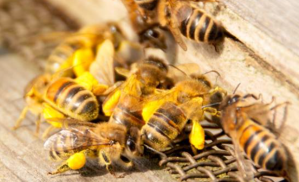

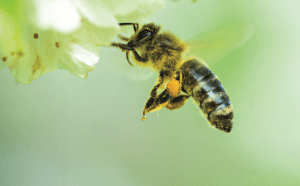

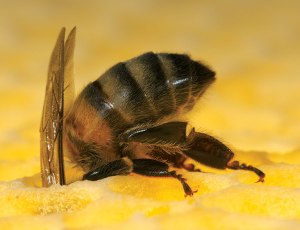

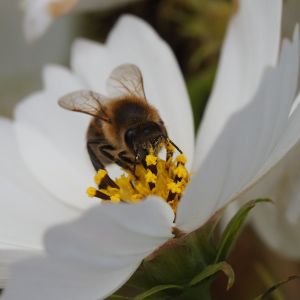

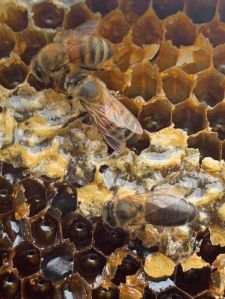
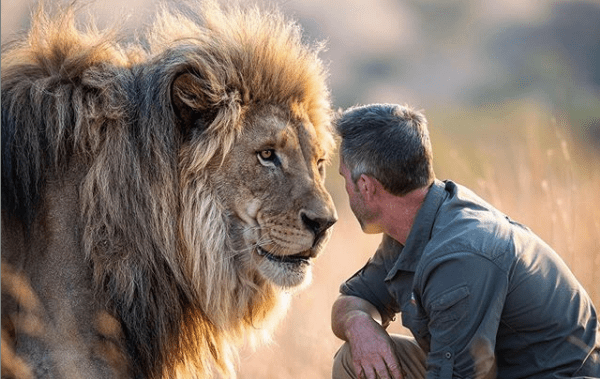


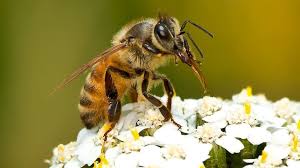

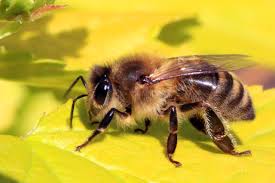

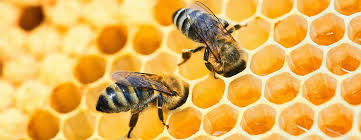
 Our Green Cathedral