Home

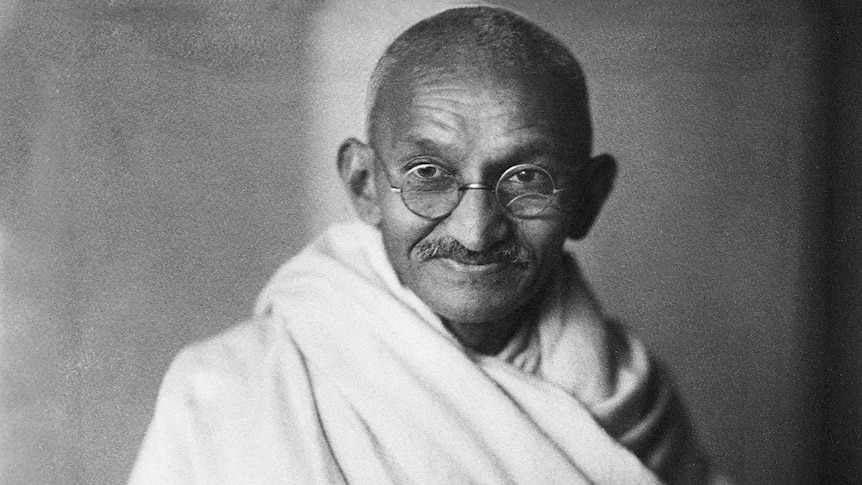
Gandhi and the Honey Bee

On the 150th anniversary of his birthOctober 2, 2019

The first scene in Richard Attenborough’s movie, Gandhi, is the  assassination of the protagonist by a Hindu patriot who feared that the Mahatma’s  emphasis on non-violence would prevent newly independent India from pursuing its national interest with military vigor.   

At the time, January, 1948, Gandhi’s life seemed to have been a spectacular failure. His beloved India had been partitioned into Hindu and Muslim majority states accompanied by devastating fratricide resulting first in the uprooting and deaths  of millions of people along religious lines, and secondly the beginning of a tension that was to cause numerous wars that in turn launched a debilitating arms race.  India had achieved independence from the imperial rule of the British Raj but not from modern industrial society as introduced by western imperialism; even Gandhi’s disciple, Prime Minister Jawaharlal Nehru, believed in rapid industrialization and urbanization in an attempt to transform a billion people into consumers. 

Gandhi was born on a sub-continent that was predisposed to the West, both intellectually and materialistically.  Europeans, backed by gun boat diplomacy, had flooded the local markets with their manufactured products, exported millions of Indian workers to far-off colonies, and, convinced of their moral superiority, imposed profound social and cultural reforms on their subjects.  Many Indians were forced to abandon their immemorial villages with a life defined by religion, family and tradition, for a society  dominated by white men  who were driven by the profit motive and sustained by a belief in the national state enforced by superior weaponry.

Initially Gandhi bought into this scenario.  He received a western-style education, studied law in London and, on his return to India, set up a law practice, as part of which he was sent to South Africa in 1893 by an Indian trading firm.  In what was to be a 21 year incubation period, Gandhi was subject to a number of racial humiliations and  witnessed the moral and psychological vacuum of a country in which, as in India,  the old ways and life styles were being replaced by the cultural and political norms of western capitalism.  And as a stretcher bearer during the Boer War he experienced first hand the violence of early twentieth century warfare. 

He was not alone in his awakening.  Many Chinese and Muslim intellectuals argued that the ideals of  the European Enlightenment were no more than a moral cover for racial hierarchies; they sought comfort in a revamped Confucianism and Islam, only later to be pushed aside by hard-line communists and fundamentalists. Gandhi’s difference was the realization that rampant nationalism or religiosity would simply replace one set of deluded rulers with another – “English rule without the Englishman,” he called it – and his term satyagraha, literally holding fast to truth in Sanskrit,argued for political and cultural reform by non-violent means.  It was truth as moral engagement.

To Gandhi, the industrial revolution, by turning human labor into a source of power, profit and capital, had made economic prosperity the goal of politics, rather than religion, ethics and the well being of all. The traditional virtues of India – simplicity, patience, frugality, otherworldliness – were denigrated as backward.  Thus Gandhi dressed simply and rejected all outward signs of being an intellectual, even though his Collected Works cover over 100 volumes.  In South Africa his closest friends were English and German Jewish intellectuals; he was initiated into Hindu philosophy by a Russian and he quoted as often from the New Testament, Ruskin, Thoreau, G.K. Chesterton and Tolstoy as from the Bhagavad Gita. Rather than present himself as a national politician, which he was, he focused on moral self-knowledge and spiritual strength, upholding the self-sufficient rural community over the nation-state, cottage industries over factories and manual labor over machines. 

The traditional authorities fought back, perhaps with the fear that can come from deep truths about which they were in denial.   Winston Churchill, who regarded himself as a true democrat, said in 1930, “It is alarming and also nauseating to see Mr. Gandhi, a seditious middle temple lawyer, now posing as a fakir of a type well known in the east, striding half-naked up the steps of the viceregal palace, while he is still organizing and conducting a defiant campaign of civil disobedience, to parley on equal terms with the representative of the king-emperor.” 

In more ways than one, Gandhi, in his belief in self-determination for all people and the universal equality of all of mankind, was much the greater of the two democrats. It is no surprise that Churchill loathed Gandhi. Gandhi  loathed no one.

By the beginning of 1948, in the midst of civil war and Indian capitalism, the 80 year old Gandhi may well have been discouraged.  Shortly before his assassination he had embarked on yet another hunger strike but had vehemently refused all police protection; it was almost as if he welcomed an end to a life-long struggle that seemed not to have produced any tangible results. 

And yet his name is wistfully invoked in many conflict zones today, not least by the non-violent demonstrators who prayed unflinchingly on Kasr al-Nil, in Cairo, as they were assaulted by Hosni Mubarak’s water canons, or in the yearning for a person of his stature in either Israel or Palestine, if not both.   He inspired  many globally revered figures, including Martin Luther King, Nelson Mandela, the Dalai Lama, Archbishop Desmond Tutu, and Aung San Suu Kyi (before the Rohingya debacle.) 

Besides Indians, who were motivated to something like self-sacrifice in the name of the common good, Gandhi’s message resonated with that part of the British soul that was empathetic to the values he embodied.  It worked too in Alabama and Mississippi in the 1950’s and 60’s, whereas it did not work with Stalin or Mao, nor would it have done with say the Khmer Rouge.  Indeed Gandhi’s suggestion in the 1930’s that Jews should resist the Nazi’s with non-violence was woefully misgided.

As the spiritually minded, sage-like thinkers, advocating ethical responsibilities and duties,  have faded from the mainstream of our society, so hard they been replaced by ideologies, institutions, science and commerce.  The writing is still there – Simone Weil, Reinhold Niebhur, Czeslaw Milosz, Vaclac Havel – but it is hardly at the forefront of the national debate. When it comes to the challenge of trying to live ethically in the midst of radical change, of trying to be moral men and women in complex, immoral societies, Gandhi still seems to be the most distinguished figure in this countercultural tradition. “He was the last political leader in the world who was a person, not a mask; the last leader on a human scale,” Dwight Macdonald wrote in a tribute after his assassination. 

How, you ask, do honey bees relate to this story?  First, in northern climes it is easy to feel disillusioned when spring reveals a number of dead-outs in the apiary.  Despite all our caring, all our work, all the money we spent on nucs and packages and queens and sugar and medications and treatments, there may be no tangible results of our effort, of our caring. The survivors struggle in an environment increasingly  despoiled by the artifacts of agri-chemical businesses which are driven by profit rather than by morality, ethics and self-knowledge.  Most of us are hobbyists, members of a cottage industry, using manual labour rather than machines, and proudly so.  We can feel helpless when the bees fly beyond our immediate reach and venture unknowingly into a toxic realm.  The Mahatama might have used a hive as a symbol, rather than a spinning wheel. 

Gandhi’s great gift was to bring together in public spaces masses of highly motivated and disciplined protesters with a common passion.  As beekeepers we are not alone in our loss; indeed, like the honey bee,  we cannot survive in isolation.  And the bees, our wards as well as our teachers, are not only motivated and disciplined but also demonstrate the traditional values that Gandhi so admired, not least, simplicity, patience and frugality.  They are beacons of hope in the best of countercultural traditions. 

Secondly, Gandhi’s ecological world view, summed up in his homily “Earth provides enough to satisfy every man’s need but not for every man’s greed,” supports the increasing move towards backyard beekeeping, organic farming,  farm-to-table restaurants and sustainable lifestyles – the kinds of practices that were common before the steam engine and the factory, a time when the majority were stewards of the land even if few could afford meat – “To bring home the bacon” originated in the late Middle Ages as a sign of unusual good fortune. 

And thirdly, Gandhi realized that the triumph  of the scientific world over the ethical one has desacralized nature and made it prey to ruthless, systematic, extractive economies  who measure only in terms of the bottom line – mountain top mining, deforestation of the Amazon basin, monocultures covering the mid-west, factory hens, hormone induced beef production,  ‘clean coal,’ fracking, unrestricted off-shore drilling, to name a few.   Just as happened in nineteenth century India, we misguidedly struggle  to achieve our independence from total reliance on nature and circumstance, but not from the dictates and materialism of a post-industrial culture. 

It is easy to romanticize Gandhi as he set out not only to undermine the system but also to change the hearts and minds of his opponents; in effect, to humanize them.  He was not perfect but he attracted respect with his sheer perseverance in the face of overwhelming obstacles, what has been labeled his ‘moral stubbornness.’  He made it clear he was in it for the long haul, as are we, the beekeepers, as we fight for environmental justice and reform.   

David Lean’s 1962 movie, Lawrence of Arabia, also opens with the death of the protagonist – a motorcycle accident in 1935 in Dorsett, England.  After the First World War General Edmund Allenby, who had been Lawrence’s commanding officer, described him as “the mainspring of the Arab movement,”   and as with India, the nationalism he inspired has not met with significant peace in the Middle East.  Nor is Lawrence’s name spoken of with the same esteem as his contemporary, Gandhi, despite his many monumental acts of bravery, in part because Seven Pillars of Wisdom does not have the moral underpinning of the Mahatma’s writings, and in part because neither Lawrence, nor very few others, could replicate the fierce, transparent, internal battle that Gandhi fought with himself, an endless inner struggle between him and his idealized image of himself, that resonated with so strongly with what others saw and experienced.  Thus is he called Mahatama, or Great Soul

Honey bees, their health and rates of attrition, are both a touchstone and a reminder of what happens when we as a society forget the difference between control over nature and living with nature.    The bees, the soul of nature,  have not forgotten and they rely on us, the humble beekeepers, to relay their message. We can never go back to a pre-industrial age but we can strive for a balance. Honey bees offer a bridge, a connection, a link between the best of the old and the finest of the new.

Knowledge v Wisdom

“If we approach nature and the environment without this openness to awe and wonder, if we no longer speak the language of fraternity and beauty in our relationship with the world, our attitude will be that of masters, consumers, ruthless exploiters, unable to set limits on their immediate needs.

By contrast, if we feel intimately united with all that exists, then sobriety and care will well up spontaneously.  

Pope Francis, Encyclical Letter, May 24, 2015

Napoleon Bonaparte, the victor of sixty  battles including Austerlitz, Jena and Friedland,  was finally killed by his wallpaper.

When the Orleans monarchy returned Napoleon’s body from Elba to Les Invalides in Paris for entombment nineteen years after his death, French investigators found traces of arsenic in his hair and finger nails, hence the rumor that he had been deliberately poisoned by the British military doctors on the island.  In reality he spent the last six years of his life writing his memoirs in a relatively confined space that was decorated with a wallpaper known as Paris Green. The color came from mixing arsenic with copper and although not the only cause, the arsenic explains his ill health and relatively early demise – he was 52 years old.    

Paris  Green has another significance.  In the 1850’s a European farmer, in a fit of annoyance,  reputedly dumped some green paint on potato plants and watched as the infestation of recently imported Colorado beetles died. The beetles had arrived in the 1840’s  embedded in a load of guano shipped from islands off Peru to Antwerp where it was acclaimed as a fertilizer that was going to revolutionize food production. It was the first ‘green revolution’ in more sense than one.

To potato farmers Paris Green was a godsend, as Charles Mann describes vividly in 1493 : Discovering the New World Columbus Created.  To chemists it was something that could be tinkered with.  If arsenic killed potato beetles, why not worms, weevils and moths in cotton, apples and elm trees?  The invention of foggers, sprayers and nozzles meant that instead of dusting arsenic on crops, it could be sprayed in combination with lead and calcium. 

By the 1880’s French researchers had discovered that copper sulfate was a remedy for the potato blight that had devastated Ireland forty years previously, even though it was known  that copper sulfate was toxic. What the farmers and the scientists did not realize was that the chemicals, despite their toxicity,  would lose their effectiveness as insects adapted. 

The first recorded resistance was in 1912 but it did not attract much attention in the face of the new compounds that were being developed.  After the First World War the companies that had been devising gasses to kill people turned their technology back to insects, and it was during the Second World War that  farmers got to test a ‘miracle compound’ known as DDT, an organo-chloride that was celebrated for seven years before insects adapted and the extent of its accumulation in organisms and the environments was realized.  DDT was banned in 1972 (its residues are still found in soil analyses forty five years later) due primarily to the work of Rachel Carson; a less-told story is the way that Rachel was attacked, demeaned and pilloried by Monsanto in particular even before her book was released and even though she was dying of cancer.  But the agro-industrial complex had been well and truly launched with its three determining characteristics : improved crops, high intensity fertilizers and chemical pesticides.

The 1970’s was the age of organo-phosphates which accumulated less in the soil than DDT but modified insect behavior.  Effects on the waggle dance of honey bees, for example, caused researchers to consider seriously the sub-lethal effects of  chemicals.

The pyrethroids of the 1980’s did not kill honey bees but their foraging behavior was modified; the bees appeared to be ‘intoxicated’ as they became unsteady on their legs, tumbled over and got lost after leaving home,  One of the findings of the Managed Pollinator CAP program is that the residues of pyrethroids pose a three-fold greater hazard to a colony than neonicotinoids. 

The larvicidal insecticides and neonicotinoids of the 1990’s were initially welcomed because of their low toxicity to humans and cost savings to the farmer.    Neonicotinoids, so called because they are modeled after the natural insecticide, nicotine, and are applied as a seed dressing, are systemic and thus omnipresent in a plant, and act by blocking neural transmissions in insects. 

At Apimondia in 2009 Bernard Vaissiere of the French National Institute for Agricultural Research, asserted that if  DDT had a toxicity of 1, the toxicity of imidacloprid is 7290, clothianidin  6750 and  fipronil  6560.  Moreover, the synergy between a pesticide and either a fungicide or a herbicide might increase that toxicity a thousand times. 

In The Botany of Desire Michael Pollan describes a toxic treadmill in which agricultural land is doused with so many fumigants, pesticides, herbicides and fungicides as to create a ‘clean field’ – ie. devoid of life except for the desired plants.  Neonicotinoids in particular kill any insect, beneficial or otherwise,  that eats on that plant, and this includes the enemies  of the targeted species.  As resistance is developed in each insect (the so-called ‘super bugs’) yet another more potent chemical weapon is required 

Has this pattern been successful?  In January, 2015, doctors in India reported the first cases of totally drug resistant tuberculosis, described as ‘long feared and virtually untreatable.’    And after 25 years of chemical treatments in the USA, varroa destructor is still the main cause of honey bee losses and within a cycle of five to seven years appears to develop resistance to each new chemically-based treatment. 

Chemical residues, not surprisingly, are also found in pollen. In the January, 2012, issues of both Bee Culture and American Bee Journal, Keith Delaplane,  in summarizing the  CAP project, stated that “… national sampling of bee-collected pollen has revealed 130 different residues of pesticides or pesticide metabolites.  The average number of residues per bee pollen load is 6.21.” 

In 2010, 99.8% of corn seeds planted on 88 million acres of land (the largest single use of arable land in North America) were coated with neonicotinoid insecticides; in fact, the amount of clothianidin on a single kernel contains enough active ingredients to kill more than 80,000 honey bees.  Corn does not rely on honey bees for pollination (corn, as a member of the grass family, is wind pollinated)  but corn pollen is frequently collected by honey bees when it is available and it can make up more than 50% of the pollen on bees sampled from agricultural areas.  If there is any nectar in corn it is not available to honey bees.

But it is more than foraging on corn itself.   On January 3, 2012,  the Public Library of Science (PLoS One) published the results of research from Purdue University entitled Multiple Routes of Pesticide Exposure for Honey Bees Living Near Agricultural Fields which described high concentrations of pesticides, herbicides and fungicides (especially clothianidin, thiamethoxam, trifloxystrobin, azoxystrobin, propiconazole, atrazine and metolachlor) in samples collected from dandelion flowers, from honey bees (both dead and healthy) and in the waste products produced during the planting of treated corn seed, in particular the talc that is added to the seed box to reduce friction and stickiness and ensure the smooth flow of seed.  In the process of planting, the talc is blown out by an exhaust fan; some falls on the soil but much goes into the air. Most of this planting occurs in the spring when the bees are building up after the winter, and the contaminated pollen is stored in the bee bread and royal jelly in the hive that are fed to larvae and on which the strength of the future colony depends.

Since this report was published there have been attempts to find alternative additives besides talc to expedite the planting proces. 

There is a positive correlation between proximity to agricultural areas and the presence of neonicotinoids. The PLoS One report showed clothianidin present in the surface soil long after treated seed has been planted. “All soil samples we collected contained clothianidin, even in cases where no treated seed had been planted for two growing seasons,” the report says.

This is not the place to list all of the hazards of neonicotinoids but it is worth noting that they  are water soluble and mobile in ground water, that they kill the entire structure of soil-born organisms, eventually leaving an inert medium, that imidacloprid has a half-life of 19 years, meaning that it could take a century or more to rid it from the 200 million acres world wide where it has been used, the effects on immunocompetence, fecundity, and sperm viability in queens, and the overall impact on the behavior of bees in a colony. 

In 2014 there was some strange behaviors in my colonies. Besides poor health and low honey production, there were abnormal brood patterns, poor quality queens and clusters of bees leaving the hives in the fall.  Initially I blamed the cocktail of chemicals being used by nearby orchards to  control the outbreak of stink bugs, and that may still be an issue, but apparently these are also the specific symptoms identified by European beekeepers as typical of bees that have had several years exposure to  neonicotinoids. 

In 2017 Ross Conrad, writing in Bee Culture, and Michele Colopy of the Pollinator Stewardship Council put the emphasis squarely on neonics.    “The focus on varroa mites as the sole pest to honey bees detracts from a primary factor affecting the health of honey bees : pesticides,” Michele wrote in September,  and in December Ross began his column thus : ”If you still think our primary problem is varroa, poor nutrition, habitat destruction, etc. and don’t believe that pesticides is one of the primary issues, if not the primary issue, for beekeepers today … think again.”

And we  haven’t so much as mentioned glyphosate, of which in excess of 11 billion pounds was sprayed worldwide in the last decade. 

Europeans have been more concerned about this than have we, and more vociferous; perhaps they are more intimately connected with their environment because space is restricted and thus all the more precious.  French beekeepers for example, have taken to the streets in protest against major agro-chemical industries like Bayer.  In addition each European country appears to have one major beekeeping organization which takes up the cudgels on behalf of all of its beekeepers, and government ministers seem to have the power to make significant decisions, bi-passing the powerful lobbying which is part of the American political  process. 

Europeans also tend to take a longer term view than we do, as witnessed by their aversion to GMO’s.  Neonicotinoids are touted as being safe for humans, and they may well be in the short term.  The fear is that, just as some chemicals are advocated  as safe for bees based on lethal consequences, the sub-lethal effects are ignored.  We can no longer avoid breathing, eating and drinking these toxins – they are omnipresent – and this in a country that is seeing rapid increases in afflictions such as cancer, diabetes, obesity and ADHD in children. 

France, roughly the same size as California, registered  2.3 million hives in 2015, a number which is increasing, compared to 2.4 million in the entire US, a number which is declining. 

There are presently no international laws or agreements, but in 2000 the European Union issued Directive 91.414 that oversees pesticides and marketing.  Even though manufacturers sat on the decision-making bodies and there was an agreed lack of bureaucratic oversight, the number of active legal substances was reduced from 800 to 400 in the first nine years with another 22 substances banned in 2010.  In 2009, this directive was revised, tightened and reissued as a Regulation.

What we are seeing in 2017 is not Colony Collapse Disorder so much as colony dwindling, which may be bigger than CCD if not as dramatic.  Speaking at Apimondia in 2009, the Italian researcher Franceso Panella stated that the agro-chemical industry is now in control. And when the focus moved to the financial recession in 2008, the  agricultural crisis which, in the long term, may be more debilitating, more pivotal, more critical, faded into the background.  

Eight thousand years ago agriculture was the key in the move from barbarism to civilization, and that which made us civilized is under threat. What was seen as an adroit solution a hundred years ago is now literally poisoning our environment and threatening our health in both the short and long terms.  Surely its time to be outraged and to work towards an embargo on the over-whelming use of these potent and toxic chemicals, as is being done in Ontario, Canada, much as was done at a public level with the tobacco industries, and by a group of motivated parents via MADD – Mothers’ Against Drunk Driving  

Is this depressing?  Possibly so.  Some would even say hopeless.   “One of the penalties of an ecological education,” Aldo Leopold noted, “is that one lives alone in a world of wounds.” And yet I live in hope, the kind of hope that believes an understanding of the past can explain the present and inspire a healing of the wounds. The kind of hope that is grounded in and nourished by real information available to everyone everywhere.  The kind of hope that motivated the late Vaclav Havel who, during the Soviet occupation of Czechoslovakia, and together with a few dissidents, circulated petitions, drafted manifestos, wrote protest plays and smuggled news from the outside world, often with very little to show for it.  What sustained him was not a belief that his cause would prevail but a belief that his cause was right.  “Hope is not prognostication,” he said.  “It is an orientation of the spirit, an orientation of the heart; it transcends the world that is immediately experienced and is anchored somewhere beyond its horizons.”

It is time for our faith in our children and in nature, as well as in our capacity for healing and loving work, to eclipse behaviors based on habit and haste.  Life on earth will outlast us.  Without insects mankind might last fifty years; without man insects would do just fine. The question is not whether life will go on; rather the question is whether we will continue our reckless use of this earth or we will work to preserve the intricacy and beauty of our universal home.  

Honey bees, unlike humans,  hold no grudges.  Their health is in our hands and ours in theirs. What more joyful work could there be than to support their untiring work with healing, especially the healing that happens when, in the words of Scott Russell Sanders, “Our wisdom transcends our knowledge.”  

The Struggle of Memory Against Forgetting

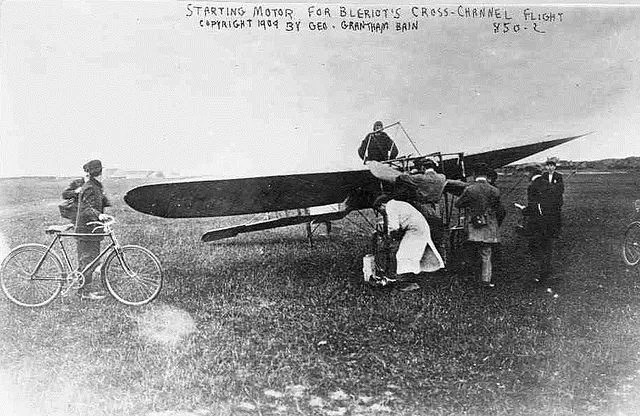
Lois Bleriot, 1909.

An elderly man was undergoing his annual physical exam when the doctor said, “I notice that you belch a lot.”  

“Yes,” responded the patient, “but it doesn’t matter because there is no sound and no smell.”  

“We need to address it nonetheless,” says doc.  “Take these pills twice a day and come back in a week’s time.”

A week later the patient reported that he was belching just as much, but now the smell was awful.

“Well, that solves your inability to smell,” says the doctor.  “Now lets deal with your hearing.” 

We perceive the world through our senses, which in turn becomes part of our experience.  My father could remember some of the early cross-Channel airplane flights in England, and for the rest of his life he could not resist the opportunity to watch a plane flying overhead.  The miracle of powered flight was something I took for granted; for me it was the moon landing that caught my imagination.   My son was born after 1969 and he was fascinated by the shuttle and the space station programs.

But there is another side to this experience. A friend brought his teen-age sons to help cut firewood. As we were returning to the vehicle, loaded with red oak,  he paused, pointed to some clover in the field and explained that it used to grow in lawns when he was a boy, that when he was their age he could not walk barefoot on the grass because of the danger of getting stung by insects. 

Bees on clover in grass was a foreign concept to the two sons; it was beyond the realms of their experience, and they are not exactly ‘urbanites.’  The term to describe this is ‘declining baselines,’ ie. the process of becoming accustomed to and accepting worsening conditions as normal. We forget that things were not always this way, we accept as normal the rapid disappearance of whole species and we experience wonder and delight  when we see the survivors, whether it is clover, salmon in a river that used to boil over with them, or bison on a prairie, without realizing what used to be ‘normal.’ 

Incidentally wild bison today roam just 1% of their former range and prairie dogs number 2% of their former population.  As is invariably the case their respective fates are linked. The bison mowed  the prairie grasses to make way for prairie dog colonies  which in turn improved the quality of forage for the bison.

When I first learned to drive, the attendant at the gas station would unfailingly wipe the  windscreen free of bugs, and my first butterfly collection came from the myriad of insects caught in the front grill of my father’s Citroen (I first got to see an American-made car when I was in college.)   When was the last time you had bugs on your windscreen?  When was the last time you had to clean the grill on the front of your car? And incidentally, I thought this might be more a reflection of the improved air flow of modern car design, but some friends with antique cars confirmed that they don’t get bugs on the windscreens and grills of their models from the 1940’s and 50’s either. 

Why is this important?  Because, as Derrick Jensen has written in Orion,  “It is harder to fight for what you don’t love than for what you do, and it’s hard to love what you don’t know you’re missing.  It’s harder still to fight an injustice you do not perceive as an injustice but rather as just the way things are.  How can you fight an injustice you never think about because it never occurs to you that things have ever been any different?”  

Responses to perceived injustice brings to mind the debate on cyber-spying, and I wonder if my grandchildren will question the mountain of spam greeting cards they receive from commercial sites on their birthdays?  Will they ask how and why a .com organization  has access to their birth dates or will they accept that loss of privacy as normal?  

Incidentally when teaching at a local college, a week before my birthday I would receive a proforma card signed by the college president.  One year, after he had walked passed me in the corridor without recognition or acknowledgment, I sent it back with a note explaining that without human contact it was a meaningless, even demeaning, gesture, and asked to be removed from the computer-generated list of birthday cards. It took the  administration two years to comply with my request.

In the words of Milan Kundera , the Czech author of The Unbearable Likeness of Being,  whose books were banned by the Communist regimes of Czechoslovakia until the downfall of the regime in the 1989, “The struggle of man against power is the struggle of memory against forgetting.” 

In our beekeeping world the agri-chemical companies have tremendous power and they have made unknowable sums of money from toxic products. No doubt they hope that we will forget what it was like to keep bees before neonicotinoids, or believe that there are no meaningful alternatives to the current pesticides, herbicides and fungicides, or indeed to the basic ways in which keep bees, including feeding commercially-made supplements.   Our challenge is to remember and to keep on speaking out, not only for the health of humankind and the planet but also for the myriad of mutually beneficial insects who cannot speak for themselves. 

The Sixth Extinction

The following sentence is patently obvious yet needs to be written nonetheless. At no time in the last 10 000 years has humankind produced, used, and carelessly discarded such a ruthless combination of chemical and toxic substances as the present.  

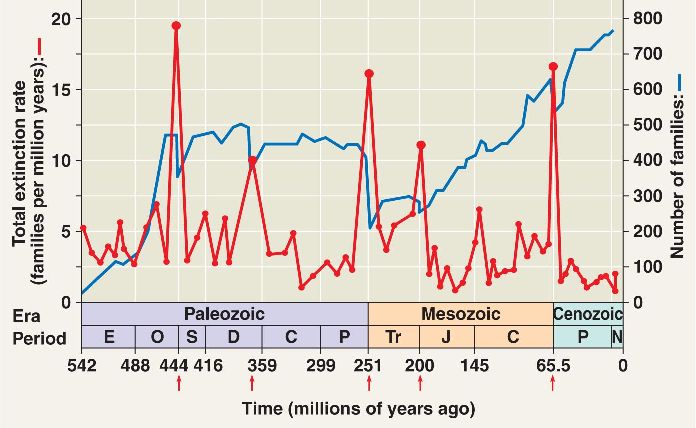
It’s tempting to think that the last time the environment was ruthlessly toxic was after an asteroid collided with the earth some 65 million years ago, which led to what is referred to as the Fifth Extinction and which included an end to the age of the dinosaurs.  And yes, extinction is a natural feature of evolution because for some species to succeed, others must fail. Since life began, an estimated 99% of the earth’s species have disappeared and, on at least five occasions, huge numbers have died out in a relatively short time. But despite such catastrophes the total number of living species has, until recently, followed a generally upward trend.

Today the extinction rate is increasing as a result of human interference in natural ecosystems combined with human behaviors which are unquestioned and unconscious. We are steadily encroaching on the habitat of millions of species while fundamentally altering the environment, a trend eloquently described by Fulbright scholar and writer for the New Yorker, Elizabeth Kolbert, in The Sixth Extinction : An Unnatural History.

This decline will continue because evolution generates new species far more slowly than the current rate of extinction. More than 320 terrestrial vertebrates have gone extinct since 1500, according to researchers at Stanford University. Surviving species have declined by about 25%, particularly devastating the ranks of large animals like elephants, rhinoceroses and polar bears. The U.N. Intergovernmental Panel on Climate Change Report of 2007 predicted that an increase of 3.5 degrees celsius, which is within the range of scientific forecasts for 2100, could wipe out 40 to 70 % of the currently known species.

According to the Israeli scientist, Yinon Bar-On, since the rise of human civilization 10 000 years ago, wild animal biomass has fallen by 83 per cent. The surviving wild mammals now comprise a meagre 4 per cent of all mammalian biomass, with our livestock comprising 60 per cent and humans the remaining 36 per cent. In other words, our domestic cattle, hogs and sheep outweigh 15 times the 5 000 feral mammalian species, and the collective mass of humanity city is is 9 times heavier.

To add to that, 70 per cent of global bird biomass is now comprised of domestic poultry.

The reasons are complex and range from our arrogance, our unjustified sense of superiority, our supposed divine right to ‘dominion over the earth,’ our unbounded belief that somehow we can do no permanent harm, an economic system that measures everything primarily in terms of money, and an unbridled confidence in the righteousness of unrestricted science. Consider that everything we eat, drink, wear and drive is infused with a complicated variety of chemicals with impossible sounding names, like polysalinate 80 (in a jar of dill pickles,) calcium disodinate EDTA (in mayonnaise,) nonylphenol ethoxylates and phthalates (in shirts,) acesulfame potassium in sodas, and bisphenol A (in plastic bottles and the plastic in our vehicles.)  Do we really know what these are, what their long term consequences are, how they interact with elements in our bodies and our environment?  A painful lesson from the bees is that the interaction between chemicals in a hive can increase their toxicity as much as one thousand times. They can also cancel one another out. 

And then there is the power of advertising, the purpose of which is to make us feel dissatisfied and inadequate,   that somehow if what we have is not faster, bigger, glossier or newer, we are in some way inferior and deficient.  Many of the best minds in the country are paid a lot of money to make us feel that way and to persuade us to buy our way to fulfillment without consideration for the larger consequences.  It is capitalism without morality, a free market without an environmental conscience. 

A news segment recently on back-to-school shopping stressed that it all starts with the right pair of shoes, that the school wardrobe has to be built from the ground up, and emphasized the pressure many parents undergo from children who believe they need brazen sneakers that their parents cannot afford.  Shoes?   Really?

Personal disclosure – as described earlier, I do not have a smart phone, nor do I want one.  I have lived my life relatively successfully without having immediate access to reams of data nor with allowing people who would never drop by unannounced to have unlimited access to my time and to expect immediate responses.   Nor do I have a GPS – I actually enjoy reading maps, making choices as to my routes and learning about the countryside as I go.   Yes, I’m a curmudgeon. The above are conscious choices, in part a deliberate resistance to the bombardment of advertisers and in part a personal preference for voluntary simplicity. I am satisfied as I am and with what I have, thank you, and increased materialism will not change that. I must be hell to buy for on birthdays!

This is what I understand by the frequent reference to honey bees as our canaries in the coal mine. Bees are super-sensitive to an increasingly complex, toxic  environment in which we all exist, in which we all live, drink and breath, without much in the way of alternatives.  

Is this depressing?  I don’t think so. Recently I was given a DVD called Happy (someone must have felt I really needed it!)  which travels from the swamps of Louisiana to the slums of Kolkata (Calcutta) in search of what really makes people happy. The conclusions include that happiness is a skill, like golf, that can be honed with practice, that it means being authentic to oneself, that relationships with friends and family are important, that it comes from seeking new experiences and doing things that are meaningful. Archbishop Emeritus Desmond Tutu would describe this as joy rather than happiness, in that it is internally induced rather than determined by external events (more of that later) but it is the emphasis on meaningfulness that struck a chord. Keeping bees, like planting trees or shopping critically, is a meaningful act.  It is something positive we can do in the face of large challenges, and feeling that one is a conscious part of the solution rather than an unconscious part of the problem is both satisfying and rewarding if not joyful. 

A Ray of Hope

In Pennsylvania, the annual Farm Show, held in January, is a big event. To judge from the front page of the local newspaper, it consists primarily of an expansive food court, tractor pulls, the butter sculpture, horse-drawn carriages, cosseted animals and wall-to-wall crowds.  Yet behind the hoop-la there are at least four premises on which the Show is based. The first is to showcase the range and quality of agricultural products in the state; the second is to create a window through which the public can gain an appreciation of the work done by an increasingly diminishing proportion of our population for the benefit of all; the third is to provide an experience by which visitors can renew contact with a rural life style which many yearn for and miss without realizing why.

There is a fourth and it can be explained this way.  I live in an area rich with milk weed, which is host to the monarch butterfly in its annual migration.  For five years Mary and I could count on the fingers of one hand the numbers of monarchs we have seen, nor have there been signs of  eggs and larvae on the undersides of the milk weed leaves. In 2017 we saw perhaps a dozen, each sighting being an event of note.

There was a brief segment on TV in 2013 describing a federal initiative to recognize the breeding grounds of the monarch butterfly as protected areas, the main implications of which would be restrictions on the use of pesticides, herbicides and fungicides in these locals. It was the subject of a year-long study and the main opposition came from the Department of Agriculture and various farming associations on the grounds that such regulations would restrict further their ability to work the land effectively. 

Another study in 2015 showed that neonicotinoids, introduced via pesticide-soaked seeds, leach into the surrounding soil and water system. Their presence can be detected in native plants 50 feet beyond the point of introduction at a ratio of 64 parts per billion.  That is seven times higher than the tolerance level of the larvae of the monarch butterfly on milkweed.

And a study out of Cornell in 2017 focused on fungicides like chlorothalonil which control plant pathogens in crops and which largely have been overlooked because they don’t targets insects. This study showed however that the residues are picked up by the bees when foraging for pollen and nectar. “While most fungicides are relatively nontoxic to bees, many are known to interact synergistically with insecticides, greatly increasing their toxicity to the bees,” the report concluded. 

So there are ethical issues involved which might be posed thus : What responsibility does agriculture have over and beyond the production of food?  Does the end justify the means?  Is anything OK that results in greater yields or lower food prices? Does agriculture have long term responsibilities in addition to the pressure to meet immediate needs?

For the large part, farming is about making money rather than about the quality of the soil, the water or the air.  This is understandable as conglomerates incorporate small family farms which cannot compete with the scale of agri-business.  And these corporations, not being locally based, do not have the same investment in the immediate environment as does say a family operation being run by a fifth generation of farmers. This is evident  in my farming neighbors who are compelled into unhealthy land practices (eg. no longer planting a winter cover crop, or using a two crop rotation of corn and soya beans because the price of winter wheat has fallen off) in an attempt to keep costs low so they can make enough money to pay off the loans used to buy seed, fertilizers and equipment.  It is no surprise that farmers use chemically-adapted strains of corn and beans so as not to have to find additional funds to suppress diseases and infestations of ‘weeds’ and insects. 

A striking example is Haiti where, according to a report by Marc Lacey in the New York Times of April 18, 2008,  the small, age-old family farms cannot sustain themselves in the face of the competition of imported rice which sells for less than half the price of the more labor-intensive, more nutritious, native variety.  The local suspicion is that the destruction of farming as a livelihood was a strategy to push  women in particular to the city where they would be sufficiently desperate to work all day in hellish sweatshops, sewing some of the four billion tee shirts made globally each year, for which they would be paid one half of one percent of the retail price of each garment they sewed. A 1996 documentary revealed that the CEO of the Walt Disney Company, for whom most of the shirts were being  made, was being paid $101 000 an hour.

Those Haitians who stayed on the land are trying to make a living growing organic mangoes for a small, western, gourmet market.  

Honey bees, and thus beekeepers, stand at the nexus between these two worlds – the pressure to provide food for an increasing global population and the long term needs of environmental health and survival.  Our bees expose both sides : effective pollination is essential for most of the agricultural process yet the bees are threatened by the environment to which they are exposed as they go about their business. 

Perhaps State Fairs are not the right venue to raise this dilemma yet we more than many others have the responsibility to initiate the discussion. It is important to rail against the darkness while also lighting a lamp of hope, however feeble the light might seem.

1+1=>2

The paradigm through which we view the major challenges facing humanity, in which broad category I would include climate change, soil depletion, the availability of fresh water, continued population explosion and the future of organisms like the honey bee that are vital to our existence, reflects a philosophical debate that has simmered over four centuries. 

With the advent of the scientific revolution in the C17th, inspired by giants like Galileo, Newton, Kepler and Descartes,  came an attitude called  reductionism, the essential notion being that phenomena can best be understood by breaking them down into their component parts. Certainly this works effectively in many situations; for example, studying the molecular structure of materials so that we can better understand their physical attributes, or studying the genome of the honey bee to better understand the triggers that activate certain behaviors and diseases.

Some attributes of complex systems, however, and living systems in particular, are hard to understand through an inventory of their  separate parts.  One cannot understand consciousness, for example,  by studying the molecular structure of the brain.  Another often cited example is that table salt is composed of atoms of sodium and chlorine, neither of which by itself has any hint of a taste of saltiness.  Nor, I would argue, can one understand the operation and behavior of a colony of honey bees by studying a worker bee, a drone or a queen in isolation. 

The human brain, salt and a honey bee colony are examples of what is  called emergent properties, ie. something that ‘emerges’ when component parts come together in relationship to form a higher-level aggregate object with properties that cannot be predicted by a knowledge of the constituent parts alone.  It’s a form of synergy, and the result in honey bees is  a superorganism,  or complex system with functions determined by its individual parts, by the character of the whole that they compose, and by the relations of the parts to that whole.

The study of complex systems and their emergent properties is known as holism, from the Greek word holos meaning whole or entire, and was coined by the South African statesman and philosopher Jan  Smuts in his book, Holism and Evolution, first published in 1926.  A good example of inherent holism is the science of ecology, another word with Greek origins that means literally, ‘the study of our house.’ Ecologists study the relationships between organisms and their environment, in particular how ecosystems emerge from the sum of their parts, whether living or inert. 

By comparison, medicine historically has tended to be more reductionist.  First year medical students are typically immersed in studies of chemistry and anatomy, and perhaps in their third year, introduced to actual patients.  I recall on a visit to McGill University in Montreal in the late 90’s, being impressed by their emphasis on students working with patients from day one, on the grounds that they needed to see the latter from the outset as complex, emergent human beings (biological, social, economic, psychological and linguistic) rather than as the aggregate of a bunch of anatomical parts. 

Both reductionism and holism can be useful pathways to understanding provided we don’t rely on one exclusively at the expense of the other.  It is tempting to look for that silver bullet panacea that will magically resolve problems with climate change, health care or honey bees; indeed simple reductionist solutions are relatively easy to explain (and sell) and the public can relax in the belief that science will solve it for us, even though the sciences have their own ethical complexities and for centuries have been integral to the problem itself. One has to think only of the phenomenal development of the oil industry over the last one hundred years, made possible by developments in geology, physics and chemistry, the many bi-products that have resulted from oil, not least plastics,  and the repercussions for our environment and global climate. According to an article in The Guardian  in 2015, ExxonMobil, the world’s biggest oil company, was aware  as early as 1981 of the connection between fossil fuels and climate change, as well as the potential for carbon-cutting regulations that could hurt its bottom line, seven years before it became a public issue, Despite this, according to Greenpeace,  the firm spent $30 million over the next 27 years to promote climate denial. 

Shades of the tobacco industry and their denial of the relationship between smoking and lung cancer.

Holistic solutions are more difficult to explain in thirty second sound bites, but more importantly they require changes in individual or societal behavior.  Rather than being passive on-lookers, we become an essential part of the solution.   To apply these two models to climate change, for example, the reductionist school of thought sees it as resulting primarily from the technical problem of carbon emissions, so why not continue burning fossil fuels but somehow capture the carbon?  If scientists  can design huge machines that will suck excess carbon out of the atmosphere, we can maintain our current economy and way of life. 

The holistic school of thought views climate change as it  relates to complex  disorders that plague our global ecosystem, including soil degradation, desertification, species extinction, decline of marine life, deforestation, overpopulation, fossil fuels and unlimited economic expansion.  To the holistic thinker, climate change will continue to worsen until we either deal with all of the systematic causes or until it overwhelms the biosphere and, with it, civilization as we have come to know it.   In the first scenario we can choose to change; in the second, change is forced upon us.  We can be proactive or reactive, with very different consequences for each.

A honey bee colony is holistic – a eusocial superorganism.  One finding of the sequencing of the honey bee genome provides a good example.  Individual bees have relatively few genes that code for immune response, fewer than the common house fly.  That number may grow as research continues, but the explanation, as Jamie Ellis outlined in the March, 2016, issue of the American Bee Journal,  is that the colony is the unit of selection.  Thus it is in the colony that the most significant immune responses occur, not in individual bees. 

So we can study the genes of specific honey bees (reductionism) but immune response in this case is an emergent property, something that manifests itself when the component parts synergize to form a conglomerate, and which cannot be predicted by a knowledge of the constituent parts in isolation.

Whereas only Beethoven, working alone, could compose any of his 722 various arrangements, it takes an average of two hundred support personnel to put one military pilot into the sky, or thousands of people working together to sustain astronauts on a space station.  And in a good marriage, two healthy people bring the best of themselves to the relationship, so that, like a good bee colony, one + one is more than two.

A World in a Village

If our world could be reduced to a village of 1000 people 

what would it look like?

There would be 

579 Asians

150 Africans

120 Europeans

81 North Americans

61 from South America

6 from Oceana

314 Christians

236 Muslims

143 Hindus

71 Buddhists

71 Confucians and Taoists

7 Shintoists

2 Jews

150 would be of a minor religion or atheist

6% receive half of the village income

16% of adults are illiterate

40% exist on less than $2 per day

40% are malnourished

And who provides honey for this village?

Just one beekeeper

Thank you to my friend and colleague, David Papke, who found the original in some old files dating to pre-1990.  The statistics have been up-dated using 2011 data

A Common Destiny

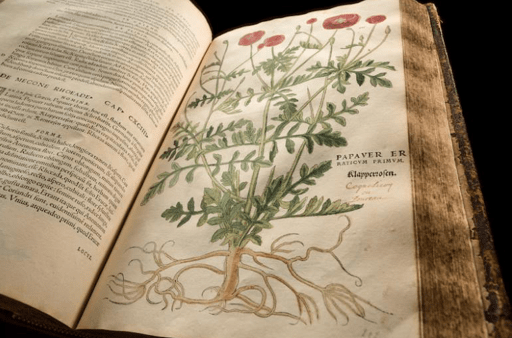
Galileo: The Natural History of Plants, , 1542.

Plants make all forms of higher life possible.

The first algae scum probably formed on land 1.2 billion years ago and it took another 800 million years for the first land plants to appear.  800 million years … that’s beyond my capacity to imagine. To put it in perspective, it has been calculated that if you counted to one billion, working eight hours a day, five days a week, spoke aloud every number and started at the beginning of the Christian era, you would not yet be finished.   Put another way, it takes a clock 31.7 years to tick 1 billion times. 

40 million years later these primitive land plants began to diversify and their petrified remains are found today in volcanic springs with their cellular detail clearly preserved. 

The establishment of a land-based flora caused oxygen, a waste product for plants,  to accumulate in the atmosphere. When this concentration rose above 13%, wildfires became possible, as documented in the fossil record some 440 million years ago by charcoalified plant fossils.

400 million years ago  most of the features recognizable in plants today were present, including roots, leaves and secondary wood, and 50 million years later seeds had evolved enabling  plants to reached a degree of sophistication that allowed them to form forests.  It was early in this period that the oldest definitive insect fossil is found, estimated to be 396-407 million years old, and 50 million years later amphibians, from which mammals would evolve, were common.

A report in Science describes an international effort to map the thousands of physical traits and genetic clues that trace the lineage ofall the placental mammals – a huge group of 5000 species. The results indicate that we, together with whales, elephants, dogs and  bats, arose from a small, furry, insect-eating animal that lived after the demise of dinosaurs.

Simple flowering plants probably first appeared 200 million years ago, proliferating 100 million years later in the angiosperm revolution, during which time a species of hunting wasp developed a taste for nectar, became a vegetarian and gave rise to the modern honey bee. 

The latest major group of plants to evolve were the grasses, of which there are some 10 000 species. They first appear in the fossil record about 80 millions ago and became prolific around 40 million years later. Over the last 10 million years the grasses, as well as many other groups, have evolved new mechanisms of metabolism to survive the low carbon dioxide and warm, dry conditions of the tropics.

Flowers, like trees, are rooted in one spot and thus rely on other agents to transport their seeds.  The wind, birds and insects are major actors, and plants evolved to attract them by color, odor and thin stems that wave in the breeze.  The honey bee in return developed the ability to see infra-red colors which direct her to the center of the flower where the nectar is contained and protected, and in so doing she collects and transports the male pollen for pollination. 

Pollen possesses two characteristics that make it particularly useful for studying plant evolution:  it is resistant to decomposition and so can be found in ancient soils, and under the microscope it is very distinctive between plant families and species. An examination of the contents of fossilised dung of plant-eating dinosaurs, for example, revealed types of cells that are only found in the epidermis of grass leaves; thus presumably the last of the dinosaurs dined on grass.

10 000 years ago human intervention played an important role in  plant evolution in the form of the neolithic shift from an economy based on hunting and gathering to a system based on the domestication of plants and animals. Early farmers, for example, selected forms of wheat that could be easily husked, making the flour-making process more manageable, and in so doing inadvertently hybridized different strains.

 So yes, plants are important. First, they take in carbon dioxide and emit oxygen, vital to the survival of most living species.  Secondly they are crucial to both water and soil quality – think of the desertification of the soil and the fetid, rancid water that occurs when plants are absent.  Ken Burns’ documentary, The Dust Bowl, illustrates this dramatically. Thirdly, when plants die they decompose back into the soil, providing a source of nutrients to sustain further life.

Plants are the major food source for most insects, reptiles, birds and mammals, which in turn provide a food source for those higher up the chain, humankind included.  And diversification is important.  We know, for example, that whereas honey bees can survive on one pollen source, to be healthy they need a variety of sources, each with its own specific chemical composition.

“Our mistake,” according to Wendell Berry talking on the Diane Rehm show in 2014, “is that we think we can save the people by abusing the land.”  Not  only does population growth place more demands on decreasing areas of farmland but the urban revolution of the last one hundred years has removed most of us from an intimate awareness of the health and well being of that land.  Beekeeping is a profound and frequent reminder of the vital connection between one species of insect and the land.   It might even be an ominous connection because, as Wendell Berry added, “We all share the same fate.”

Failure : The Price of Excellence

My stroke box contains a cutting from the local newspaper of a column written by Leonard Pitts in 1997  in which he describes a television commercial featuring a man arriving for a basketball game.  The stride of the latter is easy as he walks the gauntlet of fans, his smile secretive and knowing.  He walks like a winner.   Yet in the voice-over he says, “I’ve missed  more than 9 000 shots in my career.  I’ve lost more than 300 games.  26 times I’ve been trusted to take the winning shot – and missed.  I’ve failed over and over and over again in my life.  And that is why I succeed.” 

The man is Michael Jordan who, in the words of Pitts, “shackled gravity and courted flight, who made the impossible seem routine and the merely difficult look easy.”  And, ignoring for a moment the fact that the commercial was for over-priced athletic shoes, Jordan was arguing that  failure is why he succeeded.  Failure is the price of excellence.

This is the time of year when, with our hearts in our mouths and with feelings of apprehension,  we open the hives after a long winter.   Most of us are going to find that some of the girls have not survived and I for one never quite get over the feelings of sadness that come with the sight of those little motionless,  fuzzy butts sticking out of the cells in unison, often with a frame of capped honey only inches away, and the pile of blackened dead bees on the bottom board. 

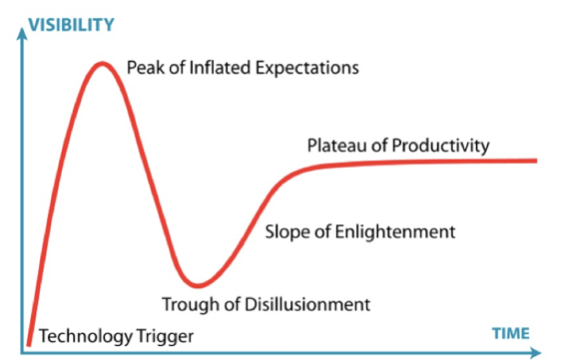
The truth is it happens to us all, and some would argue that it is an essential weeding-out process by mother nature. But often it is the first major obstacle faced by a new beekeeper.  In terms of the Gartner-Hype Cycle, after our ’peak of inflated expectations.’  (the bees who came with the package survived, the queen laid in a good pattern, the girls took all of the sugar syrup we fed in the fall)  many of the colonies die.   This ‘trough of disillusionment’ is where as many as 50% of new beekeepers decide not to continue.  The heartbreak, the disappointment, is too much.

Those  who continue cite two things for their decision to do so.  The first is a mentor, a fellow beekeeper, who assures them this is the norm, that they are not ‘bad people’ because their charges died.  It is striking how Jim Tew, writing in Bee Culture, describes his failures without being shamed by them, as if to give us permission to fail as well.  The second is a local bee association where new beekeepers can hear stories from experienced pros about winter losses, told without rancor or guilt.  The message is “Welcome to our club – having lost a colony you are now truly one of us” and there is support for the self-doubt that can understandably accompany these losses. 

I would add a third – an ability to see failure as an integral part of success – and rather than become despondent, to see this as motivation for a revitalized effort with the renewed confidence that comes from a challenging experience.   Those who make this transition move on to ‘the slope of enlightenment’ which is when the real learning begins.  It is gradual, it is real and it is experiential.  

 Pitts describes a scene from a  Michael Jordan clip : “He fakes left, goes right, elevates to the hoop, finds a man in his path, spins in midair, throws the ball backwards over his head and scores.”   The crowd roars, the announcers are breathless, and the viewer wonders … how?   I don’t know the beekeeping equivalents of faking, blocking, spinning and shooting, but I do know that better beekeeping practice comes from constant work – reading the newsletters, the journals and the books, talking with one’s peers, going to conferences, reflecting on the notes one makes in the bee yard… all good winter tasks.   We talk about talent, we nod our heads to luck, but so often we ignore the most important things – the hard work,  the unceasing push to be a little better than the day before … and the many failures.

In Michael Jordan’s case that moment was built on thousands of others that only he can know, those moments in which he paid his dues away from the cameras so that he can walk like a winner on his way to the locker room.  

From Simplicity to Complexity

The Gartner Hype Cycle

In the February, 2014, issue of Harper’s Magazine entitled Tunnel Vision : Will the Air Force Kill its Most Effective Weapon?  an Air Force colonel describes a conflict in Afghanistan involving predator drones. “If you want to know what the world looks like from a drone feed, walk around for a day with one eye closed and the other looking through a soda straw.  It gives you a pretty narrow view of the world.”   Experienced A-10 pilots use the soda straw analogy in describing the video images from their targeting pods.  “You can find people with the targeting pod,” said one such pilot, “but when it’s zoomed in I’m looking at a single house, not anything else… If you’re looking only through the soda straw you don’t know everything else that’s going on around it.”

Once upon a time our learning started with the narrow and became increasingly broad – the typical Classical education of the nineteenth century, for example.  Today the tendency is to start with the generic after which we become increasingly focused on minutiae. 

New beekeepers begin with a narrow focus, understandably and rightly so.  They focus on basic management skills, ask rudimentary questions, learn the terminology.  There is normally a romantic reason for getting involved – doing one’s part to save the bees, wanting an individual source of honey, wanting to increase pollination in one’s garden …Nothing wrong with any of those motivations.   

And then typically there is a major obstacle, a disillusionment.  The bees swarm, the queen is poorly mated and the bees wither, the colony does not survive the winter,  varroa mites and wax moths take over the hive.  In the face of what  Gartner and Hype call ‘the trough of disillusionment’ many new beekeepers, perhaps as many as half, decide not to continue.

Those who those who persist do so partly because they had realistic expectations and knew in advance that all beekeepers, no matter how good, lose colonies, heart wrenching as such l oss always is, and partly because they have a good

mentor who can encourage them despite the disappointment. These survivors enter the ‘slope of enlightenment’ where gradually they open themselves to the complexity of this fascinating hobby, and with that enhanced, deepened and broadened awareness comes the real fascination and wonder that the intricate world of honey bees can provoke.  This gradual slope leads eventually to the ‘plateau of productivity’ which is when the most profound learning occurs, when  meaningful interpretations and predictions of colony behavior can be  discerned, and when the beekeeper interacts with the larger environment in which the bees exist. 

There is no shortcut.  It’s a hands-on learning process with trial and error as a demanding teacher.  

Successful beekeeping, as with so many other things in life, is the gradual process of moving from simplicity  to complexity. I suspect that effective beekeeping classes and good mentoring follow the same pattern.  Yet ultimately it is up to the individual student to embrace complexity, to open himself or herself to the variety and apparent confusion of the different worlds behind the book covers, and to resist the temptation to accept the quick and easy solution.  “The test of a first-rate intelligence,’ said F. Scott Fitzgerald, “is the ability to hold two opposing ideas in mind at the same time and still retain the ability to function.”

A colony can be viewed in the same way.  At one level the life progress of a worker bee is relatively simple – her cycle from egg to maturity and the tasks she completes in a hive are easy to comprehend.  But when one begins to ask what stimulates her to change activities from say collecting nectar to collecting water, or how she responds to the pheromones emanating from a larva in an uncapped cell, it gets a little more complex, and even more so when one looks at the colony as an entity with the numerous individual interactions that make up the superorganism and the complex social and behavioral organization that enables the effective use of available material and energy.

For me, the greater the complexity the greater the sense of wonder, even more so as I see honey bees as metaphors and teachers for the Gordian Knot that is our current world.  The constant challenge, whether talking over the phone to a nu-bee or addressing queries at an open forum, is how to convey both the necessary simplicity and the amazement of the complex without confusing or dampening the enthusiasm of the listener.  Typically the decision as to whether to move to more complex answers is determined by the questions from the audience, which disclose their level of interest and comprehension and determine whether the rejoinder invites them to open a book of self-discovery or is a more direct googlesque response.  

For the first 25 years of my teaching career a student assignment came with the assumption that it would involve time spent in the school library; indeed I would work closely with the librarian in preparing the assignment. In more recent years, with a laptop or even a smart phone, students can comfortably complete an assignment without having to leave their dorm rooms.  And when I get to visit the college library today the majority of the students are sitting at computer terminals rather than looking at books on the shelves.  (Those not at the computer are asleep on chairs in the corners!)

Those books on the shelves, like bee hives, can appear at a casual glance to have a ‘sameness’; one has to look behind the covers to realize how different each one is. 

My concern is that as one searches for a book in a library, as one pages through the index or flips through the chapters, knowledge is found in a larger context.  A Google search, by comparison, takes one straight to the requested page or paragraph; it’s a direct but narrow search.  The student is taken to the precise phrase or word he or she is searching for without any reference to background or theme or context.  The result, all too often, is a good final paper with minimal understanding of the bigger picture.

This came to mind reading an article in the February, 2014, issue of Harper’s Magazine entitled Tunnel Vision : Will the Air Force Kill its Most Effective Weapon?  Describing a conflict in Afghanistan involving predator drones, an Air Force colonel is quoted as saying, “If you want to know what the world looks like from a drone feed, walk around for a day with one eye closed and the other looking through a soda straw.  It gives you a pretty narrow view of the world.”   Experienced A-10 pilots use the soda straw analogy in describing the video images from their targeting pods.  “You can find people with the targeting pod,” said one such pilot, “but when it’s zoomed in I’m looking at a single house, not anything else… If you’re looking only through the soda straw you don’t know everything else that’s going on around it.”

Once upon a time our learning started with the narrow and became increasingly broad – the typical Classical education of the nineteenth century, for example.  Today the tendency is to start with the generic after which we become increasingly focused on minutiae. 

New beekeepers begin with a narrow focus, understandably and rightly so.  They focus on basic management skills, ask rudimentary questions, learn the terminology.  There is normally a romantic reason for getting involved – doing one’s part to save the bees, wanting an individual source of honey, wanting to increase pollination in one’s garden …Nothing wrong with any of those motivations.   

And then typically there is a major obstacle, a disillusionment.  The bees swarm, the queen is poorly mated and the bees wither, the colony does not survive the winter,  varroa mites and wax moths take over the hive.  In the face of what  Gartner and Hype call ‘the trough of disillusionment’ many new beekeepers, perhaps as many as half, decide not to continue.

Those who those who persist do so partly because they had realistic expectations and knew in advance that all beekeepers, no matter how good, lose colonies, heart wrenching as such l oss always is, and partly because they have a good mentor who can encourage them despite the disappointment. These survivors enter the ‘slope of enlightenment’ where gradually they open themselves to the complexity of this fascinating hobby, and with that enhanced, deepened and broadened awareness comes the real fascination and wonder that the intricate world of honey bees can provoke.  This gradual slope leads eventually to the ‘plateau of productivity’ which is when the most profound learning occurs, when  meaningful interpretations and predictions of colony behavior can be  discerned, and when the beekeeper interacts with the larger environment in which the bees exist. 

There is no shortcut.  It’s a hands-on learning process with trial and error as a demanding teacher.  

Successful beekeeping, as with so many other things in life, is the gradual process of moving from simplicity  to complexity. I suspect that effective beekeeping classes and good mentoring follow the same pattern.  Yet ultimately it is up to the individual student to embrace complexity, to open himself or herself to the variety and apparent confusion of the different worlds behind the book covers, and to resist the temptation to accept the quick and easy solution.  “The test of a first-rate intelligence,’ said F. Scott Fitzgerald, “is the ability to hold two opposing ideas in mind at the same time and still retain the ability to function.”

A colony can be viewed in the same way.  At one level the life progress of a worker bee is relatively simple – her cycle from egg to maturity and the tasks she completes in a hive are easy to comprehend.  But when one begins to ask what stimulates her to change activities from say collecting nectar to collecting water, or how she responds to the pheromones emanating from a larva in an uncapped cell, it gets a little more complex, and even more so when one looks at the colony as an entity with the numerous individual interactions that make up the superorganism and the complex social and behavioral organization that enables the effective use of available material and energy.

For me, the greater the complexity the greater the sense of wonder, even more so as I see honey bees as metaphors and teachers for the Gordian Knot that is our current world.  The constant challenge, whether talking over the phone to a nu-bee or addressing queries at an open forum, is how to convey both the necessary simplicity and the amazement of the complex without confusing or dampening the enthusiasm of the listener.  Typically the decision as to whether to move to more complex answers is determined by the questions from the audience, which disclose their level of interest and comprehension and determine whether the rejoinder invites them to open a book of self-discovery or is a more direct googlesque response.