Home

World Hunger

Two articles in the May, 2018, issues of the leading national bee journals have a common motif.  In an otherwise excellent article on pollination,  Rusty Burlew writes in Bee Culture : “Modern farms are the antithesis of natural environments.  But far from being a bad thing, modern farms are necessary to feed burgeoning populations of humans.”  And in a surprisingly emotive piece of writing in the American Bee Journal, Jessica Louque defends the use of neonicotinoids on the grounds of cost effectiveness, suggesting that “If neonics are banned from the US, it’s going to be financially more difficult for everyone but the chemical companies.”  

I am not convinced that modern farming techniques are the long term answer to population growth, nor do I believe that funding issues should determine environmental health and policy. It seems short-sighted to allow our planet to degrade further on the grounds that it is too expensive to fix it. 

First, In 1985, in the executive summary of it’s  Farming Systems Trial, the Rodale Institute asserted that  “Organic farming is far superior to conventional systems when it comes to building, maintaining and replenishing the health of the soil. For soil health alone, organic agriculture is more sustainable than conventional. When one also considers yields, economic viability, energy usage, and human health, it’s clear that organic farming is sustainable, while current conventional practices are not.  As we face uncertain and extreme weather patterns, growing scarcity and expense of oil, lack of water, and a growing population, we will require farming systems that can adapt, withstand or even mitigate these problems while producing healthy, nourishing food.”

More recently, two of the leaders of the Regenerative Agriculture movement,   Gabe Brown and Dr. Jonathan Lundgren, in North Dakota and Kansas respectively, have shown practically and persuasively that moving beyond sustainable to regenerative  agriculture can significantly increase yields without the use of chemicals.  Both men are also beekeepers, and the honey bees are integral parts of their system of rejuvenation which focuses on  increased biodiversity,  soil enrichment, improvement of watersheds and enhancement of ecosystem services. 

Secondly, feeding an increasing population is much more complex than simply increasing food supplies; indeed the latter may work for 2050  when the world population is estimated to be 9.1 billion people, a 34% increase over the current figure, most of which will occur in less developed countries. But should we not be thinking further down the road than simply one generation?  A long term solution which integrates a healthy planet with a well fed population requires more elaborate solutions. 

There is an immense amount of material available on possible solutions, stemming from research papers, national conferences and international agencies, and what follows is but the tip of the iceberg, enough hopefully to increase awareness as to what lies below the surface.  The Agricultural Policy Analysis Centre, for example, points out that since 1974, agricultural production has been increasing at a higher rate than population growth. The number of hungry people, however, has not decreased; on the contrary, that number has increased steadily since 2000. 

Such hunger is not due to a shortage of food – the world has enough resources to feed, clothe, house, and employ the entire world. The problem isn’t a lack of resources so much as social inequality (both within and between countries) and inequitable distribution. By some estimates, stopping the waste of food after harvest due to poor storage or transport infrastructure, as well as in our own kitchens, could free up half of all food grown.  Providing the additional calories needed by the 13% of the world’s population facing hunger would require just 1% of the current global food supply. That such redistribution has not already taken place is shameful; there is no valid excuse for so many people to die daily in avoidable agony.

International aid, important as it is, is no longer the main story.   As in the ‘give-a-man-a-fish’ adage, the long term need is to provide  small agricultural producers with the research, extension and credit that will enable them to feed themselves and their families. The governments of Ghana and Brazil have taken the lead in doing jus that, whereas  many  countries like India, growing at 8% a year and with a mushrooming middle class, need to take greater responsibility for their hungry masses, both in the short term through effective social services and in the long term via nurturing small scale growers, including urban farming.  

Less than 1% of what the world spends every year on weapons is needed to place every child into school. Increased access to education means not only increased opportunities for income and food, but it also allows for the empowerment of women, including the provision of access to contraceptives that allows for family planning and greater economic choices.  

One of the enduring consequences of colonialism is that more people are eating a diet heavy in meat, dairy and eggs. The issue is that the standard Western diet is extremely resource intensive;  we currently produce enough calories to feed 11 billion people worldwide, but the majority of this food goes to feed livestock. One estimate is that those who eat beef use 160 times more land, water and fuel resources  to sustain their diets than their plant-based counterparts.  With the provision of fresh water becoming a significant  issue, we cannot ignore that 70% of our domestic freshwater goes directly to animal agriculture and that one acre of land can produce 250 pounds of beef ,  50,000 pounds of tomatoes or 53,000 pounds of potatoes.

Then there are the global impacts of war and climate change. For millions of people in Africa, Asia and Latin America, the latter means more frequent and intense floods, droughts and storms, accounting for up to 90% of all natural disasters annually, and which can quickly spiral into full-blown food and nutrition crises. The push in Europe and north America to reduce dependence on imported oil and gas has led to the introduction of targets and subsidies for biofuels, which compete directly with endowments for food production and result in  increased food prices for the poor. Greenhouse gas emissions in wealthy countries drive climate change at a pace that outstrips even the most pessimistic projections of the climate modelers, and there are few signs of governments agreeing to the kinds of reductions needed to avoid catastrophic temperature rises that will harm tropical agriculture in particular, thus countermanding the efforts towards small scale sustainable farming. 

Globally, social and political instability are on the rise. Since 2010, state-based conflict has increased by 60% and armed conflict within countries has increased by 125%. More than half of the food-insecure people identified in the U.N. report (489 million out of 815 million) live in countries with ongoing violence; more than three-quarters of the world’s chronically malnourished children (122 million of 155 million) live in conflict-affected regions.

The number of refugees and internally displaced persons doubled between 2008 and 2016. Of the estimated 64 million people who are currently displaced, more than 15 million are linked to one of the world’s most severe conflict-related food crises in Syria, Yemen, Iraq, South Sudan, Nigeria, northern Kenya and Somalia. While migration is itself uncertain and difficult, those with the fewest resources may not even have that option. Research from at the University of Minnesota shows that the most vulnerable populations may be trapped in place, without the resources to migrate.

War makes the poor poorer in many ways. It’s the working-class, who struggle to feed, clothe, and house themselves and their families in the best of times,  who pay for the war, both financially and with their lives. Violent disruptions to food systems and economies spill over to countries bordering such conflicts. Refugees might devastate livestock, trees, and other natural resources as they move. Once forcibly settled or self-settled, they compete for land and resources and affect local markets for food and livestock. Their additional demand creates scarcities that drive up prices, while their need for cash drives down prices of livestock and other assets when they enter markets to sell them to get the money to buy food. Such distortions interfere with local coping mechanisms that ordinarily allow people to respond effectively to drought and avoid destitution, and turn food shortage into famine, as is painfully evident in much of the Middle East and North Africa today. 

If we are sincere in our determination to resolve world hunger in a growing global population, surely we would focus as much on working for international peace and justice, the reversal of climate change, building and protecting reliable lines of communication and distribution, universal economic growth, better diets, the revival of small scale agriculture, and increased educational opportunities, as we do on providing food for the hungry at the  expense of the health and longevity of our own resources. Hunger is both a cause and a symptom of poverty and, like so much else, it is underscored by issues of power, control,  money and self-interest.  According to recent data from the UN, some 850 million people (one in eight of the world’s population) go to bed hungry every night. Many of them are children, for whom malnourishment leaves a lifelong legacy of cognitive and physical impairment. Damaged bodies and brains are a moral scandal most of all, as well as a tragic waste of economic potential. 

We work hard to provide for the nutritional well-being and longevity of our bees, and pride ourselves on acknowledging and absorbing the complexity of their society.  We admire their constant business and their long term objective of the continued survival of the species in as strong and as healthy a form as possible.   When we fail to challenge simplistic statements that eschew such complexity in our own world, not least when they emanate from organizations that have a financial stake in obscuring the deeper issues,  we  deny extending to our fellow beings the courtesies we offer to our charges in the hive. 

You Are an Apiholic if …

you mow around the dandelions in your lawn

when you get stung, you blame yourself and hold a quick memorial service for the bee

driving with a bee in the car does not distract you

no trip to the grocery store is complete without a twenty five pound bag of sugar

you let out a whoop when the weatherman announces a high pollen day in the forecast

you keep a bag of clover seeds in the car and toss handfuls out of the window into vacant median strips

you deliberately misspell words like beeautiful and beehave,  and end a conversation with bee careful

both the 911 Center and the post office have you on speed dial

you have to explain in detail when people hear that you made splits, that your Russian girls are hot, and that you have a nuc in your backyard 

you not only know what propolis and the waggle dance are, but you are quick to demonstrate the latter at every opportunity

your neighbors call to ask you to remove a yellow jackets’ nest, and are appalled when you say that you do not intend to capture and re-hive them 

you ask your spouse if he/she will change the date of your wedding anniversary because it occurs at honey harvest time

you know more about the origin of your queens than you do about the origins of your spouse

your first pound of honey cost $800.

Adapted from an on-line posting, author unknown. 

Cross-Fertilization in Community

Growing up I believed that my future would be spent in the country of my youth, surrounded by friends and family.  Fate intervened in the form of a civil war and gradually our community dispersed to the point that at one point my brother, sisters and I lived on four different continents while most of my school colleagues and friends spread themselves between South Africa, Australia and England, with none that I know of moving to the United States. 

I guess we absconded.

Mary, by contrast, is still in contact with many of her schoolgirl friends, one of whom, Maggie, flew in from Portland, OR, for the annual family vacation on the eastern shore.  Maggie’s beloved partner died a year ago and she described the feeling of loss that still remains.  Despite having a  wide circle of caring friends, good neighbors and two sons with delightful grandchildren, what Maggie misses desperately, especially in the afternoons and evenings, is the physical presence of that special someone with whom to talk things over, to share plans and ideas, dreams and disappointments. 

As best I recall it was the paleoanthropologist, Richard Leakey,  who first promoted the idea that mankind developed because we learned to cooperate, rather than because we became efficient killers. It is a theme that is summarized in his final published work, The Origin of Humankind –  the power of numbers, working in unison, not only proved to be transformative but led to features such as social organization, the development of language, art and culture, and human consciousness.  

It is a story of man the communicator rather than man the murderer. Cooperation was more potent than competition, Leakey argued, even as collaboration and teamwork made mankind more competitive.  

It is not a hypothesis that is universally accepted, yet we can agree that communities, by their very nature, contain a diversity of opinion, ideas, and knowledge that an individual does not encounter alone. The synergy that evolves amid a tumult of ideas can be an inspiration as well as a challenge to reconsider what one knows and to think creatively.  It feels good to participate positively in a group and to be acknowledged as a valuable societal member, recognizing that everyone benefits from worthwhile contributions.  One can share skills, gain from the experiences of others, and in those inevitable  difficult times, be surrounded by others who recognize what one is feeling.

In the essay, Apples and Honey, published in Listening to the Bees, (2018) Mark Winston, after explaining why it is important that many different species of wild bees participate in apple pollination besides honey bees, writes, “It is similar with human societies : it’s through the cross-fertilization of ideas and talents that we express our best communal selves.  We derive strength and wisdom from our mutual visions, just as the apples are improved by the visits of diverse bees to set fruit.”  This notion of ‘our best communal selves’ is something I get to experience at our local monthly  bee meetings and at the annual state conference in State College. 

Ronnie Janoff-Bulman, writing in Shattered Assumptions, (1992) argues that there are three beliefs essential for a healthy core self : the world is meaningful, society is benevolent, and the self is worthy.   To reach our highest cultural potential, he suggests, we need to believe that the world is a good place, that we ourselves are virtuous, and that our lives make sense somehow.  We do not simply exist in arbitrary and random chaos; rather when we come together in shared community, united by a common passion, we are incentivized by the feeling that we are  doing something honorable and decent, both individually and collectively, that makes the world a better place. 

The original human groups, perhaps some 60 000 years ago, were concerned primarily with enhancing their chances of survival.  The men would coordinate to  protect the tribe  from carnivores and would allocate roles when hunting for meat; the women would stay in the camp, raising the next generation and providing the emotional and nutritional needs of the family, in all probability inventing agriculture along the way.  “It takes a village …”    

In the space of 2500 years our progressive civilization witnessed stimulating communities ranging from the peripatetic gatherings of ancient Greek philosophers, the French salons of the Enlightenment, and the many groups today that gather to discuss a shared passion, such as managing honey bees. My guess is that most of us have experienced the affirmation, if not joy, that comes from associating with ‘cool beekeepers’ at a local or state meeting, and whereas we might attend initially out of curiosity, many of us consciously commit to becoming an integral part of this community of shared energy and enthusiasm, with both the individual and communal rewards, not to mention enjoyment and sense of fun that results from collaboration, clear communication, a strong work ethic and social responsibility … as in a bee hive. 

Honey bees are superb collaborators, which does not mean passivity.  They delegate to individuals the duty to defend the community, and it appears that most of the bees in the hive will take their turn at doing so, but their role is one of defense rather than of aggression.  Incidentally, a recent observation  is that those bees we see apparently resting in a hive are in fact a reserve militia, held in waiting in the event of a major catastrophe, such as a beekeeper removing the outer cover of a hive without fair warning to the bees!  I have often wondered why, if the guard bees are at the entrance of the hive, so many seem waiting for me in the upper box, and suspected it was more than worker bees suddenly assuming the role of protectors of the hive in response to precipitous exposure. 

Important as community is, it cannot compensate for the intimacy that comes with sharing one’s life for many years with a beloved. It’s a complex interaction. Just as a honey bee cannot survive for more than 24 hours without her community, so we need the balance between personal endearment and the support and stimulation of a wider fraternity. 

I have known a number of people, friends and family alike, who were left bereaved, and my hope for them was that they would recover gradually and gently from the unimaginable grief.  I did not understand the on-going loneliness that say, my step-mother endured after the death of my father, and because I did not understand it (nor was she able to speak of it, although in retrospect there were hints) I did little to ease it.  Perhaps if we as a species had not lost our sensitivity to pheromones we would not rely as much on words, or the absence thereof, to convey our feelings and needs. 

In this coming year I wish for you the joy and benevolence of a caring community, the serenity and tenderness that come from loving relationships, and the compassion and empathy that you can offer to those who are hurting. 

A Pale Blue Dot

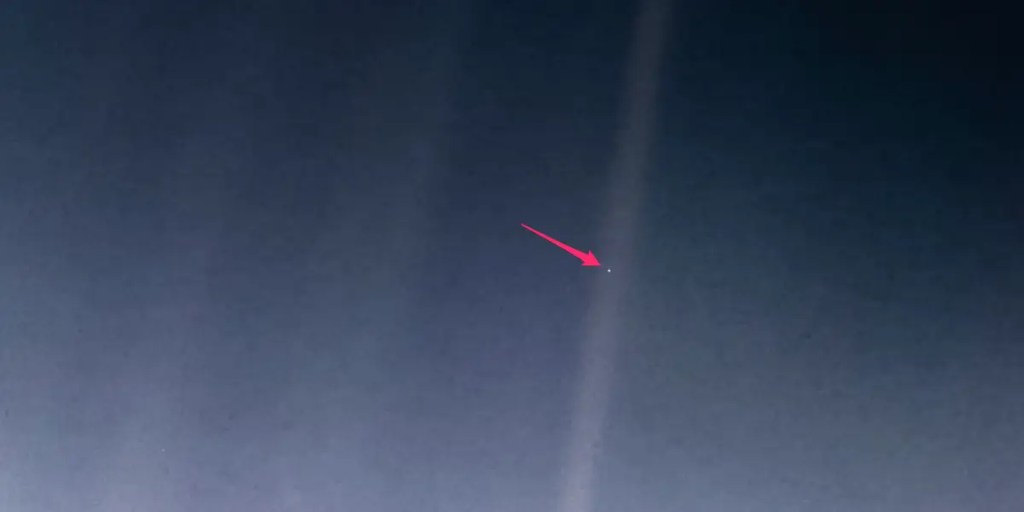
A NASA photo of our planet

On February 14, 1990,  as the spacecraft Voyager 1 raced towards  the fringes of our  solar system,  the engineers turned the  cameras around for one last look at its home planet some 4 billion miles away.  Earth appeared as a tiny point of light, 0.12 pixels in size, inspiring these words from Carl Sagan : 

“Look again at that dot. That’s here. That’s home. That’s us. On it everyone you love, everyone you know, everyone you ever heard of, every human being who ever was, lived out their lives. The aggregate of our joy and suffering, thousands of confident religions, ideologies, and economic doctrines, every hunter and forager, every hero and coward, every creator and destroyer of civilization, every king and peasant, every young couple in love, every mother and father, hopeful child, inventor and explorer, every teacher of morals, every corrupt politician, every “superstar,” every “supreme leader,” every saint and sinner in the history of our species lived there–on a mote of dust suspended in a sunbeam.

“The Earth is a very small stage in a vast cosmic arena. Think of the rivers of blood spilled by all those generals and emperors so that, in glory and triumph, they could become the momentary masters of a fraction of a dot. Think of the endless cruelties visited by the inhabitants of one corner of this pixel on the scarcely distinguishable inhabitants of some other corner, how frequent their misunderstandings, how eager they are to kill one another, how fervent their hatreds.

“Our posturings, our imagined self-importance, the delusion that we have some privileged position in the Universe, are challenged by this point of pale light. Our planet is a lonely speck in the great enveloping cosmic dark. In our obscurity, in all this vastness, there is no hint that help will come from elsewhere to save us from ourselves.

“The Earth is the only world known so far to harbor life. There is nowhere else, at least in the near future, to which our species could migrate. Visit, yes. Settle, not yet. Like it or not, for the moment the Earth is where we make our stand.

“It has been said that astronomy is a humbling and character-building experience. There is perhaps no better demonstration of the folly of human conceits than this distant image of our tiny world. To me, it underscores our responsibility to deal more kindly with one another, and to preserve and cherish the pale blue dot, the only home we’ve ever known.”

Fiddling While Rome Burns

Starting on November 26, 2017, major broadcast networks and 50 major newspapers in the US carried statements from the major tobacco companies saying, for example, “Smoking kills on average 1200 Americans. Every day” and “More people die every year from smoking than from murder, AIDS, suicide, drugs, car crashes and alcohol, combined.”

At the same time these companies continue to  spend roughly $1 million per hour in America on advertisements for tobacco products in convenience stores, wholesalers and adult entertainment venues, offering  discounts and coupons.  These are the same products that are responsible for the deaths from tobacco-related diseases of about 480,000 Americans each year in a country where  lung cancer is the leading cause of cancer death for both men and women. More people die each year of lung cancer than die of breast, colon and prostate cancer combined.

The “corrective statements” are part of a 2006 judgment in federal court which found that companies such as RJ Reynolds and Philip Morris broke anti-racketeering laws, lied about how cigarettes harmed public health and denied their efforts to market cigarettes to children.  US district judge Gladys Kessler  wrote in a 1 683 page opinion in 2006 that the companies caused “a staggering number of deaths per year, an immeasurable amount of human suffering and economic loss, and a profound burden on our national health care system”.

For eleven years after the judgment these companies appealed over details of the statements; thus they do not have to air these statements on ‘the new media’ (40% of Americans now get news online) and unlike in much of Europe, American cigarettes do not have to display graphic warnings on packs following appeals by the tobacco companies and delays from the US Food and Drug Administration.

“The tobacco companies’ basic strategy for everything,”  said Stan Glantz from the University of California San Francisco,  “whether its science or regulation or litigation, is delay.  They have used a lot of arguing about what in terms of the real world are trivial issues, to delay having to make these statements for 11 years – but it is what the tobacco companies do.” 

Documents show that these companies knew as early as the 1960’s that there was a strong correlation between tobacco use and certain types of cancer and that they either suppressed that research in the interests of their own bottom lines or employed ‘biostitutes’ to sow doubt in the public arena.  Biostitutes were scientists who were funded by the tobacco companies and given extensive resources and considerable latitude as to their research provided that occasionally they would write articles not disproving the tobacco/cancer connection but questioning the validity of the research of those who did, thus sowing doubt in the minds of the  public. 

The culminating action came from two sources.  The first was the concept of second hand smoking, by which the public realized that one person’s decision to smoke, say cigarettes, exposed others in the vicinity to risk of cancer.  The second, inspired by the above, was the decision of the man and woman in the street to vote with their wallets and their feet.  They simply declined to patronize facilities that allowed smoking in public.  Restaurants were the first to feel the impact and other institutions quickly followed suit.  It was in effect a revolution, a sea change, to the point that whereas smoking was common place and unquestioned (by news anchors on TV, for example) it is now a rare sight in public  and mostly confined to private or separated areas.  It was a revolution that came from informed consumers rather than from political authorities, many of whom were heavily influenced by lobbyists and financial support from the tobacco industry (which incidentally has now turned its despicable attention to Asia, not least the children, where there are less regulations and less public awareness.)

It is my hope that the same process will apply to the quality of the food that we eat, the water we drink and the air we breath. There is good reason to believe that the environmental agencies, as well as the legislative authorities, are aware of the realities of climate change and the dangers to insect, bird, fish, animal  and human health posed by the omnipresent danger of the chemical cocktails used in our environment (with the emphasis on our.)  I look forward to the day when an informed public will pay attention to labels that are inclusive and transparent, when price will not be the prime issue in choosing what to drink and eat, when public pressure will encourage a better use of resources for the benefit of all life on this planet, and when, despite their continued denials and political influence, the agrochemical companies will be held responsible for the damage they have done and the pain they have caused. 

There are reasons for hope.  The Quebec government, for example, has banned for personal use the five most dangerous pesticides: Atrazine, Chlorpyrifos and three neonicotinoids as well as treated seeds.   Agricultural producers will be allowed to purchase these pesticides only if it is justified by an agronomist with the Ordre des agronomes du Quebec. Philip and Mary Landrigan, co-authors of the new book, Children & Environmental Toxins: What Everyone Needs to Know, connect the dots between rising rates of childhood asthma, learning problems, cancer and toxic chemicals; most of the latter are never tested for safety before they’re sold. And if there is a silver lining to the depressing cloud of opiate addiction it is the light being shone on the manufacturers and distributors of the drugs and the increasing demand that they be held accountable. 

To repeat Stan Glantz, we should expect “… a lot of arguing about what in terms of the real world are trivial issues,” but the recurring deaths of honey bees and the increased prevalence of varroa mites as the bees’ immune systems are compromised by  chemicals are not trivial.  The bees are the tip of the iceberg and we, their minders, need to be speaking out, not least because they cannot represent themselves.  Nor can any other living forms on this precious planet, ourselves excepted, but our future is more closely inter-twined with theirs than most of us realize. 

Behavioral Plasticity

One of humankind’s greatest attributes, and the one that explains much of our success over the past millennia, is behavioral plasticity.  The term was first used by psychologist William James more than a hundred years ago to describe our ability to change habits almost as a matter of course – we change careers, diets, religions, locations, each of which requires that we make choices and adopt new behaviors. This plasticity is the defining feature of our transformation from anatomically modern Homo sapiens to behaviorally modern Homo sapiens sapiens

Neuroscientists are currently trying to explain how this plasticity developed; contemporary thinking is that it is genetic, that particular genes give us a neurotic sensitivity to the environment (witness, for example, the hectic energy as big storms approach, even from those not in harms way, or our preoccupation with the weather channels on TV) and a heightened ability to adapt to new situations. 

Other animals and insects do not display the same levels of plasticity.  A honey bee and her colony are elaborate, finely tuned  mechanisms but they are fixed, as if in amber, in the loops of their DNA, and as such are incapable of fundamental change.  The minority number of drones in a hive, focused on mating with a queen, will never acquire new responsibilities; the queen will always be an efficient ovipositor without developing any maternal instincts; forager bees will always dance in predefined patterns and other worker bees will respond in predetermined ways.

And the behavior of individuals is reflected in their societies.  Some species of bees and some of ants have complex societies with elaborately coded behavior.  E.O.Wilson described leaf-cutter colonies as “Earth’s ultimate superorganisms” but they are incapable of fundamental change.  Certainly by luck or superior adaptation a few species manage to escape their limits, at least for a while (think of the changing resistance of varroa mites to  various chemicals introduced into the hive) but rather than being conscious choices these are normally genetic mutations that enable the species to survive in the face of new environmental stressors. 

Human societies are of course far more varied than their insect cousins, and it is continued plasticity which has enabled us to move into every corner of the earth and to control what we find there.  By many accounts that plasticity faces a new and vital challenge. 

The bees, the bats and butterflies and fish and birds, cannot adapt to a rapidly changing environment and they die or ‘disappear.’  Beekeepers are frequently asked, “Are the bees recovering?” and the longer response attempts to explain that the bees exist in an environment that we have largely created; that rather than look for quick fixes for the bees we need to think about redefining our concepts of standards of living and quality of life so that we can rebuild an environment that is hospitable to all species.  With plasticity comes a responsibility for life greater than simply our own, and in this case it might mean voluntary restraint which, because it pushes against the natural biological hierarchy, is the highest order of behaviors.

The biologist, the late Lynn Margulis, argued that “The fate of every successful species is to wipe itself out.”  We have got a lot of things right, most recently the end of slavery, the emancipation and gradual empowerment of women, and the endorsement and validation of civil rights, and it is depressing to think that we could be successful in so many areas yet get this one wrong.  We can land the robot ‘Curiosity’ on Mars but fail to pay attention to Earth.  To have the potential and not to use it makes us worse than the bees; they at least do not have the privilege and the responsibility of freedom of choice. 

PTSD in the Hive

In the light of Mark Winston’s  challenge to come up with some Audacious Ideas for the Future of Beekeeping, here are two ideas involving rodents and soldiers with PTSD that relate to the big (VERY big) picture. 

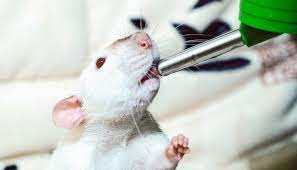
If a rat in a small cage is given two water bottles – one with just water, the other with water laced with morphine, heroin or cocaine – the rat will almost always prefer the drugged water even though it leads to its own demise. 

This was the prevalent theory of addiction : drug dependency is a moral failing and we are inherently hedonists who party too hard until the brain is hijacked. 

In 1981 Canadian psychologist Bruce K.Alexander and his colleagues at Simon Fraser University in British Columbia, asked if the choice was a reflection of living conditions rather than the addictive properties of the drugs. To test their hypothesis they built a kind of rat heaven : a colony two hundred times the floor area of a standard laboratory cage with 16–20 rats of both sexes in residence, food, balls and wheels for play, and enough space for mating. Everything a rat might want. 

They also provided both water bottles – the contaminated and the normal water. Fascinatingly, in this environment, the rats chose the latter. To generalize the overall finding of some complex experiments,  few of the rats overdosed and few developed a behavior that looked  like compulsion or addiction.

Alexander argues that addiction is caused not by morality nor by our brains, but by our ‘cage.’ Addiction, he argued, is an adaptation to our environment. Large numbers of us cannot be present in our lives without some form of drug. We have created a hyper-individualist, hyper-consumerist, isolated world whereas what we yearn for is  connection with people, self worth and dignity. This is contrary to the prevailing message that skillfully trains us from a young age to focus our hopes, dreams and ambitions on things we can buy and consume. A dependence on money has replaced our relationships with one another and nature, and not only do we use money as the measure of our accomplishments but we relinquish control of our lives to institutions that control our access to money.

It is important to say that the findings remain controversial.  The results have been difficult to replicate and it appears there might be a genetic component to the behaviors.

Driving home from one of our beekeeper meeting, I listened to On Point on the car radio, specifically an interview with Sebastian Junger, the author of Tribe: On Homecoming and Belonging. He described how, after months of combat during which “soldiers all but ignore differences of race, religion and politics within their platoon,” they return to the United States to find “a society that is basically at war with itself. People speak with incredible contempt about — depending on their views — the rich, the poor, the educated, the foreign-born, the president or the entire U.S. government.”

It’s a formula for deep despair. “Today’s veterans often come home to find that, although they’re willing to die for their country,” he said, “they’re not sure how to live for it.”

The premise is clear.  Modern civilization may provide us with unimaginable autonomy and material bounty but it has also deprived us of the psychologically invaluable sense of community and interdependence that hominids enjoyed for several million years. It is only during moments of great adversity that we come together and enjoy that kind of fellowship, which may explain why, paradoxically, we thrive during those moments. In the six months after Sept. 11, Mr. Junger observed, the murder rate in New York dropped by 40%, and the suicide rate by 20%

War, too, for all of its brutality and ugliness, satisfies some of our deepest evolutionary yearnings for connectedness. Soldiers have a chance to demonstrate their valor and loyalty, to work cooperatively, to show utter selflessness.  Platoons are like tribes.

Back home we have ‘detribalized’. Our personal loyalties have shrunk to a universe the size of our homes (our immediate families, maybe a few friends;) we have little regard for what’s collectively ours – we litter, we fudge on our taxes,  medical providers defraud Medicare, bankers perform sleights of hand with the markets and destroy the commonweal.

Mr. Junger’s asked why roughly 50% of our Iraq and Afghanistan veterans apply for permanent PTSD disability when only 10 percent of them saw combat. “The problem doesn’t seem to be trauma on the battlefield,” he concluded, “so much as re-entry into society.”  Soldiers go from a world in which they’ are united, interconnected and indispensable to one in which they’re isolated, without purpose, and bombarded with images of politicians and civilians screaming at one another on TV.

Is there any relevance for what we see in the behaviors of honey bees? 

First, let’s think of the cage analogy as the roughly 20 000 acres within which a colony of bees will forage.  We know only too well that the gasses developed to kill people in the First World War (and they were damn good at it) were later adapted to kill insects.  Arsenic and salts were replaced by organochlorines like DDT in the 50’s, by organophosphates in the 70’s, pyrethroids in the 80’s and neonicotinoids in the 90’s.   These were massively applied to the monocultures which replaced smaller diversified farms (in 2017 it is estimated that 40 acres of family farmland is lost to corporate agriculture every hour) at the same time as new parasites and pathogens from Asia and Africa were introduced and the world climate reacted to the environmental abuses of the Industrial Revolution.  

And what if we shrink the dimensions of the cage to that of a beehive? Wax absorbs impurities from the atmosphere, much as our kidneys do on our bodies.  Research at Penn State  demonstrated that forager bees bring back to the hive an average of six different pesticides on the pollen they collect. Nurse bees use this pollen to make beebread and royal jelly, which they then feed to larvae. Over and above this are the chemicals that beekeepers themselves introduce into the colony. 

So is the current behavior of the bees an unhealthy response to their macro and micro environments to the point that they are no longer capable of choosing the ‘clean water’ when it is available to them?  

Bees also have some kind of long term memory which we improperly understand.  For example, how do bees know to prepare for a winter when none of them, except possibly the queen, has lived through a full year?  Is it only a genetic response to changing daylight hours?  And Tom Seeley demonstrates how, given choices, scout bees will unerringly choose the ideal dimensions for a future home. The means that those bees, who have never experienced any other abode, somehow know what the requirements are for sustainable living in terms of volume, height above ground, size of entrance, which direction it faces and ability to withstand moisture.  How do they know this?  Is it some kind of genetic long term memory?  

Is it possible that honey bees can compare the ideal with reality, not least when we as beekeepers, apparently in the bees’ interests, tear the roof of the house, fill it with smoke, separate the different stories, pull out the room dividers, turn the bees upside down (literally) and then reassemble that house often in a different order? Perhaps the problem is that the bees, after having fought a war with the environment, have trouble reentering their own society.  Are we witnessing PTSD at an insect level? 

Faith and the Faithful

History is littered with examples of words that have been used to manipulate feelings, solicit votes and distort reality.  One of the most infamous is the German term Nationalsozialismus, more commonly abbreviated to Nazism. The Nazi Party was founded as the pan-German nationalist and antisemitic German Workers’ Party  on January 5, 1919, and re-named  the National Socialist German Workers’ Party two years later by Hitler, knowing full well that it was nationalist in ambition but neither socialist nor focused primarily on the working class. 

In my own experience during the civil war in  Rhodesia (now Zimbabwe) in the 1960’s and 70’s,  the guerrilla forces that were fighting to be part of the political process in their own country were known either as freedom fighters or terrorists, depending on which side of the fence one stood. More significantly, the white-controlled government argued that the insurgents were the front line of communism, which was good for emotional support from the threatened white minority who saw themselves as the bulwark of western values, but inaccurate in terms of the ideology of these forces who were motivated more by nationalism, a legitimate ambition that, as best I can recall,  was never acknowledged by Ian Smith’s propaganda machine.  And to my shame I cannot recall anyone demanding proof of these alleged communist links, rather being content to accept them unthinkingly as the intensity of the war escalated and the need to justify the violence escalated. 

As an aside, like most other long-lasting conflicts, the longer that confrontation continued the more the power moved to the extremes on both sides and the more the intent moved from participation to revenge.  An exception to this trend was South Africa, in which the peaceful succession of Nelson Mandela in 1994 was a stunning feat in the face of history which can be attributed almost entirely to his personal qualities, character and authority. 

In the US the term socialism is frequently a  pejorative among older sectors of the population.  My guess is that this goes back to the Cold War against the Union of Soviet Socialist Republics, and it was convenient to confuse socialism (which I would suggest is legitimate) with communism (which is not.)  This is of particular interest when Bernie Sanders,  an avowed socialist, contested the US 2016 Presidential race, and in the light of a  2012 Pew poll which suggests that 49% of Americans under the age of 30 have a favorable view of socialism compared to the 47% who expressed a positive view of capitalism.

Int the nineteenth century the social deprivations of the Industrial Revolution sparked civic uprisings focused on the relationship between the needs of the individual and the role of government, and in particular a movement towards economic and social equality.   Known originally as social democracy, it argued that the means of production, distribution, and exchange should be owned or regulated by the community as a whole, with the proceeds being returned to the community in the form of subsidized housing, education, elderly care and health benefits.

Socialists argued this would happen peacefully through the democratic process, and only the major industries would need to be nationalized (ie. owned by the nation) to pay for it.  Communists argued that capitalists would never voluntarily relinquish control of their wealth, that it required a forceful  proletarian revolution, a short term dictatorship, and the abolition of all private ownership. 

So the question becomes, if we governed on the basis of what we see in a honey bee colony, which of these two systems would it look like, if either?  

First there would not be elections as we know them. The nominal leader of such a community would be chosen at a young age.  We would know her mother but her father could be any one of about twenty possibilities. She  would be specifically nurtured for her position, together with a few others, and upon maturity would assert herself in the face of any rivals and would be allowed to exercise her role as long as she was productive and successful.  If not the community would make arrangements to replace her. Her role would not be to make decisions for the citizenry but to provide an on-going population for the continuation and expansion of the species.

Another very small section of society would be entrusted with seeing that, in terms of survival of the fittest, the species would continued as vigorously and as fervently as possible. Only a fraction of this small caste would achieve their ultimate objective; the majority would die unfulfilled and, in the event of a dearth of  resources, they would be jettisoned so that the larger society could survive, knowing that the ‘leader’ could produce more on demand once the resources were again available.  

The majority of the society would consist of a multi-functional working class who created the conditions in which the leader could operate to maximum effect, cleaned house and kept it safe, prepared food  to nurture the next generation  and preserved stores for times of need.  Each of these workers would do all of the above depending on age, available resources and the needs of the community, because it is the health and survival of the populace which would be their guiding principle. 

Democracy is derived from two Greek words, demos (people) and kratos (power) and one could argue that a honey bee colony  is a democracy in that the majority have the power – they make the decisions, instinctively, to replace the leader, eject the males, collect pollen rather than nectar, even whether some should leave home in search of a new abode, and if so, who goes and who stays. It also reflects the socialist side of the spectrum, with “the means of production, distribution, and exchange owned or regulated by the community as a whole,” and everyone sharing the proceeds.

A more interesting term might be communalism (and please note spelling – communalism, not communism) which refers to a system that integrates communal ownership within highly localized independent communities. It was evident in the early Christian churches and later in the Plymouth Colony with its policies of land use and profit-sharing. In 1621 in New England common ownership was the basis for the contract agreed upon by the venture and its investors, even if it was seen  as temporary, with a division of property and profits scheduled to take place after seven years.

Although each family controlled their own home and possessions (ie. their ‘colony,’) corn (ie. nectar and pollen) was farmed on a communal plot of land with the harvest divided equally amongst the settlers. 

Unfortunately the secular planters resented having to share their harvest with families whose religious beliefs so sharply conflicted with their own and within three years each family was temporarily assigned its own plot of land with the right to keep what was harvested from that plot.  Thus it was religious differences that led to a more competitive, divisive, capitalist system.

For three brief years, 1621-24, the Plymouth Colony acted as does a bee hive, with individual responsibility, joint accountability and the welfare of all as the common goal. We still express this as a desired ambition and certainly it can be demonstrably achieved at the family level, but nationally we are too quick to disagree, to dissent and dismiss, and the ‘commonweal’ gets lost in the process.  The problem lies not with the faith so much as with the faithful. 

A Less Colorful World

In recent years casual observation has suggested that both the number and variety of birds visiting our feeders was declining.  Turns out it was not my imagination. 

Two studies were eye-opening and disturbing.  The first, in 2006 in the journal BioScience, The Economic Value of Ecological Services Provided by Insects, evaluated the vital ecological services provided by ‘wild’ insects’ by focusing on  four crucial services they provide : dung burial, pest control, pollination, and nutrition for wildlife.  The answer?  $57 billion in the US alone.  That is about $156 million per day, or in excess of $100 000 per minute.  I suspect that only the US military spends more per hour. 

The second, published in PLOS One in 2017, looks at changes in flying insect biomass in a set of 63 protected areas in Germany based on insect-trap measurement over a 27 year period.  Between 1989 and 2016 the biomass of flying insects in these  areas fell by between 76 and 82 %. Remember, that’s the total biomass, not the number of species that were found.

According to the researchers, “Loss of insect diversity and abundance is expected to provoke cascading effects on food webs and to jeopardize ecosystem services …   Our results demonstrate that recently reported declines in several taxa such as butterflies, wild bees and moths, are in parallel with a severe loss of total aerial insect biomass, suggesting that it is not only the vulnerable species, but the flying insect community as a whole, that has been decimated over the last few decades.”

We cite constantly how much of our food is pollinated by honey bees yet forget at our peril that insects provide 80% of wild plant pollination and 60% of birds rely on insects as a food source.  Of course, the decline in insects is only part of what the natural world has lost. Another study found that between 1970 and 2012 the planet lost roughly 58% of its wild vertebrate abundance.  Do we have any idea what happens when birds eats insects that have ingested pesticides, or earthworms exposed to chemicals in the soil, or fish  exposed to toxins in the water, or beetles exposed to herbicides on grasslands? And what about eating the seeds themselves?  According to Ross Conrad writing in Bee Culture in 2017, one neonic-soaked seed can kill a bird the size of a sparrow, and twelve such seeds can kill a grouse or partridge. 

Does anyone know the sub-lethal effects as we ingest toxic substances in the water, the air and our food, even if in minute quantities? 

David Goulson, et al, in Science, 2015, point to several interacting factors for the decline in the biomass : declining availability of food and nest resources, exposure to agrochemicals, increased incidence of disease, parasites and invasive species, and climate change. Nor do they act singly so much as synergistically. Focusing on food availability, for example, the conversion of land to human infrastructure isolates patches of flowering plants.  In the US, 6000 acres of undeveloped land are lost to urban growth every day. Intensively farmed regions of monoculture provide insufficient resources and climate change is causing similar deficits in wilderness areas. In the same publication, Science, Nicole Miller-Struttmann et al spent 40 years studying  alpine meadows that are largely protected from land use changes and recorded a floral decline of 60%.

Systemic chemicals such as neonicotinoids pass readily into reproductive tissues and interfere with beneficial, as well as antagonist, insects. It is clear that honey bees exhibit neonicotinoid-induced declines in foraging success and navigation but Maj Rudolf, et al, in Nature, 2015,  suggest that honey bee susceptibility may actually underestimate that of other bees. When the authors monitored feral  and honey bee populations in 14 fields paired by land-use history and neonicotinoid treatment, the decline of feral bees was significantly higher  in the neonicotinoid-treated oilseed rape fields than in the honey bee colonies.  The reason might be the eusocial behavior of honey bees : a colony of 40 000 bees can loose 5000 and still recover, albeit in a weakened state, whereas feral bees are primarily solitary.  

In the 1960‘s, when the solutions to conservation issues appeared to be relatively simple, such as in the cases of ozone-depletion caused by halocarbon refrigerants and CFC’s,  or eggshell-thinning caused by DDT,  concerted efforts quickly rallied public and political support to protect important natural resources.   Today, not only is the world becoming a less colorful place, it is becoming a less functional one as well.  The reasons are complex and less easy to simplify in terms of mobilizing the public, but the visual evidence is real if one cares to look, hence the importance of something so simple as bird feeders.  The  time to ignore these global  warnings has passed.  Put it this way: canaries in coal mines only reveal the presence of coal gas if one is willing to listen to their singing, notice when it stops, and look in their cages to see if they are dead. If one just keeps blindly digging out coal, the eventual result is pretty obvious. 

Life, Liberty and the Pursuit of Happiness …

Cattle dipping, Zimbabwe

““Every kind of organism,” Mark Winston writes in the preface to Nature Wars: People v Pests, “has defining characteristics by which it can be identified as an entity different from all others.”  The upward turned wing tips of the  turkey buzzards as they fly overhead;  the square lip of the white rhinoceros that identifies it as a grazer, separate from it’s hook-lipped, browsing ‘black’ cousin; the flashes of color as a family of bluebirds takes flight; the tail of a fox so distinctive from a distance; the strong smell of the Matabele ants so vivid in my childhood memory; the bouquet of frangipani or brunfelsia flowers; the contrasting barks of different oaks species … each signals membership of a distinct group. 

These characteristics have been misinterpreted, sometimes with fatal consequences. The medieval Doctrine of Signatures, for example, held that every plant and animal was put on earth by the creator to serve human beings and was marked with a signature that indicates the use to which it can be put.  Thus the liver-shaped leaves of the liver wort indicated it could cure liver problems, and the ear-shaped hindwing of the earwig was a sign it could cure earaches (crushed, and mixed with the urine of a hare!) 

Humans too have signatures that make us distinctive to other species – an upright, bipedal posture, forward facing eyes and relatively hairless bodies.  These too have been abused, and variations within those characteristics – skin color, hair texture, eye shape, gender – have led to judgment and divisiveness. 

The most unusual aspect of being human however, as Dr. Winston describes, is that we live simultaneously inside and outside of nature. We are subject to the same laws as other animals – our life span is finite, we vie for mates, we respond to variations of temperature and climate – yet unlike other species we consider ourselves not only separate from nature but superior to, and more important than, the rest of life.

Justification for these feelings of eminence was found in the translation of the Hebrew word memshalah as dominion, as in having “dominion over the fish of the sea, and over the fowl of the air, and over the cattle, and over all the earth, and over every creeping thing that creepeth upon the earth.”  Does dominion mean ‘plunder and subjugate,’ or does it mean ‘care and look after’?  A pronouncement by the Imperial Conference of 1926 described Great Britain and the dominions as “autonomous communities within the British Empire, equal in status, in no way subordinate one to another in any aspect of their domestic or external affairs …”   Indeed Canada had been granted  dominion status since 1867, followed by  Australia, New Zealand and South Africa within the next fifty years. 

“Equal in status, in no way subordinate to another …”  Our relationship with fish, fowl, cattle and every creeping thing ‘doth changeth’ in the light of this interpretation  compared to  a definition which justifies the conscious and deliberate remodeling of the globe to suit our needs and which is the core of our current environmental crisis. 

Just as every organism has a defining characteristic so does it have a habitat, a niche with food, water and shelter.  We, by contrast, not only thrive in different habitats but can invent our own, whether it is the complexity of a city or the recent bio-dome built to test humans’ ability to survive in a Martian environment.

If we accept civilization as beginning 10 000 years ago with the development of permanent human settlements in at least four different areas of the world, then our society was essentially agricultural for 97% of that time, before the scientific revolution drastically re-shaped our living standards and our environment.  For more than 9500 years humans carved a few fields out of the forests and woodlands and fertilized them, if at all, with natural products. They burned a sustainable amount of wood and traveled by foot, horseback or cart along essentially dirt tracks.  Today we have token patches of natural vegetation which we need legislation to protect, despite which  more than 150 million acres of pollinator habitat have been destroyed in the United States in the last 20 years. We burn sufficient fuel to modify the earth’s climate and asphalt highways are traveled by vehicles, the emissions of which threaten the very quality of the air we breathe.

An aside. Fifty years ago, and four times a year, my drive to university covered 1400 miles, the first 400 of which took me through just one town and, during which, I might see a dozen other vehicles, if that.   The parents of a colleague, Graham Henderson, realized after he had left for the same trip that his passport was sitting on the dining room table and without it he could not cross the border at the Limpopo river.  They phoned a rural police station 80 miles down the road and described the vehicle.  The police put up a road block, recognized the car, explained the situation and Graham returned home. 

The hazards of driving did not come from emissions so much as from animals on the road,  including, very occasionally, elephants or, more commonly and if it was Thursday, herds of cattle being escorted to the tanks too be dipped for ticks. Today, driving in the US, wherever I go there always seem to be vehicles in front of me and vehicles coming up behind. 

Honey bees are not indigenous to north America and were first introduced in the early 1620’s as part of a western-based agricultural system.  In the last 50 years they have been  inundated with a number of viruses and parasites – tracheal mites, nosema ceranae,  varroa mites, chalk brood and small hive beetle, with more to come – which not only straddle the world as the result of global transportation but exist in an increasingly toxic environment, as indeed do we.   Speaking at the Pennsylvania Beekeepers’ Conference in November, 2016, Mark Winston stated that 1.3 billion pounds of pesticides are used in this country every year, which equates to about four pounds per person.  Considering that most pesticides are toxic to humans in doses of one hundredth thousand to one millionth of a pound, that’s a lot of  poison. 

If we are to be effective perhaps we need to agree on dominion as stewardship rather than as pillage, on interdependence rather than independence, on a web of life rather than a hierarchy.  Action can be effective in a crisis – the response to the depletion of the ozone layer is one example – but stewardship means being proactive rather than reactive;  it means respect for all forms of life, it requires humility and requires a re-examination of what we mean by quality of life. 

Rachel Carson concluded Silent Spring by writing that “the control of nature is a phrase conceived in arrogance born of the Neanderthal age of biology and philosophy, when it was supposed that nature exists for the convenience of man.” 

The theme for the PSBA conference in 2016, “Audacious Ideas for the Future of Beekeeping,” was inspired by Mark Winston’s Manifesto, first published in 2015, in which he argued for a new paradigm  “that recognizes beekeepers as stewards of both managed and wild bees, promoters of healthy environments, managers of economically sustainable apiaries and paragons of collaboration and cooperation. It’s time for some audacious thinking about the future of beekeeping.”  Indeed, it’s time for a BHAG. In 1994 James Collins and Jerry Porras published Built to Last : Successful Habits of Visionary Companies, in which they devised the term ‘Big Hairy Audacious Goal’.  BHAG, as it is customarily referred to, is a strategic business statement designed to focus an organization on a single goal which is audacious, likely to be externally questionable but not internally regarded as impossible.

Let’s return for a moment to the term ‘dominion’ as meaning either plunder and subjugate or caring and looking after.  In describing the different approaches to beekeeping in the United States, Europe and Oceana, as compared say to Africa, Maryann Frazier uses the terms nursing versus nurturing.  In the former the management objectives and styles are mostly economically driven, with the maxim that increased yields means increased profits for the beekeeper. The bees are expected to adopt to our needs despite the fact that they are exposed increasingly to diseases, pests and parasites, they exist increasingly in monocultures, we treat even weak colonies for survival, and the bees are expected to use and re-use old comb, which as Keith Delaplane explained, “forces the bees to use their liver as their uterus.”   It’s hardly surprising that pollinators are in decline in so-called ‘developed’ countries.   

In many parts of Africa, Asia and South America beekeeping is more biologically driven. It is nurture more than nursing, and we are expected to adapt to the bees. Although this is changing, there is less use of pesticides, less exposure to pests and diseases with minimal intervention by the beekeeper, a diverse environment for foraging,  and apis mellifera scutellata is allowed to exercise its need to swarm frequently which not only interrupts the varroa cycle but allows for the frequent building of new comb.  Honey bees are not declining in these areas; indeed they are increasing. 

There are other examples of this comparison not immediately connected to honey bees.  Dr. Mai Van Trang, an Indonesian, in a poem entitled An Asian View of Cultural Differences, describes Asians as always at rest compared to Westerners who are always on the move.  “We are passive; you are aggressive.  We like to contemplate; you like to act. We accept the world as it is; you try to change it according to your blueprint. Religion is our first love; technology is our passion.  We delight to think about the meaning of life; you delight in physics …”   Obviously these are generalizations but you get the picture. 

So what if the BHAG is to move consciously from the current Industrial era to an Ecological era?  Using comparisons developed by Riane Eisler and David Loye in The Chalice and the Blade, what if we were to move from an emphasis on material progress to one of a balance between materialism and spirituality; from a consumptive, self-serving behavior to a more cooperative, life-serving behavior; to an identity defined by possessions and social status which leaves us feeling separate and alone, to an identity defined by our participation in life which leaves us feeling  connected to a larger universe?

Recent elections in Europe and the USA suggest a retrogression to divisiveness, confrontation, fear, judgement and the elements of domination associated with control and subjugation.  Nurturing, by contrast, challenges us to view the world as a living organism of which we are a part rather than an object to be conquered and exploited.  Our interactions would be based on a win:win philosophy and rather than operate from a base of competition, control and fear  we would place our trust in cooperation, partnership and love.  “These words are hard to keep still within definitions,” said Wendell Berry during the 41st Annual Jefferson Lecture, “but they make the dictionary hum like a beehive.”

So, the question remains, what’s to be done?  In 2003 Jane Goodall and Marc Bekoff published The 10 Trusts : What We Must Do to Care for the Animals We Love, which can be tweaked for honey bees : 

  • Recognize that we are all connected and interdependent. 
  • Respect all life.
  • Open our minds in humility and learn from the bees.
  • Teach our children to love and respect nature, starting with all insects.
  • Be wise stewards of this earth.
  • Realize that every action has consequences that last for seven generations.
  • Have the courage of our convictions.
  • Recognize and help those who work for the benefit of the natural world.
  • Act knowing that we are not alone.
  • Live with hope. 

Is there, perhaps,  a BHAG that incorporates a definition of dominion as  stewardship, interdependence and a web of life, that places trust in cooperation, nurturing and partnership and which will lead to a shift of our world view for the benefits of all living things, not least our planet?

The US Declaration of Independence, in words composed by Thomas Jefferson, proclaims that  “We hold these truths to be self-evident: that all men are created equal; that they are endowed by their Creator with certain unalienable rights; that among these are life, liberty, and the pursuit of happiness.”

What if the Creator (whatever that term might mean) believed that these unalienable rights are endowed not just to human kind but to all living things, just as ‘dominion’ does not justify self serving pillage so much as demand the protection and nurture of all life?

Unfortunately, legal systems around the world are not designed to protect nature. Rather, laws and governments are focused on how to use the natural world and it’s resources as fast as possible for maximum financial gain.   There are numerous examples of CEO’s who are contractually obligated to make a profit for the benefit of the share holders even when the product is proven to be environmentally harmful. International trade agreements empower corporations to sue governments in order to obstruct or restrain the reach of environmental laws. Global climate agreements remain largely non-binding and unenforceable.

But there are signs of change, and as with many effective movements, they are evident in small groups of passionate people  from all around the world.  It might be called The Rights of Nature and is described by  Mari Margil on a website,  Democracy : A Journal of Ideas, in an article titled Nature and the Law (20th December, 2016) 

I first got to experience it in Costa Rica some ten years ago.  In lieu of a standing army Costa Rica devotes equivalent funds to education, health care and conservation, to the point that small schools and clinics cover the countryside, 25% of which has been preserved as national parks.  The passion and pride of Costa Rican citizens for the natural world are evident in their daily actions.  

Margil cites other examples. Ecuador, in 2008,  was the first country to recognize the rights of nature in its national constitution, which was tested when a provincial court found that the rights of the Vilcabamba river were being infringed by road construction that was impacting the river’s flow. Similarly in the Galapagos, a judge cited the rights of nature constitutional provisions in ruling that road construction must stop until a government review could guarantee the protection of iguana and other species’ habitats.

Here in the US, in 2013, Highland Township, PA,  passed a local law prohibiting  frack wastewater injection wells, recognizing that the wells would violate the rights of people and ecosystems. The township supervisors repealed the ordinance in 2016 under pressure from an oil and gas company,  community members voted in November 2016 to reinstate the prohibition and the township was sued a second time. The case is currently before a Court of Appeals. 

In February of 2106 the Green Party of England and Wales adopted a national policy platform on the rights of nature, and in September 2016, the General Council of the Ho-Chunk Nation, based in Wisconsin, introduced an amendment to their tribal constitution to recognize the rights of nature. If passed by a vote of the full membership later this year the Ho-Chunk would become the first tribal nation to enshrine the rights of nature in its constitution.  Similar initiatives are evident in Australia and India.

Unsurprisingly, much of industry is opposed to these efforts.

“Rights of nature laws differ significantly from conventional environmental laws,” explains Ms. Margil.  “They recognize nature as possessing legally enforceable rights, including the right to exist, flourish, regenerate and, importantly, be restored. Nature is empowered to defend and enforce its own rights, and people and governments are authorized to do the same. If the rights of an ecosystem are found to be violated, damages are to be awarded in the amount it would take to fully restore the ecosystem, and such funds are to be used solely for that restoration.

“Under rights of nature laws, proposed activities must be evaluated as to whether their operation would violate the rights of natural systems. Thus a frack wastewater injection well would need to be considered in light of whether it would infringe on the right of ecosystems to health and well-being. In so doing, such laws are intended to stop harm before it happens. Under current oil and gas laws, on the other hand, harm is legally authorized and damage that occurs is considered after the fact.  For environmental laws that do provide for citizens to bring suit against a corporation for environmental harm, the courts require citizens to show that they’ve suffered “injury in fact” by the company’s action. That is, they need to show some personal injury from that which was inflicted upon the environment. Harm to an ecosystem is considered secondarily.

“Rights of nature laws move the focus away from the human-centric premise that willfully disregards actual harm to the environment; the concern is the ecosystem itself.” 

Mari Margil points out that although these laws may be relatively new, the ideas behind them are not. In the nineteenth century environmentalist John Muir wrote that we must respect “the rights of all the rest of creation.”  More than a century later Pope Francis, in calling for a new era of environmental protection, declared, in a speech before the United Nations, that “[a] true ‘right of the environment’ does exist…”

As past movements have demonstrated, recognizing rights of the disadvantaged and disposed is difficult, lengthy work, and as current events show, years of work can be undone by the stroke of a pen.

What it means for honey bees and other threatened species is that instead of trying to rescue individuals we turn instead to the larger environment in which they exist and, in so doing, accept responsibility for having adulterated it.  Like the story of the sage in India who came across villagers pulling a never-ending series of individuals from the river, it’s just as important to find out why they were falling in in the first place.  Or as Malcolm Gladwell describes in The Tipping Point, there is a magic moment when an idea, trend, or social behavior crosses a threshold, tips, and spreads like wildfire. Just as a single sick person can start an epidemic of the flu, so too can a small but focused group cause a major paradigm shift. 

 We stand at a tipping point.  “Never believe that a few caring people can’t change the world,” Margaret Mead asserted.  “For, indeed, that’s all who ever have.”   In the words of Mark Winston, “Our ability to radically transform the world has caught up with our historical, human-centered sense of dominance and distance,” or as Wendell Berry argued in the 41st Annual Jefferson Lecture, “Ecological health, in a land dying of abuse, is not worth ‘something’; it is worth everything.”