Positive Confusion

Two scenarios share a common theme, despite being separated by distance and time. In the first, an elderly man walks to the public square where he questions young men on esoteric matters such as the nature of justice.   In the second, reflecting on what was possibly the major achievement of his life, a venerable diplomat says, “It was 700 days of failure and one day of success.”

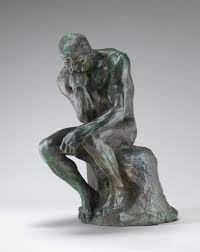
The first is Socrates in the agora of Athens almost 2500 years ago, as described by his student, Plato.  In Plato’s early dialogues, confusion is considered to be the beginning of genuine enquiry, rather than a disagreeable feeling and a waste of precious time. With their assumptions challenged, the young Greeks were left in a state of confusion which, in Socrates’ eyes, was the first indispensable step of any true enquiry into the truth : ‘[Having] been reduced to the perplexity of realizing that he did not know … he will go on and discover something.’

The second is Senator George Mitchell in April of this year, describing the two year process that led up to the Good Friday Agreement of 1998, which brought an end two decades of sectarian conflict in Northern Ireland.  Known as  ‘The Troubles,’ during which 3600 people  died and countless more were seriously injured, Protestants (or Unionists) fought to keep Northern Ireland part of the United Kingdom while Catholics (or Republicans) wanted to be part of the Republic of Ireland.  George Mitchell, a former senator from Maine and Clinton’s ambassador to Ireland, served as chairman of the Northern Ireland peace talks which brokered the historic agreement.

What did he do for those 700 days?  On the surface, very little.  He did not socialize with either side nor did not he speak much in public.  What he did do was listen, and by doing so he honored the state of national confusion without offering preconceived solutions, eventually establishing trust with both sides.  As he later said, “I tried very hard to be fair and nonpartisan. I’d had experience — six years as majority leader of the U.S. Senate gives you some practice in trying to bring people together – and so while there was considerable opposition to my serving as chairman at the outset, by the time we finished, we were all very friendly and we’ve remained personal friends really for the rest of [our] lives …”  

In a seminal paper published in APA PsycNet in 2003, the psychologists Paul Rozin and Adam Cohen asked college students to observe facial expressions and describe the emotion being expressed, as well as the facial movements involved. To their surprise, the most common descriptor was confusion, even though it is not a category in standard taxonomies of emotion, let alone part of the set of basic emotions recognised by psychologists. The question then became: what is the nature of confusion and what is its use?

Most of us encounter confusion on a daily basis, ranging from trying to make sense of an unexpected piece of national news to understanding the reasons for an inter-family quarrel. The world is an inherently and increasingly confusing place, not least in the post-truth era where fake news is ubiquitous : increasingly we encounter statements and problems that do not make immediate sense because they do not fit with previous patterns we have experienced.  Overcoming this results in real learning.

New beekeepers tend to believe the answers lie essentially in memorization or rote learning.  After all, that is how many of us got through school. Some, for example, in an early inspection, will encounter stimuli that are new and unexpectedly confusing, to the point that his or her ability to make sense of them using current knowledge is low. The consequent frustration can decrease motivation to the point of giving up altogether. Too big a piece of the puzzle is missing and  it feels that the game is not worth the strain. This is what researchers call ‘hopeless confusion’.

Complex learning tasks require both a solid knowledge base and the confidence and ability to apply that knowledge for diagnosis and possible solutions. In such instances confusion can act as a motivator.   As an aside, how often do we deliberately allow for confusion in our school classrooms (as compared to chaos) even though the learning from successfully solving a challenging problem can be deeply rewarding? Because of my background, I would add that the history of this country is confusing, and we simplify it at our peril. 

Consider, for example, a new beekeeper who, inspecting a hive, finds she cannot see eggs. Her knowledge base tells her why the presence of eggs is important; now she has to apply that knowledge to determine why they might be absent –  perhaps she just can’t see them, or the queen is not laying, in which case why, or there is a brood break because of recent swarming, or the bees are in the process of superseding the queen.  Amid this uncertainty she can adjust the inspection in a way that will help identify the likely cause which in turn will lead to appropriate solutions, ranging from doing nothing and coming back in a week’s time, to initiating enquiries for a new queen. And in the best case scenario, she will have access to a mentor who can help connect her observations with potential responses.

Nor is this confined to new beekeepers.  For example, I have a colony that did well last year, came through the winter strong, yet had a mite count of 12 in early April and 18 in late May.  My intent was to remove the queen, treat the mites once all the brood had emerged, and add a new queen with better genetics.  Yet, despite three searches, I cannot find her.  The bees are calm, which suggests they are queen-right, and there are neither eggs nor signs of a virgin, such as a queen cell from which she has emerged.  I know what to do –  add a frame with one-day-old larvae and, after three days, check to see if the workers are building queen cells around one or more of them; what I don’t know is why the colony is in this state. 

Similarly a colleague and neighbor had significant swarming from his hives last year, continuing this spring with 21 swarms from 12 hives.   It doesn’t seem to be an issue of the environment providing excess resources (his apiary and mine are less than a bee-mile apart,) nor is it likely all of his queens have a high tendency towards swarming.  Is it a management issue?  If so the answer in not immediately apparent, and he is approaching it rigorously, asking valid questions and making good notes, including graphical representations of the relationship between temperature, rainfall and swarms in his apiary. 

So he and I are confused, and happily so, the recognition of which is motivating a deeper kind of enquiry with more thorough information-processing, and without trying to hasten a conclusion.  An eventual solution will increase the chances of overcoming the next obstacle not by working harder so much as by working  differently.  The proviso is the 85 % rule – the optimal degree of difficulty to heighten focus without leading to a sense of helplessness, is a task in which learners succeed 85% of the time.

Research in neuroscience shows that encountering a problem while learning a new skill such as beekeeping enhances neuroplasticity in our brains, which make us more alert, focused and cognitively active. My guess is that most experienced beekeepers can relate to this process, in particular the feeling of being more focused, more aware, more alive, when working with honey bees.  Enhanced neuroplasticity is why retirees are frequently advised to take up a new hobby or interest, and might be why many beekeepers turn to this hobby later in their lives. 

But I don’t want to stop here.  I want to argue that there should be legitimate confusion on a much larger scale. Nicola Broadbear, the director of Bees for Development, writing in the Spring, 2023,  issue of the Natural Bee Husbandry magazine, suggests that “(P)eriods don’t become defined by the styles for which they are known until long after they have ended, and maybe the past fifty years will be regarded as the beekeeping crazy era, when it was thought that we could keep honey bee colonies in sub-standard housing, shift them from place to place, reduce the range and abundance of available flora, stop them reproducing normally, take away all their honey and feed them white sugar instead, treat them with chemicals, and we then complained that they became sick and died!” 

Reframing confusion as a positive and valuable feeling invites us to rethink some of our accepted practices. In our current world, information, data and pre-made solutions are so readily available at the tip of our fingers that we deprive ourselves of opportunities to enhance our brain plasticity by contemplating possible answers of our own. Instead of trying to come up with hypotheses for our questions, we put our brains on pause while we type in the question for Uncle Google and wait for the answer to be delivered on our phones. To cite Vidya Rajan (again) in a personal e-mail, “. So much information, but so little thinking/rumination because information just “is there”. No analysis, no inference, no hypotheses. Just answers. Boom.”

And yes, clearly there are times when confusion is inappropriate – I don’t want the pilot flying my plane, nor the surgeon about to operate, to be confused; my guess is that it was the hours of training with different unexpected scenarios  that allowed Sully Sullenberger to execute an emergency landing of US Airways Flight 1549 on the Hudson River, in January of 2009, in which all 155 passengers and crew survived.  

How might Socrates and George Mitchell approach ‘the bee problem’? I imagine the former would ask persistent and demanding questions prompting us to examine what we have come to take for granted, until we were open to questioning the issues raised by Nicola above – the structure of a modern hive, the mass transportation of bees, the lack of natural resources, feeding sugar and exposure to chemicals.  George Mitchell, by comparison, might gain the trust of the various sides involved, from commercial beekeepers to hobbyists, agribusiness to small gardeners, until he judged that  exposure to opposing points had motivated sufficient empathy on all sides so as to prompt a higher level of focus and an increased probability of success.

My expectation is that when you read above the request to students by Rozin and Cohen to observe facial expressions, and that the most common description was confusion,  your immediate impression was that this was a negative.  In fact it was a positive. Productive confusion triggers us to think more deeply and to avoid premature closure, despite the frustration. Contrary as this is to current cultural trends which promise immediate gratification,  confusion is an indication that our brain is preparing to focus more deeply, to process more thoroughly, and thus offer us a better chance at learning something valuable.  I for one am grateful, first, that honey bees frequently invite me to learn something valuable (‘beekeeping is a gateway drug!’) and secondly, for friends who allow for that confusion by encouraging my ownership of  the thinking process rather than offering unsolicited advice and premature conclusions.  

Defender of the Faith

On May 6 the former Prince of Wales was crowned, “Charles III, by the grace of God,  of  the United Kingdom of Great Britain and Northern Ireland and of his other Realms and Territories King, Head of the Commonwealth and Defender of the Faith.”

I hope someone told the bees, reassuring them that this is not a return to a previous era when the colony too was headed by a ‘king.’

Despite its emphasis on facts and objectivity, the world of science is not free from personal and societal biases. One example is how the names scientists choose to christen their findings often reflect the society in which they live.  What we now call “worker bees” for example,  were once termed “slaves” because they were named at a time when slavery was common and acceptable.  A more recent example is the inherent bias which has prevented dietitians from seriously considering data that ice cream might be weight-reducing

Aristotle, student of Plato and a man of remarkable intellect – the Isaac Newton or Albert Einstein of his times – compiled the multi-volumed History of Animals in the middle of the 4th C BCE, and it remained the accepted word on animal biology in Europe until the early seventeenth century.  But Ancient Greek society had some strong opinions about women, viewing them primarily as property, so when Aristotle witnessed a society consisting almost entirely of women it is understandable why he assumed the ‘queen’ bees were male and called them kings.

These gender biases were so ingrained that  it took a change in western society 2000 years later for the possibility of a female ruler to compute.  The work which popularized the idea was The Feminine Monarchy, by Charles Butler, published in 1609 when the author was 49 years old.   The fact that he was interested in bees, that he lived under a female monarch (Queen Elizabeth I)  for the first 43 years of his life, that there were other powerful women in Europe (eg. Elizabeth’s half-sister, Mary I, Marie and Catherine de Medici, Isabella of Castille, Mary Tudor of France, Mary Queen of Scots, Margaret and Elisabeth of Valois, Anne of Denmark, and the various consorts of Henry VIII) meant that society was primed to accept the role of a female leader – even as, twenty years before Butler, the Spanish beekeeper, Luis Mendez de Torres, had labelled her the maestro, or mistress, and as such, the source of all the bees in a colony.  Within a generation, Jan Swammerdam proved this anatomically when, after  dissection and under a microscope, he described eggs in the abdomens of queen bees.  

The first irony is that today, in the developed world, most of our human equivalents of worker bees live at a level that Elizabeth I or her father, Henry VIII, would have envied.   As Brian Watson explains in Headed into the Abyss, surrounded by comfort and wanting for little, we have more than enough to eat, have control over our physical comforts including temperature and humidity, might have more than one home, more than one car and more than one annual vacation, and we can buy almost anything we need at the touch of a button, all supported by an endless supply of light, power, fuel and energy.  

By comparison, millions of our fellow worker bees, and not only in the less developed countries, fight every day just to stay alive.  Food and water supplies are unreliable, the air is polluted, life-threatening infections and diseases are omnipresent with minimal access to health care … it sounds like a neglected colony of bees heavily infested with mites.

The second irony is that this queen does not rule.  Curiously,  five hundred  years before The Feminine Monarchy was published, the Anglo-Saxons were using the term ‘bee mother,’ recognizing her primarily as a superb ovipositor even as they did not realize the extent to which she is controlled by the workers. But because we anthropomorphize the natural world it was easy  to impose the hierarchy of the seventeenth century society on the honey bee colony, with a queen at the apex of the pyramid ruling  over her loyal subjects.  This societally imposed misconception obscured for more than two centuries the reality of a society in which there is no hierarchy, no strata, no absolute ruler; this is in contrast to our world with its vast disparity of lifestyles in which some act as if we live on a planet of infinite resources to which they are more than entitled while just as many are fighting abject poverty and denied the most basic of human rights. To steal a phrase from Vidya Rajan, writing about fecundity in India in particular,  “the poor are one fistful of rice away from starvation.”

Meanwhile the ‘perfect storm’ continues to build – an inability by many to accept that our planet exists in a delicate balance with finite resources, a capitalist model that rewards short term profits despite the long term costs, instant global communication that unendingly promotes a consumer mentality and measures growth accordingly,  a political model committed to short term, extravagant  promises and unable to plan long term, increased emphasis on the individual at the expense of community, a global population that is estimated to reach 10 billion in 25 years time, and a populace which feels disempowered and thus  unwilling to  accept personal responsibility for its actions.

Meanwhile the honey bee colony, unseen and unappreciated by most of us, continues to offer an alternative model in an increasingly challenging environment.  The queen may not be surrounded by the pomp and ceremony that accompanies Charles III, nor is her ‘coronation’  extravagant and costly, but she has one overarching attribute : she may not be the leader of the colony but she is in control of its destiny.

·

Too Little Too Late

On March 2nd, Michael Benfield, speaking on the fiftieth anniversary of the Green Party of England and Wales, of which he was one of the founders,  said he believed the battle for the world’s environmental survival was “at this moment, lost … I think we have succeeded in helping to educate but we have failed in dealing with the battle for environmental survival.” The scale of the solutions is simply too unpalatable for any political party to propose, he argued. The focus now has to be on mitigation. “It doesn’t mean to say that we can’t perhaps do other things to put things right, but it’s a very dire situation that we have.”

What follows is an imaginary scenario as to what might unfold if we continue to fail to support the talk with action.  I want to acknowledge at the outset my indebtedness to Dave Goulson’s chapter, A View From the Future, in Silent Earth, David Wallace-Wells, The Uninhabitable Earth,  which covers a huge amount of ground for such a short book, and Brian Watson, Headed Into the Abyss : The Story of Our Time and the Future We’’ll Face

I’ve lost.  Last night they came for the last little bits and I was unable to stop them. What surprises me, looking back, is how fast this has come to be.  I thought it was something my grandchildren would have to deal with; now I believe there is nothing left to which they can respond. 

I recall the abundance of my youth.  Supermarkets were filled daily with food, including exotic fruits flown in from all over the world and available throughout the year.  And it was so cheap that we bought more than we needed, throwing away at least one third, much of it only half-eaten.  Indeed the privileged societies of the world consumed so much that there was an epidemic of obesity and a wave of self-inflicted diabetes at the same time as, every day, hundreds of children were dying world-wide from hunger.    And this excess came wrapped in plastic that went into the landfills together with the dirty diapers and unused medicines, the household chemicals and  industrial waste, eventually leaching into the water systems and thus the oceans, to the point that micro-plastics were omnipresent, including the bottom of the Marian Trench more than 5 miles below the sea surface. 

Gasoline was plentiful and cheap.   Many families had two or more cars, each of which was six or eight cylinders when four was more than enough, heavy on fuel consumption, and there was little hesitation in driving or flying anywhere at short notice, despite the warnings of excess emissions.   And we lived in large houses with beautiful gardens, watered by sprinklers that turned themselves on and off without any thought from us. 

60 years ago in the midst of the excesses of the developed world,  Rachel Carson wrote, “Man’s attitude toward nature is today critically important simply because we have now acquired a fateful power to alter and destroy nature. But man is a part of nature, and his war against nature is inevitably a war against himself. We are challenged as mankind has never been challenged before to prove our maturity and our mastery, not of nature, but of ourselves.”  

In 1992 1700 scientists from every corner of the globe issued  a Warning to Humanity explaining  that the lifestyle of developed nations was changing the global climate, polluting our soils, rivers and air, felling rainforests, overfishing the seas, creating acid rains and driving species extinct, in effect destroying the biodiversity which our planet had developed over literally millions, if not billions, of years, and which is both basic and essential to all life, whether it be animal, bird or insect. 

Governments paid little heed, even when a second warning was issued in 2017, this time signed by 20 000 scientists.  Indeed, in 2000, one of the leading voices on climate change, Al Gore, was narrowly defeated in a Presidential election by George Bush, a climate denier.  With the benefit of hindsight, that was a critical opportunity missed. Most politicians, despite their rhetoric, cannot see beyond the next election, and the general public has become so accustomed to short term gratification that it cannot think long term, never mind take actions that might be uncomfortable despite their being for the greater good.  Add to this a capitalist system that allows multi-national conglomerates to focus on profits rather than the human or environmental good, an unfounded belief in the benefit, if not the inevitability, of endless economic growth, and a belief that science, robotics, mechanization and Artificial Intelligence, despite being part of the problem, would come up with the necessary solutions. Indeed a UNO report in March 2023, eight years in the making, focused on technological innovation, thereby once again absolving John and Jane Doe from facing any personal change in behaviors. 

I have long been a beekeeper, always having (or after last night, perhaps I need to use the past tense) several hives of honey bees.   Thus a personal trigger point was some research out of Germany, published in 2022, which showed that the global biomass of insects has declined by 76% in less than 25 years.  Insects evoke strong emotional responses — usually fear and loathing – but they are the foundation upon which the natural world rests.  Many plants are eaten by them and, in turn, are eaten by other insects as well as by birds, reptiles and a variety of small mammals. But, as this report made clear,  insects, as a class, were dying, and we were the cause. 

Insects are also the foundation of our food pyramid, from earth worms who aerate the soil lessening our reliance on fertilizers, to those who act as biological control agents that can help reduce our reliance on pesticides, to the myriad of pollinators – bees, moths, butterflies, bats, wasps, ants, flies and birds among many others. 87% of all plant species require pollination in order to produce fruits or seeds — and this includes 75% of all agricultural food crops. 

Yet most people remained blithely oblivious to these dramatic changes, explainable by several factors. First, shifting baselines, where we mistakenly thought that the current state of the world at any one time was ‘normal.’ Secondly, the vast majority of people in more developed nations were so detached from the natural world that they saw pollinators only as bugs that needed to be squashed, unaware that the agri-businesses that mass-produced their food was also putting toxins in the water, soil and air to the point that even the nectar collected by honey  bees was impoverished.   Thirdly, our culture and education system for the most part did not encourage deep connections with the natural world, nor the ability to think and act selflessly in the long term.

Consequently, and like the reports before it, the appeal of 2017 had no visible impact on policy or behavior even as the percentages of wild vertebrates declined and carbon emissions increased, together with those of methane-emitting livestock, global climate temperatures and the human population.  It was named The Sixth Extinction and gave rise to numerous appeals on behalf of the polar bears, elephants and white rhinos while the real obsolescence was happening in our own back yards. 

By 2030  food crops such as coffee, chocolate,  raspberries, strawberries, blueberries, peaches and apples became more scare, replaced by the limited (and frankly unappealing) products of the grass family – wheat, rice, and barley – which are wind-pollinated.  It was a self-repeating positive feedback loop because everything in nature is interlinked with synergies that no one could predict. At local levels,  with the gradual loss of, and huge increase in the price of, milk, cheese and beef, the public learned how cattle are fed primarily alfalfa, that  alfalfa is insect-pollinated, and that insect pests had become resistant to the barrage of pesticides to which they had been subjected for decades, thus overwhelming the beneficial  insects like ladybirds, overflies, lacewings and carabid beetles,  severely weakened as they were by the same chemicals.  At a global level reduced ice cover at the Poles decreased reflection of the sun’s energy, leading to more warming and thus more melting (glacier melting in both the Arctic and Antarctica increased more than four times in the space of six years in the early 2020’s;) the thawing of the Arctic permafrost  released huge quantities of methane that were once trapped underground (methane is a far more potent greenhouse gas than carbon dioxide;) changing weather patterns reduced rainfall in the Amazon and forests of equatorial Africa, so the rainforests disappeared after acting as ‘the lungs’ of our planet for some 55 million years.

At the same time extreme weather conditions increased, especially hurricanes and wild fires.

Heavy rains, storm surges and increases in the ocean level flooded cities from New York to London to Mumbai, Shanghai, Osaka and Miami; the weakened economies could not afford to build the necessary protections, insurance companies were bankrupted and eventually large swaths of countryside disappeared under water, starting with the Maldives and Bangladesh and including much of Florida and the Fens of England. 

By 2035 it was obvious that the world no longer had the capacity to feed a global population that had stabilized at some ten billion people.  Summer droughts in the American wheat belt and the advance of the Sahara southwards in Africa meant many farmers had to leave their land with nowhere to go.  A century of intensive farming had critically reduced the narrow layer of top soil on which plants depend; what remained was critically polluted by chemicals (the world’s only sources of natural fertilizer, especially potassium found primarily in Morocco, were exhausted;) underground water used for irrigation had dried up, and all major rivers had stopped flowing in the summer causing storage dams to go dry. 

Increasingly ‘climate refugees’ were forced into crowded temporary accommodations which were ideal for outbreaks of deadly diseases, not least cholera.  The consequent fear, combined with rising unemployment,  food prices and shortages, led to protests, riots, and the election of increasingly extremist politicians who in turn inflamed this pubic anxiety for personal ends.  By 2040 countries had become isolationist, putting their own interests before those of humankind or the environment.  The mistrust, if not derision,  of scientists reached new peaks in an environment in which ‘truth’ was defined by those who shouted the loudest or had the money to buy time on the media. The title of Al Gore’s book, An Inconvenient Truth, seemed increasingly prescient. 

As agricultural production declined globally, money could no longer buy food from abroad, supermarket shelves began to empty and families began to stockpile provisions, resenting any suggestion that they should help feed the migrants camped on their borders. 

There is no doubt that those in developing countries suffered the worst.  The theme of the 2030’s was of the three f’s (floods, fires and famines,) leaving a billion people destitute and desperate.  Millions died in famines; those who survived created mass migrations north and south, trying to escape the civil wars that broke out along ethnic and religious lines as people looked for a scapegoat to blame for their suffering.  

Initially the rich were still able to live in a state of luxury out of all proportion to their numbers, even to their value.  But as the environment collapsed as measured by the increasing levels of  the oceans and of aridity, share prices fell, hedge funds folded and banks collapsed. Hyperinflation made money virtually worthless and everyone was poor.  It was a painful reminder that the foundation of the economy, even of civilization, is a healthy environment – if one cannot grow food the economy is obliterated. 

As early as 2022 life expectancy began to fall, living standards declined and the health services were overwhelmed. An aging population, the epidemic of obesity, related chronic illnesses such as diabetes, the resistance of bacteria to antibiotics, and plagues in the unsanitary migratory camps only made the situation worse.  By 2040 schools, hospitals and a nation’s infrastructure were in disrepair, pay-checks (when they came) could not cover the basic necessities of family life, law and order crumbled, people stole and looted what they could, and many abandoned the cities. Eventually the electric supply faltered and then failed – those who had stockpiled food lost much of it when their freezers failed.  And without power, water stopped running, shops had to close, gasoline was rationed (my ration was two gallons per month) but without electricity there was no way to pump nor to get power for electric vehicles. 

How have I survived, at least until now?   Fortunately I live in a rural area, have a well that can be accessed by hand, solar panels to provide electricity, a few chickens, some deer in the woods which I try to trap and, my pride and joy, a two acre vegetable garden, hidden from view and large enough to feed the three generations that live in the farmhouse.    Or so I thought.   

Last night some desperate, starving people, scavenging what they could to stay alive, invaded the farm. First they killed the few chickens, desperate for meat and ignoring the fact that otherwise there was a steady supply of eggs.  They tore apart the two bee hives, partly for honey, which they could have taken without killing the bees, and then for the larvae which are a rich source of protein, even as their removal will lead to the death of the colonies.   Then they found the garden and tore it up, irrespective of whether the root and leaf vegetables were ready to eat or not.  Everything is gone, including the seed which I collected so carefully in the fall  to create seedlings in the spring.  Yes, I have a gun, but it as empty threat, literally – there has not been any ammunition available for at least five years.  

So, for me and my extended family, as for most others, it is over.    Like those affected by the dreadful plagues in the Middle Ages, we have no alternative but to accept our fate. 

The irony is that in this last decade, with humanity in retreat, there are signs of environmental recovery.  The water in the streams is more clear; there are indigenous shrubs and wild flowers growing in the fields that were once intensively cultivated, without smog and micro-plastics the trees are more leafy, and it might have been my imagination, or even wishful thinking, but last week  I thought I caught a glimpse of a butterfly, which would have been the first in three years.   

It is all too little too late.  We had our chances to change our behaviors, and ignored them, hoping instead for miracles, or at the very least a colony on Mars.  Anything but the acceptance of personal responsibility and accountability.

So what of the future?  Human beings are newcomers to this world.  If we start with the first homo sapiens, which is 150 000  years before the first use of language, as best we can calculate, we have been present for .0004% of the planet’s history.  That is equivalent to 8 seconds in a 24 hour day. There has never been any guarantee that humans are not destined to disappear one day; we just never thought it would be this soon.  Not only is the end of our reign imminent but we should welcome it.  By desperately hanging on, repeatedly doing the same things, we are only postponing the inevitable.  Without us the earth will recover and perhaps, sometime in the next one or two million years, another intelligent species might emerge unencumbered with myths of divine creation and the right to domination, and a deeper understanding of the concept of love.    All evidence of our existence will have disappeared,  and hopefully these new beings, in whatever form they take, will do a better job than we have, not that any of us will be around to see it. 

Observation

An observation hive at the Arts and Science     School, Vancouver

At the University of Burlington, VT,  one of the science professors was renowned for his emphasis on the importance of observation.  Story has it that he would walk into the first class of the semester carrying a jar of yellow liquid, turn to the students banked in rows before him, and announce  that “The only way to find out if this is indeed urine is to smell and taste it,” upon which he put his nose close to the rim of the jar, dipped a finger into the liquid, and then licked his finger. 

“You all have to test and decide for yourself,” he would say, and when they protested he alleged that this was a pass/fail part of the course.  When they had all hesitantly smelled, dipped and licked, he would explain, “If you had been observant, you would have noticed that I dipped my second finger into the liquid, and licked my third finger.”

This past winter ten beekeepers from the local association decided to meet once a month for four months to discuss a previously-chosen book.  The only caveat was that this was not a ‘how to keep bees’ session so much as to reflect on some of the issues bees represent, the feelings they evoke and the challenges they face.

The first book we chose was Mark Winston’s Bee Time (which ended up taking two months to discuss;) the second was Dave Goulson’s The Insect Apocalypse, and the third was Richard Taylor’s The Joys of Beekeeping, most of which consists of the columns titled ‘Bee Talk’ that he wrote for Gleanings in Bee Culture in the 1970’s. 

One of the questions posed was, “What part of honey bees and beekeeping has most influenced you?” The answers included an increased awareness of the natural world, of the meaning of each season, of plant species and their presence, and of the variety of pollinators.   Taylor himself wrote, ”I shall never understand nature, this earth, the bees – all the myriad forms.  No one ever will.  I have no need to.  I gaze in unuttered reverence, and I am fulfilled.”

My responses were two-fold.  Having grown up in a competitive culture, I am constantly affirmed by witnessing a cooperative environment in which there is no designated leader and a commitment to the common good. The second response related to the subtle changes in my skills of observation.  I have written before about spending my youth on Murahwa’s Hill, an uninhabited outcrop close to the house in which I spent my teenage years.  On one occasion, walking over a granite exposure on the hillside, I saw, out of the corner of my eye,  something twitch.  When I stopped, and turned a troop of chacma baboons burst into life accompanied by a vociferous chorus.  On the one hand I had been unaware of their presence while they remained quiet in the trees, which was a lack of observation on my part; on the other hand I picked up the smallest movement in my peripheral vision, and knew enough not to ignore it. 

Some years later I was fortunate to spend time in the company of skilled African game guides as they searched for wild life in the veldt.  Initially I would look in the light, open, sunny places, expecting to see impala, warthogs, kudu, whatever, staring back at me.   The guides explained that most animals have predators, and those that survive have learned to stay within the boundaries of their natural camouflage, which means the periphery, the shade, the tree line.  Learning to look differently, namely to avoid the obvious areas and rather look with a broad, generalized gaze not for a specific animal so much as an unusual shape, the twitch of an ear, or something that for whatever reason felt out of place, dramatically changed my observation skills.  

I can recall, as a young teacher,  being asked to state the eye color of each student in the room, with the suggestion that if I could not do it  I had never really looked at them.  And on patrol as a platoon during the Rhodesian Civil War, we made a habit of not only looking ahead and to the side, but also above and behind. My guess is that GI’s in places like Vietnam, Afghanistan, and Kuwait learned the same habits, out of necessity.  

After my first five years of beekeeping, during which time a frame of bees seemed to be mysterious and confusing, I gradually developed a protocol for a colonial inspection that involves both specific and broad observation.    The first step is to look, really look, at what is on the ground in front of at the hive as well as what was happening at the hive entrance. No expectations – just look. Incidentally, I place old carpet in front of each hive, underside up : not only does it suppress weed growth but it also provides a background on which dead bees are more visible.   Secondly, I look closely at the top of the frames after the inner cover is removed. In part, one develops a sense (sight, sound and smell) of what is normal, and without focusing on any one bee, one comes to recognize instinctively when something is out of the ordinary.  Thirdly, as each frame is removed,  I cast a broad eye over each side, trusting that I will absorb what is important.  With time, rather than an unholy mess of activity, patterns became evident to even the quickest of glances.   Many ask how to find the queen, even as that is seldom necessary – it is more important to see evidence of the quality of her activity.  If I do need to find her she will normally  make herself evident at the first, broad glance because of her distinct shape and the behavior of the bees around her.   Finally, I choose to look closely at one frame – after examining some individual bees for signs of say, DWV, I shake off the bees into the box (putting aside some for a mite check) and, without the impediment of little furry bodies, look specifically into a number of cells. 

This practice, which continues to improve every year,  has converted into the wider world.  Driving, I am instinctively looking to the sides and behind, and am quicker to see a red tailed hawk on a telephone line, or white tailed deer beside the road, or a couple of hives in a backyard that had previously been vacant.  I am more aware of what has been planted in the fields adjoining the road, or what is in bloom.  Consequently I enjoy driving on smaller side roads rather than main highways even though the former may take longer; sometimes time is not the most important criteria.    Walking, I look up and behind as much as forward, and my vision is generic and yet quick to see unusual details.  I am mindful of the comment from Tom Seeley that with the current spotlight on genetics we are in danger of losing an appreciation of observational research, which, time consuming as it is, has been the basis of honey bee discoveries for thousands of years. 

So this is how beekeeping has influenced me, with one caveat – should I be on the phone, my observational skills literally disappear!

As for the Burlington professor, was it really urine?  I don’t know, but one of those students, more than thirty years later, says it is a lesson he has never forgotten. 

“The same life that pulsates in us, the same yearning and striving, the same love of existence, fills everything around us, “wrote Richard Taylor in a chapter entitled Friends. “These things are not foreign; they belong to us and we to them. It is not our role as human beings to conquer, exploit and destroy, but to build up, protect and love in the spirit of acceptance the natural order into which we have been placed.”

The Art of Self Improvement

With acknowledgments to Peter Sieling

Do you ever have one of those mornings when you come downstairs and you know that, in the midst of the normal marital bliss, someone is clearly not happy?   My first response was one of avoidance, usually involving the bee yard where I could hide behind clouds of smoke.  

Then I  realized it was better to hang around, doing little jobs around the house, hoping that ‘she who must be obeyed’ noticed how helpful I was.  I would do the dishes without being asked, clean away all the papers on the dining room table, plug up the entrance to the yellow jacket nest on the porch, hoping that a few stings might show the levels I would go to as a means of contrition. 

My third approach as a one man truth and reconciliation commission, was to read out loud interesting excerpts from books that I thought might lead to some  self-improvement – improvement not for me, you understand, but gentle advice for she who might need it. 

Old bee books hide nuggets of wisdom between the ‘how to keep’ bees information. Lorenzo Langstroth, for example, in the Hive and the Honey  Bee, offered what he called “a friendly word to wives.”

I would say to every wife, do all that you can to make your husband’s home a place of attraction. When absent from it, let his heart glow at the thought of returning to his dear enjoyments; as he approaches it, let his countenance involuntarily assume a more cheerful expression, while his joy-quickened steps proclaim that he feels there is no place like the cheerful home where his chosen wife and companion presides as its happy and honored queen. If your home is not full of dear delights, try all the virtue of winning words and smiles, and the cheerful discharge of household duties, and exhaust the utmost possible efficacy of love, faith and prayer.

For those  of you who want to use this delightful passage in the event of marital discord, it is in the 1878 edition on p. 125.

After I had finished reading, the Chairlady of the Family Fund Raising Committee did not say anything.  Clearly the passage had moved her more than I had anticipated.  I was expecting something like, “Don’t you love how those nineteenth century writers expressed such noble and lofty thoughts?”

“I have my own friendly advice for husbands who are beekeepers,” she said eventually. 

“First, don’t ask me to scrub and wash the shirts you wear in the beeyard.  Either wear a beesuit, like any sane beekeeper does, or use old shirts which can be thrown away afterwards.”

The term ‘sane beekeeper’ struck a note with me.  “The bees can’t tell the difference in my shirts,” I suggested.

She didn’t answer.  “Secondly, the cup holder in the Prius is full of dead bees.  When are you going to vacuum them out?”

“It’s been on my to do list since last fall, and is rapidly working its way to the top.”

“Thirdly, why are there still two hives on the porch?”   I was about to explain that actually they were nucs and they were in the process of being moved away from the apiary, one foot every week, but she continued, “AND there’s a hive in the driveway, another outside the barn, a fifth on the garage roof.”

The last one started out as a bait hive until a swarm moved in, but I didn’t get a chance to explain. 

“Fourth. I’m missing a pair of panty hose.”

“Don’t look at me, I’m not that kind of guy,” I protested.   

“You were using them to strain honey in the kitchen,” she countered. 

“Oh, THAT pantyhose.  I didn’t realize you were the type who counted every article of clothing …”

Then came the coup de grace. “Remember that Lorenzo Langstroth suffered from severe depression, spent much of his life separated from his wife, and moved in with his brother-in-law.  MY brother, YOUR brother-in-law, is looking for a nanny.”

Whoa.  I didn’t know my betrothed was so familiar with the life and times of Lorenzo Langstroth.  I realized it was time to check the bees and I  retreated out of the door. 

It was the bees who inspired my fourth approach. 

Now when I come across a piece of useful information, I write it on a post-it note, highlight it in yellow, write ‘good advice’ in the margin, stick it on her chair, and then go back to the bees.

In the next installment of this exciting serial, I will tell you what I come up with for my fifth approach. 

Mutualism

Mention parasites to a beekeeper and the conversation invariably will turn to varroa mites, both species of nosema, tracheal mites, and even possibly bee parasitic mite syndrome (BPMS,) a complex of symptoms associated with varroa mites, viruses, or a combination of both. By comparison, American Foul Brood and European Foul Brood are bacterial infections, chalk brood is a spore-forming fungus and  sac brood is a virus.

Parasites are ubiquitous to the global ecosystem.  Scott Gardner,  Judy Diamond and Gabor Racz, writing in Parasites (Nov. 2022,) state that “It has been said that every species of animal is either a parasite or a host.” We can add plants to that list, and the single exception is the phylum containing starfish and sea urchins.   

Many parasites are obligate, meaning they are unable to complete their life cycle without a host.  Consider nematodes, for example, a phylum of worms.  They account for 80 per cent of all animal species and are so plentiful that, according to the authors, “one could line them up end to end and have nematodes in every meter across our entire galaxy.” Fossil evidence from South America shows that early species of nematodes infested iguanodons 120 million years ago, which is the middle of the age of dinosaurs. One of the sub-species Ascaris lumbricoides, transmitted by contaminated feces, is present in more than one billion people where it is the source of the tropical disease, ascariasis.  An adult  female produces some 200 000 eggs a day, each of which can survive for a decade. Though the eggs are microscopic, multiple by the number of affected people worldwide and the result is a biomass  equivalent to 8000 adult elephants. 

A parasite with which I had more than a passing acquaintance is Trypanosoma brucei which is transmitted via the bite of the tsetse fly; the consequent ‘sleeping sickness’ overwhelms the central nervous system with fatal consequences. Some people of African descent have developed a genetic resistance to trypanosomiasis although with an increased risk for high blood pressure and kidney disease.  In sub-Saharan Africa this might be worthwhile trade-off, but members of the African diaspora may pay dearly for an immunity they no longer need. 

In terms of plants, in the 1840’s in Ireland, the potato blight caused by a parasitic pathogen resulted in a famine that killed more than a million people and led two million more to emigrate.  The authors caution that “Modern agriculture, in which each individual food plant is genetically identical to the next one in the row, is highly vulnerable to the worst effects of parasitic fungi.”  By comparison, Lars Chittka writes  in The Mind of a Bee (July, 2022 “(W)e have learned in recent years that, in bees, differences occur in any psychological trait examined, and occur between individual bees as well as between colonies of bees …   Variation in individual intelligence is important for how well bees fare in the economy of nature, and variation among individuals in a colony determines the efficiency of their division of labor.” 

Mosquitoes, cockroaches, nematodes, ticks, varroa mites – that is the ‘icky’ factor. 

But there are also parasites that provide a symbiosis with their hosts called mutualism, in which each of the two species benefits from their interaction.  A prime example is honey bees and flowers, where the latter depend on the former for pollination and in turn provide nectar as a carbohydrate for the bees and pollen as a protein essential for the growth of the larvae.  In the words of Victor Hugo, “Life is the flower for which love is the honey.”

An alternative relationship is commensalism, where one partner benefits and the other is unaffected. Trees, for example, provide shelter, protection and, in some cases, nutrition, to birds, which in turn don’t benefit their hosts (with the possible exception of aiding seed distribution) but nor do they harm them. 

What prompted me to investigate this topic a little further was the realization that we, too, are parasites on earth.  Interestingly, the modern definition of parasites originated in the eighteenth century and the scientific revolution.  The original definition is Greek and refers to a person dining at at someone else’s table at someone else’s expense.  First, that is an apt description of our current behavior as a global species.  Ironically we evolved through the good auspices of nature, and now, having evolved, are rapidly destroying that which nurtured us.  In a nutshell, we have ravaged evolution by evolving.  This is unusual behavior; typically parasites preserve their hosts, if not individually at least as a community,  for their own long term survival.

Secondly, just as a bee colony is an ideal environment in which parasites and viruses can exist and multiply – warm and humid with newcomers being introduced through the foraging bees – so we, with our urban lifestyles, are the equivalent of an apiary – one vast, interconnected web that includes covid, avian flu, ebola  and mad cow disease among many others, all mutating at a rate many times faster than are we, and faster than we can come up with safe, effective chemical treatments.  

An alternative is the paradigm of mutualism, neatly summed up by President Luiz Inácio Lula da Silva of Brazil (despite the God reference) when he met with President Joe Biden at the White House on February 10th, and called for protecting the natural world to combat climate change together with creating a world governance to enable us to work together against existential threats.  “This is not a government program,” Lula said. “This is a faith commitment of someone that believes in humanism, someone that believes in solidarity. I don’t want to live in a world where humans become algorithms. I want to live in a world where human beings are human beings. And for that, we have to take care very carefully what God gave us: that is the planet Earth.”

An Objective Matter

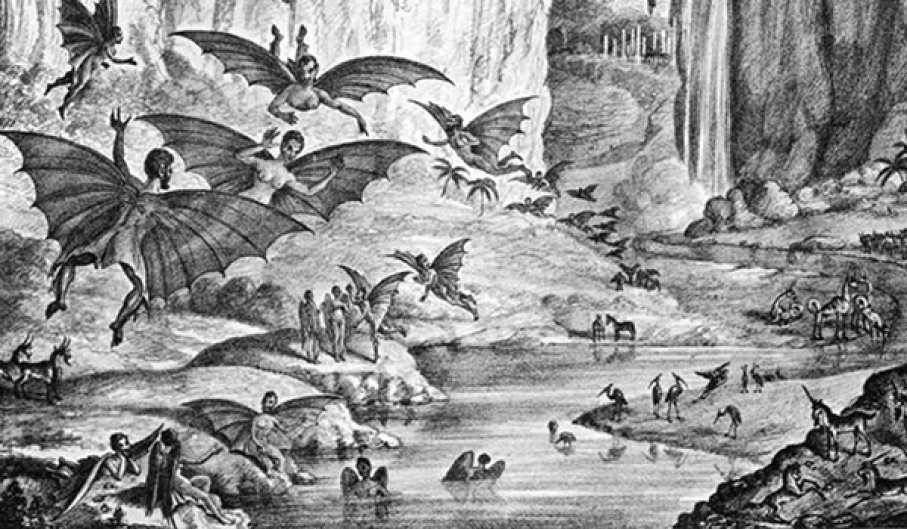
In 1835, the New York Sun printed a report attributed to the Edinburgh Journal of Science which reputedly had been submitted from a remote part of South Africa by the famous astronomer, Sir John Herschel.  In it he described how, after focusing a remarkable new telescope on the moon, he had seen unicorns, beavers walking on their hind legs, and four foot, naked  ‘man bats’ that copulated in public and were given the genus vespertilio homo. (The use of the term vespertilio was clever in that it is the oldest accepted genus name for bats, which Carl Linnaeus grouped with the primates  due to certain characteristics that bats seemed to share with actual primates.)  

The Sun, published by Benjamin Day with Richard Locke as editor, was one of the new ‘penny papers’ that were commonly available, compared to the more established papers which required a subscription that made it accessible primarily to the elite.  The six consequent articles enlarging on this remarkable discovery produced a public sensation to the point that The Sun was, for a time, the most widely read newspaper in the world.

The articles were not intended as a hoax so much as satire, and the reasons it was not  read as such were twofold.  First, New York was deeply divided on the issue of slavery, and those opposing abolition believed that the remedy was to re-settle on the moon.  Secondly, what has been labelled as ‘astro-religion’  was increasingly popular in the early nineteenth century, namely the belief that all of the heavenly bodies were populated because God would not have created them without also creating intelligence beings to appreciate them.  Indeed Thomas Dick, the most popular astronomer of the time, calculated that the population of the moon was in excess of four million beings, and religious groups outdid themselves raising funds to purchase bibles which would be sent up to them.  

Richard Locke, the editor of the Sun, thought this was preposterous, not least the idea of superimposing religion on  science.  “I will give you man bats on the moon,” he wrote, “written in high falutin’ rhetoric, just to expose your ideas.”  What he did not anticipate was that even though the Edinburgh Journal of Science had never published any such article, and even though Sir John Herschel had never sent such a report, so many people were so deeply schooled in the ideas of astro-religion that they simply believed it to be true.   

Locke was deeply concerned as his intended lampoon was taken literally, but the publisher, Benjamin Day, wanted to milk it as much as he could because of the revenue from increased sales, to the extent that he hired an artist to produce a lithograph based on Herschel’s description, versions of which were re-published world wide, invariably with highly imaginative additions. Readers seemingly felt no need to investigate their authenticity for themselves, to check the sources or to question their assumptions.                               

The point is that an idea, an organization, even a person, no matter what its validity, can be misinterpreted through public fervor or ignorance.  And the point of this Corner is that I see something similar in the relationship between commercial and small scale  beekeepers.  

This is not in any way meant to criticize commercial beekeepers who are a particularly North American phenomenon in size and number, and are outnumbered by smaller beekeepers at a  ratio of 99:1, even though they operate more than 95% of colonies in the US  As Al Avitabile wrote in a letter to Bee Culture, December 2022, commercial beekeepers “care and tend to their bees more so than many small size beekeepers, for after all, bees are their livelihood. We … are all members of the beekeeping family.  Commercial beekeepers make any honest living transporting their bees to assist in pollinating monoculture crops (without which) our crops would be far less productive  and their cost to the consumer would be prohibitive. The commercial beekeepers did not create monoculture farming.  However by providing pollinators for these crops they assist in sustaining this form of agriculture.” 

What is important is that the objectives of commercial beekeepers are different to those of small scale beekeepers, as Charles Lindner makes abundantly clear in his on-going series in ABJ, A Year as a Commercial Beekeeper.  In the second installment, November 2022, he wrote, “One of the keys to successful commercial beekeeping is understanding the business.  It is not so much about the bees as it is the logistics.” 

It is easy for smaller beekeepers, especially those newer to the craft, to believe that their big brothers have all of the answers simply based on the magnitude of their operations, even though their objectives are so different.  For example, after the Second World War when honey was expensive and sugar was cheap, some commercial beekeepers (I believe initially in Canada)  realized it was more profitable to remove all of the honey from their colonies and substitute it with sugar syrup for purposes of winter survival.  It was purely profit driven and  had nothing to do with the health of the bees.  

Today we regard it almost as a necessity to feed the bees with sugar syrup, sugar cakes, pollen patties and a whole lot of other  supplements promoted in the journals, all of which would be provided by honey and pollen if there were sufficient quantities available to the bees.  Nor  do we question the effect of such feeding on the health of the bees – replacing the complexity of honey and pollen with simple sugars and yeasts – even as research increasingly shows the questionable value of supplements and additives. More bees may overwinter this way but it is increasingly apparent they are smaller in size, lighter in weight, and have their immune systems compromised, thus (ironically) making them more vulnerable to the 4 P’s, including varroa. 

It is easy to equate size with expertise. Commercial practices, made necessary by the need for profits, are now accepted as a vital part of small scale practices, not least because some journal articles are written by commercial beekeepers and much of the advertising is directed at them.  Charles Lindner, for example, orders 20 000 new frames at a time, and how many side-liners need a 32 frame extractor at a cost of several thousands of dollars, or are interested in buying 8 frame hives once the almond season is over with a minimum purchase of 50?

It does strike me every month that the voice of the hobbyist beekeeper is missing on the Ask Three Beekeepers panel in this publication, even as the majority of the readers are presumably hobbyists.  The responses of Mark, Steve and Charlie are considered and experienced, avoid hoax and  satire as well as the inane kind of fabled reports attributed to Sir John Herschel.  There is much that the smaller beekeeper (and I count myself as one) can learn from them provided we realize that the objectives of large scale beekeeping are different to those of the hobbyist, that objectives drive management decisions, and that hobbyist beekeepers have  aspirations, practices and end goals of their own, equally valid as those of our commercial bretheren. The lesson therefore, as a beekeeper, is to be clear on one’s objectives and manage the bees accordingly.  The moon – man bats and all – is an intriguing distraction (pie in the sky?) but we all have compelling alternatives here on mother earth. 

Toxic House Syndrome


In his book Bee Time : Lessons From the Hive, in a chapter entitled ‘A Thousand Little Cuts,’ Mark Winston  describes in exquisite language and detail, “(T)he slow but relentless transformation of beekeeping from a relatively small scale, pastoral occupation directed by a close feeling for nature’s rhythms, with little chemical input and mostly stationery apiaries, to a highly industrialized business where mobility is essential and management is driven by artificial feed, pesticides and antibiotics.”

Colony Collapse Disorder was one of the outcomes of the latter form of management,  and significant energy was devoted to studying the causes.  The initial suspect was a  new disease or pesticide until attention refocused on the synergy between multiple factors, of which pesticides were central, both those applied by farmers in nearby fields and those applied by beekeepers in the hives.

The first significant study came from the Department of Entomology at Pennsylvania State University in 2010 which found 121 different pesticides in wax comb, many with known toxic effects on bees, and an average of 214 ppm of pesticides in stored pollen. Although the latter had been delivered very efficiently to both nectar and pollen by a new class of systemic insecticides called neonicotinoids, Chris Mullin, one of the authors, asserted that “It’s not any one of the pesticides correlating with with decline or health problems; it’s the suite of chemistry and the chemical load that causing the problem.”

In France, Yves LeConte showed higher bee mortality and reduced resistance to diseases when bees were exposed to nosema spores together with a pesticide (imidacloprid, a neonicotinoid) rather than when exposed separately.  At the University of Maryland a study reported that the impact of miticides applied by beekeepers was more severe in the presence of antibiotics, in that the ability of the bees to detoxify and eliminate pesticides was reduced.  

Wanyi Zhu, at PSU, developed a model using invariables such as the reduced nectar and pollen collection from disoriented foragers, the shortened life spans of workers who  begin to forage several days earlier than they normally would, and small increases in larval mortality which caused eventual reductions in the worker bee population, all of which destabilize the age structure of a healthy colony, disrupting the vital balance between eggs, larvae, pupae, workers and foragers.  Remarkably the model mimicked CCD almost perfectly – all seemed well until the colonies suddenly collapsed and died. 

The overall picture of these and many further studies is that small effects on individual bees are amplified as they accumulate in the thousands of workers that make up a colony. Each worker’s functions are only minimally reduced by one exposure but reactions between diseases, miticides and  agricultural pesticides lead to considerably worse outcomes. 

The overarching lesson is one of synergy – disorders act together and escalate exponentially to induce considerably more damage than simple addition would predict. In agriculture, for example, the application of herbicides, fungicides, pesticides and fertilizers have increased at the same time as water becomes an increasingly sensitive resource.  Like the bees, it is not one issue in isolation but the synergy between them that Winston calls ‘the toxic chemical treadmill’ – increased resistance in pests, decreasing biodiversity, habitat reduction, the build up of chemical residues in soil, water and air, and the increasing costs for farmers together with increased rates for petroleum, natural gas and food caused by the war in Ukraine. 

Nor is this limited to bees and agriculture.   Our homes, schools and  workplaces are riddled with a profusion of synthetic compounds in a potentially toxic package.  Winston describes some of the  interactions as described by biologist Sandra Steingrabber in Raising Elijah –  preterm births linked to exposure to combustion products from coal, the connection between asthma and plastics, between learning disabilities, organophosphates and heavy metals, and between autism and chemical exposures in early pregnancy.  With one exception, risk assessment is  based on one material at a time even though we are exposed to hundreds, if not thousands, of low level toxicants in our food and environment, each of which alone is supposedly safe for us, according to the EPA, but perhaps not in combination.  Why?  Because almost none has been evaluated in groups of two, three, ten or hundreds even though the fate of the bees confirms the regulatory limits to the exposure of single compounds offer little safety. 

Anyone who has picked up a prescription at the local chemist knows what that exception is –  the pharmaceutical industry.  In the US, where people over 55 take anything from 6 to 9 drugs on average, regulatory authorities require exhaustive tests of drug interactions, and even when a drug is approved the side effects are extensively monitored.  (The same monitoring does not apply to products labeled ‘natural’, even though they cram the shelves of the same pharmacy.) 

I feel like I am living in the midst of a CCD epidemic, although I prefer Chris Mullin’s phrase,  toxic house syndrome.  In the 24 hours leading up to this article, over and above the regular acrimonious political news, stories related to climate change (as of mid-October, 2022, there is nowhere on earth where it is safe to drink rainwater)  and fears of a recession, there have been vivid images of child starvation in Sudan and the Yemen, barbaric deaths of civilians in the Ukraine, missiles launched over Japan by North Korea, fears of rising winter fuel costs in Europe, threats of nuclear war by Putin, the bombing of a school in Afghanistan were 50 girls killed as they studied for university entrance exams, and 30 young children killed in a day-care in Thailand. 

When is one cut one too many?  Like CCD, it’s unpredictable, even unforseeable.

I can handle and respond to each issue alone, but it is the synergy between them which is overwhelming to the point that I want to abscond, if not physically then emotionally and mentally.  Yet I also want to stay informed, not to bury my head in the sand.  So what to do, not least as our exposure through modern media is only going to increase?  Incidentally, the evening news programs often end with a ‘feel-good story’ of individual kindness or generosity, but somehow it doesn’t cut it in the face of the preceding stories of overwhelming tragedy and sadness. It’s the old tale of the frog in water on the stove; he doesn’t react as the heat gradually escalates until it is too late and he boils to death.  We may not literally be in the process of incineration but the increasing rates of mental illness may be a symptom of that distress. 

Historically, this is when a populace is tempted to trade its liberty for security, realizing too late that the ‘strong man’ cares little for those who gave him or her that power. 

 In terms of solutions, beekeeping is probably the easy part in that we need to become more bee-centric, meaning managing honey bees in terms of their health and well-being as they have established it over the millennia, rather than for the convenience of the beekeeper.  The environment in which pollinators exist is more challenging, and it is depressing to note that in the coming elections only one percent of the voting population regards climate and environmental issues as their main priority, or that here in York County, according to the latest county profile, of the 253 000 acres of farmland, only one percent is farmed organically. Unfortunately, the environment is controlled by the politicians who in turn are influenced by the deep pockets of industries with their own profit-oriented agendas.  Bee colonies, by contrast, remain in the hands of the beekeepers. As with our toxic houses, schools and workplaces (consider children bussed to school in vehicles belching diesel fumes)  education is a vital part of the solution, and meanwhile I vote with my wallet by making purchases in line with my values, as happened with the anti-smoking movement a generation ago.  And lets not forget how one amazing person – a Rachel Carson, John Muir, David Thoreau, Ralph Nader, Greta Thunberg – can make a difference as long as we don’t abdicate our personal responsibilities. 

Ultimately the solution involves reducing pesticide use and diversifying farms in a way that enhance both our food security and the natural world on which we depend.  There is much research to show that this is economically realistic; the challenge is to change the current mindset which is beset with inertia.  I’m reminded of the many predictions in the 1900’s that the automobile had no long term future and that it was physically impossible for a man-carrying machine to fly!

That leaves our exposure to incessant stories and images of brutality, criminality, denial, irresponsibility and cruelty to the innocent.  I guess we each have our own solutions, which for me include recognizing my meaningful sphere of influence and acting within it.    Honey bees are an essential part of this.  How often am I asked, “How are the bees doing?” which provides an opening to discuss wider issues. I can be creative in ways to help them, and I get to appreciate a creature and an environment that has, like us, survived and prospered through collaboration.  

‘How are the bees are doing’ offers other specific reactions as well.   Common lore has it that a honey bee starts working immediately she leaves her birth cell and doesn’t stop until she dies of fatigue some five weeks later.   In fact in 1983 an English research, Walter Kaiser, showed that bees sleep anywhere between 5 and 8 hours a day, According to Jurgen Tautz, young bees sleep for shorter periods than foragers and are fond of “cat naps.” Conversely, adult foragers have a sleep pattern that mimics a human adult –  a night of long deep sleep –  reflecting  the arduous demands of foraging.  They are what Mark Winston calls ‘restaholics rather than workaholics.’ 

This pattern can change.  If stressed, perhaps by a drop in population, the workers begin foraging at an earlier age and return with heavier loads.  But they die younger, a trade-off that is good for the colony but tough on  individuals.  

When sleep deprived, their waggle dance is impacted negatively,  affecting both those performing the dance as well as the observers, which in turn results in less efficient foraging. And according to a report in Nature in June, 2020, sleep disturbances show impairments in both metabolism and memory consolidation.  It doesn’t matter that I am a sloppy dancer, but it does to a bee!`

Although honey bees don’t mirror the exact sleep patterns of humans, there are many similarities. Like honey bees, humans tend to sleep at night so we can have the energy to do demanding jobs during the day. Both human’s and bee’s body temperatures decrease during sleep, they move less, and it is more difficult to wake them when they are in a deep sleep stage.  The lesson for humans is that rest builds a potential for work that can be utilized when our personal professional and personalized lives are challenged, not to mention the implications for our lifespan. 

The term multi-tasking initially defined the ability of microprocessors to do more than one job at a time.  It works well for computers but not so well for people – switching contexts leads to inadequate focus and thus human error.  One example will suffice : auto accidents are four times more likely when driving while talking on a cell phone, which is the same rate as driving while drunk.  

Honey bees also perform many functions during a lifetime, but they do them one at a time, from cleaning out the birth cell to foraging for resources.   They may not be intelligent in the conventional sense, but they are single minded.  The obvious lesson for us in our stressful world is to be present in the moment, much as many beekeepers are when they are in the apiary – calm, focused and without distraction. 

In a chapter titled Bees in the City, Mark Winston describes his appreciation for that ‘sweet spot where nature on one hand and human ingenuity and commerce on the other are in equilibrium.  Bees literally connect one generation of plants to the next … but also pass on values and a sense of belonging to each other and to the generations to come.”

Umwelt

Jakob von Uexküll, born into an aristocratic family in  Estonia in 1864,  lost most of his wealth by expropriation during the Russian Revolution. Aged 53 and needing to support himself, he took a job as professor of biology at the University of Hamburg where he became particularly interested in how living beings perceive their surroundings.  He developed the concept of  Umwelt (literally, in German, environment) meaning not so much one’s blanket surroundings so much as those aspects that an animal can sense and experience. By contrast, the Umgebung would be those same surroundings as seen from the particular perspective of a human observer.

He describes, for example, the tick.  “(T)his eyeless animal finds the way to her watchpoint [at the top of a tall blade of grass] with the help of only its skin’s general sensitivity to light. The approach of her prey becomes apparent to this blind and deaf bandit only through her sense of smell. The odor of butyric acid, which emanates from the sebaceous follicles of all mammals, works on the tick as a signal that causes her to abandon her post (on top of the blade of grass/bush) and fall blindly downward toward her prey. If she is fortunate enough to fall on something warm (which she perceives by means of an organ sensible to a precise temperature) then she has attained her prey, the warm-blooded animal, and thereafter needs only the help of her sense of touch to find the least hairy spot possible and embed herself up to her head in the cutaneous tissue of her prey. She can now slowly suck up a stream of warm blood.”

Thus the Umwelt of the tick is reduced to only three carriers of significance: the odor of butyric acid which emanates from the sebaceous mammalian follicles the temperature of 37 C. degrees corresponding to the blood of all mammals, and the hairiness of mammals.

In  his most recent book, An Immense World : How Animal Senses Reveal the Hidden World Around Us,Ed Yong explains that “Every Umwelt is limited; it just doesn’t feel that way.  Each one feels all encompassing to those who experience it.  Our Umwelt is all we know and so we easily mistake it for all there is to know. This is an illusion shared by every creature.” 

Take bats as another example, particularly pertinent after a recent encounter with a wounded bat which ‘screamed’ at me as I tried to capture and release it from our kitchen.  Bats are one of only two animal groups that have perfected the skill of echolocation; the other is toothed whales such as dolphins, orcas and sperm whales.  

Related to body size, the pulses emitted by bats are higher and louder than those from whales because high-pitched  sounds quickly lose energy in air  and thus must be strong enough to return audible echoes. To avoid deafening themselves, bats contracts the muscles in their  ears in time with their calls, opening them in time to receive the echo.  And because each echo is a snapshot in time bats must send out their pulses quickly to detect fast-moving  insects – consider that some species of bats can catch as many as 1200 mosquitos an hour, which is more than their own body weight in a night.  With their fast moving vocal muscles (the fastest in any known mammal) emitting as many as 200 pulses per second, and a nervous system so sensitive that, in total darkness, it can differentiate the time between the release of the pulse and receiving the echo by one millionth of a second, a bat is much more precise at detecting the position of an insect than we are.  

The point is that it is impossible for humans to imagine using echolocation to navigate, to sense danger  or to find our food, and thus impossible to imagine the reality of life as a bat.   The closest I can come is the auto sonar system which warns of another vehicle coming too close, but even that is far from a bat’s world.  The one that I rescued in the house wasn’t screaming at me, it wasn’t an aggressive display despite the surprisingly long teeth; the bat was sending out pulses to  determine the Umwelt, in this  case me, whereas I perceived it in terms of the Umgebung, or a mindset based on my human experiences.  What seemed to me to be screaming in fear was the bat’s echolocation observed up close. 

The issue of whether or not the bat had rabies is a different but very real matter.

Of all the species, humans alone (as best we know) possess the ability to appreciate the Umwelten of other sensory beings. But there is a critical difference between appreciating and experiencing – it is impossible for us to experience life as a honey bee.  I doubt it is even truly imaginable to us.  We don’t have the super sensitive antennae, the responses to pheromones, the close association with the super organism, the devotion to the survival of the species, a fragmented vision that includes infrared light, a navigational system based on the sun, the ability to work closely in the dark, the ability to fly or to create our own ambient temperature …   Their Umwelt is so foreign to us as to be inaccessible, not matter how hard we try.  Technology can recreate some of the specifics but to deny our own Umwelt and immerse ourselves fully in the sensate experience of the honey bee is inconceivable. 

Rather than simply appreciate, we barrage different animals with stimuli and language of our own making, thereby forcing them to live in our own Umwelt and perpetuating an era of biological annihilation.  We project our experiences and expectations, our Umgebung, on to the honey bee, not least by anthropomorphizing our observations and describing the behavior of a honey bee in human terms.  It can be as obvious as Jerry Seinfeld’s Bee Movie, or illustrated comic segments in the journals, or, less obvious, using human emotions like happyangry and content to describe bees or their colony.  The use of smoke does not make bees think that the forest is on fire, the loss of a queen does not make the bees sad, worker bees do not have a maternal instinct towards the larvae they feed. 

To avoid such anthropomorphism is not easy, yet a first step is to question the conditions we have forced on to honey bees as we attempt to manage them and instead to examine more closely, a la Tom Seeley,  the criteria they develop for themselves.  Instead of requiring them to live in our world, lets try being more sensitive to theirs.  We will never fully do it but we are the only animal that can try.  This availing of ourselves to perspectives beyond our own is a profound gift which comes with a heavy responsibility.  “As the only species that can come close to understanding other Umwelten,” Yong urges, “but also the species most responsible for destroying those sensory realms, it falls on us to marshal our empathy and ingenuity to protect other creatures and their unique ways of experiencing our shared world.”

Incidentally, when Adolf Hitler was a demagogue and before he became a tyrant, Jakob von Uexküll held hopes that Nazism might bring an end to the expansion of communism and the democratization of German society, for which he had an aristocratic antipathy.  By the autumn of 1933 he had rejected the way in which his work was being used to justify Nazi policy and ideology, describing racial discrimination against Jews as “the worst kind of barbarism,” and henceforward tried to avoid political issues, much as it often proved impossible. He died on the Isle of Capri as the Second World War came to an end, aged 79.

An Abundance of Lies

Rachel Carson

In 1949 Karl von Frisch and his wife, Margarete, visited the United States for two months as guests of a number of Ivy League schools, and it proved to be a journey of mutual admiration.   Karl gave a number of talks, including his discovery of the language of the bee dances, and he was by all accounts a superb speaker.  He in turn was impressed by the country’s abundance, especially in the light of the dark backdrop of post-war recovery in Austria and Germany, and the sense of progress and optimism exuded by the people.  According to his biographer, Tania Munz, writing in The Dancing Bees, Karl saw a washing machine for the first time, and “a machine that could be filled in the evening with ground coffee and water and then set to begin brewing early in the morning.   When the coffee finished dripping into the carafe the device doubled as an alarm clock and woke its lucky owners to the smell of fresh coffee.” 

 Certainly there was a prevailing sense in  America that scientific advances had not only won the war against the Axis powers and Japan but were improving exponentially the daily lives of its citizens. With few exceptions, that optimism suppressed any  thought of the risks and costs that came with such advances, and when concerns were expressed,  many industries mobilized aggressively, and often dishonestly,  to counter them.

I offer three stories as evidence, the first of which is that of DDT.  Developed in 1939 and  initially used during World War II to clear malaria-causing insects from South Pacific islands for American soldiers, DDT was effective in that it killed hundreds of different types of insects rather than targeting only one or two.  In 1948, the Nobel Prize in Physiology or Medicine was awarded to a Swiss scientist, Paul Müller, “for his discovery of the high efficiency of DDT as a contact poison against several arthropods.”

Meanwhile Rachel Carson, a Pennsylvania native, well educated and a former marine biologist with the U.S. Fish and Wildlife Service, received a letter from a friend who was concerned about the numbers of birds dying on Cape Cod as a result of DDT spraying. When her investigative articles were rejected by a number of magazines she spent four years writing the book that would become Silent Spring, detailing the process by which DDT entered the food chain and led to cancer and genetic damage.  She ended with an appeal  for further study  before making any decisions with potential environmental impacts. 

The book was first published 50 years ago this month and serialized in The New Yorker in 1962, initiating calls from readers for governmental action. In response the pesticide manufacturing companies devoted three million dollars (in today’s money) to discredit Carson, an attack spearhead by E.  Bruce Harrison, who will feature in next month’s column. An attempt  to sue the publisher to stop publication of the book failed.  One executive for the American Cyanamid Company complained that “If man were to faithfully follow the teachings of Miss Carson, we would return to the Dark Ages, and the insects and diseases and vermin would once again inherit the earth.” Monsanto produced a parody of Silent Spring titled “A Desolate Year,” claiming that disease and famine would run amok in a world where pesticides had been banned. In a 1963 editorial entitled “The Myth of the ‘Pesticide Menace’” published in The Saturday Evening Post, a former science editor, Edwin Diamond, raised rhetorical questions such as why “an industrialist or a scientist…would poison our food and water — the same food and water he himself eats and drinks?”   

Many of the attacks, we now know, came from biostitutes – scientists who were rewarded handsomely by the chemical companies to write occasional articles casting doubt on Rachel herself and her work. Her integrity and her sanity were questioned; she was called ‘radical, unscientific, disloyal, and hysterical.’   In Time, for example, her argument was called ‘unfair, one-sided, and hysterically overemphatic,’ and she was claimed to have a ‘mystical attachment to the balance of nature.’ Some even questioned why she, an unmarried woman, would be concerned about genetics! The campaign against the book had an unintended effect: sales had reached one million by the time she died.

Eminent scientists rose to her defense and President Kennedy ordered the President’s Science Advisory Committee to examine the issue, leading to Carson’s eventual vindication. In 1980, President Carter posthumously awarded her the Presidential Medal of Freedom. 

Sadly, in 1961 she had been diagnosed with malignant breast cancer which had metastasized and which she kept  a secret, knowing that the companies would use it against her. Rachel died in 1964 without seeing the fruits of her actions. In 1970, the Environmental Protection Agency was formed and two years later DDT was banned. And  the dialogue had shifted; the question was no longer if pesticides were dangerous, but rather, which ones.

In Silent Spring Rachel had described how DDT remained in the environment even after rainfall, a claim confirmed by a PSU research team that confirmed the presence of DDT in our soils almost 40 years after it had been banned. In 2007 samples collected from honey bee colonies affected by CCD showed  87 different pesticides found in the wax.  The average was 9 pesticides per sample and they ranged across the chemical spectrum of every category and type.  Last month at EAS In Ithaca, NY, Scott McArt mentioned that 17 insecticides and 10 pesticides were found in the apple blossoms of New York orchards, 20 in California almond orchards, and 35 in New England’s blueberry fields.   And, he added, there is a synergy between fungicides and pesticides – the former  interfere with the detoxification  process as enzymes in the bee gut break down the toxins. 

Rachel Carson’s research and her fears were well founded. 

Second story.   In 2011 a report on CBS confirmed public suspicions that for fifty years tobacco companies had known that cigarette smoke contained cancer-causing particles.  This places the industry’s initial awareness at the same time as Rachel was writing Silent Spring

The CBS report focused on a study  published in the September 27, 2011, issue ofNicotine & Tobacco Research,  in which UCLA researchers had examined dozens of internal tobacco industry documents made public after a 1998 court case.  “They knew that the cigarette smoke was radioactive (as early as 1959) and that it could potentially result in cancer, and they deliberately kept that information under wraps,” wrote the study’s author Dr. Hrayr S. Karagueuzian, professor of cardiology at UCLA’s cardiovascular research laboratory.  “We show here that the industry used misleading statements to obfuscate the hazard of ionizing alpha particles to the lungs of smokers and, more importantly, banned any and all publication on tobacco smoke radioactivity.”

The radioactive particle in question – polonium-210 – is found in all commercially available cigarettes and inhaled directly into a smoker’s lungs.  An independent study by the UCLA researchers found the radioactive particles could cause between 120 and 140 deaths for every 1,000 smokers over a 25-year period.  “We used to think that only the chemicals in the cigarettes were causing lung cancer,” Karagueuzian said, but the research suggested these radioactive particles were targeting “hot spots” in the lungs to cause cancer.

Their study outlined how the tobacco industry was also concerned by polonium-210 and went so far as to study the potential lung damage from radiation exposure.The industry could have removed this radiation through techniques discovered decades previously  but chose not to, on the grounds partly that they would be “costly and dangerous for the environment,” but mainly, according to Karagueuzian, that the tobacco industry was concerned such techniques would make the absorption of nicotine by the brain more difficult, depriving smokers of the addictive nicotine

Indeed David Sutton, a spokesperson for Philip Morris, confirmed onABC News that the public health community had known about this particle for some time, justifying it on the grounds that   “… polonium 210 is a naturally occurring element found in the air, soil, and water and therefore can be found in plants, including tobacco.”  The FDA was not convinced – the resultant Family Smoking Prevention and Tobacco Control Act gave it the power to remove harmful substances, with the exception of nicotine, from tobacco.  

It’s an old lawyer’s mantra that when losing the argument, attack the person. When E. Bruce Harrison labeled Rachel Carson as ‘radical, unscientific, disloyal, and hysterical,’  what was he saying?   That it was radical to put the health and well-being of the soil, water, air and all life ahead of a company’s bottom line?  That her methods were unscientific because they conflicted with the results of company-employed scientists who were being well paid to promote the welfare of the industry? That she was disloyal because she was incorruptible and refused to bend to industrial pressure?  And she was hysterical because she was a woman!

It is comforting to know that the ultimate victory was for science and public health in the face of corporate profits,  but the damage that was done in the meantime, both to the environment and to individuals world wide, is incalculable.   Nor, as the tobacco story shows, did the chemical industry learn any kind of ethical lesson from this experience. 

The third, most recent, and possibly the most outrageous, of the three stories has long term consequences for us as well as for the bees. 

Thirty years ago, E Bruce Harrison, widely acknowledged as the father of environmental Public Relations, addressed a room full of business leaders in Washington, DC.  At stake was a large contract with  the Global Climate Coalition (GCC) which represented the oil, coal, auto, utilities, steel and rail industries; the pitch was for a communications partner who could persuade the public that global warming, as it was then labeled, was not a significant issue, even though these respective industries had done enough of their homework to know that climate change was real and escalating. 

The GCC had been formed in 1989 as a forum for members to exchange information and to lobby policy makers against actions to limit fossil fuel emissions.  Initially it saw little cause for alarm – President George HW Bush was a former oilman and his message on climate was the the same as that of the GCC : there would be no mandatory fossil fuel reductions.

But that changed in 1992. First, in June, at the Earth Summit in Rio de Janeiro, the international community created a framework for climate action.  Secondly, in November, the presidential election brought environmentalist Al Gore to the White House as vice-president. Clearly the new administration would attempt to regulate fossil fuels and the Coalition, recognizing that it needed strategic PR communications,  put out a bid for a public relations contractor.

The details of that 1992 meeting are revealed in a three part documentary titled Big Oil v the World.  Drawing on thousands or recently revealed documents, it was first shown on Front Line on April 22nd, 2022 – Earth Day 

Sixty years earlier E. Bruce Harrison had spearheaded the attack on Rachel Carson’s Silent Spring and his PR company, founded in 1973, had discredited research on the toxicity of pesticides on behalf of the  chemical industry and on the effects of smoking on human health on behalf of the tobacco companies. 

Harrison reminded  his new team that he had taken the lead in opposing tougher emissions standards for car makers by reframing the issue. The same tactics would help beat climate regulation – persuade the public that the scientific facts were not settled and that policy makers needed to consider how action on climate change would, in the GCC’s view,  negatively impact American jobs, trade and prices. The strategy of fear-based misinformation was implemented through an extensive media campaign, everything from placing quotes and pitching opinion pieces to direct contacts with journalists. “A lot of reporters were assigned to write stories,” one of the team members later explained, “and they were struggling with the complexity of the issue. So I would write backgrounders so reporters could read them and get up to speed.”  And the press provided a willing platform.  One of those assigned to write ‘counter perspectives that were not in the mainstream’ later said,  “Journalists were actually actively looking for the contrarians. It was really feeding an appetite that was already there.”

Within a year Harrison’s firm claimed to have secured more than 500 specific mentions in the media.  The ‘scientific uncertainty’ caused some in Congress to pause on advocating new initiatives, and one of the environmental activists later wrote, “What the geniuses of the PR firms who work for these big fossil fuel companies know is that truth has nothing to do with who wins the argument. If you say something enough times, people will begin to believe it.”

In  1995, Harrison wrote that the “GCC has successfully turned the tide on press coverage of global climate change science, effectively countering the eco-catastrophe message and asserting the lack of scientific consensus on global warming.”  Thus was laid the groundwork for the biggest campaign to date – opposing international efforts  at Kyoto, Japan, in 1997, to negotiate emissions reductions. There was a consensus among scientists that human-caused warming was now detectable  but 44% of US respondents to a Gallup poll believed scientists were divided. With the political arena poisoned by public antipathy,  Congress never implemented the Kyoto Accords.  It was a major victory for the industry coalition.

In the same year Harrison sold his firm and the GCC began to disintegrate as some members grew uncomfortable with its hard line. But the tactics, the playbook, and the message of doubt were now embedded and would outlive their creators. Three decades on, the consequences are all around us.  According to Al Gore “It is the moral equivalent of a war crime.  It is, in many ways, the most serious crime of the post-World War Two era, anywhere in the world.”

How different would our world be today if we had addressed the issue openly and impartially at the outset? 

If there is one statement that most typifies the opposing horns of this dilemma it is that from an executive of the American Cyanamid Company : “If man were to faithfully follow the teachings of Miss Carson, we would return to the Dark Ages, and the insects and diseases and vermin would once again inherit the earth.”  The implication is that Rachel Carson’s moderate, well-researched appeal for further study  before making any decisions with potential environmental impacts  was radical, irresponsible and doom-laden.   Her suggestion that exercising reasonable caution with chemicals, that putting first the health and well-being of humanity and of our natural resources, would reinstate ‘the Dark Ages,’ is insulting to all those who have been damaged by their indiscriminate use.  Yet this is the power of the profit motive, this is the impact of short term quarterly performances to satisfy shareholder expectations in the absence of long term rewards.  The indifference of many to our fellow creatures on this earth, human and otherwise, as well as what we will do for money, is shameful, even knowing that the truth will out eventually.  As Dave Goulson writes in Silent Earth, with three million tons of pesticides going into the global environment every year, some of which are thousands of times more toxic to insects than any that existed in 1962, “(Rachel Carson) would weep to see how much worse it has become.”

Nor do we often see abusive corporations and industries held accountable, even as there are exceptions such as judicial rulings against some of the tobacco giants (a large sum levied against the companies) including Juul e-cigarettes last month, and glyphosate manufacturers (large sums in favor of individual law suits.) The amounts

 might have been reduced on appeal but they were not overturned.

These contemptuous behaviors are significant for beekeepers, not only because of their impact on our charges but also because a honey bee community offers a stark  contrast of environmentally responsible behavior. Everything in the colony is motivated by the survival of the super-organism in as strong and as healthy a form as possible, and they utilize the surrounding resources in ways that not only facilitates healthy reproduction but in such a manner that not so much as a leaf is harmed. 

And what of the two men featured in the opening paragraphs of these two essays? Karl von Frisch was professor of Zoology at the University of Munich when Hitler came to power in 1933. In an effort to purge government of Jews ‘and other undesirables’, and based on an abuse of science, the Nazi government required all civil servants to provide proof of their Aryan descent.  In 1940, and after months of searching, the Nazi office for genealogical research found that his maternal grandmother had been of Jewish descent, even though her parents had converted to Catholicism three years before she was born, presumably to secure a better future for their family in a society that was primarily Christian.  Von Frisch, a practicing Christian all of his life,  was a declared ‘a Quarter Jew’ because Nazi ‘science’ was based exclusively on blood, no matter how distant, rather than on cultural heritage or religious belief, no matter how genuine. 

The personal threats and trials he faced during the Second World War make for depressing reading, and he continued his research only because he convinced his connections in the Nazi hierarchy that his research on honey bees was vital for the agricultural effort needed to support the front line troops. When he visited the US three years after the end of the war,  he was welcomed by most as one of the ‘good’ Germans (again, a term from the times,)  one whose life had been devoted to science in its most pure and thorough form.  As he said in one of his Ivy League lectures, “A bee’s life is like magic well : the more you draw from it, the more it fills with water.”

And what of Bruce Harrison, who died last year aged 88 and who’s life was devoted to denying scientific authenticity? In 2003 a sub-genus of mosquito was named Bruceharrisonius.  Anyone who has been locked in a small dark room with a mosquito knows just how irritating such a small critter can be.