A Double Edged Sword

Wendell Berry

Progress is a double-edged sword.  On the one hand we have made tremendous advances in combatting the things that hurt us, damage our crops and blight our environment; on the other hand we have invented painful ways to harm ourselves and our surrounds, the ultimate of which is global climate change. 

This dichotomy is evident in many spheres, not least agriculture.  Modern agribusiness depends on extensive inputs : chemical fertilizers, pesticides, herbicides and fungicides are applied to the seeds, to the soil and to the plants themselves, and undeniably affect the food we eat, the air we breath and the water we drink at levels that we do not fully understand.  An oft-remarked irony is that these chemicals, together with extensive monocultures,  are killing the insects that the farmers rely on to pollinate many of their crops. 

Similarly we hear ad nauseam that honey bees pollinate one third of what we eat.  It’s a misleading statistic in that our diet is based largely on grasses (corn, wheat and rice in particular) which are not bee-pollinated.  Remove those three and the percentage of our foods that are honey bee dependent rises significantly.   Secondly, what the bees do pollinate is most of our commercially produced fruits and vegetables, which are top of the food pyramid.  Without the bees these products become scarce and the cost rises considerably.  Less fruits and veggies means reduced rates of wellness with incalculable increases in health care. And thirdly, bees, together with other species, pollinate the millions of acres of flora that extract carbon dioxide from the air and reprocess it as oxygen.  It is estimated that one mature tree may reclaim as much as twenty tons of carbon dioxide per year. That is not insignificant in an age of dramatically increasing levels of a gas that threatens our very existence.

It requires a certain humility to recognize that sometimes the natural way is better than what we deem as progress.  For example, nature is a self organizing and adaptive network of complex relationships. As with a colony of honey bees, disrupt one part and we disturb a system that has been finessed over millions of years.    But when she is recognized and honored mother nature creates yet more life, more relationships that are both competitive and cooperative and are unimaginably diverse. 

We live in a culture in which it is easy to accept that we have the right to conquer, displace, drain our natural resources; to believe without question that human acumen, together with modern technology, will take us on a guilt-free trip to a brighter future. But as we approach the limits of what life on earth can tolerate we are compelled to realize that there are other ways of being on this earth.  Fortunately there are an escalating number of resources which offer humility rather than hubris, which provide inspiration as to how, together with like-minded citizens of this planet we call home,  we can re-connect with the natural world in a way this is respectful and mutually beneficial. Honey bees are such a resource, and the more we interact with them the more we realize that they are our teachers and we are the students.  

In a recent and rather rare interview, Bill Moyers asked Wendell Berry (farmer, philosopher, poet and novelist) what he has come to understand as ‘the natural logic of capitalism.‘   Wendell replied, “That you have a right to as much as you want of anything you want and by extension, the right to use any means available to get it. I’ve been talking for a long time about leadership from the bottom and I’m convinced perfectly that it’s happening…. The world is full of people now who see something that needs to be done and start to do it, without the government’s permission, or official advice, or expert advice, or applying for grants or anything else. They just start doing it.”  

That sounds like most of the beekeepers I know. 

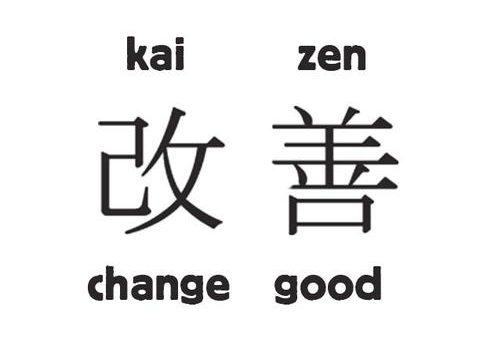
Kaizen

Rumor has it that an Englishman, flying to Australia, was asked by an Australian immigration official if he had any felonies or convictions.   “I didn’t know it was still a requirement,” he replied. 

Many seventeenth and eighteenth century emigrants to Australia did not go by choice, compared with many Europeans (not Africans) who chose to cross the Atlantic to the New World.   One hypothesis is that those who made this choice were the risk takers; those who were more cautious stayed behind believing they could accommodate to or co-exist with the dominant religious or governmental paradigms that were causing others to depart.    And the current American society reflects this in that the pace of life is quicker and more finite.  Thus checkers replaced chess as the most popular board game, poker v bridge, baseball v cricket.   A cricket match at the traditional international level lasts for five seven-hour days and often ends in a draw.  Indeed, in some circumstances, it is honorable to play for a draw and there is no means of forcing a result – no overtime or sudden death. 

I do not have an intimate knowledge of baseball, football or basketball but I am intrigued by the skills of the athletes.  As Mark McClusky documents in Faster, Higher, Stronger, the old presumption was that good athletes had the basic skills, and practice was about getting to work with your teammates. Today, innate athletic ability is the base from which one has to ascend, and with the help of science and technology we are witnessing some of the best athletes in history. McClusky argues that it is not that the best are so much better as that so many people are so extraordinarily good to the point that the performance curve at the top is flattening out, possibly because we are nearing our biological limits. 

There is specific technology for every sport, an example being Nike’s Vapor Strobe goggles  which periodically cloud over for 1/10th of a second intervals  so as to train footballers’ eyes to focus in the midst of chaos. Add to this the use of biometric sensors. Chris Hoy, who won two gold medals as a cyclist in the 2012 Olympics, was followed by a team of scientists, nutritionists and engineers who monitored what he ate and how he trained (an $80 000 carbon fibre bike helped too!) and because his competitors were doing the same, he won in both cases by only a fraction of a second.  Novak Djokovic, for many months the top ranked male on the professional tennis circuit, has a retinue of coaches to cover every skill, Ben Hogan was the first golfer to practice regularly while Tiger Woods introduced a physical training regime which most professional golfers now follow rigorously.  Using computers, chess players today can practice consistently against the grandmasters, and classical musicians routinely play pieces that once were regarded as too difficult for all but a few. 

In the decades after the Second World War American manufacturers faced little competition; they were profitable but complacent about quality until Japanese products began to mount a significant challenge.  In 1969 one third of people who purchased a new American vehicle found it to be unsatisfactory on delivery, and growing up in Rhodesia the first vehicles I knew were European – Citroens, Peugeots, and Renaults – which were considered more reliable. Even today, turn on a safari documentary and the chances are the vehicles will be made by Toyota, never mind the Tacomas driven by ISIS and Taliban fighters in Syria and Afghanistan!

Similarly in the 1970’s service calls for American-made TV’s were five times greater than for Japanese-made sets, and the production time in American factories was three times as long. 


The Japanese emphasized quality control as part of the process rather than a response to customer complaints, an ethos captured by the term kaizen or ‘continuous improvement.   The forces of competition as well as an increasing global market compelled American companies to adapt quickly to the point where although products are more complex today they are also more reliable.  Before I could own my first car (a Peugeot 203) my father insisted that I knew how to strip and re-build the engine.  Today I wouldn’t know where to begin, but the average age of a vehicle on the road is double that of my 1959 Peugeot.

Playing catch-up is neither easy nor fast.  Of the ten vehicles that head the list of most reliable in the November 2014 Consumer Report, only one is US based (Buick) and this is in 6th place.  There are other fields that are equally lagging.  In an article in the New Yorker of Nov 10, 2014, James Surowiecki suggested that they include customer service (poorly trained workers,) medicine (high levels of medical errors and wasted spending,) and education (our teacher training programs lag behind  those of the rest of the developed world.)

And I would add beekeeping to that list, in two respects.  First, reading the Lancaster Farmer every week I am struck by the professionalism of the dairy, beef, chicken, sheep and goat industries; they have a professional staff, a coherent policy and an effective marketing campaign. Yes, I know that most of their members are full time producers with larger financial resources, but their industry relies on ours.  Without honey bees they could not effectively feed much of their stock.  In Pennsylvania we rely on volunteer beekeepers for our common good and in effect the state organization is as strong as the President who is giving of his or her spare time in any one year. This was brought home when I visited Wales and was forcibly struck by the professionalism and presence of advertisements and displays for bees and honey in almost every town we visited; it was no surprise to stumble on a center from which it was coordinated by full time, professional staff.

The second is that beekeeping as a whole has not changed much in recent years, despite the challenges of pesticides, diseases, viruses and monocultures. 96% of us are hobbyists, doing the best we can, which is not always good enough for the survival of the bees. For many beekeeping is still the preserve of a quirky, quaint, mildly eccentric minority and, as one wag put it, if pilots were allowed to start flying with the same amount of skill that beekeepers start keeping bees, no one would step onto a plane. 

Most beekeeping conferences are rewarding and gratifying – there is a sense of kaizen, of self improvement.  Disappointing is the turnout.  Certainly here in Pennsylvania, the annual conference in November attracts less than 5% of registered beekeepers in the state over the two days the conference is held. Many reasons are offered for this, but ultimately we have to show up, no excuses offered.  Local mentors are vital yet there is nothing quite like the energy generated by 10 000 people from across the world, with different languages, different customs, but one unifying passion – honey bees.  This is what happened at Apimondia in Montpellier, France, in 2009 and occurs every second year with Europe and somewhere else in the world taking turns as host. Not all of us can go to Apimondia but we can support the many state and county conferences where nationally respected  researchers and beekeepers share so generously. The speakers are  normally excellent and on point, the information is relevant and based on current data, the presentations professional and accomplished, the vendors increasingly diverse, and the informal conversations are sparkling and informative.  It’s a veritable hive of information and fellowship where very beekeeper, like every athlete,  is given the means to build on his or her innate ability.  Unlike athletes, even the best apiarists don’t yet see a flattening out of the performance curve. 

Learning in Place

In the 1970’s, before the civil war in Rhodesia escalated, I devoted occasional weekends to taking small groups of high schools students to a Tribal Trust Land (not unlike an American reservation) where, by arrangement with the District Commissioner,  we would meet the tribal elders, especially the tribal historian, and record as best we could their oral traditions before they were lost.  Later, we were able to check some of those traditions against the archival record in Salisbury (now Harare)  and were invariably impressed by their accuracy. 

At one of those meetings a young lad sat with his back to a tree and wrote down  the answers given by his uncles to the questions we asked (indeed, just as we were doing.)  His initiative was admirable; the downside was that once we learn to write our oral memories fade as do the traditional stories that connect us with the natural world.  This was reinforced three decades later on the outskirts of Nairobi, Kenya.  An impressive flock of colorful birds was present every morning in the local experimental apiary, and when I asked a Kenyan college student what they were, she smiled and shrugged.  I was at fault for assuming that she would be familiar with the native wild life –  I would not have made that assumption about an American student on the outskirts of an American city – and she might have realized how her ‘education’ had separated her from her immediate natural environment. 

In retrospect I am deeply grateful for the opportunity to have experienced a small part of rural and traditional Africa at the time I did.  I have  written before about the distinguished game guide who was frightened by the flashing lights on my car, or the villagers who took me in when it rained, or the elderly man on his bicycle who was deeply concerned when my sister and I were involved in a minor vehicle incident  

The oral and archaeological records suggest that  the ancestors of these Shona-speaking, Bantu people arrived from the north perhaps as long as one thousand years ago, which suggests there is a continuity to their history that we in the US lack.  The questions, for me, are what does a culture learn from living in a place for that length time without written records, and (of course) does this relate in any way to beekeeping?

Stephen Muecke,  professor of creative writing at Flinders University, Adelaide, has spent many years walking with the indigenous people of Australia, and it was his book, Reading the Country (1984) that provoked these recollections. 

The oral stories that we heard in Rhodesia (now Zimbabwe,) handed down from the ancestors,  not only tied human and nonhuman worlds together but also animated those connections. They had been learned by deep listening and by applying them to an environment with which each person was intimately familiar.  As with the Native Australians and the Native Americans, children learned experientially; rather than ask a lot of questions – respect for elders entails not bothering them too much  – they learned to pay attention and acquire practical knowledge-based skills, rather than the ‘pure’ knowledge we often teach in our schools. 

When Mary and I  walked behind our Zulu game scout in Mkhuze Game Reserve on the trail of black rhino and he casually identified tracks in the sand made by various  antelope,  his skill was not sharp eyesight or a special psychological attribute so much as something embedded in generations of practices involving animals and the land. 

Here’s a bit of handy know-how for you. Should you run out of food in the southern African bush, and wonder what fruits and berries are safe to eat, check the ground for  evidence that the baboons and monkeys consume them. 

We regard knowledge as acquired cognitively, immortalized by Rene Descartes – cogito ergo sum – whereas indigenous people remind us that knowledge is environmentally embedded, that learning happens best after students have their curiosity aroused.  (Sherry Turkel, writing in her Empathy Diaries, suggests that, considering Facebook et al., the modern equivalent of Descartes, is “I share, therefore I am”!)

So how do we create an environment that provokes interest, and then cultivate the relationships essential to good learning?   Sometimes it is easy : a beekeeping class or workshop, for example, normally consists of people who are already interested; when they  meet in an apiary and work on a hive as a group, they are further intrigued and can explore their feelings and their discoveries with class mates. 

Teaching Western Civilization II at 8:00 am to college students who simply needed the credits was a very different challenge.  The difference was relevance, something which has to be nurtured and demonstrated.   The norms of western civilization were seen by these college students as barely germane to their professional schedule, yet I would argue that, in the light of recent events, they are more important than ever. 

Good learning happens slowly,  not in 45 minute segments, and goes both ways; it is not a one-way transfer so much as shared excitement.   I wince every time I read that bees are responsible for three out of every four mouthfuls of food we eat, an assertion  that focuses on what we eat rather than the way the food the bees eat is poisoned because of the way we grow ours.   It is this self-interest which is so destructive, penurious and  hurtful.  

Stephen Muecke calls this ‘living in one place, while living off another’ and offers the following example.   “When multinational corporations arrive in Australia’s North-West to drill for gas and oil, they claim what they are doing is ‘good for the country’. But they don’t mean the local territory, they mean something more abstract, such as Australia and its GDP – or, more specifically, their shareholders, whose lives might be marginally improved as they live in cities or on yachts in the Caribbean. That is the difference between living in one place while living off another.”

Beekeeping is one of those activities.  To do it successfully, one has to slow down, listen to what the bees are saying and observe what they  need to survive. Like all living beings they have their own nature, and if we pay close attention we realize that that we are part of it: we breathe the same air, drink the same water and share the same nutrients. There is no escape; there is no better world. 

David Papke shared with me an extract from Mark Winston’s Bee Time. “Initiating a dialogue requires the same attention as entering an apiary.  Both stimulate a state of deep listening, engage all the senses, hearing without judging … Understandings emerge, issues clarify and become connected … Those too rare moments of presence and awareness, when deep human interactions are realized : they too, are bee-time.”  

Whether under a tree in  a Zimbabwe kraal, on a walk-about in Australia, on the outskirts of Nairobi, or looking for rhinos in Kwa-Zulu, that’s not a bad definition of good education, and we find it all with the bees. 

No doubt everyone’s adventure with beekeeping is different.   Ideally it starts with a good beekeeping class, combining the theory and the practice, followed by a five year period in which, with the help of a mentor, one becomes familiar with the various  storylines of a colony of honey bees.   What happens next depends first on why one keeps bees, secondly on one’s level of curiosity, and thirdly the extent to which one  exposes oneself to current research, thinking and practices. 

In retrospect, the class I took initially was not a good one. The presenter was knowledgable but did not have the communication skills that are an integral part of  inspired teaching, and there was no logic behind the curriculum.  The tip-off was the number of participants who were taking the class for the third, fourth and even fifth time.   This is a  reminder that we need somehow to assess the skill levels of those who volunteer for presentations under the banner of our various associations.  Their willingness to give of their time and share their knowledge is cherished; the question as to gauging their levels of competence is delicate but consequential.  

Also involved with this class was a local supplier who had preordered all the paraphernalia, including packages, that the participants might need.  I can recall no discussion of alternatives, nor of the pros and cons of packages. 

I was fortunate to stumble on the assistance of a mentor during my first year, which proved vital.  It was not a service provided by the local beekeeping organization which, at the time, was a rather small, stolid group which did not offer much outside of the once-a-month meeting. 

After six years of practical, hands-on experience supported by a reasonable amount of reading, and with Mary’s support, I committed to attending Apimondia in Montpellier, France, in 2009.  It was inspirational, stimulating and self-affirming; I returned not only with increased knowledge but also with the determination to take my honey bee management to a new level and to share both with others. 

In the following eleven years there were a series of stimuli, one of which, in 2018, was what Tom Seeley calls Darwinian Beekeeping, and which I prefer to think of as regenerative beekeeping.  In essence, Dr. Seeley suggests that beekeeping has become increasingly designed for the benefit of the beekeeper rather than the health of the bees, and he has examined feral colonies to survey  the conditions that bees choose for themselves, given their druthers.  David Papke had been similarly inspired, was a step ahead of me in coming up with a hive design that was more bee friendly, and we spent a year re-designing our hive bodies and presenting, with differing levels of success, our reasoning to some local bee organizations. The reactions ranged from outright dismissal to skepticism to enthusiasm to excitement.  

Initial results are encouraging, but it is a small sample and early days.  The question is, what kind of changes in management might supplement the re-design of the hive?   It is important to note that at each of the three occasions on which I have been fortunate to hear Tom Seeley present his findings, he stresses that this is a concept for hobbyists, possibly for sideliners, but not for commercial beekeepers, whose objectives and financial commitments are less likely to allow for experimentation. 

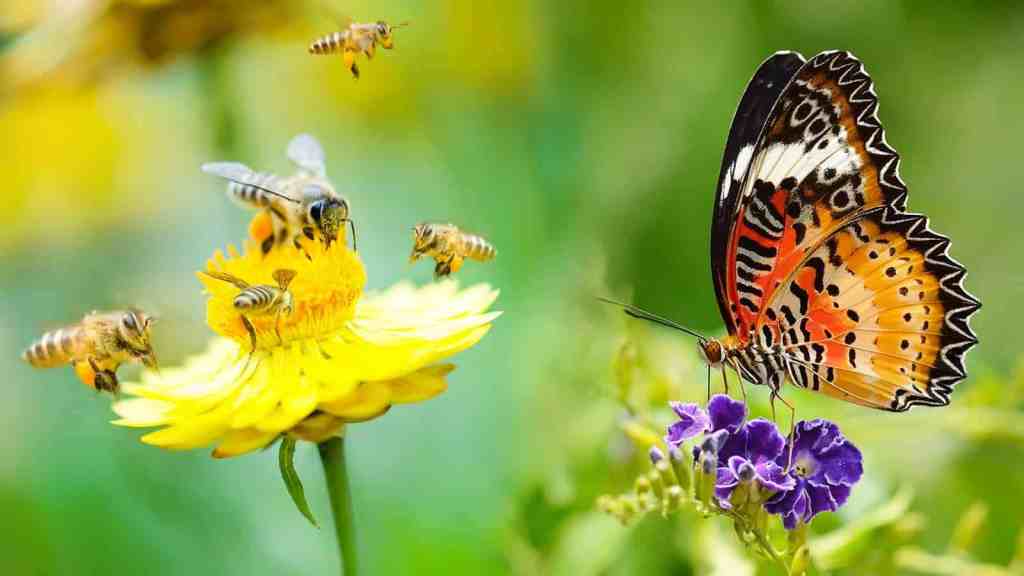
Too often Darwinian beekeeping  is interpreted as survival of the fittest, requiring a ’hands off’ or ‘ live and let die’ approach by the beekeeper.   Far from it.  In fact, if the goal is to keep locally adapted, healthy bees without resorting to chemicals, it is right in line with my objectives at this point in my calling. If people can be seen as either butterflies (sitting still, spreading their wings, displaying their beauty and attracting attention) or bees (flitting from flower to flower, cross-pollinating) I am the latter,  consistently attracted by different ideas and visions, flying to them to enlarge my foraging area and the diversity of food in my brood nest. 

Earlier this year David came across a series of three articles written by Terry Combs and published in ABJ, August, 2018, and Jan and Feb or 2019, and which fused all that I had learned over some 20 years and gave it a distinct focus under the bigger umbrella of restorative beekeeping.  This is the most recent stimuli in my beekeeping  journey, I have committed the next three years to it, and am enthusiastic as to the challenges and opportunities it presents. 

None of the fundamentals involved are particularly difficult or different.  The first is to keep good records in order to assess queen quality and colony sustainability.  Terry, having once bred guppies, gives example of the complex evaluation sheets he uses; we have devised something a little more simple, with a quantitive assessment, that can be used with each colony over a year, culminating in a numerical decision as to how to proceed with those bees the following year.

The process begins by critically selecting the colonies one wants to over-winter, to the extent of culling the queen in any colony that lacks the  resources or mass of bees to survive successfully and combining the remaining bees with a strong colony.


In the spring, the beekeeper selects breeder colonies for queen propagation, which might be either ones own hives that have a persistent record of success (hence the importance of those records) or a feral swarm. Ideally, once established, a beekeeper  should never have to purchase a queen; indeed, the active sharing of queens by local beekeepers   committed to this program is the best source of all.  If a new outside queen is needed, perhaps for genetic diversity,  it is vital to realize that ‘locally adapted,’ means more than simply having survived one or two winters.  The queen supplier needs to explain the  testing, evaluation and selection processes the bees have undergone.

Swarming is an integral part of the honey bee cycle.  Rather than trying to prevent it, one can use the swarming impulse to make splits once there are queen cells with larvae.  The thinking  is that bees make specific choices when it comes to developing queen cells, whereas  our choices via grafting are random. The nucs made by these splits can contain either the queen from the original colony or well developed  queen cells.

Drone quality is an increasing topic of conversation. Terry argues in favor of establishing drone mother colonies that have the desired traits.  In York County we do have a community apiary which could conceivable serve as a modified drone mating yard as established by Brother Adam on the moors of Devon, but he was breeding a specific sub-species of honey bee and therefore he wanted his queens to mate with drones of a certain type.  That is not our issue.  We simply want our queens to mate with quality drones.

That leads to the question, what is a quality drone? We know what qualities we want in a queen, but those in a drone are more difficult to quantify.  

Indeed, does it matter?  Jurgen Tautz , writing in The Buzz About Bees, argues that the desired quality comes in the drones that succeed, among hundreds, of mating with a queen, and then again in the selection of sperm to mate with queen’s gametes. He further points out that queens transported to a different area (eg. a mating yard) had a much lower success rate than those in local mating stations (eg. an apiary.)  The reason, he suggests, is that the queen is accompanied by a retinue of forager bees who know the area and escort her to and from the DCA.

Terry is not specific in terms of ‘desirable traits’ but does stress the need for active feral colonies and to introduce occasionally new stock for genetic diversity. 

The takeaway is that if we follow the Darwinian process of not needlessly removing drone cells, and as we develop better and stronger colonies using Terry Combs’ selection procedures, we can assume that the drones will be equally robust and will provide the quality that we need without having to develop specific drone mother colonies. 

The final step is to re-queen each original colony with the best young queens from the splits. Each new queen can be evaluated after a full brood cycle, realizing, as Terry writes, “Rigorous and timely culling is hard but necessary.  If you truly want to help bees, you’re going to have to adopt nature’s hard stance against the weak, deformed and inferior …”

We should stress that this system does not preclude the use of organic chemicals as part of an integrated pest management system.  In the  specific case of excessive varroa counts, options include freezing the brood, replacing the queen,  combining with a resistant colony,  using an organic treatment, or in the worst case scenario, eliminating the entire colony. 

So that is where I am at.  The next three years seem to be taken care of, but as we all know, if you want to make God laugh, tell Her your future plans …

An Ode to Joy

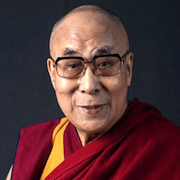
The Dalai Lama

In 2011 the South African government, in response to pressure from China, refused to grant the Dalai Lama a visa so that he could celebrate Archbishop Desmond Tutu’s 80th birthday in Capetown. Four years later the Dalai Lama invited his spiritual brother to spend a week at his residence in Dharmasala in India to discuss the concept and achievement of joy.   The resulting book describing that discussion, compiled by Douglas Abrams, is called The Book of Joy : Lasting Happiness in a Changing World

Americans focus on happiness (the ‘pursuit of happiness’ is listed as one of three ‘inalienable rights’ in the 1776 Declaration of Independence)  whereas the Danes relish contentment, but joy is bigger than both, Desmond Tutu argues.  “While happiness is often seen as being dependent of external circumstances, joy is not.”  “The ultimate source of joy is within us,” the Dalai Lama agrees.   “Not money, not power, not status… which fail to bring inner peace.  Outward attainment will not bring real inner joyfulness.  We must look inside.” 

The title of the book is insightful : the conscious cultivation of joy within us can lead to long lasting happiness despite the external challenges and traumas of a world that is changing beyond our control.  The reverse does not apply : happiness from an external event, say the purchase of a new car, does not lead to long lasting joy.  An example would be how quickly the elation of a child opening gifts under a Christmas tree can dissipate. 

Both the Archbishop and the Dalai Lama have suffered deeply, and in the midst of pain and turmoil each has managed to discover a level of peace, of courage , even exuberance.  “Discovering joy does not save us from the inevitability of hardship and heartbreak,” said the Archbishop, whose prostate cancer has returned. “In fact we may cry more easily but we will laugh more easily too.  Perhaps we are just more alive.  Yet as we discover more joy we can face suffering in a way that ennobles rather than embitters.  We have hardship without becoming hard.  We have heartbreak without being broken.”

Working with honey bees can bring happiness (and sadness!) but does it reinforce our discovery of and adventure toward, joy?  Paul Ekman, a psychologist and pioneer in the study of emotions and their relation to facial expressions, and a friend of the Dalai Lama,  has written that joy is associated with a variety of feelings.  The question is if those feelings relate to beekeeping.  For example …

  • Pleasure of the five senses : initially looking at bees becomes observing them,  gradually we learn to hear and smell them, and it is not unknown for beekeepers to dip drone pupae in honey and eat them.  They taste like chicken!
  • An original feeling of relief at overcoming anxiety and fear can lead to a sense of excitement : there is an understandable apprehension and nervousness as one first approaches the art, science and craft of beekeeping, and as the challenges of keeping bees healthy and alive increase, so does the sense of achievement, which in turn leads to joyful feelings like contentment, pride and delight at having accomplished a challenging task. 
  • Wonder, ecstasy and bliss : the bees never fail to astonish, and the more we learn the greater the amazement until eventually we are transported outside of ourselves and imagine more closely the life of a colony.  This in turn can provoke feelings of gratitude for what the bees offer and a sense of pride at being a small part of this vital process. 

The feelings of joy thus evoked were valued particularly by the romanticists of the nineteenth century, who, as materialism and empiricism became manifest, asked if the sensual can be entwined with the scientific, and of what value is a technology that enriches the understanding but robs the imagination. In the 1820’s Alexander von Humbolt, the Prussian geographer, naturalist, explorer, and influential proponent of Romantic philosophy and science, wrote to his friend, Johann von Goethe, “Nature must be experienced through feelings.” 

A modification is provided by Douglas Halladay, a professor of business at Georgetown University, who adds ‘meaning’ to the equation. Is there a vital difference between happiness and meaning? “Is child rearing a happy task?” he asks.  “Well, yes and no.  Is it the most meaningful role one could do?  Yes.”   Beekeepers find meaning not only in the lessons of the superorganism but also in making a difference at an individual level to local and global  environmental challenges. 

And joy has a value!  In 1922, Albert Einstein was in Japan having been awarded the Nobel Prize for physics, and not having cash with which to tip the hotel porter he wrote two notes on a piece of hotel stationery, one of which read, “A calm and modest life brings more joy than the pursuit of success combined with constant restlessness.” That note was sold at auction in October, 2017 for $1.56 million. 

Ultimately the daunting graphs, tables and technical language with which researchers churn out data-filled reports assessing the perils we face are too often devoid of poetry and imagination. When we obscure the intuitive, sensual feelings that we experience with, say, a colony of honey bees or an exuberant family, we also obfuscate the feelings of wonder, pleasure, excitement and gratitude that can drive the perseverance needed to find solutions.   As Henry Thoreau asked rhetorically in 1851, “With all your science can you tell me how it is, and whence it is, that light comes into the soul?”

If

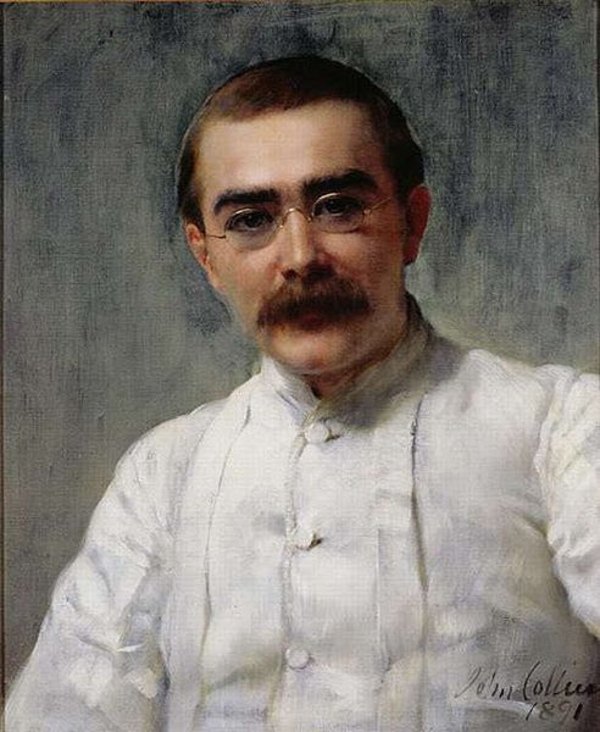
With apologies to Rudyard Kipling
		
If you can keep your bees when those about you
   Are losing theirs and blaming it on you,
If you can find the queen when others doubt you
   But make allowance for their doubting too;
If you can feed and not get tired of feeding,
   Of being stung and not give way to flinching;
Be quick to help and slow to give advice,
   And tempted not to look too good nor talk to wise;

If you can dream that next year will be better;
   If you can think when looking at a frame;
If you can meet with beetles and varroa
   And treat these two vexations just the same;
If you can bear to see a strong hive swarming,
   Flying by the trap you carefully set,
And watch the girls you gave your all to, leaving
   For nests uncharted and unknown  … and yet

If you can watch a weak hive dwindling
   And know it’s going to be a loss,
And grieve and feel your heart strings shrinking,
   Yet know the girls are still the final boss;
If you can force your will and nerve and sinew
   To serve you, long after all the bees have gone
And hold on when there is nothing in you,
   Except the love which says to them, ‘Hold on;’

If you can talk with groups and keep your virtue
   Or raise new queens but keep the common touch;
If neither drones nor workers  find rare favor
   If all bee species count with you, but none too much;
If you can fill the unforgiving bee house
   With sixty thousands bodies having fun, 
Yours is the earth and everyone applauds you -
  a beekeeper - when all is said and done.   

Small is Big

Shaki Waterfall, Armenia

In August, 2017,  there was a common thread running through four events that happened  in the space of a week. 

I enjoyed the eclipse, even if it was not as dark as I had anticipated it would be where we were vacationing near Cambridge, Maryland,  but the hype that preceded it was over-the-top.   Front page coverage in the newspapers every day for two weeks prior and traffic jams in South Carolina three days before the event seemed incongruous in terms of priorities and practicalities. 

Secondly, when our extended family went on a two mile walk to a waterfall, the focus of the children was on the destination with little awareness of the myriad of alluring attractions alongside the path, nor did the adults draw attention to them.  

Thirdly, the thirty and forty year olds chose to rent a power boat large enough to hold ten passengers which could  race up the bay.   My choice was a two seater kayak so that a grandchild could sit in front as we paddled along the shore line looking for birdlife and various water creatures.

The final event was a breakfast discussion with a good friend in which she described how she receives between forty and seventy e-mails at work every day, while others get in excess of one hundred. 

The theme is that we are so focused on the big things that it is easy to ignore the smaller but equally compelling things along the way.  The eclipse was dramatic yet how often do we appreciate the stars on a clear night?   Waterfalls whet more than the appetite yet they are surrounded by amazing rock formations covered with insects and surrounded by beautiful wild flowers, some no bigger than a dime but ever so elegant on close inspection.  Power boats drive the wind through one’s hair but the speed frightens the birds, makes it difficult to observe anything in the water, and the shoreline is too far off to see any detail.  And one hundred e-mails a day means there is little time for earnest thought or a profound response; it is too superficial, too quick.  To spend five minutes on each of a hundred e-mails would take more than an eight hour work day, so clearly we cannot and do not do it.  And this does not include all the other materials available via cyberspace; according to one TV analyst, four hundred hours of content are added to Facebook every sixty seconds, and the total content of that site is greater than all of the published knowledge from the dawn history until 2012. Sometimes less is more.   

The pressures imposed on younger generations by advertising are unfathomable;  everything has to be bigger, quicker, faster,  sleeker, newer.  Advertising  by its very nature makes us feel inadequate and incomplete based on our material possessions; 2.0 is good until the 2.1 version comes out, Playstation 4 until Playstation 5 is produced,  an annual up-grade  to the new version of the I-Phone is seen as an essential … we might label this the Age of Perpetual Discontent.  Meanwhile the news media focuses on the big, the dramatic,    Hurricane Harvey fills our screens until Irma hits Florida and the people of Texas are left behind; Maria hits Puerto Rico and Florida disappears from the news.  

The sports pages are filled with the latest signings invariably involving multi-million dollars deals (Lionel Messi, for example, signing a €500, four year deal with Barcelona in 2017)  and the entertainment pages are studded with ‘stars’ on red carpets in gowns valued in the thousands of dollars. Yet if we look closely we find that their lives are no more joyful than our own; indeed the reverse may be true if only we can identify what truly brings us contentment. 

Imagine the pressures faced by a teen standing on a street corner in a major city while his family is struggling honestly to provide the  basics of life, and he sees an entertainer or sports figure or drug pusher go past in a flashy car dressed up to the nines.  It is tempting to judge others solely in terms of ostentatious displays of wealth and to feel inadequate by comparison, to the point of being willing to do almost anything to scale  those appealing but false heights.  

I have been fortunate in always having a job when I needed one, having sufficient funds to pay for the basics, and having an advantageous skin color and ethnicity.  Nor have I felt envious of those who have more, which was easier to do in the 1960’s in a country without television and a society where the lower classes were kept at arms’ length (ie. the indigenous African population – an unfortunate and typical colonial scenario.)   And I discovered other ways of being in this world that did not require money.   Yet I wonder how affluence impacts my grandchildren.  In the 1970’s, at a conference on  teens and drugs, a presenter observed that that generation could no longer be scared into good choices, referring to photos of blackened lungs scarred by smoking tobacco, or drug takers withered and anemic and literally dead to the world. The only insurance policy of any value that parents and teachers (and perhaps grandparents) could provide was the confidence and capability  to say no and to walk away because, she argued, when those children first came into contact with drugs or alcohol or promiscuous sex (yes, that’s what we called it)  with all the accompanying peer pressure, we, the parents, grandparents and teachers, would not be there to guide or rescue them. 

While there is certainly a big picture, beekeeping is essentially about the small stuff. I suspect that one of the difficulties facing new beekeepers is the ability to really see at the micro level, to look at a frame of bees and absorb the phenomenal detail that it provides with hierarchies of levels of information.  And then being able to assimilate, categorize, analyze and evaluate that data (ie. exercising Benjamin Bloom’s Higher Order Thinking Skills) and make the appropriate decisions. 

In Feathers : The Evolution of a Natural Miracle, Thor Hanson distinguishes between bird watching and bird identification. Too often we do the latter whereas the true wonder of birding, he suggests, “lies in the watching, soaking up the fine details of plumage, behavior and habitat.  Even common birds do uncommon things, and every sighting is worth more that a glance and a tick on a checklist.”                                   

So yes, eclipses and waterfalls and power boats and e-mails are important, but never at the expense of the smaller stuff – small in size perhaps, and too easily not seen, but a never-ending source of joy and wonder if one chooses to look.  That is what the ‘girls’ offer me – not only an insight into a beautiful world that is omnipresent, vital to our continued existence, but a touchstone to combat the mass exposure to the dramatic, the grand and, all too often, the superficial.  Even common bees do uncommon things, and they put into context much of what we otherwise take for granted. 

A Gift

Painting by John Trumbull, 1819

Thirty years ago,  in Philadelphia and with time to spare, I joined a group touring the Independence National Historic Park which, I believe, is the only national park within a city.  It is famous for the Liberty Bell but what happened that morning involved a different type of liberty. 

A large group had assembled in a hall dominated by a painting of the signing of the Declaration of Independence. After the guide and ranger, Lisa Randolph (the fact that I remember her name is itself telling) had finished her explanation of the events depicted in the painting, a young African American boy, perhaps eight years old, raised his hand and asked how old Benjamin Franklin was when he signed the declaration.  

The majority of teachers would have provided the answer immediately, but not Lisa.  Instead she told the young man the year in which Franklin was born, explained that he could find the date of the signing at the bottom of the painting, and then said, “When you have worked out the answer, raise your hand and you can tell me how old he was.”

The tour continued.  We were standing in front of the ropes that section off the original Supreme Court when a hand when up.   Without saying a word Lisa stepped forward, picked up the young man, took him behind the ropes (probably highly illegal,) sat him on one of the historic benches and invited him to tell the answer to the whole group.  He did, he got it right and the group applauded loudly.  

That young man will probably remember that event and the positive feelings associated with it for the rest of his life. 

Notice that Lisa did not check to confirm that the answer was correct before he gave it.  She trusted him and had he got it wrong she would undoubtedly have helped him work through to the correct response.

Lisa was a mentor for me and after the tour had ended I was able to convey to her the significance of her actions. I have not seen her since but the memory is as fresh as if it happened yesterday.  The gift she gave the 8 year old boy was the privilege to think for himself, the freedom to come to his own decision based on the data, and the joy of immediate feedback and recognition. 

Being a mentor for a nu-bee presents similar challenges.  How much does one demonstrate oneself and how much does one stand back and observe?   How often does one speak and how often does one wait for the lessons to be learned, the connections to be made?  How does one persuade others to read and attend those vital meetings rather than sharing what one has read or what the guest speaker at the latest meeting revealed?  There are no definitive rules and ironically I am one who probably is too quick to interfere, too quick to pull out my hive tool and demonstrate. 

Best  of course is a mutual, trusting to-and-fro.  

This is mindful  of a conversation with a nephew who spent a semester at Trinity College in Dublin.   When asked to describe the  critical difference between the school in Ireland and the schools he attended in the United States, he thought for a minute before responding, “At Trinity we were expected to teach ourselves.” 

There are many gifts that we have to share with those who are new to this ancient craft, including our knowledge and our passion.  In Parker Palmer’s wonderful definition of education, we too “can create the space in which the community of truth might occur.”

A Piece of Chalk

Socrates

Many of the world’s greatest teachers – the Buddha, Socrates, Jesus, Mohammed, Gandhi – did not have so much as a piece of chalk for a teaching aid, yet the lessons they taught with the help of a finger in the sand and a spinning wheel, have lasted, in some cases, for thousands of years.  Today it would appear that teaching equivalents are powerpoint slide programs which have become an obligatory part of  presentations to the point that a conference cannot be considered effective without  them. 

Three inventions in the last century were predicted to ‘revolutionize teaching.’  The first was the wireless, invented during the First World War so that front line soldiers could communicate without the wires (hence the name) which were too often blown up on the battlefield.  The second was the overhead projector which enabled teachers to face the students while simultaneously projecting an image on a screen behind them, and the third was the internet with it’s immediate access to a wealth of knowledge. 

If this trend suggests anything at all it is that powerpoint projections will  be as quaint in the classrooms of our grandchildren as radios and overhead projectors are in classrooms today.   And if so, what will have replaced them?

Powerpoint is not a panacea; it is not an easy tool to use nor are the slides simple to design and produce.  Too often, for example, the slides are so busy that they are either difficult for the viewer to absorb (for me graphs are particularly difficult to understand at a glance) or they distract from, rather than reinforce, the points the speaker is making, or the speaker feels obliged to read everything on the slide and since an audience tends to read faster than a presenter can talk, the former is well ahead of the latter and loses focus.  Personally I would argue that reading a slide aloud is an insult to the intelligence of the audience. 

Some honey bee researchers prepare and present slides very effectively. Randy Oliver comes too mind, as do Keith Delaplane and Denis Vanengelsdorp.  For them a slide is a stimulus for a bigger issue rather than the whole issue spelled out;  graphs and diagrams are explained thoroughly and often become the basis for future slides, thus making it easier for the audience to comprehend  the significance of the various lines on the graph as they develop without having to reinterpret the axes every time. 

The reliance on powerpoint presentations implies that our audience cannot stay focused unless we provide them with something to look at, a reflection perhaps of the influence of television and it’s associated media on our attention spans as well as the confusion between education with entertainment. In the old black-and-white movies the camera stayed on a scene for more that 20 seconds.  Observation of almost any current  television program will show that that time is now less than 2 seconds, and for commercials it can be even less. 

No wonder more than 90% of ADD medication is prescribed in the US – we suffer from visual stimulation overload. 

 As an aside, three other observations about recent honey bee conferences I have attended.   There are very few people of color among the attendees;  casual observation suggests that 70% were male with an average age in excess of 50, although it was probably difficult for younger folk to get away for mid-week events; and a significant number of men had a beard, mustache or both.  Explain that one!

Charlie Rose, before he was discredited by charges of sexual harassment, was asked the secret of good interviewing.   There are  three essentials, he suggested  – prepare, listen and engage.  Technology can help us with the first but not necessarily the second and third requirements.   I recall a colleague describing a student in her classroom who was listless and disinterested yet when she saw him on the sports field he was a ball of energy and clearly the team leader.  Her question was, “What was the coach doing that I was not doing in the classroom?”  How was he getting that student engaged?   The answer included shared responsibility as a team, the coach as motivator rather than judge, and  a shared, agreed objective, in this case winning.  

In the absence of natural materials we  have to provide honey bees with the necessary technology for their survival – hive bodies, frames and foundation, for instance –  after which they seem to function without the need for chalk, wirelesses, overhead projectors and power points.   Certainly they ‘listen’ to each other, thanks to the marvel of those floral bouquets we call pheromones, and they are actively engaged from the day they are born to the day they die.  Bees live in community.  It is a common existence with shared responsibility and a clear objective – the long term survival of the colony. And as beekeepers we are coaches rather than presenters : we are invested in the same objectives as are the bees and do all we can to facilitate their success; we are, with them, a team, and prosperity comes from cooperation rather than from competition. 

Balm for the Soul

Nick Hoefly, Brooklyn, NY.

Many of us fantasize about far away places, about different and strange cultures, musing as to how other people live.  And as beekeepers we are the recipients of such conjecture. In today’s profound disconnect from our ecological dependency in general, and from food production in particular, we quietly do what many consider to be madness – work with insects which (so others think) want to sting us. 

Those who have survived the initial physical and emotional turmoil of working with honey bees know both the brilliance and the brutality that comes with our commitment, the wonder and the dismay, the rewards and the anxiety.  Subject to the weather, pests, pathogens and diseases, and the apparent whimsicality of the bees – “Why did they abscond in the autumn, with no chance of survival in the bigger world, and after all that I did for them…?” –  we are also treated to the visual joys of foragers at the entrance of the hive loaded with pollen or of a newly mated queen, the sensory delights of honey made by our own bees or of newly made glistening wax, the audible hum of a contended colony or the sense of rapt immersion that comes when one loses oneself in observing the inner workings of a hive. 

And once one has experienced that ‘zen of beekeeping’, heard the hum, witnessed the dances and smelled the brood, one can develop a very protective instinct towards the bees, to the extent that the loss of a colony is heart-wrenching.  In Slovenia the term for colony is ‘family’, and yes, it can feel like one has lost part of one’s family. 

The tension between doing what is necessary to keep the bees alive and healthy, and enjoying that process, is what makes the life of a beekeeper difficult to understand for many. What words describe adequately the hours spent worrying through the winter or working in the summer, or the romanticized idyllic pastoral reverie of communing with nature?   There is joy to be found as one is pulled between theory and practice, between growth and survival, between acceptance and intervention,  which is difficult for those who are detached from the agronomic ethic to comprehend.

And not everyone can manage honey bees.  How useful it would be to develop a profile of a successful beekeeper which could be used to assess the potential of every wannabee.  My guess is that the prime characteristic would be a yearning for reconnection, a realization that he or she will never move back to the land full-time but needs to experience again, even if only temporarily, what was a vital element of the human existence for thousands of years, was central to the agricultural revolution and which diminished when mankind began to industrialize.  Today, in a post-industrial age, the world is witness to 400 cities with populations in excess of one million inhabitants, most of whom feel that the natural world is not important so long as there is a park of some kind in the neighborhood. 

Nor does everyone want to keep  honey bees, but in and age of ‘nature deficit disorder,’ to use Richard Louv’s phrase, those of us who do need to bring others on the journey with us. Not least, it determines the caliber of the world our grandchildren will inherit. We cannot escape our responsibilities to the quality of the soil, water and air, and every time we sit down to a meal we are the beneficiaries of this interdependence.  Becoming familiar with the ecstasy and the heartache of beekeeping, even by proxy,  offers an insight into the larger and vital world of food decisions, land-use policies and environmental health. 

Perhaps that is why, when a meeting of beekeepers is asked if they love what they do, almost all hands go up.  It can be hard to find the right words to describe the feelings that lead to that sense of satisfaction, of fulfillment, but perhaps keeping bees allows us to connect briefly with that never-ending cycle, and to experience first hand what Forrest Pritchard calls ‘an ancient biorhythm’ that the bees intuitively understand and we are in danger of forgetting. 

Honey bees, to steal a phrase from Joel Salatin, can be ‘nature’s balm for the soul,’ provided we can step back long enough from the sugar roll tests, the sticky jars of sugar syrup, the mantle of smoke, the odor of the guard bees and the gummy propolis on a hive tool, to see them in a larger context, not least as a sophisticated yet sensitive super organism that is the culmination of some 40 million years of evolution.  

Murphy’s Laws of Beekeeping

The chances of it raining at the height of the nectar flow when the bees are most geared up to gather nectar and pollen are 100%.

When the soil’s soggy and you can’t get near your hives to remove ripening queen cells, it will rain again.

When you’re looking for the queen she will be on the last frame you pull from the hive; when you’re not looking for her, she will pop her head over the top bars and wave at you.

The season’s biggest snowfall will occur five minutes before you were going to wrap your hives for the winter.

The chance of your smoker going out is directly proportional to the 

 ‘pissiness’ (ye olde beekeeping worde) of the hive. 

Heavy winds will blow the top covers off of your hives while you are looking for bricks to hold them down.

The catalogs will have every bee related item known to man – except the one you’re looking for. 

Your lawn mower will run out of gas just as you mow in front of your most pernickety hive.

And don’t bother getting the gas can – it’s empty. 

Everybody in the neighborhood has floral feasts, but the bees seem to like best the garden of she who believes she is allergic to bees.

That old, rusted hive tool never gets misplaced. It’s the new shiny one that always gets lost in the grass.