If

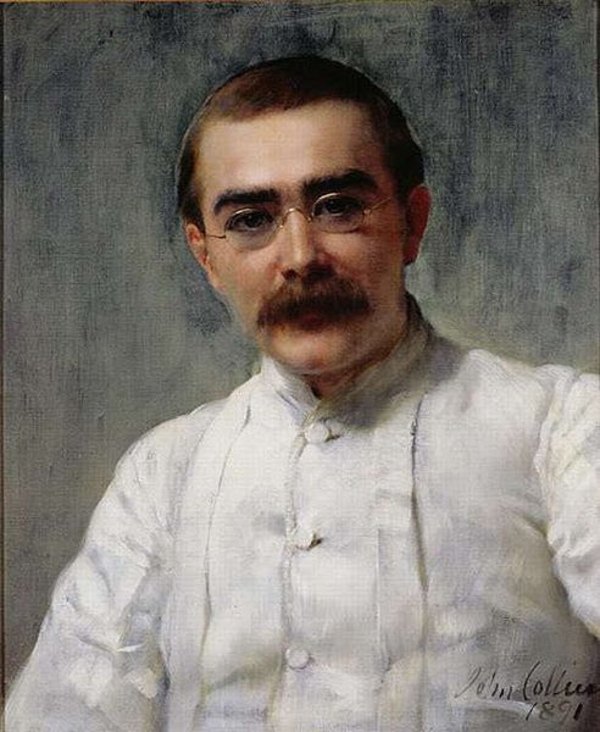
With apologies to Rudyard Kipling
		
If you can keep your bees when those about you
   Are losing theirs and blaming it on you,
If you can find the queen when others doubt you
   But make allowance for their doubting too;
If you can feed and not get tired of feeding,
   Of being stung and not give way to flinching;
Be quick to help and slow to give advice,
   And tempted not to look too good nor talk to wise;

If you can dream that next year will be better;
   If you can think when looking at a frame;
If you can meet with beetles and varroa
   And treat these two vexations just the same;
If you can bear to see a strong hive swarming,
   Flying by the trap you carefully set,
And watch the girls you gave your all to, leaving
   For nests uncharted and unknown  … and yet

If you can watch a weak hive dwindling
   And know it’s going to be a loss,
And grieve and feel your heart strings shrinking,
   Yet know the girls are still the final boss;
If you can force your will and nerve and sinew
   To serve you, long after all the bees have gone
And hold on when there is nothing in you,
   Except the love which says to them, ‘Hold on;’

If you can talk with groups and keep your virtue
   Or raise new queens but keep the common touch;
If neither drones nor workers  find rare favor
   If all bee species count with you, but none too much;
If you can fill the unforgiving bee house
   With sixty thousands bodies having fun, 
Yours is the earth and everyone applauds you -
  a beekeeper - when all is said and done.   

Small is Big

Shaki Waterfall, Armenia

In August, 2017,  there was a common thread running through four events that happened  in the space of a week. 

I enjoyed the eclipse, even if it was not as dark as I had anticipated it would be where we were vacationing near Cambridge, Maryland,  but the hype that preceded it was over-the-top.   Front page coverage in the newspapers every day for two weeks prior and traffic jams in South Carolina three days before the event seemed incongruous in terms of priorities and practicalities. 

Secondly, when our extended family went on a two mile walk to a waterfall, the focus of the children was on the destination with little awareness of the myriad of alluring attractions alongside the path, nor did the adults draw attention to them.  

Thirdly, the thirty and forty year olds chose to rent a power boat large enough to hold ten passengers which could  race up the bay.   My choice was a two seater kayak so that a grandchild could sit in front as we paddled along the shore line looking for birdlife and various water creatures.

The final event was a breakfast discussion with a good friend in which she described how she receives between forty and seventy e-mails at work every day, while others get in excess of one hundred. 

The theme is that we are so focused on the big things that it is easy to ignore the smaller but equally compelling things along the way.  The eclipse was dramatic yet how often do we appreciate the stars on a clear night?   Waterfalls whet more than the appetite yet they are surrounded by amazing rock formations covered with insects and surrounded by beautiful wild flowers, some no bigger than a dime but ever so elegant on close inspection.  Power boats drive the wind through one’s hair but the speed frightens the birds, makes it difficult to observe anything in the water, and the shoreline is too far off to see any detail.  And one hundred e-mails a day means there is little time for earnest thought or a profound response; it is too superficial, too quick.  To spend five minutes on each of a hundred e-mails would take more than an eight hour work day, so clearly we cannot and do not do it.  And this does not include all the other materials available via cyberspace; according to one TV analyst, four hundred hours of content are added to Facebook every sixty seconds, and the total content of that site is greater than all of the published knowledge from the dawn history until 2012. Sometimes less is more.   

The pressures imposed on younger generations by advertising are unfathomable;  everything has to be bigger, quicker, faster,  sleeker, newer.  Advertising  by its very nature makes us feel inadequate and incomplete based on our material possessions; 2.0 is good until the 2.1 version comes out, Playstation 4 until Playstation 5 is produced,  an annual up-grade  to the new version of the I-Phone is seen as an essential … we might label this the Age of Perpetual Discontent.  Meanwhile the news media focuses on the big, the dramatic,    Hurricane Harvey fills our screens until Irma hits Florida and the people of Texas are left behind; Maria hits Puerto Rico and Florida disappears from the news.  

The sports pages are filled with the latest signings invariably involving multi-million dollars deals (Lionel Messi, for example, signing a €500, four year deal with Barcelona in 2017)  and the entertainment pages are studded with ‘stars’ on red carpets in gowns valued in the thousands of dollars. Yet if we look closely we find that their lives are no more joyful than our own; indeed the reverse may be true if only we can identify what truly brings us contentment. 

Imagine the pressures faced by a teen standing on a street corner in a major city while his family is struggling honestly to provide the  basics of life, and he sees an entertainer or sports figure or drug pusher go past in a flashy car dressed up to the nines.  It is tempting to judge others solely in terms of ostentatious displays of wealth and to feel inadequate by comparison, to the point of being willing to do almost anything to scale  those appealing but false heights.  

I have been fortunate in always having a job when I needed one, having sufficient funds to pay for the basics, and having an advantageous skin color and ethnicity.  Nor have I felt envious of those who have more, which was easier to do in the 1960’s in a country without television and a society where the lower classes were kept at arms’ length (ie. the indigenous African population – an unfortunate and typical colonial scenario.)   And I discovered other ways of being in this world that did not require money.   Yet I wonder how affluence impacts my grandchildren.  In the 1970’s, at a conference on  teens and drugs, a presenter observed that that generation could no longer be scared into good choices, referring to photos of blackened lungs scarred by smoking tobacco, or drug takers withered and anemic and literally dead to the world. The only insurance policy of any value that parents and teachers (and perhaps grandparents) could provide was the confidence and capability  to say no and to walk away because, she argued, when those children first came into contact with drugs or alcohol or promiscuous sex (yes, that’s what we called it)  with all the accompanying peer pressure, we, the parents, grandparents and teachers, would not be there to guide or rescue them. 

While there is certainly a big picture, beekeeping is essentially about the small stuff. I suspect that one of the difficulties facing new beekeepers is the ability to really see at the micro level, to look at a frame of bees and absorb the phenomenal detail that it provides with hierarchies of levels of information.  And then being able to assimilate, categorize, analyze and evaluate that data (ie. exercising Benjamin Bloom’s Higher Order Thinking Skills) and make the appropriate decisions. 

In Feathers : The Evolution of a Natural Miracle, Thor Hanson distinguishes between bird watching and bird identification. Too often we do the latter whereas the true wonder of birding, he suggests, “lies in the watching, soaking up the fine details of plumage, behavior and habitat.  Even common birds do uncommon things, and every sighting is worth more that a glance and a tick on a checklist.”                                   

So yes, eclipses and waterfalls and power boats and e-mails are important, but never at the expense of the smaller stuff – small in size perhaps, and too easily not seen, but a never-ending source of joy and wonder if one chooses to look.  That is what the ‘girls’ offer me – not only an insight into a beautiful world that is omnipresent, vital to our continued existence, but a touchstone to combat the mass exposure to the dramatic, the grand and, all too often, the superficial.  Even common bees do uncommon things, and they put into context much of what we otherwise take for granted. 

A Gift

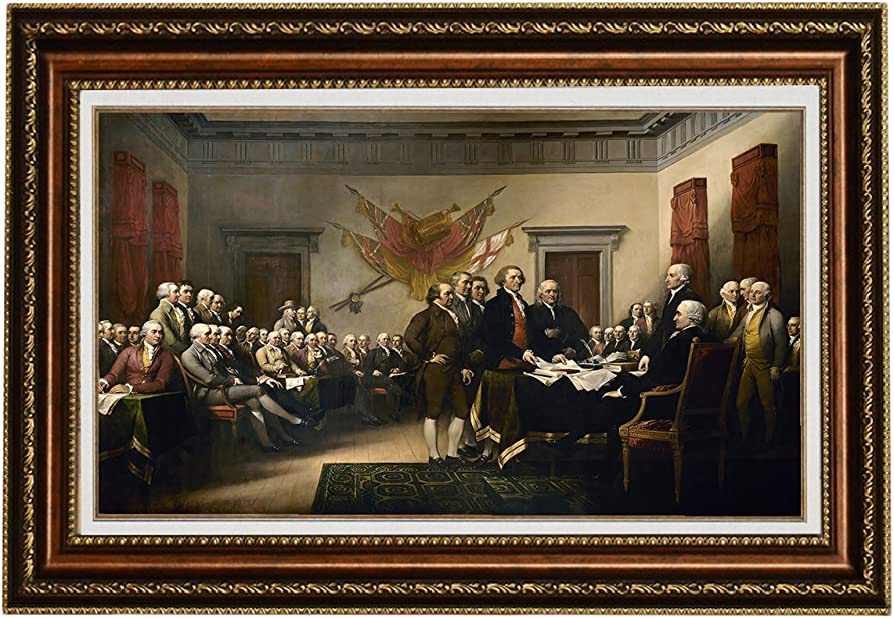
Painting by John Trumbull, 1819

Thirty years ago,  in Philadelphia and with time to spare, I joined a group touring the Independence National Historic Park which, I believe, is the only national park within a city.  It is famous for the Liberty Bell but what happened that morning involved a different type of liberty. 

A large group had assembled in a hall dominated by a painting of the signing of the Declaration of Independence. After the guide and ranger, Lisa Randolph (the fact that I remember her name is itself telling) had finished her explanation of the events depicted in the painting, a young African American boy, perhaps eight years old, raised his hand and asked how old Benjamin Franklin was when he signed the declaration.  

The majority of teachers would have provided the answer immediately, but not Lisa.  Instead she told the young man the year in which Franklin was born, explained that he could find the date of the signing at the bottom of the painting, and then said, “When you have worked out the answer, raise your hand and you can tell me how old he was.”

The tour continued.  We were standing in front of the ropes that section off the original Supreme Court when a hand when up.   Without saying a word Lisa stepped forward, picked up the young man, took him behind the ropes (probably highly illegal,) sat him on one of the historic benches and invited him to tell the answer to the whole group.  He did, he got it right and the group applauded loudly.  

That young man will probably remember that event and the positive feelings associated with it for the rest of his life. 

Notice that Lisa did not check to confirm that the answer was correct before he gave it.  She trusted him and had he got it wrong she would undoubtedly have helped him work through to the correct response.

Lisa was a mentor for me and after the tour had ended I was able to convey to her the significance of her actions. I have not seen her since but the memory is as fresh as if it happened yesterday.  The gift she gave the 8 year old boy was the privilege to think for himself, the freedom to come to his own decision based on the data, and the joy of immediate feedback and recognition. 

Being a mentor for a nu-bee presents similar challenges.  How much does one demonstrate oneself and how much does one stand back and observe?   How often does one speak and how often does one wait for the lessons to be learned, the connections to be made?  How does one persuade others to read and attend those vital meetings rather than sharing what one has read or what the guest speaker at the latest meeting revealed?  There are no definitive rules and ironically I am one who probably is too quick to interfere, too quick to pull out my hive tool and demonstrate. 

Best  of course is a mutual, trusting to-and-fro.  

This is mindful  of a conversation with a nephew who spent a semester at Trinity College in Dublin.   When asked to describe the  critical difference between the school in Ireland and the schools he attended in the United States, he thought for a minute before responding, “At Trinity we were expected to teach ourselves.” 

There are many gifts that we have to share with those who are new to this ancient craft, including our knowledge and our passion.  In Parker Palmer’s wonderful definition of education, we too “can create the space in which the community of truth might occur.”

A Piece of Chalk

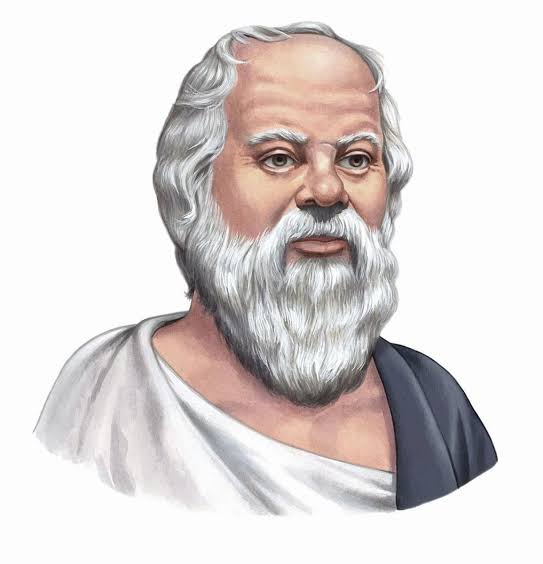
Socrates

Many of the world’s greatest teachers – the Buddha, Socrates, Jesus, Mohammed, Gandhi – did not have so much as a piece of chalk for a teaching aid, yet the lessons they taught with the help of a finger in the sand and a spinning wheel, have lasted, in some cases, for thousands of years.  Today it would appear that teaching equivalents are powerpoint slide programs which have become an obligatory part of  presentations to the point that a conference cannot be considered effective without  them. 

Three inventions in the last century were predicted to ‘revolutionize teaching.’  The first was the wireless, invented during the First World War so that front line soldiers could communicate without the wires (hence the name) which were too often blown up on the battlefield.  The second was the overhead projector which enabled teachers to face the students while simultaneously projecting an image on a screen behind them, and the third was the internet with it’s immediate access to a wealth of knowledge. 

If this trend suggests anything at all it is that powerpoint projections will  be as quaint in the classrooms of our grandchildren as radios and overhead projectors are in classrooms today.   And if so, what will have replaced them?

Powerpoint is not a panacea; it is not an easy tool to use nor are the slides simple to design and produce.  Too often, for example, the slides are so busy that they are either difficult for the viewer to absorb (for me graphs are particularly difficult to understand at a glance) or they distract from, rather than reinforce, the points the speaker is making, or the speaker feels obliged to read everything on the slide and since an audience tends to read faster than a presenter can talk, the former is well ahead of the latter and loses focus.  Personally I would argue that reading a slide aloud is an insult to the intelligence of the audience. 

Some honey bee researchers prepare and present slides very effectively. Randy Oliver comes too mind, as do Keith Delaplane and Denis Vanengelsdorp.  For them a slide is a stimulus for a bigger issue rather than the whole issue spelled out;  graphs and diagrams are explained thoroughly and often become the basis for future slides, thus making it easier for the audience to comprehend  the significance of the various lines on the graph as they develop without having to reinterpret the axes every time. 

The reliance on powerpoint presentations implies that our audience cannot stay focused unless we provide them with something to look at, a reflection perhaps of the influence of television and it’s associated media on our attention spans as well as the confusion between education with entertainment. In the old black-and-white movies the camera stayed on a scene for more that 20 seconds.  Observation of almost any current  television program will show that that time is now less than 2 seconds, and for commercials it can be even less. 

No wonder more than 90% of ADD medication is prescribed in the US – we suffer from visual stimulation overload. 

 As an aside, three other observations about recent honey bee conferences I have attended.   There are very few people of color among the attendees;  casual observation suggests that 70% were male with an average age in excess of 50, although it was probably difficult for younger folk to get away for mid-week events; and a significant number of men had a beard, mustache or both.  Explain that one!

Charlie Rose, before he was discredited by charges of sexual harassment, was asked the secret of good interviewing.   There are  three essentials, he suggested  – prepare, listen and engage.  Technology can help us with the first but not necessarily the second and third requirements.   I recall a colleague describing a student in her classroom who was listless and disinterested yet when she saw him on the sports field he was a ball of energy and clearly the team leader.  Her question was, “What was the coach doing that I was not doing in the classroom?”  How was he getting that student engaged?   The answer included shared responsibility as a team, the coach as motivator rather than judge, and  a shared, agreed objective, in this case winning.  

In the absence of natural materials we  have to provide honey bees with the necessary technology for their survival – hive bodies, frames and foundation, for instance –  after which they seem to function without the need for chalk, wirelesses, overhead projectors and power points.   Certainly they ‘listen’ to each other, thanks to the marvel of those floral bouquets we call pheromones, and they are actively engaged from the day they are born to the day they die.  Bees live in community.  It is a common existence with shared responsibility and a clear objective – the long term survival of the colony. And as beekeepers we are coaches rather than presenters : we are invested in the same objectives as are the bees and do all we can to facilitate their success; we are, with them, a team, and prosperity comes from cooperation rather than from competition. 

Balm for the Soul

Nick Hoefly, Brooklyn, NY.

Many of us fantasize about far away places, about different and strange cultures, musing as to how other people live.  And as beekeepers we are the recipients of such conjecture. In today’s profound disconnect from our ecological dependency in general, and from food production in particular, we quietly do what many consider to be madness – work with insects which (so others think) want to sting us. 

Those who have survived the initial physical and emotional turmoil of working with honey bees know both the brilliance and the brutality that comes with our commitment, the wonder and the dismay, the rewards and the anxiety.  Subject to the weather, pests, pathogens and diseases, and the apparent whimsicality of the bees – “Why did they abscond in the autumn, with no chance of survival in the bigger world, and after all that I did for them…?” –  we are also treated to the visual joys of foragers at the entrance of the hive loaded with pollen or of a newly mated queen, the sensory delights of honey made by our own bees or of newly made glistening wax, the audible hum of a contended colony or the sense of rapt immersion that comes when one loses oneself in observing the inner workings of a hive. 

And once one has experienced that ‘zen of beekeeping’, heard the hum, witnessed the dances and smelled the brood, one can develop a very protective instinct towards the bees, to the extent that the loss of a colony is heart-wrenching.  In Slovenia the term for colony is ‘family’, and yes, it can feel like one has lost part of one’s family. 

The tension between doing what is necessary to keep the bees alive and healthy, and enjoying that process, is what makes the life of a beekeeper difficult to understand for many. What words describe adequately the hours spent worrying through the winter or working in the summer, or the romanticized idyllic pastoral reverie of communing with nature?   There is joy to be found as one is pulled between theory and practice, between growth and survival, between acceptance and intervention,  which is difficult for those who are detached from the agronomic ethic to comprehend.

And not everyone can manage honey bees.  How useful it would be to develop a profile of a successful beekeeper which could be used to assess the potential of every wannabee.  My guess is that the prime characteristic would be a yearning for reconnection, a realization that he or she will never move back to the land full-time but needs to experience again, even if only temporarily, what was a vital element of the human existence for thousands of years, was central to the agricultural revolution and which diminished when mankind began to industrialize.  Today, in a post-industrial age, the world is witness to 400 cities with populations in excess of one million inhabitants, most of whom feel that the natural world is not important so long as there is a park of some kind in the neighborhood. 

Nor does everyone want to keep  honey bees, but in and age of ‘nature deficit disorder,’ to use Richard Louv’s phrase, those of us who do need to bring others on the journey with us. Not least, it determines the caliber of the world our grandchildren will inherit. We cannot escape our responsibilities to the quality of the soil, water and air, and every time we sit down to a meal we are the beneficiaries of this interdependence.  Becoming familiar with the ecstasy and the heartache of beekeeping, even by proxy,  offers an insight into the larger and vital world of food decisions, land-use policies and environmental health. 

Perhaps that is why, when a meeting of beekeepers is asked if they love what they do, almost all hands go up.  It can be hard to find the right words to describe the feelings that lead to that sense of satisfaction, of fulfillment, but perhaps keeping bees allows us to connect briefly with that never-ending cycle, and to experience first hand what Forrest Pritchard calls ‘an ancient biorhythm’ that the bees intuitively understand and we are in danger of forgetting. 

Honey bees, to steal a phrase from Joel Salatin, can be ‘nature’s balm for the soul,’ provided we can step back long enough from the sugar roll tests, the sticky jars of sugar syrup, the mantle of smoke, the odor of the guard bees and the gummy propolis on a hive tool, to see them in a larger context, not least as a sophisticated yet sensitive super organism that is the culmination of some 40 million years of evolution.  

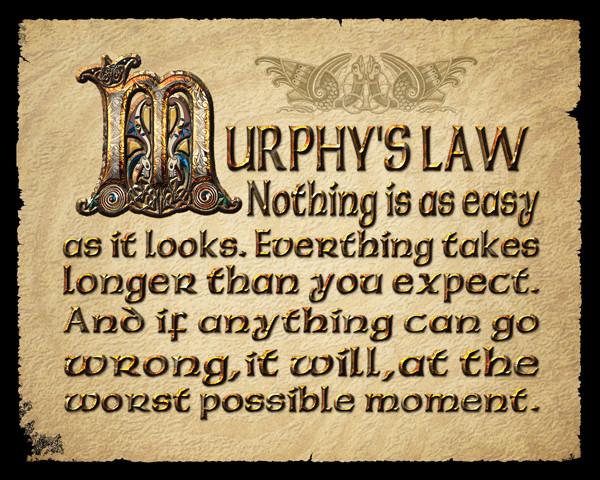
Murphy’s Laws of Beekeeping

The chances of it raining at the height of the nectar flow when the bees are most geared up to gather nectar and pollen are 100%.

When the soil’s soggy and you can’t get near your hives to remove ripening queen cells, it will rain again.

When you’re looking for the queen she will be on the last frame you pull from the hive; when you’re not looking for her, she will pop her head over the top bars and wave at you.

The season’s biggest snowfall will occur five minutes before you were going to wrap your hives for the winter.

The chance of your smoker going out is directly proportional to the 

 ‘pissiness’ (ye olde beekeeping worde) of the hive. 

Heavy winds will blow the top covers off of your hives while you are looking for bricks to hold them down.

The catalogs will have every bee related item known to man – except the one you’re looking for. 

Your lawn mower will run out of gas just as you mow in front of your most pernickety hive.

And don’t bother getting the gas can – it’s empty. 

Everybody in the neighborhood has floral feasts, but the bees seem to like best the garden of she who believes she is allergic to bees.

That old, rusted hive tool never gets misplaced. It’s the new shiny one that always gets lost in the grass.

Outrage

In 1924, when Stéphane Hessel was seven years old, his father  moved his family west across the Rhine river from Berlin to Paris.  The family’s literary milieu was shattered by the German invasion of 1940 and Stéphane, by then a member of the French army, became a POW.  He escaped and, outraged by Marshall Petain’s decision to collaborate with the German occupation in the form of Vichy France,  joined General de Gaulle’s Resistance movement in London where he found the inspiration that was to excite the rest of his life.  It came in the form of the program of the National Council of the Resistance which looked beyond the defeat of the Axis powers to ‘a true economic and social democracy.’

In 1944 he parachuted into France ahead of the Allied invasion to organize resistance networks.  Captured by the Gestapo he was subject to the equivalent of water boarding and was sent to Buchenwald concentration camp, surviving only by switching identities with an inmate who had already died.  While being transferred to Bergen-Belsen he escaped. 

With the war over Stéphane, aged 28, was sent to the United Nations in New York  where he joined Eleanor Roosevelt in drafting the Universal Declaration of Human Rights and found his life work in the promotion of what he called ‘a culture of human rights,’ whether it be between Israelis and Palestinians, illegal immigrants anywhere in the world, or the withdrawal of social rights in many countries in Europe which he described as ‘a rejection of the gift of the wartime generation’s legacy.’

In 2010, aged 93, Stéphane published a 30 page pamphlet which became an over night sensation.  Titled Indignez-Vous, or Get Outraged, he exhorts his readers to “find a reason to be indignant.  This is a priceless act, because when something makes us indignant we become activists, we feel committed and our force becomes irresistible … I would like everyone of us to find his or her own reason to cry out. That is a precious gift. When something makes you want to cry out, as I cried out against Nazism, you become a militant, tough and committed. You become part of the great stream of history.”

His words describe the feelings many experience as they stagger from one crisis to another, battered by financial catastrophes and inundated with recurring messages of disaster from across the globe.  It’s easy to feel helpless, to collude with the perceived enemy, as some Frenchmen did under Petain, or to get involved on the basis that, as Gandhi described, one has to become the change one wishes to see in the world.  

So, what are you outraged about (there are more than enough choices) and how does it translate into action? What is your equivalent of the Second World War – that period of loss, confusion and turmoil in which lay the germ of an idea that was to become a focus of your life?  For me it was the credibility gap between what we say and what we do, between principles and practice, either individually or as a nation.

And in the midst of this I found the bees, or perhaps they found me, and a passion and a sense of outrage came together.  The bees invited me to walk the walk  and gradually I became the activist that Stéphane Hessel describes, striving for “… ethics, justice and a sustainable balance” in the belief that commitment is irresistible, peaceful insurrection is inevitable, and the bees, our environment,  and  the next generation will be the beneficiaries.  

Stéphane died in February, 2013, aged 95, and even in the tenth decade of life his conscience was outraged whenever the post-war world betrayed the program he had fought for. He often found himself in a minority, yet speaking in London in 2010 he said that of the long and arduous journey that had been his life, “something clearly emerged :  the need to give a sense to my life by defending the values that the Nazis had scorned.”

“The worst of all attitudes,” wrote Stéphane, “is indifference.” Or as Charles de Gaulle said in 1940 after having been driven from France by the invading German armies, perhaps his darkest hour, “Must hope disappear?  Is defeat final?  No!”

Lessons from Alsace

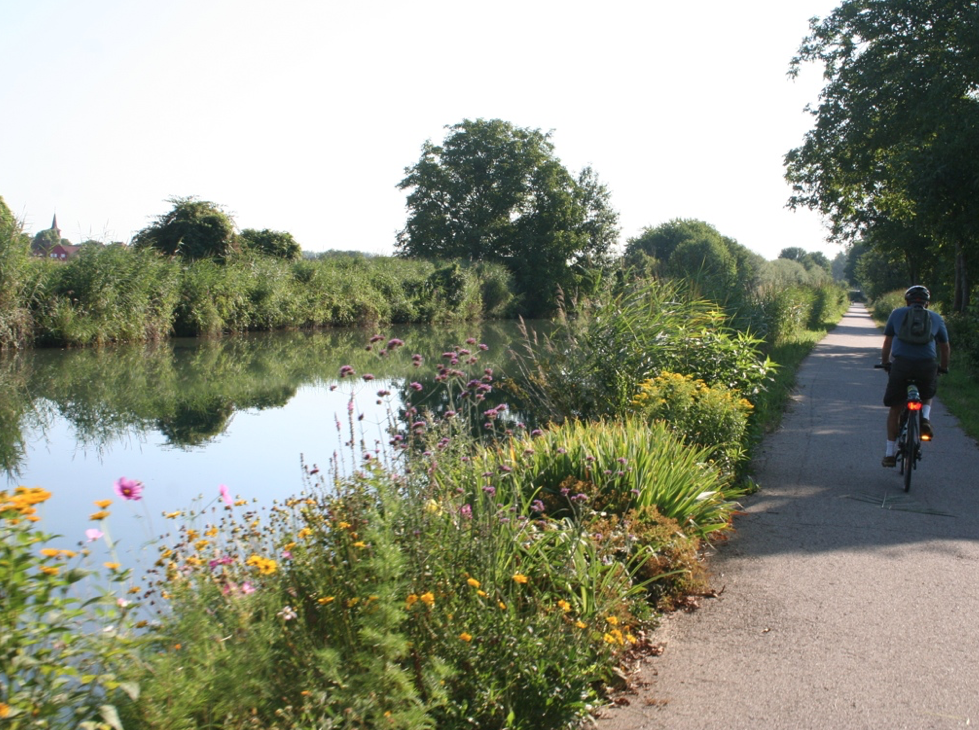
Wildflowers along a cycle path, Alsace

Conventional wisdom in Pennsylvania has it that one year in five is a good one for the honey bees. 2014 was that year for me, and there was a possible explanation.

The agricultural practice in this neck of the woods  is mainly no-till on the basis that it preserves earthworm activity just below the surface and reduces water run-off with the associated contaminants and top soil that make their way eventually to the Chesapeake Bay.  The down-side, and it’s a big one for beekeepers, is the use of herbicides to kill the spring growth that in previous years would have been plowed under. 

My home apiary is surrounded by farm land with a dual rotation of corn and soya beans.   The soil seems to be regarded by the farmer is an inert substance to hold commercial fertilizers rather than a healthy, self-sufficient, complex organism; the prime concern appears to be financial viability rather than the long term health of the soil, the quality of water or the variety of life that the land supports. It says much that it is seen as an either/or situation.  Thus in the fall, after the crop is harvested, the land lies fallow for four months which means that in early spring it is an 80 acre bed of ‘weeds’ (ie. a carpet of wild flowers with mainly blue and purple florets close to the ground.)     In early April, just as those flowers are coming into bloom,  the farmer  spreads lime and then herbicides which kill literally every living plant, after which  he sows either corn or bean seed.

In 2014 the weather did not cooperate.  The wet, cool spring meant the farmer delayed his applications of weed killer which in turn meant that the bees had an extra few weeks to work the verdant wild pasture.  And it was those couple of weeks that, I believe, made the difference.  The colonies built up fast and when the regular nectar flow started they were well positioned to take full advantage. It is what Randy Oliver has called a “brief nutritional boom-or-bust period” during which this  short and unexpected period of floral diversity provided a copious quantity of both nectar and pollen, followed by the regular nectar flow and thereafter a ‘green desert.’  

Mary and I had occasion that same year to meet with several Alsatian beekeepers. Alsace, a contentious piece of land that has been much fought over by the French and Germans, is 106 miles long and 60 miles wide.  The eastern border is the Rhine river, 10 miles either side of which is a flat alluvial plain.  Water run off is not an issue (there is a network of canals to catch water from the Vosges mountains to the west and the Black Forest to the east, and to use it for irrigation before feeding it into the Rhine) and perhaps that is why we saw evidence of plowing rather than no-till practices. The main crops on the alluvial plain are corn and wheat, whereas vines dominate the foothills of the mountains.  The Vosges is richly forested with four tree species –  acacia (locust,) tilleul (linden or basswood,)  chatagnier (chestnut) and sapin (fir;) which, together with fleur sauvage (wild flower) make up the main honey varietals from May to August. It is noteworthy that the overwhelming source of nectar is from trees; beekeepers move their hives to different areas of the forests as the differing species of trees come into bloom from April through August.  To take advantage of an agricultural crop requires the beekeeper to pay rent to the farmer and the accepted fee is 12 jars of honey!

Two professional beekeepers we met both said that it had been a bad year for the bees (in France to qualify as professional one must have a minimum of 200 operational hives;) in fact according to Erik Delfortrie, “Last year was the worst and this is worse.”  In a good year he expects to get 20 tons of honey from 400 colonies, which averages out at 100 lbs per colony;  last year he harvested 4 tons, or 20 lbs per colony.

I raised the question of pesticides as a possible reason and, to my surprise, both denied it.  They pointed out that corn, grapes and wheat are not honey bee pollinated and that chemicals are not used in the forests. Erik described how a good quality microscope revealed that bees in weak colonies had high levels of nosema cerenae compared to their sisters in strong colonies.  

I asked Jean-Pierre Maisset, who had been President of the Valle de Ville beekeepers’ association for 20 years (he retired when he turned 70 so that younger people with different ideas could step forward) about the two year ban in France of two of the neonicotinoid products.  He supported the action but was skeptical of it’s effectiveness because of the complexity of the chemical interactions and the difficulties of enforcement.

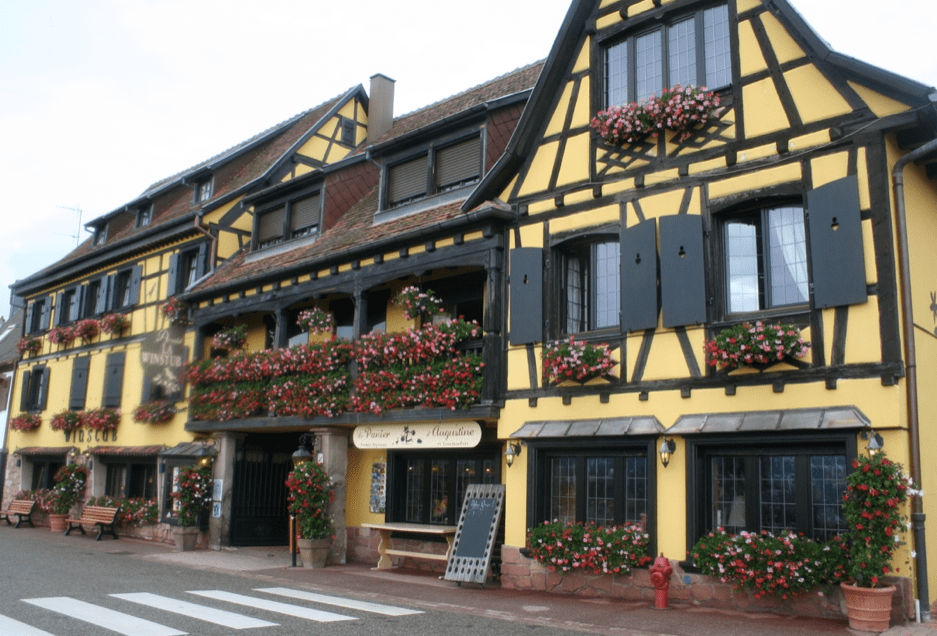
Flower Boxes, typical of Alsace towns

The other impression of Alsace is of road sides and borders of fields that are rich in preserved floral vegetation, whereas we label the native plants growing in the brush, between rows, in ditches, hedgerows and woods as weeds which need to be mowed or sprayed, even though they provide a steady and diverse nutritional supply to a myriad of insects, 99% of which are beneficial.  We have come to believe, erroneously in my opinion, that  honey bees are unlikely to survive the winter unless we feed fondant or sugar syrup in the fall, on the basis that our environment is increasingly unable to support honey bees without our intervention.  First, syrup from white sugar does not have any of the minerals, proteins, amino-acids, phenols, pigments and vitamins that are in honey and which, although small in quantity are vital to the health of the bees; and secondly bees fed on sugar syrup emerge from the winter stronger in numbers but smaller in size with their immune system compromised; and thirdly, feeding a sugar substitute allows us to ignore the bigger issue – the depletion of our environment – much like the curbside recycling programs were devised by the garbage collection industry to distract the public for the real issue – the massive accumulation trash in the first place.

There seems to be a disconnect between the commercial agricultural sector and beekeepers. Mary and I were approached by a local farmer who enquired about the possibility of renting some of our acreage to plant his corn/soya bean rotation.  But, he insisted, he would need to remove the trees we have planted so that his heavy machinery could access all of the land more efficiently. The majority of those trees, which he saw merely as obstacles, are black locusts (acacia) which we have planted over the years specifically for the honey bees.  He seemed unaffected by the idea that the girls pollinate some 27 000 acres, much of which includes his farmland, and the discussion did not go any further.  

Farmers and beekeepers complement and benefit each other.  There is the potential and the need for a win:win situation,  yet the necessary conversations do not seem to be happening at a local level.  Is it possible that, in the days of smaller, family farmsteads, the farmer and the beekeeper were one and the same person, and there was a natural understanding of the interactions between insects and plants, to the benefit of both? Is it a coincidence that the farmer and researcher leading the restorative agricultural movement – Gabe Brown and Jonathan Lundgren respectively –  are also beekeepers?   Whatever the reason, we are all the poorer for the lack of dialog. 

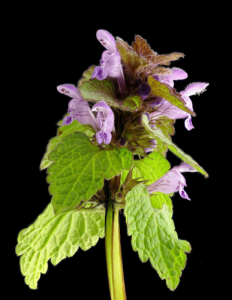
Purple Deadnettle : Wildflower or weed?

Gandhi and the Honey Bee

On the 150th anniversary of his birthOctober 2, 2019

The first scene in Richard Attenborough’s movie, Gandhi, is the  assassination of the protagonist by a Hindu patriot who feared that the Mahatma’s  emphasis on non-violence would prevent newly independent India from pursuing its national interest with military vigor.   

At the time, January, 1948, Gandhi’s life seemed to have been a spectacular failure. His beloved India had been partitioned into Hindu and Muslim majority states accompanied by devastating fratricide resulting first in the uprooting and deaths  of millions of people along religious lines, and secondly the beginning of a tension that was to cause numerous wars that in turn launched a debilitating arms race.  India had achieved independence from the imperial rule of the British Raj but not from modern industrial society as introduced by western imperialism; even Gandhi’s disciple, Prime Minister Jawaharlal Nehru, believed in rapid industrialization and urbanization in an attempt to transform a billion people into consumers. 

Gandhi was born on a sub-continent that was predisposed to the West, both intellectually and materialistically.  Europeans, backed by gun boat diplomacy, had flooded the local markets with their manufactured products, exported millions of Indian workers to far-off colonies, and, convinced of their moral superiority, imposed profound social and cultural reforms on their subjects.  Many Indians were forced to abandon their immemorial villages with a life defined by religion, family and tradition, for a society  dominated by white men  who were driven by the profit motive and sustained by a belief in the national state enforced by superior weaponry.

Initially Gandhi bought into this scenario.  He received a western-style education, studied law in London and, on his return to India, set up a law practice, as part of which he was sent to South Africa in 1893 by an Indian trading firm.  In what was to be a 21 year incubation period, Gandhi was subject to a number of racial humiliations and  witnessed the moral and psychological vacuum of a country in which, as in India,  the old ways and life styles were being replaced by the cultural and political norms of western capitalism.  And as a stretcher bearer during the Boer War he experienced first hand the violence of early twentieth century warfare. 

He was not alone in his awakening.  Many Chinese and Muslim intellectuals argued that the ideals of  the European Enlightenment were no more than a moral cover for racial hierarchies; they sought comfort in a revamped Confucianism and Islam, only later to be pushed aside by hard-line communists and fundamentalists. Gandhi’s difference was the realization that rampant nationalism or religiosity would simply replace one set of deluded rulers with another – “English rule without the Englishman,” he called it – and his term satyagraha, literally holding fast to truth in Sanskrit,argued for political and cultural reform by non-violent means.  It was truth as moral engagement.

To Gandhi, the industrial revolution, by turning human labor into a source of power, profit and capital, had made economic prosperity the goal of politics, rather than religion, ethics and the well being of all. The traditional virtues of India – simplicity, patience, frugality, otherworldliness – were denigrated as backward.  Thus Gandhi dressed simply and rejected all outward signs of being an intellectual, even though his Collected Works cover over 100 volumes.  In South Africa his closest friends were English and German Jewish intellectuals; he was initiated into Hindu philosophy by a Russian and he quoted as often from the New Testament, Ruskin, Thoreau, G.K. Chesterton and Tolstoy as from the Bhagavad Gita. Rather than present himself as a national politician, which he was, he focused on moral self-knowledge and spiritual strength, upholding the self-sufficient rural community over the nation-state, cottage industries over factories and manual labor over machines. 

The traditional authorities fought back, perhaps with the fear that can come from deep truths about which they were in denial.   Winston Churchill, who regarded himself as a true democrat, said in 1930, “It is alarming and also nauseating to see Mr. Gandhi, a seditious middle temple lawyer, now posing as a fakir of a type well known in the east, striding half-naked up the steps of the viceregal palace, while he is still organizing and conducting a defiant campaign of civil disobedience, to parley on equal terms with the representative of the king-emperor.” 

In more ways than one, Gandhi, in his belief in self-determination for all people and the universal equality of all of mankind, was much the greater of the two democrats. It is no surprise that Churchill loathed Gandhi. Gandhi  loathed no one.

By the beginning of 1948, in the midst of civil war and Indian capitalism, the 80 year old Gandhi may well have been discouraged.  Shortly before his assassination he had embarked on yet another hunger strike but had vehemently refused all police protection; it was almost as if he welcomed an end to a life-long struggle that seemed not to have produced any tangible results. 

And yet his name is wistfully invoked in many conflict zones today, not least by the non-violent demonstrators who prayed unflinchingly on Kasr al-Nil, in Cairo, as they were assaulted by Hosni Mubarak’s water canons, or in the yearning for a person of his stature in either Israel or Palestine, if not both.   He inspired  many globally revered figures, including Martin Luther King, Nelson Mandela, the Dalai Lama, Archbishop Desmond Tutu, and Aung San Suu Kyi (before the Rohingya debacle.) 

Besides Indians, who were motivated to something like self-sacrifice in the name of the common good, Gandhi’s message resonated with that part of the British soul that was empathetic to the values he embodied.  It worked too in Alabama and Mississippi in the 1950’s and 60’s, whereas it did not work with Stalin or Mao, nor would it have done with say the Khmer Rouge.  Indeed Gandhi’s suggestion in the 1930’s that Jews should resist the Nazi’s with non-violence was woefully misgided.

As the spiritually minded, sage-like thinkers, advocating ethical responsibilities and duties,  have faded from the mainstream of our society, so hard they been replaced by ideologies, institutions, science and commerce.  The writing is still there – Simone Weil, Reinhold Niebhur, Czeslaw Milosz, Vaclac Havel – but it is hardly at the forefront of the national debate. When it comes to the challenge of trying to live ethically in the midst of radical change, of trying to be moral men and women in complex, immoral societies, Gandhi still seems to be the most distinguished figure in this countercultural tradition. “He was the last political leader in the world who was a person, not a mask; the last leader on a human scale,” Dwight Macdonald wrote in a tribute after his assassination. 

How, you ask, do honey bees relate to this story?  First, in northern climes it is easy to feel disillusioned when spring reveals a number of dead-outs in the apiary.  Despite all our caring, all our work, all the money we spent on nucs and packages and queens and sugar and medications and treatments, there may be no tangible results of our effort, of our caring. The survivors struggle in an environment increasingly  despoiled by the artifacts of agri-chemical businesses which are driven by profit rather than by morality, ethics and self-knowledge.  Most of us are hobbyists, members of a cottage industry, using manual labour rather than machines, and proudly so.  We can feel helpless when the bees fly beyond our immediate reach and venture unknowingly into a toxic realm.  The Mahatama might have used a hive as a symbol, rather than a spinning wheel. 

Gandhi’s great gift was to bring together in public spaces masses of highly motivated and disciplined protesters with a common passion.  As beekeepers we are not alone in our loss; indeed, like the honey bee,  we cannot survive in isolation.  And the bees, our wards as well as our teachers, are not only motivated and disciplined but also demonstrate the traditional values that Gandhi so admired, not least, simplicity, patience and frugality.  They are beacons of hope in the best of countercultural traditions. 

Secondly, Gandhi’s ecological world view, summed up in his homily “Earth provides enough to satisfy every man’s need but not for every man’s greed,” supports the increasing move towards backyard beekeeping, organic farming,  farm-to-table restaurants and sustainable lifestyles – the kinds of practices that were common before the steam engine and the factory, a time when the majority were stewards of the land even if few could afford meat – “To bring home the bacon” originated in the late Middle Ages as a sign of unusual good fortune. 

And thirdly, Gandhi realized that the triumph  of the scientific world over the ethical one has desacralized nature and made it prey to ruthless, systematic, extractive economies  who measure only in terms of the bottom line – mountain top mining, deforestation of the Amazon basin, monocultures covering the mid-west, factory hens, hormone induced beef production,  ‘clean coal,’ fracking, unrestricted off-shore drilling, to name a few.   Just as happened in nineteenth century India, we misguidedly struggle  to achieve our independence from total reliance on nature and circumstance, but not from the dictates and materialism of a post-industrial culture. 

It is easy to romanticize Gandhi as he set out not only to undermine the system but also to change the hearts and minds of his opponents; in effect, to humanize them.  He was not perfect but he attracted respect with his sheer perseverance in the face of overwhelming obstacles, what has been labeled his ‘moral stubbornness.’  He made it clear he was in it for the long haul, as are we, the beekeepers, as we fight for environmental justice and reform.   

David Lean’s 1962 movie, Lawrence of Arabia, also opens with the death of the protagonist – a motorcycle accident in 1935 in Dorsett, England.  After the First World War General Edmund Allenby, who had been Lawrence’s commanding officer, described him as “the mainspring of the Arab movement,”   and as with India, the nationalism he inspired has not met with significant peace in the Middle East.  Nor is Lawrence’s name spoken of with the same esteem as his contemporary, Gandhi, despite his many monumental acts of bravery, in part because Seven Pillars of Wisdom does not have the moral underpinning of the Mahatma’s writings, and in part because neither Lawrence, nor very few others, could replicate the fierce, transparent, internal battle that Gandhi fought with himself, an endless inner struggle between him and his idealized image of himself, that resonated with so strongly with what others saw and experienced.  Thus is he called Mahatama, or Great Soul

Honey bees, their health and rates of attrition, are both a touchstone and a reminder of what happens when we as a society forget the difference between control over nature and living with nature.    The bees, the soul of nature,  have not forgotten and they rely on us, the humble beekeepers, to relay their message. We can never go back to a pre-industrial age but we can strive for a balance. Honey bees offer a bridge, a connection, a link between the best of the old and the finest of the new.

Knowledge v Wisdom

“If we approach nature and the environment without this openness to awe and wonder, if we no longer speak the language of fraternity and beauty in our relationship with the world, our attitude will be that of masters, consumers, ruthless exploiters, unable to set limits on their immediate needs.

By contrast, if we feel intimately united with all that exists, then sobriety and care will well up spontaneously.  

Pope Francis, Encyclical Letter, May 24, 2015

Napoleon Bonaparte, the victor of sixty  battles including Austerlitz, Jena and Friedland,  was finally killed by his wallpaper.

When the Orleans monarchy returned Napoleon’s body from Elba to Les Invalides in Paris for entombment nineteen years after his death, French investigators found traces of arsenic in his hair and finger nails, hence the rumor that he had been deliberately poisoned by the British military doctors on the island.  In reality he spent the last six years of his life writing his memoirs in a relatively confined space that was decorated with a wallpaper known as Paris Green. The color came from mixing arsenic with copper and although not the only cause, the arsenic explains his ill health and relatively early demise – he was 52 years old.    

Paris  Green has another significance.  In the 1850’s a European farmer, in a fit of annoyance,  reputedly dumped some green paint on potato plants and watched as the infestation of recently imported Colorado beetles died. The beetles had arrived in the 1840’s  embedded in a load of guano shipped from islands off Peru to Antwerp where it was acclaimed as a fertilizer that was going to revolutionize food production. It was the first ‘green revolution’ in more sense than one.

To potato farmers Paris Green was a godsend, as Charles Mann describes vividly in 1493 : Discovering the New World Columbus Created.  To chemists it was something that could be tinkered with.  If arsenic killed potato beetles, why not worms, weevils and moths in cotton, apples and elm trees?  The invention of foggers, sprayers and nozzles meant that instead of dusting arsenic on crops, it could be sprayed in combination with lead and calcium. 

By the 1880’s French researchers had discovered that copper sulfate was a remedy for the potato blight that had devastated Ireland forty years previously, even though it was known  that copper sulfate was toxic. What the farmers and the scientists did not realize was that the chemicals, despite their toxicity,  would lose their effectiveness as insects adapted. 

The first recorded resistance was in 1912 but it did not attract much attention in the face of the new compounds that were being developed.  After the First World War the companies that had been devising gasses to kill people turned their technology back to insects, and it was during the Second World War that  farmers got to test a ‘miracle compound’ known as DDT, an organo-chloride that was celebrated for seven years before insects adapted and the extent of its accumulation in organisms and the environments was realized.  DDT was banned in 1972 (its residues are still found in soil analyses forty five years later) due primarily to the work of Rachel Carson; a less-told story is the way that Rachel was attacked, demeaned and pilloried by Monsanto in particular even before her book was released and even though she was dying of cancer.  But the agro-industrial complex had been well and truly launched with its three determining characteristics : improved crops, high intensity fertilizers and chemical pesticides.

The 1970’s was the age of organo-phosphates which accumulated less in the soil than DDT but modified insect behavior.  Effects on the waggle dance of honey bees, for example, caused researchers to consider seriously the sub-lethal effects of  chemicals.

The pyrethroids of the 1980’s did not kill honey bees but their foraging behavior was modified; the bees appeared to be ‘intoxicated’ as they became unsteady on their legs, tumbled over and got lost after leaving home,  One of the findings of the Managed Pollinator CAP program is that the residues of pyrethroids pose a three-fold greater hazard to a colony than neonicotinoids. 

The larvicidal insecticides and neonicotinoids of the 1990’s were initially welcomed because of their low toxicity to humans and cost savings to the farmer.    Neonicotinoids, so called because they are modeled after the natural insecticide, nicotine, and are applied as a seed dressing, are systemic and thus omnipresent in a plant, and act by blocking neural transmissions in insects. 

At Apimondia in 2009 Bernard Vaissiere of the French National Institute for Agricultural Research, asserted that if  DDT had a toxicity of 1, the toxicity of imidacloprid is 7290, clothianidin  6750 and  fipronil  6560.  Moreover, the synergy between a pesticide and either a fungicide or a herbicide might increase that toxicity a thousand times. 

In The Botany of Desire Michael Pollan describes a toxic treadmill in which agricultural land is doused with so many fumigants, pesticides, herbicides and fungicides as to create a ‘clean field’ – ie. devoid of life except for the desired plants.  Neonicotinoids in particular kill any insect, beneficial or otherwise,  that eats on that plant, and this includes the enemies  of the targeted species.  As resistance is developed in each insect (the so-called ‘super bugs’) yet another more potent chemical weapon is required 

Has this pattern been successful?  In January, 2015, doctors in India reported the first cases of totally drug resistant tuberculosis, described as ‘long feared and virtually untreatable.’    And after 25 years of chemical treatments in the USA, varroa destructor is still the main cause of honey bee losses and within a cycle of five to seven years appears to develop resistance to each new chemically-based treatment. 

Chemical residues, not surprisingly, are also found in pollen. In the January, 2012, issues of both Bee Culture and American Bee Journal, Keith Delaplane,  in summarizing the  CAP project, stated that “… national sampling of bee-collected pollen has revealed 130 different residues of pesticides or pesticide metabolites.  The average number of residues per bee pollen load is 6.21.” 

In 2010, 99.8% of corn seeds planted on 88 million acres of land (the largest single use of arable land in North America) were coated with neonicotinoid insecticides; in fact, the amount of clothianidin on a single kernel contains enough active ingredients to kill more than 80,000 honey bees.  Corn does not rely on honey bees for pollination (corn, as a member of the grass family, is wind pollinated)  but corn pollen is frequently collected by honey bees when it is available and it can make up more than 50% of the pollen on bees sampled from agricultural areas.  If there is any nectar in corn it is not available to honey bees.

But it is more than foraging on corn itself.   On January 3, 2012,  the Public Library of Science (PLoS One) published the results of research from Purdue University entitled Multiple Routes of Pesticide Exposure for Honey Bees Living Near Agricultural Fields which described high concentrations of pesticides, herbicides and fungicides (especially clothianidin, thiamethoxam, trifloxystrobin, azoxystrobin, propiconazole, atrazine and metolachlor) in samples collected from dandelion flowers, from honey bees (both dead and healthy) and in the waste products produced during the planting of treated corn seed, in particular the talc that is added to the seed box to reduce friction and stickiness and ensure the smooth flow of seed.  In the process of planting, the talc is blown out by an exhaust fan; some falls on the soil but much goes into the air. Most of this planting occurs in the spring when the bees are building up after the winter, and the contaminated pollen is stored in the bee bread and royal jelly in the hive that are fed to larvae and on which the strength of the future colony depends.

Since this report was published there have been attempts to find alternative additives besides talc to expedite the planting proces. 

There is a positive correlation between proximity to agricultural areas and the presence of neonicotinoids. The PLoS One report showed clothianidin present in the surface soil long after treated seed has been planted. “All soil samples we collected contained clothianidin, even in cases where no treated seed had been planted for two growing seasons,” the report says.

This is not the place to list all of the hazards of neonicotinoids but it is worth noting that they  are water soluble and mobile in ground water, that they kill the entire structure of soil-born organisms, eventually leaving an inert medium, that imidacloprid has a half-life of 19 years, meaning that it could take a century or more to rid it from the 200 million acres world wide where it has been used, the effects on immunocompetence, fecundity, and sperm viability in queens, and the overall impact on the behavior of bees in a colony. 

In 2014 there was some strange behaviors in my colonies. Besides poor health and low honey production, there were abnormal brood patterns, poor quality queens and clusters of bees leaving the hives in the fall.  Initially I blamed the cocktail of chemicals being used by nearby orchards to  control the outbreak of stink bugs, and that may still be an issue, but apparently these are also the specific symptoms identified by European beekeepers as typical of bees that have had several years exposure to  neonicotinoids. 

In 2017 Ross Conrad, writing in Bee Culture, and Michele Colopy of the Pollinator Stewardship Council put the emphasis squarely on neonics.    “The focus on varroa mites as the sole pest to honey bees detracts from a primary factor affecting the health of honey bees : pesticides,” Michele wrote in September,  and in December Ross began his column thus : ”If you still think our primary problem is varroa, poor nutrition, habitat destruction, etc. and don’t believe that pesticides is one of the primary issues, if not the primary issue, for beekeepers today … think again.”

And we  haven’t so much as mentioned glyphosate, of which in excess of 11 billion pounds was sprayed worldwide in the last decade. 

Europeans have been more concerned about this than have we, and more vociferous; perhaps they are more intimately connected with their environment because space is restricted and thus all the more precious.  French beekeepers for example, have taken to the streets in protest against major agro-chemical industries like Bayer.  In addition each European country appears to have one major beekeeping organization which takes up the cudgels on behalf of all of its beekeepers, and government ministers seem to have the power to make significant decisions, bi-passing the powerful lobbying which is part of the American political  process. 

Europeans also tend to take a longer term view than we do, as witnessed by their aversion to GMO’s.  Neonicotinoids are touted as being safe for humans, and they may well be in the short term.  The fear is that, just as some chemicals are advocated  as safe for bees based on lethal consequences, the sub-lethal effects are ignored.  We can no longer avoid breathing, eating and drinking these toxins – they are omnipresent – and this in a country that is seeing rapid increases in afflictions such as cancer, diabetes, obesity and ADHD in children. 

France, roughly the same size as California, registered  2.3 million hives in 2015, a number which is increasing, compared to 2.4 million in the entire US, a number which is declining. 

There are presently no international laws or agreements, but in 2000 the European Union issued Directive 91.414 that oversees pesticides and marketing.  Even though manufacturers sat on the decision-making bodies and there was an agreed lack of bureaucratic oversight, the number of active legal substances was reduced from 800 to 400 in the first nine years with another 22 substances banned in 2010.  In 2009, this directive was revised, tightened and reissued as a Regulation.

What we are seeing in 2017 is not Colony Collapse Disorder so much as colony dwindling, which may be bigger than CCD if not as dramatic.  Speaking at Apimondia in 2009, the Italian researcher Franceso Panella stated that the agro-chemical industry is now in control. And when the focus moved to the financial recession in 2008, the  agricultural crisis which, in the long term, may be more debilitating, more pivotal, more critical, faded into the background.  

Eight thousand years ago agriculture was the key in the move from barbarism to civilization, and that which made us civilized is under threat. What was seen as an adroit solution a hundred years ago is now literally poisoning our environment and threatening our health in both the short and long terms.  Surely its time to be outraged and to work towards an embargo on the over-whelming use of these potent and toxic chemicals, as is being done in Ontario, Canada, much as was done at a public level with the tobacco industries, and by a group of motivated parents via MADD – Mothers’ Against Drunk Driving  

Is this depressing?  Possibly so.  Some would even say hopeless.   “One of the penalties of an ecological education,” Aldo Leopold noted, “is that one lives alone in a world of wounds.” And yet I live in hope, the kind of hope that believes an understanding of the past can explain the present and inspire a healing of the wounds. The kind of hope that is grounded in and nourished by real information available to everyone everywhere.  The kind of hope that motivated the late Vaclav Havel who, during the Soviet occupation of Czechoslovakia, and together with a few dissidents, circulated petitions, drafted manifestos, wrote protest plays and smuggled news from the outside world, often with very little to show for it.  What sustained him was not a belief that his cause would prevail but a belief that his cause was right.  “Hope is not prognostication,” he said.  “It is an orientation of the spirit, an orientation of the heart; it transcends the world that is immediately experienced and is anchored somewhere beyond its horizons.”

It is time for our faith in our children and in nature, as well as in our capacity for healing and loving work, to eclipse behaviors based on habit and haste.  Life on earth will outlast us.  Without insects mankind might last fifty years; without man insects would do just fine. The question is not whether life will go on; rather the question is whether we will continue our reckless use of this earth or we will work to preserve the intricacy and beauty of our universal home.  

Honey bees, unlike humans,  hold no grudges.  Their health is in our hands and ours in theirs. What more joyful work could there be than to support their untiring work with healing, especially the healing that happens when, in the words of Scott Russell Sanders, “Our wisdom transcends our knowledge.”