Musings on Honey Bees, the Environment and Ourselves
Author: Jeremy
I have spent some 75 years living and working in England,Rhodesia/Zimbabwe, South Africa and the USA, with many opportunities to learn from beekeepers in a v variety of African and European countries in between . An educator by profession, with a focus on history and group dynamics, the honey bees chose me in 2002, despite which, like many beekeepers, I lost my first two hives over winter. In 2009 I was asked by the editor of the PSBA to write a column for the monthly newsletter, which she labelled "Jeremy's Corner"; 14 years later is still continues. A rather eclectic style of content and vision developed, and these posts are based mostly on those essays. Meanwhile I was fortunate to be honored as York County's Beekeeper of there Year in 2013, and similarly for Pennsylvania in 2018.
History is littered with examples of words that have been used to manipulate feelings, solicit votes and distort reality. One of the most infamous is the German term Nationalsozialismus, more commonly abbreviated to Nazism. The Nazi Party was founded as the pan-German nationalist and antisemitic German Workers’ Party on January 5, 1919, and re-named the National Socialist German Workers’ Party two years later by Hitler, knowing full well that it was nationalist in ambition but neither socialist nor focused primarily on the working class.
In my own experience during the civil war in Rhodesia (now Zimbabwe) in the 1960’s and 70’s, the guerrilla forces that were fighting to be part of the political process in their own country were known either as freedom fighters or terrorists, depending on which side of the fence one stood. More significantly, the white-controlled government argued that the insurgents were the front line of communism, which was good for emotional support from the threatened white minority who saw themselves as the bulwark of western values, but inaccurate in terms of the ideology of these forces who were motivated more by nationalism, a legitimate ambition that, as best I can recall, was never acknowledged by Ian Smith’s propaganda machine. And to my shame I cannot recall anyone demanding proof of these alleged communist links, rather being content to accept them unthinkingly as the intensity of the war escalated and the need to justify the violence escalated.
As an aside, like most other long-lasting conflicts, the longer that confrontation continued the more the power moved to the extremes on both sides and the more the intent moved from participation to revenge. An exception to this trend was South Africa, in which the peaceful succession of Nelson Mandela in 1994 was a stunning feat in the face of history which can be attributed almost entirely to his personal qualities, character and authority.
In the US the term socialism is frequently a pejorative among older sectors of the population. My guess is that this goes back to the Cold War against the Union of Soviet Socialist Republics, and it was convenient to confuse socialism (which I would suggest is legitimate) with communism (which is not.) This is of particular interest when Bernie Sanders, an avowed socialist, contested the US 2016 Presidential race, and in the light of a 2012 Pew poll which suggests that 49% of Americans under the age of 30 have a favorable view of socialism compared to the 47% who expressed a positive view of capitalism.
Int the nineteenth century the social deprivations of the Industrial Revolution sparked civic uprisings focused on the relationship between the needs of the individual and the role of government, and in particular a movement towards economic and social equality. Known originally as social democracy, it argued that the means of production, distribution, and exchange should be owned or regulated by the community as a whole, with the proceeds being returned to the community in the form of subsidized housing, education, elderly care and health benefits.
Socialists argued this would happen peacefully through the democratic process, and only the major industries would need to be nationalized (ie. owned by the nation) to pay for it. Communists argued that capitalists would never voluntarily relinquish control of their wealth, that it required a forceful proletarian revolution, a short term dictatorship, and the abolition of all private ownership.
So the question becomes, if we governed on the basis of what we see in a honey bee colony, which of these two systems would it look like, if either?
First there would not be elections as we know them. The nominal leader of such a community would be chosen at a young age. We would know her mother but her father could be any one of about twenty possibilities. She would be specifically nurtured for her position, together with a few others, and upon maturity would assert herself in the face of any rivals and would be allowed to exercise her role as long as she was productive and successful. If not the community would make arrangements to replace her. Her role would not be to make decisions for the citizenry but to provide an on-going population for the continuation and expansion of the species.
Another very small section of society would be entrusted with seeing that, in terms of survival of the fittest, the species would continued as vigorously and as fervently as possible. Only a fraction of this small caste would achieve their ultimate objective; the majority would die unfulfilled and, in the event of a dearth of resources, they would be jettisoned so that the larger society could survive, knowing that the ‘leader’ could produce more on demand once the resources were again available.
The majority of the society would consist of a multi-functional working class who created the conditions in which the leader could operate to maximum effect, cleaned house and kept it safe, prepared food to nurture the next generation and preserved stores for times of need. Each of these workers would do all of the above depending on age, available resources and the needs of the community, because it is the health and survival of the populace which would be their guiding principle.
Democracy is derived from two Greek words, demos (people) and kratos (power) and one could argue that a honey bee colony is a democracy in that the majority have the power – they make the decisions, instinctively, to replace the leader, eject the males, collect pollen rather than nectar, even whether some should leave home in search of a new abode, and if so, who goes and who stays. It also reflects the socialist side of the spectrum, with “the means of production, distribution, and exchange owned or regulated by the community as a whole,” and everyone sharing the proceeds.
A more interesting term might be communalism (and please note spelling – communalism, not communism) which refers to a system that integrates communal ownership within highly localized independent communities. It was evident in the early Christian churches and later in the Plymouth Colony with its policies of land use and profit-sharing. In 1621 in New England common ownership was the basis for the contract agreed upon by the venture and its investors, even if it was seen as temporary, with a division of property and profits scheduled to take place after seven years.
Although each family controlled their own home and possessions (ie. their ‘colony,’) corn (ie. nectar and pollen) was farmed on a communal plot of land with the harvest divided equally amongst the settlers.
Unfortunately the secular planters resented having to share their harvest with families whose religious beliefs so sharply conflicted with their own and within three years each family was temporarily assigned its own plot of land with the right to keep what was harvested from that plot. Thus it was religious differences that led to a more competitive, divisive, capitalist system.
For three brief years, 1621-24, the Plymouth Colony acted as does a bee hive, with individual responsibility, joint accountability and the welfare of all as the common goal. We still express this as a desired ambition and certainly it can be demonstrably achieved at the family level, but nationally we are too quick to disagree, to dissent and dismiss, and the ‘commonweal’ gets lost in the process. The problem lies not with the faith so much as with the faithful.
In recent years casual observation has suggested that both the number and variety of birds visiting our feeders was declining. Turns out it was not my imagination.
Two studies were eye-opening and disturbing. The first, in 2006 in the journal BioScience, The Economic Value of Ecological Services Provided by Insects, evaluated the vital ecological services provided by ‘wild’ insects’ by focusing on four crucial services they provide : dung burial, pest control, pollination, and nutrition for wildlife. The answer? $57 billion in the US alone. That is about $156 million per day, or in excess of $100 000 per minute. I suspect that only the US military spends more per hour.
The second, published in PLOS One in 2017, looks at changes in flying insect biomass in a set of 63 protected areas in Germany based on insect-trap measurement over a 27 year period. Between 1989 and 2016 the biomass of flying insects in these areas fell by between 76 and 82 %. Remember, that’s the total biomass, not the number of species that were found.
According to the researchers, “Loss of insect diversity and abundance is expected to provoke cascading effects on food webs and to jeopardize ecosystem services … Our results demonstrate that recently reported declines in several taxa such as butterflies, wild bees and moths, are in parallel with a severe loss of total aerial insect biomass, suggesting that it is not only the vulnerable species, but the flying insect community as a whole, that has been decimated over the last few decades.”
We cite constantly how much of our food is pollinated by honey bees yet forget at our peril that insects provide 80% of wild plant pollination and 60% of birds rely on insects as a food source. Of course, the decline in insects is only part of what the natural world has lost. Another study found that between 1970 and 2012 the planet lost roughly 58% of its wild vertebrate abundance. Do we have any idea what happens when birds eats insects that have ingested pesticides, or earthworms exposed to chemicals in the soil, or fish exposed to toxins in the water, or beetles exposed to herbicides on grasslands? And what about eating the seeds themselves? According to Ross Conrad writing in Bee Culture in 2017, one neonic-soaked seed can kill a bird the size of a sparrow, and twelve such seeds can kill a grouse or partridge.
Does anyone know the sub-lethal effects as we ingest toxic substances in the water, the air and our food, even if in minute quantities?
David Goulson, et al, in Science, 2015, point to several interacting factors for the decline in the biomass : declining availability of food and nest resources, exposure to agrochemicals, increased incidence of disease, parasites and invasive species, and climate change. Nor do they act singly so much as synergistically. Focusing on food availability, for example, the conversion of land to human infrastructure isolates patches of flowering plants. In the US, 6000 acres of undeveloped land are lost to urban growth every day. Intensively farmed regions of monoculture provide insufficient resources and climate change is causing similar deficits in wilderness areas. In the same publication, Science, Nicole Miller-Struttmann et al spent 40 years studying alpine meadows that are largely protected from land use changes and recorded a floral decline of 60%.
Systemic chemicals such as neonicotinoids pass readily into reproductive tissues and interfere with beneficial, as well as antagonist, insects. It is clear that honey bees exhibit neonicotinoid-induced declines in foraging success and navigation but Maj Rudolf, et al, in Nature, 2015, suggest that honey bee susceptibility may actually underestimate that of other bees. When the authors monitored feral and honey bee populations in 14 fields paired by land-use history and neonicotinoid treatment, the decline of feral bees was significantly higher in the neonicotinoid-treated oilseed rape fields than in the honey bee colonies. The reason might be the eusocial behavior of honey bees : a colony of 40 000 bees can loose 5000 and still recover, albeit in a weakened state, whereas feral bees are primarily solitary.
In the 1960‘s, when the solutions to conservation issues appeared to be relatively simple, such as in the cases of ozone-depletion caused by halocarbon refrigerants and CFC’s, or eggshell-thinning caused by DDT, concerted efforts quickly rallied public and political support to protect important natural resources. Today, not only is the world becoming a less colorful place, it is becoming a less functional one as well. The reasons are complex and less easy to simplify in terms of mobilizing the public, but the visual evidence is real if one cares to look, hence the importance of something so simple as bird feeders. The time to ignore these global warnings has passed. Put it this way: canaries in coal mines only reveal the presence of coal gas if one is willing to listen to their singing, notice when it stops, and look in their cages to see if they are dead. If one just keeps blindly digging out coal, the eventual result is pretty obvious.
““Every kind of organism,” Mark Winston writes in the preface to Nature Wars: People v Pests, “has defining characteristics by which it can be identified as an entity different from all others.” The upward turned wing tips of the turkey buzzards as they fly overhead; the square lip of the white rhinoceros that identifies it as a grazer, separate from it’s hook-lipped, browsing ‘black’ cousin; the flashes of color as a family of bluebirds takes flight; the tail of a fox so distinctive from a distance; the strong smell of the Matabele ants so vivid in my childhood memory; the bouquet of frangipani or brunfelsia flowers; the contrasting barks of different oaks species … each signals membership of a distinct group.
These characteristics have been misinterpreted, sometimes with fatal consequences. The medieval Doctrine of Signatures, for example, held that every plant and animal was put on earth by the creator to serve human beings and was marked with a signature that indicates the use to which it can be put. Thus the liver-shaped leaves of the liver wort indicated it could cure liver problems, and the ear-shaped hindwing of the earwig was a sign it could cure earaches (crushed, and mixed with the urine of a hare!)
Humans too have signatures that make us distinctive to other species – an upright, bipedal posture, forward facing eyes and relatively hairless bodies. These too have been abused, and variations within those characteristics – skin color, hair texture, eye shape, gender – have led to judgment and divisiveness.
The most unusual aspect of being human however, as Dr. Winston describes, is that we live simultaneously inside and outside of nature. We are subject to the same laws as other animals – our life span is finite, we vie for mates, we respond to variations of temperature and climate – yet unlike other species we consider ourselves not only separate from nature but superior to, and more important than, the rest of life.
Justification for these feelings of eminence was found in the translation of the Hebrew word memshalah as dominion, as in having “dominion over the fish of the sea, and over the fowl of the air, and over the cattle, and over all the earth, and over every creeping thing that creepeth upon the earth.” Does dominion mean ‘plunder and subjugate,’ or does it mean ‘care and look after’? A pronouncement by the Imperial Conference of 1926 described Great Britain and the dominions as “autonomous communities within the British Empire, equal in status, in no way subordinate one to another in any aspect of their domestic or external affairs …” Indeed Canada had been granted dominion status since 1867, followed by Australia, New Zealand and South Africa within the next fifty years.
“Equal in status, in no way subordinate to another …” Our relationship with fish, fowl, cattle and every creeping thing ‘doth changeth’ in the light of this interpretation compared to a definition which justifies the conscious and deliberate remodeling of the globe to suit our needs and which is the core of our current environmental crisis.
Just as every organism has a defining characteristic so does it have a habitat, a niche with food, water and shelter. We, by contrast, not only thrive in different habitats but can invent our own, whether it is the complexity of a city or the recent bio-dome built to test humans’ ability to survive in a Martian environment.
If we accept civilization as beginning 10 000 years ago with the development of permanent human settlements in at least four different areas of the world, then our society was essentially agricultural for 97% of that time, before the scientific revolution drastically re-shaped our living standards and our environment. For more than 9500 years humans carved a few fields out of the forests and woodlands and fertilized them, if at all, with natural products. They burned a sustainable amount of wood and traveled by foot, horseback or cart along essentially dirt tracks. Today we have token patches of natural vegetation which we need legislation to protect, despite which more than 150 million acres of pollinator habitat have been destroyed in the United States in the last 20 years. We burn sufficient fuel to modify the earth’s climate and asphalt highways are traveled by vehicles, the emissions of which threaten the very quality of the air we breathe.
An aside. Fifty years ago, and four times a year, my drive to university covered 1400 miles, the first 400 of which took me through just one town and, during which, I might see a dozen other vehicles, if that. The parents of a colleague, Graham Henderson, realized after he had left for the same trip that his passport was sitting on the dining room table and without it he could not cross the border at the Limpopo river. They phoned a rural police station 80 miles down the road and described the vehicle. The police put up a road block, recognized the car, explained the situation and Graham returned home.
The hazards of driving did not come from emissions so much as from animals on the road, including, very occasionally, elephants or, more commonly and if it was Thursday, herds of cattle being escorted to the tanks too be dipped for ticks. Today, driving in the US, wherever I go there always seem to be vehicles in front of me and vehicles coming up behind.
Honey bees are not indigenous to north America and were first introduced in the early 1620’s as part of a western-based agricultural system. In the last 50 years they have been inundated with a number of viruses and parasites – tracheal mites, nosema ceranae, varroa mites, chalk brood and small hive beetle, with more to come – which not only straddle the world as the result of global transportation but exist in an increasingly toxic environment, as indeed do we. Speaking at the Pennsylvania Beekeepers’ Conference in November, 2016, Mark Winston stated that 1.3 billion pounds of pesticides are used in this country every year, which equates to about four pounds per person. Considering that most pesticides are toxic to humans in doses of one hundredth thousand to one millionth of a pound, that’s a lot of poison.
If we are to be effective perhaps we need to agree on dominion as stewardship rather than as pillage, on interdependence rather than independence, on a web of life rather than a hierarchy. Action can be effective in a crisis – the response to the depletion of the ozone layer is one example – but stewardship means being proactive rather than reactive; it means respect for all forms of life, it requires humility and requires a re-examination of what we mean by quality of life.
Rachel Carson concluded Silent Spring by writing that “the control of nature is a phrase conceived in arrogance born of the Neanderthal age of biology and philosophy, when it was supposed that nature exists for the convenience of man.”
The theme for the PSBA conference in 2016, “Audacious Ideas for the Future of Beekeeping,” was inspired by Mark Winston’s Manifesto, first published in 2015, in which he argued for a new paradigm “that recognizes beekeepers as stewards of both managed and wild bees, promoters of healthy environments, managers of economically sustainable apiaries and paragons of collaboration and cooperation. It’s time for some audacious thinking about the future of beekeeping.” Indeed, it’s time for a BHAG. In 1994 James Collins and Jerry Porras published Built to Last : Successful Habits of Visionary Companies, in which they devised the term ‘Big Hairy Audacious Goal’. BHAG, as it is customarily referred to, is a strategic business statement designed to focus an organization on a single goal which is audacious, likely to be externally questionable but not internally regarded as impossible.
Let’s return for a moment to the term ‘dominion’ as meaning either plunder and subjugate or caring and looking after. In describing the different approaches to beekeeping in the United States, Europe and Oceana, as compared say to Africa, Maryann Frazier uses the terms nursing versus nurturing. In the former the management objectives and styles are mostly economically driven, with the maxim that increased yields means increased profits for the beekeeper. The bees are expected to adopt to our needs despite the fact that they are exposed increasingly to diseases, pests and parasites, they exist increasingly in monocultures, we treat even weak colonies for survival, and the bees are expected to use and re-use old comb, which as Keith Delaplane explained, “forces the bees to use their liver as their uterus.” It’s hardly surprising that pollinators are in decline in so-called ‘developed’ countries.
In many parts of Africa, Asia and South America beekeeping is more biologically driven. It is nurture more than nursing, and we are expected to adapt to the bees. Although this is changing, there is less use of pesticides, less exposure to pests and diseases with minimal intervention by the beekeeper, a diverse environment for foraging, and apis mellifera scutellata is allowed to exercise its need to swarm frequently which not only interrupts the varroa cycle but allows for the frequent building of new comb. Honey bees are not declining in these areas; indeed they are increasing.
There are other examples of this comparison not immediately connected to honey bees. Dr. Mai Van Trang, an Indonesian, in a poem entitled An Asian View of Cultural Differences, describes Asians as always at rest compared to Westerners who are always on the move. “We are passive; you are aggressive. We like to contemplate; you like to act. We accept the world as it is; you try to change it according to your blueprint. Religion is our first love; technology is our passion. We delight to think about the meaning of life; you delight in physics …” Obviously these are generalizations but you get the picture.
So what if the BHAG is to move consciously from the current Industrial era to an Ecological era? Using comparisons developed by Riane Eisler and David Loye in The Chalice and the Blade, what if we were to move from an emphasis on material progress to one of a balance between materialism and spirituality; from a consumptive, self-serving behavior to a more cooperative, life-serving behavior; to an identity defined by possessions and social status which leaves us feeling separate and alone, to an identity defined by our participation in life which leaves us feeling connected to a larger universe?
Recent elections in Europe and the USA suggest a retrogression to divisiveness, confrontation, fear, judgement and the elements of domination associated with control and subjugation. Nurturing, by contrast, challenges us to view the world as a living organism of which we are a part rather than an object to be conquered and exploited. Our interactions would be based on a win:win philosophy and rather than operate from a base of competition, control and fear we would place our trust in cooperation, partnership and love. “These words are hard to keep still within definitions,” said Wendell Berry during the 41st Annual Jefferson Lecture, “but they make the dictionary hum like a beehive.”
So, the question remains, what’s to be done? In 2003 Jane Goodall and Marc Bekoff published The 10 Trusts : What We Must Do to Care for the Animals We Love, which can be tweaked for honey bees :
Recognize that we are all connected and interdependent.
Respect all life.
Open our minds in humility and learn from the bees.
Teach our children to love and respect nature, starting with all insects.
Be wise stewards of this earth.
Realize that every action has consequences that last for seven generations.
Have the courage of our convictions.
Recognize and help those who work for the benefit of the natural world.
Act knowing that we are not alone.
Live with hope.
Is there, perhaps, a BHAG that incorporates a definition of dominion as stewardship, interdependence and a web of life, that places trust in cooperation, nurturing and partnership and which will lead to a shift of our world view for the benefits of all living things, not least our planet?
The US Declaration of Independence, in words composed by Thomas Jefferson, proclaims that “We hold these truths to be self-evident: that all men are created equal; that they are endowed by their Creator with certain unalienable rights; that among these are life, liberty, and the pursuit of happiness.”
What if the Creator (whatever that term might mean) believed that these unalienable rights are endowed not just to human kind but to all living things, just as ‘dominion’ does not justify self serving pillage so much as demand the protection and nurture of all life?
Unfortunately, legal systems around the world are not designed to protect nature. Rather, laws and governments are focused on how to use the natural world and it’s resources as fast as possible for maximum financial gain. There are numerous examples of CEO’s who are contractually obligated to make a profit for the benefit of the share holders even when the product is proven to be environmentally harmful. International trade agreements empower corporations to sue governments in order to obstruct or restrain the reach of environmental laws. Global climate agreements remain largely non-binding and unenforceable.
But there are signs of change, and as with many effective movements, they are evident in small groups of passionate people from all around the world. It might be called The Rights of Nature and is described by Mari Margil on a website, Democracy : A Journal of Ideas, in an article titled Nature and the Law (20th December, 2016)
I first got to experience it in Costa Rica some ten years ago. In lieu of a standing army Costa Rica devotes equivalent funds to education, health care and conservation, to the point that small schools and clinics cover the countryside, 25% of which has been preserved as national parks. The passion and pride of Costa Rican citizens for the natural world are evident in their daily actions.
Margil cites other examples. Ecuador, in 2008, was the first country to recognize the rights of nature in its national constitution, which was tested when a provincial court found that the rights of the Vilcabamba river were being infringed by road construction that was impacting the river’s flow. Similarly in the Galapagos, a judge cited the rights of nature constitutional provisions in ruling that road construction must stop until a government review could guarantee the protection of iguana and other species’ habitats.
Here in the US, in 2013, Highland Township, PA, passed a local law prohibiting frack wastewater injection wells, recognizing that the wells would violate the rights of people and ecosystems. The township supervisors repealed the ordinance in 2016 under pressure from an oil and gas company, community members voted in November 2016 to reinstate the prohibition and the township was sued a second time. The case is currently before a Court of Appeals.
In February of 2106 the Green Party of England and Wales adopted a national policy platform on the rights of nature, and in September 2016, the General Council of the Ho-Chunk Nation, based in Wisconsin, introduced an amendment to their tribal constitution to recognize the rights of nature. If passed by a vote of the full membership later this year the Ho-Chunk would become the first tribal nation to enshrine the rights of nature in its constitution. Similar initiatives are evident in Australia and India.
Unsurprisingly, much of industry is opposed to these efforts.
“Rights of nature laws differ significantly from conventional environmental laws,” explains Ms. Margil. “They recognize nature as possessing legally enforceable rights, including the right to exist, flourish, regenerate and, importantly, be restored. Nature is empowered to defend and enforce its own rights, and people and governments are authorized to do the same. If the rights of an ecosystem are found to be violated, damages are to be awarded in the amount it would take to fully restore the ecosystem, and such funds are to be used solely for that restoration.
“Under rights of nature laws, proposed activities must be evaluated as to whether their operation would violate the rights of natural systems. Thus a frack wastewater injection well would need to be considered in light of whether it would infringe on the right of ecosystems to health and well-being. In so doing, such laws are intended to stop harm before it happens. Under current oil and gas laws, on the other hand, harm is legally authorized and damage that occurs is considered after the fact. For environmental laws that do provide for citizens to bring suit against a corporation for environmental harm, the courts require citizens to show that they’ve suffered “injury in fact” by the company’s action. That is, they need to show some personal injury from that which was inflicted upon the environment. Harm to an ecosystem is considered secondarily.
“Rights of nature laws move the focus away from the human-centric premise that willfully disregards actual harm to the environment; the concern is the ecosystem itself.”
Mari Margil points out that although these laws may be relatively new, the ideas behind them are not. In the nineteenth century environmentalist John Muir wrote that we must respect “the rights of all the rest of creation.” More than a century later Pope Francis, in calling for a new era of environmental protection, declared, in a speech before the United Nations, that “[a] true ‘right of the environment’ does exist…”
As past movements have demonstrated, recognizing rights of the disadvantaged and disposed is difficult, lengthy work, and as current events show, years of work can be undone by the stroke of a pen.
What it means for honey bees and other threatened species is that instead of trying to rescue individuals we turn instead to the larger environment in which they exist and, in so doing, accept responsibility for having adulterated it. Like the story of the sage in India who came across villagers pulling a never-ending series of individuals from the river, it’s just as important to find out why they were falling in in the first place. Or as Malcolm Gladwell describes in The Tipping Point, there is a magic moment when an idea, trend, or social behavior crosses a threshold, tips, and spreads like wildfire. Just as a single sick person can start an epidemic of the flu, so too can a small but focused group cause a major paradigm shift.
We stand at a tipping point. “Never believe that a few caring people can’t change the world,” Margaret Mead asserted. “For, indeed, that’s all who ever have.” In the words of Mark Winston, “Our ability to radically transform the world has caught up with our historical, human-centered sense of dominance and distance,” or as Wendell Berry argued in the 41st Annual Jefferson Lecture, “Ecological health, in a land dying of abuse, is not worth ‘something’; it is worth everything.”
A study out of Stanford University some twenty years ago examined why some doctors are sued more than others. We, the patients, cannot assess accurately their medical expertise. We look at the certificates on the wall, during the procedure we are often anesthetized, and on recovery, look to see how straight is the line of stitches. No, we evaluate doctors on their bedside manner. Doctors with good communication skills are sued less often than those without.
In December of 2013 the Center for Food Integrity argued that in an era when smart phones can take videos so easily, farmers need to run their operations as if someone is recording their activities. What, they asked, separates the ‘good actor’ from the ‘bad actor’ farmers and how does this relate to the level of trust that consumers have in their products?
If we substitute ‘beekeeper’ for ‘farmer,‘ there are two major consequences. First, as a beekeeper’s operation grows in size it starts to look to the consumer as ‘institutional’, and the more institutional it looks, the less the consumer believes he or she can trust the beekeeper. The larger the operation the more likely it is perceived as putting profit above public interest.
Secondly, the values held by the beekeeper are more important to the public than his or her technical competence. We tend to speak to the public and answer questions in scientific and technological terms but consumers are primarily concerned with the availability, affordability and safety of healthy foods, in this case honey or the crops that honey bees pollinate.
To address those values the beekeeper needs to have earned public trust and be transparent. Easier said than done, right? So the CFI polled 6000 people and discovered that ‘bad actors’ typically discounted public concerns, passed on the blame and were not consistent in their informational data. ‘Good actors,’ by comparison, focused on addressing perceived problems, did not hesitate to bring in other expertise and focused on larger issues like health and well being. Good actors, in other words, listened hard and addressed real concerns.
Good actors, or in our case good beekeepers, keep good records (which can be a valid source of their methodology if support is needed,) participate in honey bee related programs, have a good relationship with local expertise and accept responsibility when things don’t work out as they would like.
A report in Lancaster Farming, December 7, 2013, which is where I first read of this report, ends thus : “(Beekeepers) need to demonstrate and communicate an understanding of the ethical obligation to provide for the well being of (honey bees.) And they need to communicate that their commitment to doing what is right goes beyond their economic interests.”
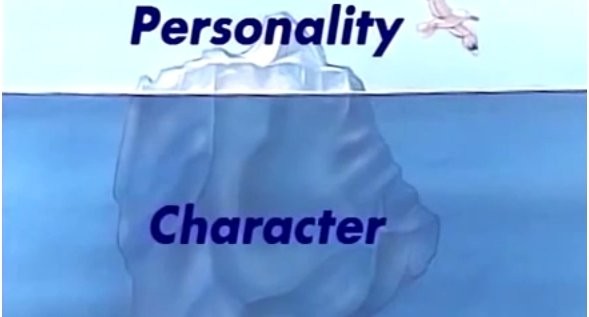
Clearly none of the above is limited to farming and beekeeping. The late Stephen Covey described the difference between personality and character in The Seven Habits of Highly Effective People. The second half of the last century saw the promotion of the personality ethic, when the new genre of self-help books stressed appearance, technique and a positive mental attitude. Valuable as these are, they lack meaning unless they are based on primary principles of character such as integrity, humility, courage, patience and ‘the Golden Rule.’ Covey said we can get by using the personality ethic to help make favorable first impressions but these secondary traits have no prolonged worth in long-term relationships. “Eventually, if there is no integrity, the challenges of life will reveal one’s true character. As Emerson once said, ‘What you are shouts so loudly in my ears I cannot hear what you say.’ “
To illustrate the difference he asks that you imagine being in say New York, and using a map to find the Statue of Liberty.. You may have excellent map reading skills but they will be to no avail if your map is of Washington, DC. In other words you must have the right map (character, or primary skills) before the secondary skills (personality) can be effective. A pertinent example is the late Nelson Mandela, who exemplified a depth of character for which he initially suffered and eventually triumphed. As President Obama said at his memorial service, he represented “principles that need to be chiseled into law.” Mandela personified the difference between a statesman and a politician; we have too many of the latter and too few of the former.
I spend a lot of money at True Value, the local hardware store. I don’t begrudge it; I am known there by both face and name and feel more than just a customer. It’s an inviting, helpful environment and every visit feels like a win:win situation; I feel welcome, I get what I need in terms of both advice and materials, and they keep my business. It’s one of the many advantages of living in a small, semi-rural community.
True Value occasionally sends out gift certificates to its customers. Checking out of the store on a recent visit, I mentioned to Marion behind the counter that I had received such a certificate but had left it at home. She immediately gave me the gift (a first aid kit for the car) and said I could return the certificate on my next visit. When I returned the next day, certificate in hand, the response of the young lady at the till (it was Marion’s day off) was interesting. She was clearly surprised which led me to believe that based on previous experiences there had been no expectation that the request would be honored. For me there was no question that I would respond in any other way; the agreement had been based on mutual trust and respect, qualities that are too important to be taken for granted or abused.
A 2012 study at the University of Illinois suggested that bees have different personalities, with some showing a stronger willingness to seek adventure than others. The researchers found that thrill-seeking is not limited to humans and other vertebrates. The brains of those honeybees that were more likely than others to seek adventure exhibited distinct patterns of gene activity in molecular pathways known to be associated with thrill-seeking in humans. Rather than being a highly regimented colony of interchangeable workers taking on a few specific roles to serve their queen, it now seems that individual honeybees differ in their desire to perform particular tasks and these differences could be due to variability in bees’ personalities. This supports a 2011 study at Newcastle University that suggests honeybees exhibit pessimism, indicating that insects might have feelings.
An experienced beekeeper can learn much by simply listening to a colony – they communicate clearly and unambiguously. One evening in Alsace Erik Delfortrie was opening some hives for my benefit and after the third one he said it was time to close them up. “How do you know?” I asked. In response he held his hand to his ear. Erik is a good beekeeper and, like his bees, a good actor. He is also a man of character and one could sense it immediately on meeting him. Ultimately a contrived personality cannot hide character defaults. Thus we cherish the basic character traits of honey bees – their industry and work ethic, commitment to the greater society, patience, and relationship with the natural world, for instance – and accept the differences of personality that each colony displays.
There is a critical difference of course between honey bees and ourselves. The behavior of the former, as best we know, is essentially the result of their genetic makeup. Bees do not make conscious choices; rather they respond automatically to the chemical bouquets we call pheromones. We too have a genetic disposition but it is moderated by nurturing, first by others (normally our parents) and then by ourselves. Every day we make thousands of conscious choices, each one dictated by a moral value as expressed in our personality and character.
And that was the lesson of my visit to True Value. In an age that has come to expect no more than personality (saying the right thing is more important than doing the right thing) I had made a choice based on character (following words with action) and it felt good.
Adapted from a poem by Liz Westcott published in Bee Culture
I know she’s in here somewhere,

It’s obvious where she’s been -

Lots of eggs and larvae …

… I still can’t find the queen.

I’ve looked in every corner,

Searched on every frame;

And now I’m at that point

Where all bees look the same.

I look first at the edges

And move towards the middle;

I must be ‘queen dyslexic’ -

To me it’s just a riddle.

Queen cells are everywhere

In every nook and cranny

A split is clearly called for -

not just one but many.

But ‘til I find Her Majesty

My splits are all on hold;

I’ll curtsy if I have to,

Threats work too, I’m told.

Put the hive aside, they say,

And let the bees fly out

Back to their first site.

With not so many bees about

It surely will be easy then

to find the shy, reclusive, queen ...

The One Who Can’t Be Found.

I’ve been through once,

I’ve been through twice,

More patience is required.

And then it finally dawns

On me - perhaps she has expired?

And then, the very final frame ...

I carefully turn it over.

Demurely looking back at me ...

The colony’s cute mother.

Eureka, and Euphoria,

Now I can proceed

To make the splits I dreamed of

With everything I need :

foundation, frames and nucleus box

And that last essential thing -

the piece that makes the jig saw whole

that shy, elusive queen!
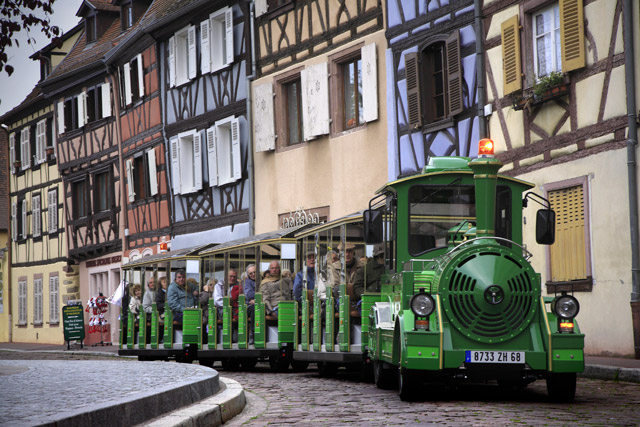
In August, 2013, Mary and I were in Alsace, France, for a family wedding and had the opportunity to take a guided tour of the medieval center of the city of Colmar. It involved a small locomotive with three open carriages and attached to each seat was a headset. There were fourteen languages one could choose from, with English third on the list behind French and German. There was Chinese and Japanese but no Arabic or Balkan languages. It was a truly multi-ethnic group of passengers and Mary observed how everyone was dressed so similarly, the result no doubt of the outsourcing of the clothing industry to Asian factories where it is mass produced and then shipped back to the US, Europe, the Middle East, Asia …
In 1995, in a small rural town in Zimbabwe, there was only one general store and it stocked almost everything in a quaint yet orderly way, including a shelf of school bags above and behind the storekeeper, each with the logo of the Chicago Bulls imprinted on it. Michael Jordan in rural Zimbabwe, where very few houses had electricity, never mind television? To the school children it was an intriguing but meaningless design.
In the same year a BBC film crew was anxious to document the effect of the war in Rwanda on the gorilla population and, because of the turmoil in East Africa, it had to approach from the west, which meant a week long trip by boat up the Congo river followed by several more days in canoes beyond the Stanley Falls. One night they stopped at a camp of pygmies, probably of the Mbuti clan, in a quest to find guides who could lead them through the forests to the northern edge of the Mitambu mountains in Kivu province where the great apes could be found. As the camera panned over the camp fire in this remotest of areas, a woman came into the picture. It was difficult to assess her age because, being small of stature anyway, the T-shirt she was wearing swept to the ground. On the orange T, in large black letters, was inscribed “FREE OJ.”
The theme running through these experiences is the unintended effects of globalization. As writers like Wendell Berry, Michael Pollen and Bill Cronon point out repeatedly, most of us have become very good at doing or producing one particular thing and at consuming everything else. Ironically, the further one gets from the actual product the greater the chance of economic success; one has to think only of the extravagant wages of many CEO’s compared to those on the shop floor, even though ironically the latter probably have the practical skills to survive without the former, but not vice-versa.
It is painful that the millions of American workers laid off in the recent recession are desperately seeking re-training so that they can re-enter the job market. Their previous experience and expertise appear to have no value of their own. And that initial expertise was the result of choices we made, often unwittingly, at a young age that determined much of the rest of our lives. I can recall vividly, in the 1960’s, a wise man predicting to a group of assembled high school boys that two thirds of the jobs that we would end up doing as adults did not then exist. We scoffed, and yet today I would estimate that two thirds was a conservative estimate. I recall too the adage that if there had been a computer in New York City in 1900 to predict what the city would look like in the year 2000, the answer might have been, “Six feet deep in horse manure.‘
This firewalls between labor pools can make us despair of ever changing the way we live. It is easy to feel that change can only come from outside, perhaps proactively from a higher authority like government or reactively after some kind of disaster, because we no longer feel we can effect significant change ourselves.
Part of the frustration is that in this new outsourced economy it is difficult to know how things are grown or made, and to relate to those who grow and make them. Beekeeping, like gardening, cannot be outsourced. Putting aside queens and drones, who together make up about 3% of a colony in the summer, bees are not specialists. Each worker bee undertakes a series of tasks during her brief life, starting with cleaning the cell from which she emerged and ending as a forager. Each worker bee gets to experience almost all of the functions of a hive; all are multi-skilled generalists and none is a specialist.
Many of us are finding relief from this feeling of dependence on people and events outside of ourselves by turning to activities which show that we can still self-provide, we can still create, manage and control a mini ecosystem. Gardening is one such activity; beekeeping is another. As Al Summers said in an interview with Boulder’s Daily Camera newspaper, “Bees are a portal to a much wider view of the environment. Much as I like bees, and they do have a nostalgic appeal, that’s not my dominant reason for beekeeping. It’s my style of being environmentally responsible.”
Being attentive to the needs of the bees leads to greater appreciation of the intricate work and interactions that makes life possible, an awareness of the complexity of the many systems involved in producing say, an apple for the table, water from the faucets or a teaspoon of honey for our morning cup of tea. This in turn changes our relationship to the environment, both immediate and wide spread, and renews our appreciation for the people who provide what we otherwise accept unthinkingly as the necessities of life.
The phrase carpe diem, extolled by Robin Williams in the movie Dead Poets’ Society and by songs from Metallica and Green Day, was first coined by the Roman poet Horace more than 2,000 years ago and as such ‘seize the day’ is one of the oldest philosophical mottos in Western civilization.
Roman Krznaric, in a book titled Carpe Diem Regained : The Vanishing Art of Seizing the Day, found a range of definitions “…from seizing opportunities, to spontaneity, to hedonism, to being in the present moment; as well as a collective political form of carpe diem. They’re all different ways of having agency in the face of death, of feeling that you’re fully alive.”
The popularity of carpe diem in modern culture has been sabotaged by the language of the advertising slogan and the hashtag ‘Just do it’ or ‘Yolo’ (You Only Live Once) and as such has helped strip the concept of its true meaning. “The hijacking of carpe diem is the existential crime of the century – and one that we have barely noticed,” Krznaric writes. “That idea that instead of just doing it, we just buy it instead: shopping is the second most popular leisure activity in the Western world, beaten only by television. Instead of seizing the day, we’re seizing the credit card.”
Carpe diem has also been commandeered by our culture of hyper-scheduled living, he argues. ‘Just do it’ becomes ‘Just plan it’ as we fill up our electronic calendars weeks in advance with no free weekends, to the point that we no longer realize how our spontaneity has been stolen from us.
People had more spontaneous lives in the Middle Ages “… partly of course because death was so much closer,” he says. But the Reformation argued that wasting time is a sin as the churches, both Protestant and Catholic, banned carnival and summer fairs, public dancing and games.
“Then came the Industrial Revolution with its great weapon, the factory clock,” says Krznaric, with an emphasis on measured productivity and our to-do lists. An antidote for Victorian Britain was a craze for ‘the East’ , which was far more than a fad for Persian carpets and Japanese lacquer furniture. The Orient evoked fantasies of sensuality and passionate carpe diem living that were the opposite of sober Victorian Christianity.
One of the key texts was Edward FitzGerald’s loose translation of verses by the 11th century Persian poet and mathematician Omár Khayyám, which took the form of a poem called the Rubáiyát of Omár Khayyám. After a copy was passed to the artist Dante Gabriel Rossetti, who shared it with his Pre-Raphaelite circle, there began a cult of Omár Khayyám that lasted at least until the sobriety of World War One. The poem was an “outcry against the unofficial Victorian ideologies of moderation, primness and self-control”, in their place offering “sensuous embraces in jasmine-filled gardens on balmy Arabian nights, accompanied by cups of cool, intoxicating wine”. The Rubáiyát even appeared to be rejecting religion itself, suggesting there was no afterlife, its message being that since human existence is transient and death will come much faster than we imagine, it is best to savor its exquisite moments. Oscar Wilde described it as a “masterpiece of art”, placing it alongside Shakespeare’s sonnets as one of his greatest literary loves.
And the late 19th century witnessed the era of organized sport and entertainment as we became increasingly a society of watchers rather than participators, which fed neatly into the age of television, of i-Pads, i-Phones and digital distraction.
It is interesting to muse on how honey bees experience time. We know that they have a sense of the seasons based primarily on day light time, and a sense of day and night based on temperature and a light source. It was intriguing to see the bees retreat into their hives during the eclipse on August 21st, 2017, responding instinctively to the lack of light rather than any 24 hour clock. I doubt that they have a sense of passing daily time as we perceive it, even if they know, as Diane Ackerman writes in Dawn Light,
“… dandelions and water lilies open at 7:00 am, marigolds at 9:00 am and evening primroses not until 6:00 pm.” Rather they respond to a series of stimuli (pheromones, nectar and pollen intake and the presence of brood, for example) and their natural biorhythms, (such as the duties of a worker bee) rather than any internal clock. For them they are probably not conscious of either past or future, and potentially they are always ‘in the moment.’
Leaning on the rail of a yacht in 1968, looking at the “rocky cliffs, rolling seas, dazzling sky” of the Dalmatian Straits, Jerry Mander had an epiphany. “It struck me that there was a film between me and all of that,” he wrote in his 1977 book, Four Arguments for the Elimination of Television. “I could ‘see’ the spectacular views. I knew they were spectacular. But the experience stopped at my eyes. I couldn’t let it inside me. I felt nothing. Something had gone wrong with me … I felt dead. Nature had become irrelevant to me, absent from my life. Through mere lack of exposure and practice, I’d lost the ability to feel it, tune into it, or care about it. Life moved too fast for that now.”
As beekeepers we can rush through a hive inspection, conscious of the to-do list on our phone, or take time to treasure the moment and be truly present with these marvelous insects that reflect so much of ourselves. The joy that can come from watching forager bees return to the hive laden with pollen is wonder-full. It’s the zen of beekeeping writ large.
Is this an argument for hedonism, for self-indulgence and self-gratification? Or for sheer escapism, savoring so many exquisite moments as to leave all of one’s responsibilities behind? Not at all, argues Krznaric. It’s not about excess so much as rediscovering the senses, rediscovering direct experience, whether it is honey bee society, a renewed awareness of the small things found on a walk, or appreciating the subtle flavors in honeys collected at different times of the year.
Its was 50 years ago that Jerry Mander reflected on his reaction, or lack thereof, to the cliffs, seas and skies of the Dalmatian Straits. The pace of life has been accelerating since, and what Mander described is increasingly widespread. “Human beings have always had mediated experiences, ever since the invention of reading,” said Krznaric, “but now things like TV have so removed us from direct experience of life that we’ve almost forgotten what it’s like.” His solution? “It’s vital to try and recover this carpe diem instinct which is in all of us.”
Honey bees are, for me, vital agents in that recovery process.
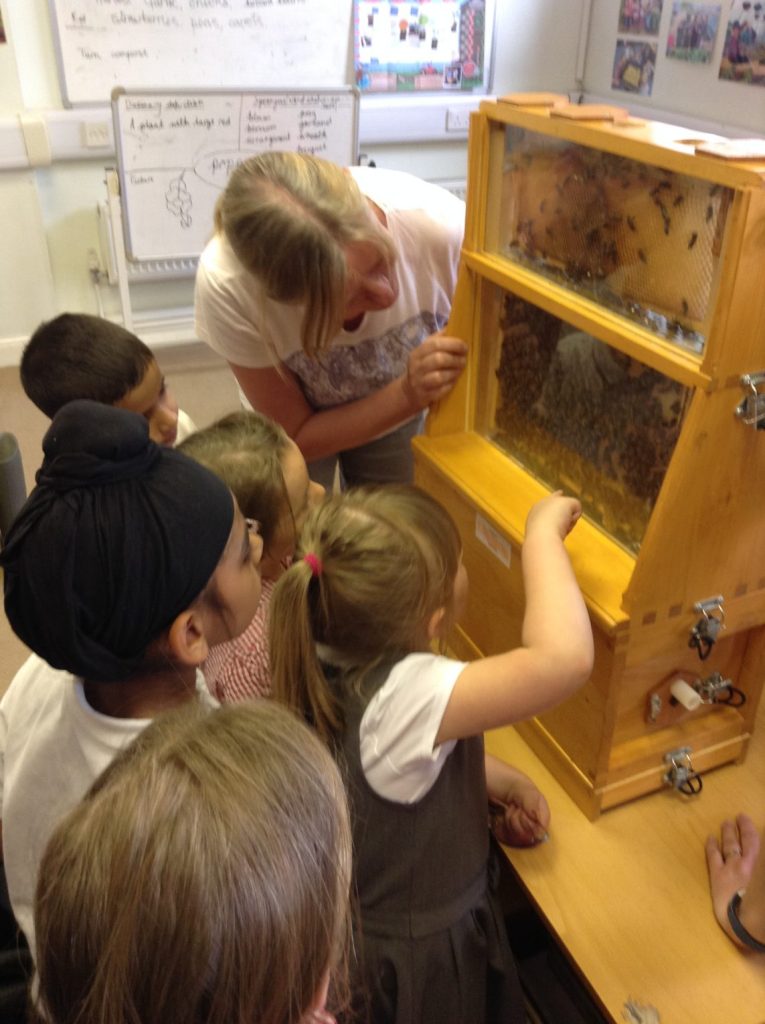
The observation hive on my desk, with access for the bees to the outside, provided countless hours of pleasure, instruction and amazement, not least by contemplating the combination of even-temperedness and sense of purpose exhibited by the bees despite the constant presence and pressure of their peers. All day and night there are bees going over, under, around and on top of each other, yet there are no signs of frustration (what would ‘road rage’ in a honey bee look like?) Rather the colony seems to find comfort, support and reassurance in the constant presence of others of its kind.
The closest I have come to experiencing this kind of pressure was at Apimondia in 2009 at Montpellier, France, as we pushed and struggled and grappled and wriggled in columns of six deep trying to get to see the hundreds of vendors in the short intervals between presentations. If this is ‘bee space’ it is much too confining for my liking.
Much has been written about bees as a superorganism, not least by Jurgen Tautz, and many of William Longgood’s essays as collected in The Queen Must Die stress how each bee exists primarily for the good and survival of the larger community. In his book, Bee Time : Lessons from the Hive, Mark Winston writes that “Underlying all the physical sensations are collaboration and order, communication and common purpose, each bee submerging her individual nature for the colony.”
We used to be like that. There was a time when we got to know people because we had both to ask for and to offer help. In the absence of a health system, unemployment insurance and public housing, charity was an integral part of life and indeed was central to all of the world’s major religions. And yet today how many of us, when approached by the sick, the frail, the homeless or the confused, choose to look the other way, or cross the street, or say “He will only spend it on drugs,” or blame the individual for his or her predicament. “If only they would work harder …”
My guess is that this is especially evident in the USA because the country chose to pass on the social revolution of C19th and C20th Europe, which means that the sick, the hurting and the disadvantaged of this society depend all too often on random acts of kindness. Yes, we are still warm hearted, well meaning and generous, but to preserve a sense of balance we either turn our metaphorical backs on, or put fences between, the millions of human beings who are all around us all of the time, whether needy or not. The public spaces in which we are forced to rub shoulders with our many neighbors – busses, lifts, pavements, shopping malls, restaurants – throw us into the mix in a way that denies our individuality and can make us feel insignificant, trivial, if not irrelevant.
If one wants to start a commotion, try starting a conversation with a stranger in an elevator!
Honey bees go into a cell occasionally for a little privacy, a little sleep, whereas we retreat increasingly into our private cocoons to retain our dignity and our sanity. And technology has provided us with plenty of recesses in which to hide – our cars, our computers, buying with a credit card over the internet, Facebook, detached houses with fences … And, as a general rule, the wealthier we are the more easy it is to be isolated with bigger houses and taller fences. Sealed away it is easy to forget or deny the inherent worth and dignity of every individual in the face of a media that emphasizes the murderers and swindlers and unethical politicians and vain celebrities and abusive pedophiles.
Honey bees have been living a life virtually unchanged for millions of years, a life style that is now being threatened by the technology we espouse so loudly. A pertinent example was the 2010 ban on honey bees being imported from Australia to the almond trees of California because of the mites and diseases that might come with them on the Boeing 707, or indeed the debate in Britain about the risks of small hive beetle inherent in imported bees or the Asian hornet crossing the Channel
Do I want to live like a bee? Could I survive in the organized chaos of a bee hive? Absolutely not. But I do want to keep the ‘virtues ‘ of technology in perspective. A poignant reminder is the technology available to the world’s great teachers compared to the power and longevity of their messages.
A popular analogy argues that people can be viewed either as butterflies – beautiful, and sitting in the sun with their wings spread as others gather around them – or bees, out in the garden cross-pollinating. I know that I need meaningful interactions face-to-face, emotion-to-emotion, with other people, those foragers who are out collecting nectar and pollen and then coming back to tell us where the good stuff is. And, even as a drone, I need to feel that, to paraphrase Mark Winston, I am collaborating and communicating our common purpose, although fortunately, and unlike the bee, I don’t have to submerge my individual nature to do so.
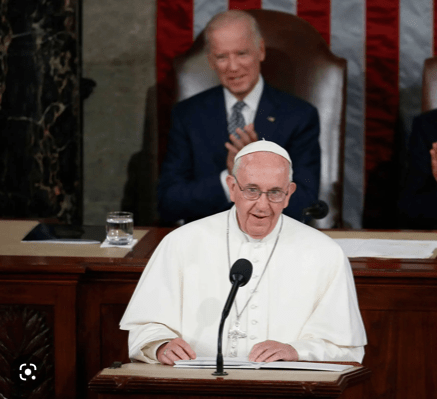
On Sept 24th, 2015, Pope Francis addressed the assembled Congress of the United States. It was a superbly structured speech, delivered eloquently and gently by a wise and loving soul. It was not a sermon in the traditional sense so much as a moving reminder of the best of human values.
What might Francis have said to the bees (after all, he chose his papal moniker in honor of St. Francis of Assisi?) We get an inkling if we take a few extracts from his 55 minute presentation and change some of the nouns (eg. colony for country or nation, worker and drone for son and daughter, etc.)
Imagine an elderly drone who has lost much of his hair dressed in a white cassock and zucchetto with slippers on four feet, leaving two front feet free to hold his notes, addressing an assembled throng of honey bees.
“Honorable Members of the Colony, Good Friends:
“Each drone and worker of a given colony has a mission, a personal and social responsibility. Your own responsibility is to enable this colony to grow. You are called to defend and preserve the dignity of your bees in the tireless and demanding pursuit of the common good. A colony endures when it seeks, as a vocation, to satisfy common needs by stimulating the growth of all its members, especially those in situations of greater vulnerability or risk.
“I would like to take this opportunity to dialogue with the many thousands of worker bees who strive each day to do an honest day’s work, to bring home their bee bread – one step at a time – to build a better life for their families. These workers, in their own quiet way, sustain the life of society. They generate solidarity by their actions, and they create an organization which offers a helping hand to those most in need.
“These bees, for all their many limitations, are able by hard work and self-sacrifice – some at the cost of their lives – to build a better future. They shape fundamental values which will endure forever in the spirit of the hive. A colony with this spirit can live through many crises, tensions and conflicts, while always finding the resources to move forward, and to do so with dignity. Building a future requires love of the common good and cooperation in a spirit of subsidiarity and solidarity.
“We must move forward together, as one, in a renewed spirit of fraternity and solidarity, cooperating generously for the common good. The challenges facing us today call for a renewal of that spirit of cooperation. All activity is an expression of our compelling need to live as one, in order to build the greatest common good: that of a community which sacrifices particular interests in order to share, in justice and peace, its goods, its interests, its social life.
“In recent centuries, millions of bees came to this land to pursue the dream of building a future in freedom. We are not fearful of foreigners, because most of us were once foreigners. Tragically, the rights of those who were here long before us were not always respected. Those first contacts were often turbulent and violent. Nonetheless, we must resolve now to live as nobly and as justly as possible, as we educate new generations not to turn their back on our “neighbors” and everything around us. Building a colony calls us to recognize that we must constantly relate to others, rejecting a mindset of hostility in order to adopt one of reciprocal subsidiarity, in a constant effort to do our best.
“Let us remember the Golden Rule: “Do unto others as you would have them do unto you.” This Rule points us in a clear direction. Let us treat others with the same passion and compassion with which we want to be treated. Let us seek for others the same possibilities which we seek for ourselves. Let us help others to grow, as we would like to be helped ourselves. In a word, if we want security, let us give security; if we want life, let us give life; if we want opportunities, let us provide opportunities. The yardstick we use for others will be the yardstick which time will use for us.
“This common good also includes the earth. We need a conversation which includes everyone, since the environmental challenge we are undergoing, and its human roots, concern and affect us all. I call for a courageous and responsible effort to avert the most serious effects of the environmental deterioration caused by human activity. I am convinced that we can make a difference. Now is the time for courageous actions and strategies, aimed at implementing a culture of care and at the same time protecting nature.
How essential the family has been to the building of this colony. And how worthy it remains of our support and encouragement. Yet I cannot hide my concern for the family, which is threatened, perhaps as never before, from without. I can only reiterate the importance and, above all, the richness and the beauty of family life. In particular, I would like to call attention to those family members who are the most vulnerable, the young. For many of them, a future filled with countless possibilities beckons, yet so many others seem disoriented. Their problems are our problems. We cannot avoid them. We need to face them together.
In these remarks I have sought to present some of the richness of your apis heritage, of the spirit of the home of the honey bee. It is my desire that this spirit will continue to develop and grow, so that as many bees as possible can inherit and dwell in this hive.”
Our mythical drone would have been preaching to the choir because these are values and lessons the bees have learned only too well and practice every day. We, on the other hand …