Part IV of IV
“Ethical beekeeping begins with supporting the well-being of the colony foremost before maximizing the honey yield or anything else. These goals are not mutually exclusive and can realistically be achieved with a commitment to align management practices with the natural life-cycle of the colony and to purposefully refrain from any practices that create unnecessary stress on the colony. This requires a thorough knowledge and understanding of honey bee biology and how colonies live naturally in the wild. Ethical beekeeping avoids toxic chemicals and includes supporting natural ecosystems, plant diversity and local habitats.” (David Papke, Being Observant, PSBA Newsletter, Feb 2026.)
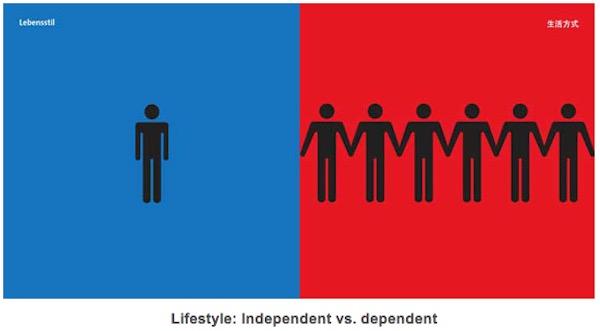
How we think about the nature of human existence dictates the way in which we understand our moral values. Patrick Smith (Somebody’s Else’s Century : East and West in a Post-Western World, 2010) describes the modern Western ethos as a radically individual, hypermasculine character formed during the C19th expansion of the white man’s world. “Bold, conquering and altogether assertive, it was dedicated to action, hostile to reflection, indifferent to community and the environment, and guilty of possessing an undeveloped heart.” By comparison, the Chinese, Indian and Japanese philosophical traditions have different conceptions of selfhood, society, space and time. Rather than put mankind at the center of and apart from nature, they ask what it means to be human in their interaction with their social, historic and natural surroundings.
The time has come, Smith argues, for a stringent reexamination of our “ego-centered subjectivity … we must alter our very relations with the world around us,” otherwise, he warns, “we will not survive the Western notion of the individual much longer.”
These predictions are not new nor have they not done much to move the needle – we are better at being reactive than proactive. But within our own domain, our own sphere of influence, is there anything practical we can do at a beekeeper level? First, as part of the new beekeeper classes, in conjunction with the how-to’s of constructing and managing a hive, we can introduce and discuss an ethical component to our craft. If not now, before habits are moulded, when else would be an appropriate time? It may be as simple as a few questions that would inform our practices as they develop; for example, how can we keep bees with minimal harm, nurture a respectful relationship with our charges and their environment, and develop a mindfulness that does not disrupt the bees’ natural behaviors? Effectively we would be asking at the outset, if we remove ourselves from the center of nature, how does our humanity interact with the social, historic and natural surroundings of honey bees?
Secondly, we might reconsider the sequencing of our Introduction to Beekeeping classes. Currently the orientation is invariably ‘bold, conquering and altogether assertive,’ to cite Patrick Smith again. We start with the components of a hive and basic management techniques designed to keep bees alive and produce honey, with a component on honey bee biology tacked on towards the end. What if we were to reverse that? What if we started these classes with the biology both of the honey bee and of the colony, followed by the question, “How can we manage these insects in a way that is respectful of and consistent with the behaviors they have developed over the millions of years?” What if, instead of imposing ourselves on the bees, the ‘ego-centered subjectivity’ that Smith describes, we allow for the development of a management system that emerges in tandem with the bees’ natural behaviors? The question, “What does it means to be an ethical human in our interactions with honey bees?” allows for a partnership with the bees, rather than an imposition on them. Or, to cite David Papke above, “to align our management practices with the natural life-cycle of the colony and to purposefully refrain from any practices that create unnecessary stress on the colony.”
90% of those reading this will find it inconvenient, uncomfortable or difficult to relate to, but there will be a handful of beekeepers who will see some validity in the proposal. In my first twenty years of teaching, I would see new ideas met by the old guard on the faculty with the response, ”We tried this ten years ago and it didn’t work, but we’ll try it again to please you.” They give it minimal effort, it fails, and the comeback is “See, we told you it would fail.” The system becomes mired in skepticism and controlled by those who are too entrenched to change. Change is an inconvenience; the needs of the learners are low priority.
The most significant advances come from passionate people who demonstrate by example, rather than by diktat from the top. Malcom Gladwell, in The Tipping Point, shows that the implementation of meaningful change takes the support of only 3 per cent of those involved. Where does that minority come from? More on this next month.
How important is it that we consider trying something different? David Papke addressed this in the final paragraph of his Bee Observant column in February. “So much has changed in the world and it seems like we are all just waiting for the next catastrophe. Feeling anxious and overwhelmed is the new status quo. Trouble and confusion permeate so many aspects of our lives. Ethical problems may be inconvenient, but they are not inconsequential. Beekeepers will shape the future of beekeeping — by their decisions, by their actions, and by their attitude. Each beekeeper is in a unique position to advocate and act on behalf of these insects we hold so dear and this dynamic living earth we love and share.”

 Our Green Cathedral