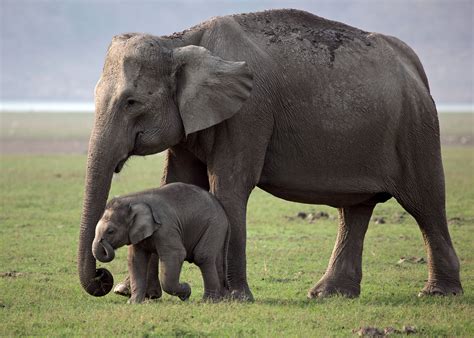
The gestation period for an African elephant is 22 months and after birth the mother will lactate for an average of 4.8 years. For a blue whale it is 18 months and a calf may nurse from its mother for as long as two years. We are all familiar with similar numbers for dogs, cats, birds, hamsters … the newly-born are vulnerable and are vitally dependent on their parents (and in particular, their mothers,) for survival.
And yet honey bee queens have no maternal instincts; once an egg is laid the queen shows no further interest in it. Even worse, after about a year, and normally when resources are at their peak, she flies off with a significant number of her offspring, abandoning the nest to a successor not yet born. Although not unique to honey bees, it is an unusual, high risk strategy which must have significant evolutionary advantages to have progressed to this behavior.
Jacques van Alphen suggests two such benefits, the first of which is the more obvious. Because a swarm is under considerable time pressure to survive, having a proven queen who can start laying as soon as the workers have drawn out sufficient comb, perhaps two weeks or less, is a significant advantage.
The second reason is more complex and perhaps more intriguing. A bee hive, moist and warm, is a rich breeding ground for bacteria, fungi, microsporidia and viruses, which have shorter generation times and larger populations than do the bees. If, for example, the varroa mite cycle from egg to adult takes 9 – 12 days, depending on factors such as temperature and food availability, the number of completed cycles between spring and fall will be somewhere between 20 and 25. And every time a male mite mates with his sister there is the possibility of new mutations which enable the mites to adapt quickly to the environment within a colony, eg. resistance to a particular chemical in a miticide.
On the positive side for honey bees (and their keepers) varroa mites usually inbreed and therefore build clones, which means there is not as much genetic variation as would otherwise be the case. Dr. Ralph Buchler expands on this at some length in an interview in the April, 2026, issue of ABJ. Less positive is that mites combine with their secondary infections, such as viruses, which genetically are very flexible. It is not the mites themselves that kill the bees so much as the pathogens that adapt quickly to changing conditions in the hive. As Dr. Ralph Buchler explained in the previous issue of ABJ, “It is a really complex system and it always interacts.”
At the same time as the mites are completing as many as 25 reproductive cycles, a honey bee colony completes just one – when the queen leaves with a swarm and the virgin queen mates with drones from different colonies. Because worker bees have different fathers they have different genetic characteristics which in turn increase the chances that some workers will be resistant to infection from the rapidly changing pathogens, at least for the first few months, thus increasing the chances for the survival of the colony. This might explain in part why, after a swarm, mite counts can be temporarily stagnant. But in the long term, the pathogens will always out-breed their hosts, hence Sammy Ramsay’s observation as to how difficult it is, if not impossible, to develop varroa-resistant bees in the long term by breeding programs alone.
In summary, as long as the old queen is present, the genetic make-up is fixed at the colonial level and does not change, even as there is individual variation with eggs fertilized by different drones. Pathogens meanwhile have plenty of time to adapt because of their rapid reproductive cycle. These adaptations are counteracted when a new queen introduces new alleles to the colony. The old queen meanwhile migrates to a new environment, escaping many of the microbes. Thus the polyandry of honey bees (queen mating with multiple drones from a variety of areas) is vitally important to create new genetic variants in competition with the many mutations developed by the rapid rapid productive cycle of pathogens.
Beekeepers frequently violate the third Precept, namely “I refrain from sexual misconduct,” or “I refrain from using the five senses to violate basic rights.” Individual beekeepers, for example, in the name of an increased honey supply, prevent swarming by cutting out queen cells or clipping a queen’s wings, and because the old queen, to whom the pathogens have adapted, remains in the hive, there is a higher risk of infectious diseases for the colony. For queen breeders, the selection of bees for specific traits via artificial insemination threatens genetic variants – rare alleles, vital for adapting bees to new circumstances, may be lost. This partly explains why pedigree bees are less likely to develop resistance to varroa, whereas feral bees, unaffected by a beekeeper’s interference, may do so.
And this, in essence, is the heart of the ethics question. How we think about the nature of human existence dictates the way in which we understand our moral values. So perhaps the ethics of beekeeping means being api-centric to the point of approaching our subject first and foremost from the honey bee’s view point. What this means in practice will be pursued in the fourth, and final, part of this series.

 Our Green Cathedral