I began my teaching career in 1969 at a government (ie. state) school in Rhodesia. Twice a year, without prior warning, an inspector from the country’s capital would spend a few days in my classroom, delivering an oral and written at the end. My colleagues generally did not look forward to these visits; certainly, for the first one, I was apprehensive. I had no idea what kind of teacher I was, or might become, or even if it was the right fit for me, not having received any professional input once on the job. I was fortunate; it turned out to be a positive experience, focusing on my future development rather than on niggling criticisms, from a man with whom I was to become a good friend. My wife and I actually invited him to stay with us on his bi-annual visits, which was unheard of! Today, the fact that he accepted our offer still delights me.
I have often thought how different my career might have been had that initial experience between less supportive and how I never again had that kind of external professional support. For practical reasons I spent the rest of my career in private schools, for the entirety of which I had a total of three people (two department chairs and one principal) sit in on my classes for less than an hour in all, none of whom gave me any direct feedback. The indirect response came at a faculty meeting when the principal suggested that if my colleagues wanted to see a Socratic type of teaching, they might visit my classroom. Of course none ever did.
At the end of my career, as a college advisor to education majors doing their teaching practicum, I attempted to give back a little of what I had received more than thirty years previously. I have no idea how successful I might have been, nor is that important.
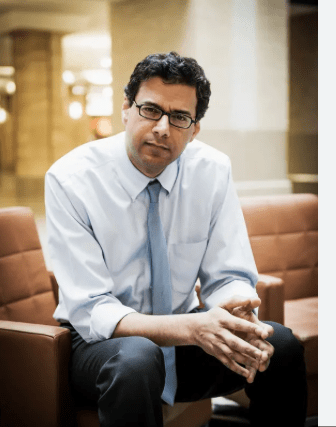
These memories were invoked by a TED talk given by Dr Atul Gawande in 2017, which has attracted some 4 million viewers. A surgeon, writer and public health researcher, Dr. Gawande is best known among the wider public for his book, On Being Mortal. In the TED talk he describes how, while visiting a birth center in the north of India, he watched as the birth attendants struggled to improve in the face of complexity. The simplest things were not simple. It is common practice, for example, for nurses to wash their hands and put on clean gloves between deliveries, but at this center the faucet was in another room and there were no clean gloves. The new mothers were dying at a rate ten times higher than was the norm.
Successful child delivery requires a skilled, coordinated team of people – the nurses who do the deliveries, the supervising doctor, the supply clerk and the medical officer responsible for the quality of the whole facility. In Dr. Gawande’s observations they were all experienced but, in the face of these complexities, they were at their limits. They were no longer getting better, and it’s how good one is going to be that really matters.
This led to a fundamental question. How do professionals get better at what they do? The traditional pedagogical view is that we go to school, study, practice, graduate, and then go out into the world and make our way on our own. That is the way that most professionals learn – doctors, lawyers, scientists, teachers, musicians … But it is
neither simple nor easy. We don’t recognize the issues that are standing in our way and, if we do, we don’t necessarily know how to fix them. Dr. Gawande had entered practice in 2003 and the first several years witnessed a steady, upward improvement in his learning curve until he realized he wasn’t getting any better. His prevailing thought – Is this as good as I’m going to get?
By contrast is the sports model, where the view is ”You are never done – everybody needs a coach.” This was evident in the Men’s Singles of the US Tennis Open Championship last month, where the No’s 1 and 2 players in the world, Carlos Alcaraz and Jannik Sinner, met in the finals, and each had a group of three or more coaches in their respective court-side boxes. Nor was it any different for the women finalists, Alyna Sabalenka and Amanda Anisimova, the previous day.
So what if Dr. Gawande were to hire someone to come into his operating room, observe, and critique him? Initially it seemed absurd. Expertise means not needing to be coached. “I didn’t like being observed, and at times I didn’t want to have to work on things,” he says in the TED talk. He ran the idea by Itzhak Perlman, arguably the greatest violinist of his generation. “I have always had a coach,” Perlman responded in the course of a two hour conversation – his wife, Toby. She had given up her job as a concert violinist so she could sit in the audience, observe and provide feedback.
Eventually Dr. Gawande invited one off his former professors, since retired, to come to his operating room and observe him. The surgery went well, there didn’t appear to be much to discuss, until the observer produced page dense with notes.
“Just small things,” he said.
But it made Dr. Gawande realize that good coaches are onto something profoundly important : it’s the small things that matter. It was a whole different level of awareness. Coaches are our external eyes and ears, providing a more accurate picture of our reality. They recognize the fundamentals, breaking down one’s actions and then helping build them back up again. “After two months of coaching, I felt myself getting better again,” he says.
Dr. Gawande also leads a health systems innovation center in India which addresses problems in the delivery of health care and which includes a safe childbirth checklist devised with the help of the World Health Organization. But just handing out a checklist wasn’t going to change very much, and, reflecting on his own experience in the surgery, he asked, “What if we tried coaching on a massive scale?”
His partners include the government of India with a trial case of 120 birth centers. It involved the training of an army of doctors and nurses which ended up coaching 400 nurses and 100 physicians and managers. The results across 160,000 births were dramatic, with distinct improvements in quality across a whole range of centers. And this, he says, is just the beginning.
We strongly promote Beekeeping 101 courses and the value of mentorship, after which I wonder how many beekeepers ask that vital question, “Is this as good as I am going to get?” Most hobbyists and many sideline’s are content if their bees survive the winter and they are able to extract some honey each summer; commercial operators are fully stretched simply to earn an income from their bee yards. For those whose interest is piqued by their exposure to honey bees, there are journals, meetings and conferences, which is very much the traditional pedagogical view. Is there room for coaching to be part of that improvement, understanding that whereas a mentor is a person with experience helping a nu-bee, a coach and a beekeeper have similar levels of experience and expertise, and interact with mutual levels of trust and respect? Perhaps the biggest obstacles are trepidation at being watched, apprehension about feeling judged and a lack of awareness as to the value of a coach.
I had always believed that the prime objective for both successful teachers and parents was to make themselves dispensable by inculcating habits of thinking and of learning to the point that a young adult can make his or her way in the world without them. Today I would amend that by adding a commitment to life time growth, both in the traditional, pedagogical sense and by instilling the self-esteem and confidence to seek good coaches in all aspects of one’s life. The result can be beautiful.
Dr. Gawande ends his presentation with the story of a 23-year-old woman who had arrived by ambulance, in labor with her third child. Everything went well until the baby turned blue and floppy and was not breathing. The nurse kept going with her checkpoints. She dried the baby with a clean towel, then ran to get the baby mask while another used a mouth suction (rather than a mechanical suction because the supply of electricity was unreliable.) Within 20 seconds of clearing out the baby’s airways she got back a green, thick liquid, and soon the baby started to breathe and, a minute later, was crying.
This was the result of a coached team calmly following a checklist, with a life saved which otherwise would have been lost. The team met with the mother a few months later; mom and baby were doing great. The baby’s name is Anshika, which means “beautiful.”
“She is what is possible,” argues Dr. Gawande, “when we really understand how people get better at what they do.”

 Our Green Cathedral