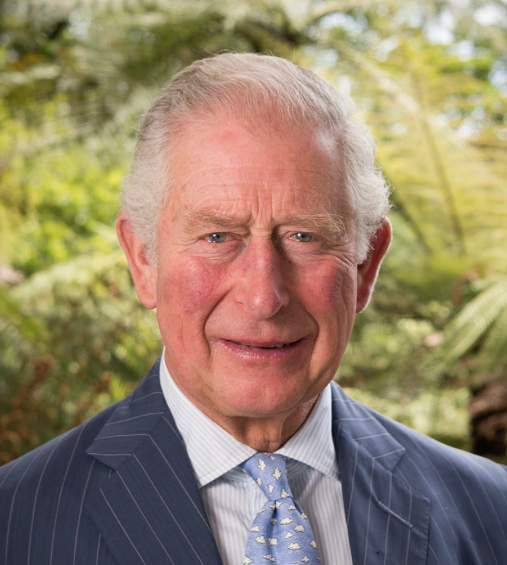
On May 6 the former Prince of Wales was crowned, “Charles III, by the grace of God, of the United Kingdom of Great Britain and Northern Ireland and of his other Realms and Territories King, Head of the Commonwealth and Defender of the Faith.”
I hope someone told the bees, reassuring them that this is not a return to a previous era when the colony too was headed by a ‘king.’
Despite its emphasis on facts and objectivity, the world of science is not free from personal and societal biases. One example is how the names scientists choose to christen their findings often reflect the society in which they live. What we now call “worker bees” for example, were once termed “slaves” because they were named at a time when slavery was common and acceptable. A more recent example is the inherent bias which has prevented dietitians from seriously considering data that ice cream might be weight-reducing
Aristotle, student of Plato and a man of remarkable intellect – the Isaac Newton or Albert Einstein of his times – compiled the multi-volumed History of Animals in the middle of the 4th C BCE, and it remained the accepted word on animal biology in Europe until the early seventeenth century. But Ancient Greek society had some strong opinions about women, viewing them primarily as property, so when Aristotle witnessed a society consisting almost entirely of women it is understandable why he assumed the ‘queen’ bees were male and called them kings.
These gender biases were so ingrained that it took a change in western society 2000 years later for the possibility of a female ruler to compute. The work which popularized the idea was The Feminine Monarchy, by Charles Butler, published in 1609 when the author was 49 years old. The fact that he was interested in bees, that he lived under a female monarch (Queen Elizabeth I) for the first 43 years of his life, that there were other powerful women in Europe (eg. Elizabeth’s half-sister, Mary I, Marie and Catherine de Medici, Isabella of Castille, Mary Tudor of France, Mary Queen of Scots, Margaret and Elisabeth of Valois, Anne of Denmark, and the various consorts of Henry VIII) meant that society was primed to accept the role of a female leader – even as, twenty years before Butler, the Spanish beekeeper, Luis Mendez de Torres, had labelled her the maestro, or mistress, and as such, the source of all the bees in a colony. Within a generation, Jan Swammerdam proved this anatomically when, after dissection and under a microscope, he described eggs in the abdomens of queen bees.
The first irony is that today, in the developed world, most of our human equivalents of worker bees live at a level that Elizabeth I or her father, Henry VIII, would have envied. As Brian Watson explains in Headed into the Abyss, surrounded by comfort and wanting for little, we have more than enough to eat, have control over our physical comforts including temperature and humidity, might have more than one home, more than one car and more than one annual vacation, and we can buy almost anything we need at the touch of a button, all supported by an endless supply of light, power, fuel and energy.
By comparison, millions of our fellow worker bees, and not only in the less developed countries, fight every day just to stay alive. Food and water supplies are unreliable, the air is polluted, life-threatening infections and diseases are omnipresent with minimal access to health care … it sounds like a neglected colony of bees heavily infested with mites.
The second irony is that this queen does not rule. Curiously, five hundred years before The Feminine Monarchy was published, the Anglo-Saxons were using the term ‘bee mother,’ recognizing her primarily as a superb ovipositor even as they did not realize the extent to which she is controlled by the workers. But because we anthropomorphize the natural world it was easy to impose the hierarchy of the seventeenth century society on the honey bee colony, with a queen at the apex of the pyramid ruling over her loyal subjects. This societally imposed misconception obscured for more than two centuries the reality of a society in which there is no hierarchy, no strata, no absolute ruler; this is in contrast to our world with its vast disparity of lifestyles in which some act as if we live on a planet of infinite resources to which they are more than entitled while just as many are fighting abject poverty and denied the most basic of human rights. To steal a phrase from Vidya Rajan, writing about fecundity in India in particular, “the poor are one fistful of rice away from starvation.”
Meanwhile the ‘perfect storm’ continues to build – an inability by many to accept that our planet exists in a delicate balance with finite resources, a capitalist model that rewards short term profits despite the long term costs, instant global communication that unendingly promotes a consumer mentality and measures growth accordingly, a political model committed to short term, extravagant promises and unable to plan long term, increased emphasis on the individual at the expense of community, a global population that is estimated to reach 10 billion in 25 years time, and a populace which feels disempowered and thus unwilling to accept personal responsibility for its actions.
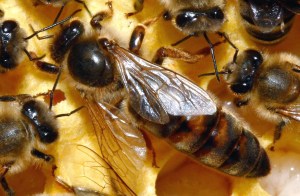
Meanwhile the honey bee colony, unseen and unappreciated by most of us, continues to offer an alternative model in an increasingly challenging environment. The queen may not be surrounded by the pomp and ceremony that accompanies Charles III, nor is her ‘coronation’ extravagant and costly, but she has one overarching attribute : she may not be the leader of the colony but she is in control of its destiny.
·

 Our Green Cathedral