
With acknowledgments to Peter Sieling
Do you ever have one of those mornings when you come downstairs and you know that, in the midst of the normal marital bliss, someone is clearly not happy? My first response was one of avoidance, usually involving the bee yard where I could hide behind clouds of smoke.
Then I realized it was better to hang around, doing little jobs around the house, hoping that ‘she who must be obeyed’ noticed how helpful I was. I would do the dishes without being asked, clean away all the papers on the dining room table, plug up the entrance to the yellow jacket nest on the porch, hoping that a few stings might show the levels I would go to as a means of contrition.
My third approach as a one man truth and reconciliation commission, was to read out loud interesting excerpts from books that I thought might lead to some self-improvement – improvement not for me, you understand, but gentle advice for she who might need it.
Old bee books hide nuggets of wisdom between the ‘how to keep’ bees information. Lorenzo Langstroth, for example, in the Hive and the Honey Bee, offered what he called “a friendly word to wives.”
I would say to every wife, do all that you can to make your husband’s home a place of attraction. When absent from it, let his heart glow at the thought of returning to his dear enjoyments; as he approaches it, let his countenance involuntarily assume a more cheerful expression, while his joy-quickened steps proclaim that he feels there is no place like the cheerful home where his chosen wife and companion presides as its happy and honored queen. If your home is not full of dear delights, try all the virtue of winning words and smiles, and the cheerful discharge of household duties, and exhaust the utmost possible efficacy of love, faith and prayer.
For those of you who want to use this delightful passage in the event of marital discord, it is in the 1878 edition on p. 125.
After I had finished reading, the Chairlady of the Family Fund Raising Committee did not say anything. Clearly the passage had moved her more than I had anticipated. I was expecting something like, “Don’t you love how those nineteenth century writers expressed such noble and lofty thoughts?”
“I have my own friendly advice for husbands who are beekeepers,” she said eventually.
“First, don’t ask me to scrub and wash the shirts you wear in the beeyard. Either wear a beesuit, like any sane beekeeper does, or use old shirts which can be thrown away afterwards.”
The term ‘sane beekeeper’ struck a note with me. “The bees can’t tell the difference in my shirts,” I suggested.
She didn’t answer. “Secondly, the cup holder in the Prius is full of dead bees. When are you going to vacuum them out?”
“It’s been on my to do list since last fall, and is rapidly working its way to the top.”
“Thirdly, why are there still two hives on the porch?” I was about to explain that actually they were nucs and they were in the process of being moved away from the apiary, one foot every week, but she continued, “AND there’s a hive in the driveway, another outside the barn, a fifth on the garage roof.”
The last one started out as a bait hive until a swarm moved in, but I didn’t get a chance to explain.
“Fourth. I’m missing a pair of panty hose.”
“Don’t look at me, I’m not that kind of guy,” I protested.
“You were using them to strain honey in the kitchen,” she countered.
“Oh, THAT pantyhose. I didn’t realize you were the type who counted every article of clothing …”
Then came the coup de grace. “Remember that Lorenzo Langstroth suffered from severe depression, spent much of his life separated from his wife, and moved in with his brother-in-law. MY brother, YOUR brother-in-law, is looking for a nanny.”
Whoa. I didn’t know my betrothed was so familiar with the life and times of Lorenzo Langstroth. I realized it was time to check the bees and I retreated out of the door.
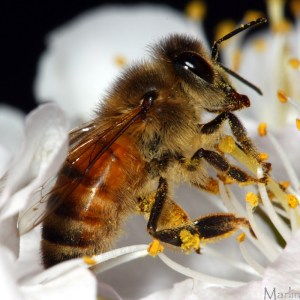
It was the bees who inspired my fourth approach.
Now when I come across a piece of useful information, I write it on a post-it note, highlight it in yellow, write ‘good advice’ in the margin, stick it on her chair, and then go back to the bees.
In the next installment of this exciting serial, I will tell you what I come up with for my fifth approach.

 Our Green Cathedral