
Mention parasites to a beekeeper and the conversation invariably will turn to varroa mites, both species of nosema, tracheal mites, and even possibly bee parasitic mite syndrome (BPMS,) a complex of symptoms associated with varroa mites, viruses, or a combination of both. By comparison, American Foul Brood and European Foul Brood are bacterial infections, chalk brood is a spore-forming fungus and sac brood is a virus.
Parasites are ubiquitous to the global ecosystem. Scott Gardner, Judy Diamond and Gabor Racz, writing in Parasites (Nov. 2022,) state that “It has been said that every species of animal is either a parasite or a host.” We can add plants to that list, and the single exception is the phylum containing starfish and sea urchins.
Many parasites are obligate, meaning they are unable to complete their life cycle without a host. Consider nematodes, for example, a phylum of worms. They account for 80 per cent of all animal species and are so plentiful that, according to the authors, “one could line them up end to end and have nematodes in every meter across our entire galaxy.” Fossil evidence from South America shows that early species of nematodes infested iguanodons 120 million years ago, which is the middle of the age of dinosaurs. One of the sub-species Ascaris lumbricoides, transmitted by contaminated feces, is present in more than one billion people where it is the source of the tropical disease, ascariasis. An adult female produces some 200 000 eggs a day, each of which can survive for a decade. Though the eggs are microscopic, multiple by the number of affected people worldwide and the result is a biomass equivalent to 8000 adult elephants.
A parasite with which I had more than a passing acquaintance is Trypanosoma brucei which is transmitted via the bite of the tsetse fly; the consequent ‘sleeping sickness’ overwhelms the central nervous system with fatal consequences. Some people of African descent have developed a genetic resistance to trypanosomiasis although with an increased risk for high blood pressure and kidney disease. In sub-Saharan Africa this might be worthwhile trade-off, but members of the African diaspora may pay dearly for an immunity they no longer need.
In terms of plants, in the 1840’s in Ireland, the potato blight caused by a parasitic pathogen resulted in a famine that killed more than a million people and led two million more to emigrate. The authors caution that “Modern agriculture, in which each individual food plant is genetically identical to the next one in the row, is highly vulnerable to the worst effects of parasitic fungi.” By comparison, Lars Chittka writes in The Mind of a Bee (July, 2022) “(W)e have learned in recent years that, in bees, differences occur in any psychological trait examined, and occur between individual bees as well as between colonies of bees … Variation in individual intelligence is important for how well bees fare in the economy of nature, and variation among individuals in a colony determines the efficiency of their division of labor.”
Mosquitoes, cockroaches, nematodes, ticks, varroa mites – that is the ‘icky’ factor.
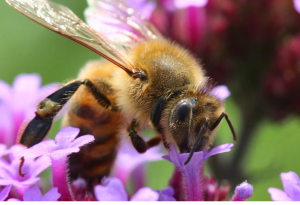
But there are also parasites that provide a symbiosis with their hosts called mutualism, in which each of the two species benefits from their interaction. A prime example is honey bees and flowers, where the latter depend on the former for pollination and in turn provide nectar as a carbohydrate for the bees and pollen as a protein essential for the growth of the larvae. In the words of Victor Hugo, “Life is the flower for which love is the honey.”
An alternative relationship is commensalism, where one partner benefits and the other is unaffected. Trees, for example, provide shelter, protection and, in some cases, nutrition, to birds, which in turn don’t benefit their hosts (with the possible exception of aiding seed distribution) but nor do they harm them.
What prompted me to investigate this topic a little further was the realization that we, too, are parasites on earth. Interestingly, the modern definition of parasites originated in the eighteenth century and the scientific revolution. The original definition is Greek and refers to a person dining at at someone else’s table at someone else’s expense. First, that is an apt description of our current behavior as a global species. Ironically we evolved through the good auspices of nature, and now, having evolved, are rapidly destroying that which nurtured us. In a nutshell, we have ravaged evolution by evolving. This is unusual behavior; typically parasites preserve their hosts, if not individually at least as a community, for their own long term survival.
Secondly, just as a bee colony is an ideal environment in which parasites and viruses can exist and multiply – warm and humid with newcomers being introduced through the foraging bees – so we, with our urban lifestyles, are the equivalent of an apiary – one vast, interconnected web that includes covid, avian flu, ebola and mad cow disease among many others, all mutating at a rate many times faster than are we, and faster than we can come up with safe, effective chemical treatments.
An alternative is the paradigm of mutualism, neatly summed up by President Luiz Inácio Lula da Silva of Brazil (despite the God reference) when he met with President Joe Biden at the White House on February 10th, and called for protecting the natural world to combat climate change together with creating a world governance to enable us to work together against existential threats. “This is not a government program,” Lula said. “This is a faith commitment of someone that believes in humanism, someone that believes in solidarity. I don’t want to live in a world where humans become algorithms. I want to live in a world where human beings are human beings. And for that, we have to take care very carefully what God gave us: that is the planet Earth.”

 Our Green Cathedral