
Thirty five years ago in Britain a mining tradition dating back to 1911 came to an end. Caged canaries, taken into coal mines to detect carbon monoxide and other toxic gases before they hurt humans, were replaced by an ‘electronic nose’, a detector with a digital reading. Although ending this use of the birds was more humane, miners’ feelings were mixed. “They are so ingrained in the culture, miners report whistling to the birds and coaxing them as they worked, treating them as pets,” the BBC reported at the time.
The idea of using canaries is credited to John Scott Haldane, known as “the father of oxygen therapy.” His research on carbon monoxide led him to recommend using birds because of their vulnerability to airborne poisons – they need immense quantities of oxygen to enable them to fly and to reach heights that would make us sick, and by holding air in extra sacs they are able to get a dose of oxygen when they inhale and another when they exhale. This way, and relative to mice or other easily transportable animals, the canaries got a double dose of air and any poisons it might contain, thus giving the miners an earlier warning
Britain wasn’t the only place to adopt Haldane’s suggestion – the practice was soon adopted in both the USA and Canada. Pit ponies, the other animal that went underground with human miners to haul coal, were also phased out by automation; the last of them retired in 1999.
The ‘canary in the coal mine’ metaphor is commonly employed to warn of the catastrophic consequences of pollinator demise, where honey bees are (mis-)used as a stand-in for all pollinators. Essentially, the story goes that if honey bees collapse, our food systems will follow. Maggie Shanahan, writing in the Journal of Insect Science in January of 2022, outlines the limitations of this metaphor, not least that focussing on the stressors that cause the canary to die allows us to avoid questioning the system that creates those conditions in the first place. “We see the canary,” she writes, “we know it is unwell, but instead of evacuating the coal mine and bringing the bird up to the surface for the fresh air that it needs, we scientists are setting up a more permanent camp inside the mine, hooking the canary up to oxygen, running diagnostic tests, supplementing the canary’s diet to elevate its hemoglobin levels, and initiating a program to develop a canary that can survive on CO2. Our efforts may allow the canary to live a little longer, but focusing solely on individual aspects of canary health actually keeps us from asking more fundamental questions: Why are we keeping canaries in coal mines in the first place? Why are we still building coal mines at all?”
To translate this into the bee world, by focusing on issues like K-wing disease, bee kills, shortened lives of queens, increasing queen infertility and over-winter losses, we avoid examining the agro-chemical-industrial world that creates and sustains these conditions in the first place. Instead, we try to prop up the bees, much like we nurse weak hives through the winter much to the distress of the next generation of those colonies. We breed more resilient bees with the genetics and behavioral traits we want; we treat the colonies with a profusion of chemicals in an attempt to negate the damage done by chemicals in the environment; we feed a variety of supplements because the surrounding environs can no longer provide sufficient quantities of nectar and pollen, and when the bees die, we bring more bees into the same habitat. All are short term solutions that perpetuate an unviable system.
It is the old adage at work – focus on the messenger rather than heed the message – and the consequences are dire. As the late E.O.Wilson wrote so famously : “If all mankind were to disappear, the world would regenerate back to the rich state of equilibrium that existed ten thousand years ago. If insects were to vanish, the environment would collapse into chaos.”
The objectives of industrial agriculture are increased labor productivity in the form of maximum output per worker, and increase yield in the form of maximum output per plant or animal. The justification is that an increasing global population has to be fed, and the solution is mechanization and chemistry. And yet most farming still needs to be financial subsidized, a complex combination of the four P’s (parasites, pathogens, poor nutrition and pesticides) threatens the health of every colony, toxic emissions and monocultures are destroying life as we know it, and over 50 million people in this world are perpetually hungry.
During the BIP zoom discussion on pesticides, held on November 30 last year, and in response to a question about pesticides in wax, pollen nectar and propolis, one of the presenters (I believe it was Scott McArt) pointed out that all of our food is contaminated, and we accept it without question provided it is below the ‘safe’ levels as set by the FDA.
There is another way and it is not too late. In non-industrial, diversified farming systems, complex communities of plants, animals, bacteria and fungi build ecosystems that provide for sustainable food production in the quantities that we need and at a cost we can afford. Soil quality underlies it all, hence the farmers’ priority is to foster biodiversity. In so doing greenhouse gasses are reduced, as is water contamination; food security is increased and the quality of life for farmers and their workers is improved as yield and profit become incidental to making our planet inhabitable for all. And for beekeepers, all pollinators will be revitalized, reducing the current pressure on honey bees.
There are increasing numbers of successful models world-wide, normally labelled ‘regenerative agriculture’, which show this process in action. My fear is that, as with previous examples of tobacco, toxic chemicals and fossil fuels, there are well funded, well-heeled, embedded corporations that are inherently opposed to such change because of the profits they are making from the present system, unsustainable as it is. Of some comfort is the UN sponsored global meeting on biodiversity (COP 15) which assembled in Montreal last month and attracted more than 10 000 representatives from more than 200 countries. Hopefully the results will be more specific and more effective than those of the global warming conference that met in Egypt in one month earlier.
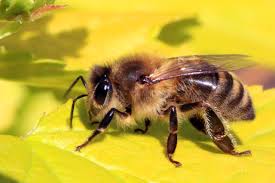
This is not an exercise in blame; it is understanding how this system works at its deepest level so that we can transform it. Ignoring the root causes of colony loss and pollinator decline will not create the change we need. Nor can we solve our problems with the same thinking we used when we created them, as Einstein stressed. Maggie Shanahan’s article is addressed primarily to researchers, but beekeepers must join them on the front lines in reframing the debate. Not to do so is akin to ignoring the canary as she expires in her cage in the belief that continuing to exploit the minerals in the mine until the last vital moment is our prime objective.

 Our Green Cathedral