Starting on November 26, 2017, major broadcast networks and 50 major newspapers in the US carried statements from the major tobacco companies saying, for example, “Smoking kills on average 1200 Americans. Every day” and “More people die every year from smoking than from murder, AIDS, suicide, drugs, car crashes and alcohol, combined.”
At the same time these companies continue to spend roughly $1 million per hour in America on advertisements for tobacco products in convenience stores, wholesalers and adult entertainment venues, offering discounts and coupons. These are the same products that are responsible for the deaths from tobacco-related diseases of about 480,000 Americans each year in a country where lung cancer is the leading cause of cancer death for both men and women. More people die each year of lung cancer than die of breast, colon and prostate cancer combined.
The “corrective statements” are part of a 2006 judgment in federal court which found that companies such as RJ Reynolds and Philip Morris broke anti-racketeering laws, lied about how cigarettes harmed public health and denied their efforts to market cigarettes to children. US district judge Gladys Kessler wrote in a 1 683 page opinion in 2006 that the companies caused “a staggering number of deaths per year, an immeasurable amount of human suffering and economic loss, and a profound burden on our national health care system”.
For eleven years after the judgment these companies appealed over details of the statements; thus they do not have to air these statements on ‘the new media’ (40% of Americans now get news online) and unlike in much of Europe, American cigarettes do not have to display graphic warnings on packs following appeals by the tobacco companies and delays from the US Food and Drug Administration.
“The tobacco companies’ basic strategy for everything,” said Stan Glantz from the University of California San Francisco, “whether its science or regulation or litigation, is delay. They have used a lot of arguing about what in terms of the real world are trivial issues, to delay having to make these statements for 11 years – but it is what the tobacco companies do.”
Documents show that these companies knew as early as the 1960’s that there was a strong correlation between tobacco use and certain types of cancer and that they either suppressed that research in the interests of their own bottom lines or employed ‘biostitutes’ to sow doubt in the public arena. Biostitutes were scientists who were funded by the tobacco companies and given extensive resources and considerable latitude as to their research provided that occasionally they would write articles not disproving the tobacco/cancer connection but questioning the validity of the research of those who did, thus sowing doubt in the minds of the public.
The culminating action came from two sources. The first was the concept of second hand smoking, by which the public realized that one person’s decision to smoke, say cigarettes, exposed others in the vicinity to risk of cancer. The second, inspired by the above, was the decision of the man and woman in the street to vote with their wallets and their feet. They simply declined to patronize facilities that allowed smoking in public. Restaurants were the first to feel the impact and other institutions quickly followed suit. It was in effect a revolution, a sea change, to the point that whereas smoking was common place and unquestioned (by news anchors on TV, for example) it is now a rare sight in public and mostly confined to private or separated areas. It was a revolution that came from informed consumers rather than from political authorities, many of whom were heavily influenced by lobbyists and financial support from the tobacco industry (which incidentally has now turned its despicable attention to Asia, not least the children, where there are less regulations and less public awareness.)
It is my hope that the same process will apply to the quality of the food that we eat, the water we drink and the air we breath. There is good reason to believe that the environmental agencies, as well as the legislative authorities, are aware of the realities of climate change and the dangers to insect, bird, fish, animal and human health posed by the omnipresent danger of the chemical cocktails used in our environment (with the emphasis on our.) I look forward to the day when an informed public will pay attention to labels that are inclusive and transparent, when price will not be the prime issue in choosing what to drink and eat, when public pressure will encourage a better use of resources for the benefit of all life on this planet, and when, despite their continued denials and political influence, the agrochemical companies will be held responsible for the damage they have done and the pain they have caused.
There are reasons for hope. The Quebec government, for example, has banned for personal use the five most dangerous pesticides: Atrazine, Chlorpyrifos and three neonicotinoids as well as treated seeds. Agricultural producers will be allowed to purchase these pesticides only if it is justified by an agronomist with the Ordre des agronomes du Quebec. Philip and Mary Landrigan, co-authors of the new book, Children & Environmental Toxins: What Everyone Needs to Know, connect the dots between rising rates of childhood asthma, learning problems, cancer and toxic chemicals; most of the latter are never tested for safety before they’re sold. And if there is a silver lining to the depressing cloud of opiate addiction it is the light being shone on the manufacturers and distributors of the drugs and the increasing demand that they be held accountable.
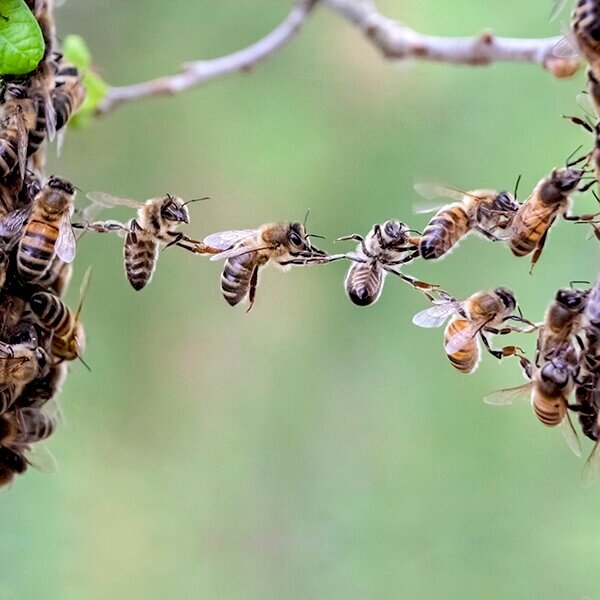
To repeat Stan Glantz, we should expect “… a lot of arguing about what in terms of the real world are trivial issues,” but the recurring deaths of honey bees and the increased prevalence of varroa mites as the bees’ immune systems are compromised by chemicals are not trivial. The bees are the tip of the iceberg and we, their minders, need to be speaking out, not least because they cannot represent themselves. Nor can any other living forms on this precious planet, ourselves excepted, but our future is more closely inter-twined with theirs than most of us realize.


 Our Green Cathedral