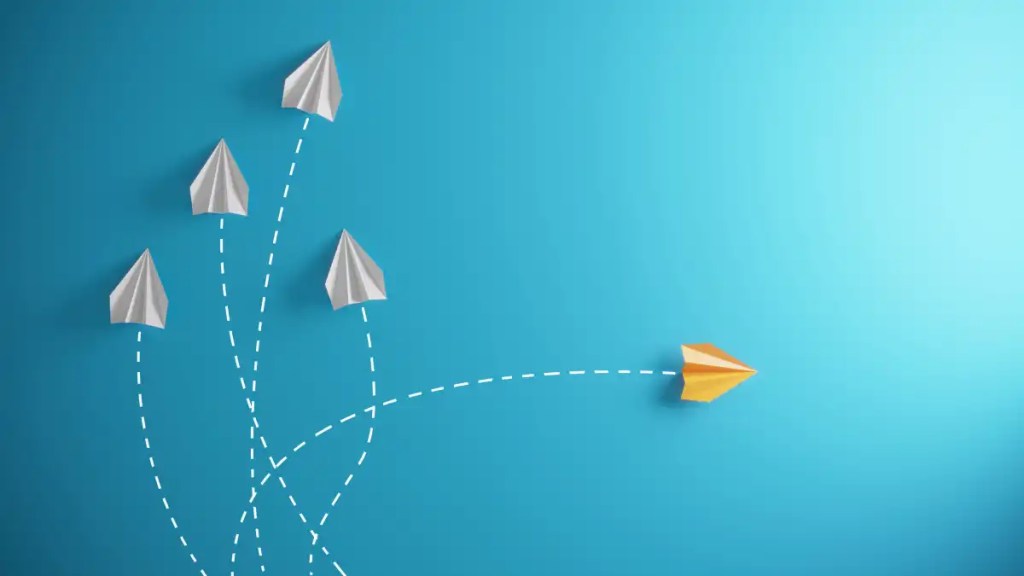
One of humankind’s greatest attributes, and the one that explains much of our success over the past millennia, is behavioral plasticity. The term was first used by psychologist William James more than a hundred years ago to describe our ability to change habits almost as a matter of course – we change careers, diets, religions, locations, each of which requires that we make choices and adopt new behaviors. This plasticity is the defining feature of our transformation from anatomically modern Homo sapiens to behaviorally modern Homo sapiens sapiens.
Neuroscientists are currently trying to explain how this plasticity developed; contemporary thinking is that it is genetic, that particular genes give us a neurotic sensitivity to the environment (witness, for example, the hectic energy as big storms approach, even from those not in harms way, or our preoccupation with the weather channels on TV) and a heightened ability to adapt to new situations.
Other animals and insects do not display the same levels of plasticity. A honey bee and her colony are elaborate, finely tuned mechanisms but they are fixed, as if in amber, in the loops of their DNA, and as such are incapable of fundamental change. The minority number of drones in a hive, focused on mating with a queen, will never acquire new responsibilities; the queen will always be an efficient ovipositor without developing any maternal instincts; forager bees will always dance in predefined patterns and other worker bees will respond in predetermined ways.
And the behavior of individuals is reflected in their societies. Some species of bees and some of ants have complex societies with elaborately coded behavior. E.O.Wilson described leaf-cutter colonies as “Earth’s ultimate superorganisms” but they are incapable of fundamental change. Certainly by luck or superior adaptation a few species manage to escape their limits, at least for a while (think of the changing resistance of varroa mites to various chemicals introduced into the hive) but rather than being conscious choices these are normally genetic mutations that enable the species to survive in the face of new environmental stressors.
Human societies are of course far more varied than their insect cousins, and it is continued plasticity which has enabled us to move into every corner of the earth and to control what we find there. By many accounts that plasticity faces a new and vital challenge.
The bees, the bats and butterflies and fish and birds, cannot adapt to a rapidly changing environment and they die or ‘disappear.’ Beekeepers are frequently asked, “Are the bees recovering?” and the longer response attempts to explain that the bees exist in an environment that we have largely created; that rather than look for quick fixes for the bees we need to think about redefining our concepts of standards of living and quality of life so that we can rebuild an environment that is hospitable to all species. With plasticity comes a responsibility for life greater than simply our own, and in this case it might mean voluntary restraint which, because it pushes against the natural biological hierarchy, is the highest order of behaviors.
The biologist, the late Lynn Margulis, argued that “The fate of every successful species is to wipe itself out.” We have got a lot of things right, most recently the end of slavery, the emancipation and gradual empowerment of women, and the endorsement and validation of civil rights, and it is depressing to think that we could be successful in so many areas yet get this one wrong. We can land the robot ‘Curiosity’ on Mars but fail to pay attention to Earth. To have the potential and not to use it makes us worse than the bees; they at least do not have the privilege and the responsibility of freedom of choice.

 Our Green Cathedral