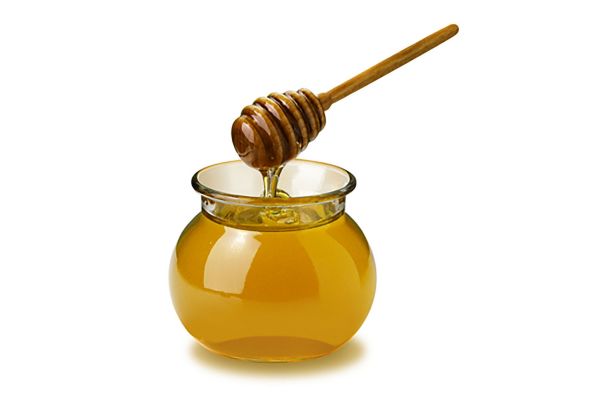
Most new beekeepers believe they can cover their start up and maintenance costs from the sale of honey. Not only have I never achieved that but I’m increasingly convinced that it is near impossible for a beekeeper, commercial or otherwise, to make a living from honey sales alone.
The current price of a one pound jar of local honey in Pennsylvania averages about $8, and my guess is that some of us feel a little hesitant asking even this price, especially when a customer states that he or she has seen honey in the supermarket for less than $5. This leads to the inevitable discussion about local, verifiable, authentic honey with it’s own terroir (to use a French term) and we might even throw in the word ‘organic’ as compared to honey of unknown origins with undisclosed chemical components and which might have been heated and strained.
“I want to support local beekeepers,” replies the customer, “but it’s just too expensive.”
The beekeeper responds with the bit about bees flying 54 000 miles to collect the nectar to make the honey in the jar, and visiting somewhere between two and three million flowers. We seldom include the cost of the beekeeper’s time, skills and labor but we might explain that one bee makes 1/12th of a teaspoon of honey in her lifetime and that this jar represents the life work of some 600 bees.
The customer nods as the beekeeper continues. Worker bees are foragers for the last two weeks of their lives and let’s presume that half of them are collecting nectar, the other half pollen. So if they work 8 hours a day a week and we had to pay each bee the current minimum wage, each forager would earn $392 per week.
We know it takes twelve bees to collect sufficient nectar to make one teaspoon of honey. So $392 x 12 means that, using minimum wage as a measure, a teaspoon of honey costs $4704. It takes 50 teaspoons to fill a one pound jar (yes, I counted) so the cost of a jar of honey is $235 200 … and that is for the nectar collection only.
I have no idea how to calculate the amount of time spent on reducing the moisture content of the stored nectar nor for producing the wax and capping each cell, yet it is safe to say that, at these rates, we would be paying the bees in excess of $500 000 for each one pound jar of honey.
$8.00 a pound is an absolute bargain.
The customer is still not convinced so the beekeeper keeps going. If a forager averages 30 flights a day for two weeks, averaging one mile from the hive, the total distance she will fly is 840 miles, which is a little further than the distance from Pittsburgh to Wichita, KS, or from Philadelphia to Tallahassee, FL. And the end result of all that flying, besides the pollination that she does, is enough nectar to make one twelfth of a teaspoon of honey.
“So to collect enough nectar to make the teaspoon of honey that you will put in your tea every morning,” the beekeeper concludes, “the bees fly 5040 miles, which if they went east from here would take them to Madrid, Spain, and if they went west, almost to Hawaii.”
At this point our customer buys one jar, not because he or she is convinced but partly out of a sense of guilt and partly to end the broadside. The same customer will not question the asking price of a Ford Mustang, or a luxury hotel charging $500 for a night’s stay, or a Rolex that keeps the same time as a $5 wristwatch, or a $150 pair of sneakers, or a 55” TV screen. Incidentally, have you tried to get rid of a five year old TV set, or lap top computer recently? It’s hard to so much as give them away. And I have to mention an advertisement that appeared in the local commercial gazette for four weeks : ”Thick book on history, $5.”!
We have been conditioned to expect cheap food to the point that we minimize the connection between price and quality. We forget that most food in the supermarket is discounted by government subsidies and that the bigger the farm the bigger the subsidy. We don’t ask how many thousands of miles the food had to travel to get to the supermarket, nor do we place freshness and quality above price, yet believe we can make up for any deficiencies with cheap supplements that are often unproven and unregulated.
Those who lament the loss of local farm land to residential development or the closure of a commercial bee yard don’t necessarily make the connection between their buying habits and the decline of the country life that they profess to admire.
Perhaps our argument would be more effective if we challenged our customers to spend a year maintaining a colony of bees, harvest the honey, factor in their expenses, add a modest profit margin, and then sell the honey. I did this exercise for myself. I won’t bore you with the math, but the expense side of the balance sheet is based on maintenance costs for the year 2015 (no packages or nucs purchased, no new hardware, no new queens bought that year,) five hours of management per hive per year, which is conventional wisdom but a conservative estimate, and minimum wage for labor costs.
Based on a harvest of 200 lbs of honey, and I stress minimum wage rates, the cost works out at a little under $12 per pound. With a 20% markup so that I can continue operating next year, each one pound honey jar would cost $14.50. That’s Economics 101. And if I include ancillary expenses like the cost of the jars and lids, transportation, conferences at which I can improve my knowledge and skills, that figure is closer to $16.00
So $8 for a one pound jar of honey works out, conservatively, at 50% of my production costs.
I have two things in my favor. First, I am not in it for the money; keeping bees brings rewards for which there is no monetary value. And secondly, I can keep the Chairlady of the Family Finance Committee happy by making up the deficit through offering classes, selling the occasional nuc, filling a few small pollination contracts and writing the occasional article for bee journals.
And yet I have to ask, why is it that the public expects beekeepers, and many others involved in the agricultural community, to have to supplement their income because the market will not support a fair price for their products? The solution lies in education – educating the public that good food, as with everything else, has a price attached, and with the concomitant improvement in public health, that increased outlay is still relatively inexpensive. That implies, correctly, the argument that honey is a health food, a life enhancer, more than it is a commodity, a sweetener, that can be sourced from many places and easily substituted with sugar, corn, rice or agave syrup. The Europeans understand this and willingly pay more for honey than do North Americans.
Education, by good and consistent communication, is the only way we can bring others along on the journey, so that they walk beside and not behind us.


 Our Green Cathedral