Rumor has it that an Englishman, flying to Australia, was asked by an Australian immigration official if he had any felonies or convictions. “I didn’t know it was still a requirement,” he replied.
Many seventeenth and eighteenth century emigrants to Australia did not go by choice, compared with many Europeans (not Africans) who chose to cross the Atlantic to the New World. One hypothesis is that those who made this choice were the risk takers; those who were more cautious stayed behind believing they could accommodate to or co-exist with the dominant religious or governmental paradigms that were causing others to depart. And the current American society reflects this in that the pace of life is quicker and more finite. Thus checkers replaced chess as the most popular board game, poker v bridge, baseball v cricket. A cricket match at the traditional international level lasts for five seven-hour days and often ends in a draw. Indeed, in some circumstances, it is honorable to play for a draw and there is no means of forcing a result – no overtime or sudden death.
I do not have an intimate knowledge of baseball, football or basketball but I am intrigued by the skills of the athletes. As Mark McClusky documents in Faster, Higher, Stronger, the old presumption was that good athletes had the basic skills, and practice was about getting to work with your teammates. Today, innate athletic ability is the base from which one has to ascend, and with the help of science and technology we are witnessing some of the best athletes in history. McClusky argues that it is not that the best are so much better as that so many people are so extraordinarily good to the point that the performance curve at the top is flattening out, possibly because we are nearing our biological limits.
There is specific technology for every sport, an example being Nike’s Vapor Strobe goggles which periodically cloud over for 1/10th of a second intervals so as to train footballers’ eyes to focus in the midst of chaos. Add to this the use of biometric sensors. Chris Hoy, who won two gold medals as a cyclist in the 2012 Olympics, was followed by a team of scientists, nutritionists and engineers who monitored what he ate and how he trained (an $80 000 carbon fibre bike helped too!) and because his competitors were doing the same, he won in both cases by only a fraction of a second. Novak Djokovic, for many months the top ranked male on the professional tennis circuit, has a retinue of coaches to cover every skill, Ben Hogan was the first golfer to practice regularly while Tiger Woods introduced a physical training regime which most professional golfers now follow rigorously. Using computers, chess players today can practice consistently against the grandmasters, and classical musicians routinely play pieces that once were regarded as too difficult for all but a few.
In the decades after the Second World War American manufacturers faced little competition; they were profitable but complacent about quality until Japanese products began to mount a significant challenge. In 1969 one third of people who purchased a new American vehicle found it to be unsatisfactory on delivery, and growing up in Rhodesia the first vehicles I knew were European – Citroens, Peugeots, and Renaults – which were considered more reliable. Even today, turn on a safari documentary and the chances are the vehicles will be made by Toyota, never mind the Tacomas driven by ISIS and Taliban fighters in Syria and Afghanistan!
Similarly in the 1970’s service calls for American-made TV’s were five times greater than for Japanese-made sets, and the production time in American factories was three times as long.
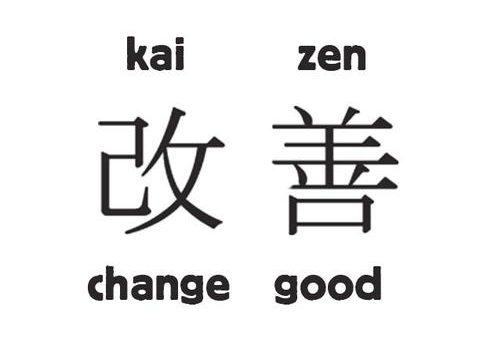
The Japanese emphasized quality control as part of the process rather than a response to customer complaints, an ethos captured by the term kaizen or ‘continuous improvement. The forces of competition as well as an increasing global market compelled American companies to adapt quickly to the point where although products are more complex today they are also more reliable. Before I could own my first car (a Peugeot 203) my father insisted that I knew how to strip and re-build the engine. Today I wouldn’t know where to begin, but the average age of a vehicle on the road is double that of my 1959 Peugeot.
Playing catch-up is neither easy nor fast. Of the ten vehicles that head the list of most reliable in the November 2014 Consumer Report, only one is US based (Buick) and this is in 6th place. There are other fields that are equally lagging. In an article in the New Yorker of Nov 10, 2014, James Surowiecki suggested that they include customer service (poorly trained workers,) medicine (high levels of medical errors and wasted spending,) and education (our teacher training programs lag behind those of the rest of the developed world.)
And I would add beekeeping to that list, in two respects. First, reading the Lancaster Farmer every week I am struck by the professionalism of the dairy, beef, chicken, sheep and goat industries; they have a professional staff, a coherent policy and an effective marketing campaign. Yes, I know that most of their members are full time producers with larger financial resources, but their industry relies on ours. Without honey bees they could not effectively feed much of their stock. In Pennsylvania we rely on volunteer beekeepers for our common good and in effect the state organization is as strong as the President who is giving of his or her spare time in any one year. This was brought home when I visited Wales and was forcibly struck by the professionalism and presence of advertisements and displays for bees and honey in almost every town we visited; it was no surprise to stumble on a center from which it was coordinated by full time, professional staff.
The second is that beekeeping as a whole has not changed much in recent years, despite the challenges of pesticides, diseases, viruses and monocultures. 96% of us are hobbyists, doing the best we can, which is not always good enough for the survival of the bees. For many beekeeping is still the preserve of a quirky, quaint, mildly eccentric minority and, as one wag put it, if pilots were allowed to start flying with the same amount of skill that beekeepers start keeping bees, no one would step onto a plane.
Most beekeeping conferences are rewarding and gratifying – there is a sense of kaizen, of self improvement. Disappointing is the turnout. Certainly here in Pennsylvania, the annual conference in November attracts less than 5% of registered beekeepers in the state over the two days the conference is held. Many reasons are offered for this, but ultimately we have to show up, no excuses offered. Local mentors are vital yet there is nothing quite like the energy generated by 10 000 people from across the world, with different languages, different customs, but one unifying passion – honey bees. This is what happened at Apimondia in Montpellier, France, in 2009 and occurs every second year with Europe and somewhere else in the world taking turns as host. Not all of us can go to Apimondia but we can support the many state and county conferences where nationally respected researchers and beekeepers share so generously. The speakers are normally excellent and on point, the information is relevant and based on current data, the presentations professional and accomplished, the vendors increasingly diverse, and the informal conversations are sparkling and informative. It’s a veritable hive of information and fellowship where very beekeeper, like every athlete, is given the means to build on his or her innate ability. Unlike athletes, even the best apiarists don’t yet see a flattening out of the performance curve.


 Our Green Cathedral