Conventional wisdom in Pennsylvania has it that one year in five is a good one for the honey bees. 2014 was that year for me, and there was a possible explanation.
The agricultural practice in this neck of the woods is mainly no-till on the basis that it preserves earthworm activity just below the surface and reduces water run-off with the associated contaminants and top soil that make their way eventually to the Chesapeake Bay. The down-side, and it’s a big one for beekeepers, is the use of herbicides to kill the spring growth that in previous years would have been plowed under.
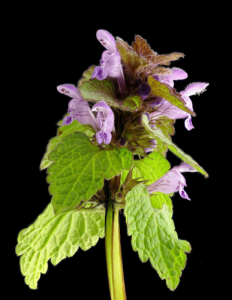
My home apiary is surrounded by farm land with a dual rotation of corn and soya beans. The soil seems to be regarded by the farmer is an inert substance to hold commercial fertilizers rather than a healthy, self-sufficient, complex organism; the prime concern appears to be financial viability rather than the long term health of the soil, the quality of water or the variety of life that the land supports. It says much that it is seen as an either/or situation. Thus in the fall, after the crop is harvested, the land lies fallow for four months which means that in early spring it is an 80 acre bed of ‘weeds’ (ie. a carpet of wild flowers with mainly blue and purple florets close to the ground.) In early April, just as those flowers are coming into bloom, the farmer spreads lime and then herbicides which kill literally every living plant, after which he sows either corn or bean seed.
In 2014 the weather did not cooperate. The wet, cool spring meant the farmer delayed his applications of weed killer which in turn meant that the bees had an extra few weeks to work the verdant wild pasture. And it was those couple of weeks that, I believe, made the difference. The colonies built up fast and when the regular nectar flow started they were well positioned to take full advantage. It is what Randy Oliver has called a “brief nutritional boom-or-bust period” during which this short and unexpected period of floral diversity provided a copious quantity of both nectar and pollen, followed by the regular nectar flow and thereafter a ‘green desert.’
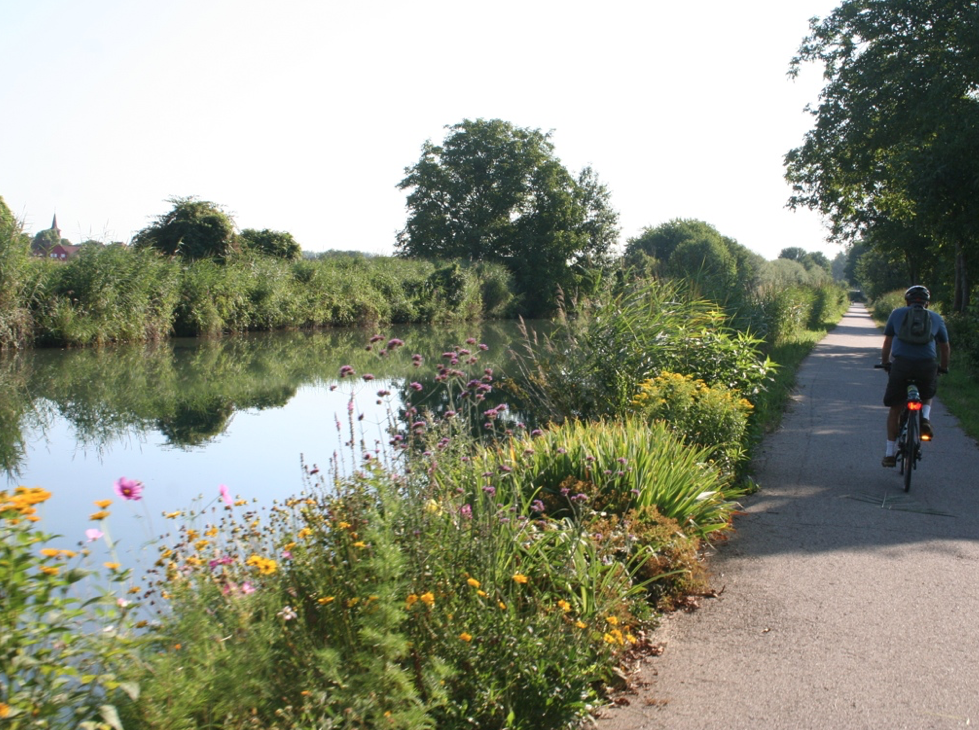
Mary and I had occasion that same year to meet with several Alsatian beekeepers. Alsace, a contentious piece of land that has been much fought over by the French and Germans, is 106 miles long and 60 miles wide. The eastern border is the Rhine river, 10 miles either side of which is a flat alluvial plain. Water run off is not an issue (there is a network of canals to catch water from the Vosges mountains to the west and the Black Forest to the east, and to use it for irrigation before feeding it into the Rhine) and perhaps that is why we saw evidence of plowing rather than no-till practices. The main crops on the alluvial plain are corn and wheat, whereas vines dominate the foothills of the mountains. The Vosges is richly forested with four tree species – acacia (locust,) tilleul (linden or basswood,) chatagnier (chestnut) and sapin (fir;) which, together with fleur sauvage (wild flower) make up the main honey varietals from May to August. It is noteworthy that the overwhelming source of nectar is from trees; beekeepers move their hives to different areas of the forests as the differing species of trees come into bloom from April through August. To take advantage of an agricultural crop requires the beekeeper to pay rent to the farmer and the accepted fee is 12 jars of honey!
Two professional beekeepers we met both said that it had been a bad year for the bees (in France to qualify as professional one must have a minimum of 200 operational hives;) in fact according to Erik Delfortrie, “Last year was the worst and this is worse.” In a good year he expects to get 20 tons of honey from 400 colonies, which averages out at 100 lbs per colony; last year he harvested 4 tons, or 20 lbs per colony.
I raised the question of pesticides as a possible reason and, to my surprise, both denied it. They pointed out that corn, grapes and wheat are not honey bee pollinated and that chemicals are not used in the forests. Erik described how a good quality microscope revealed that bees in weak colonies had high levels of nosema cerenae compared to their sisters in strong colonies.
I asked Jean-Pierre Maisset, who had been President of the Valle de Ville beekeepers’ association for 20 years (he retired when he turned 70 so that younger people with different ideas could step forward) about the two year ban in France of two of the neonicotinoid products. He supported the action but was skeptical of it’s effectiveness because of the complexity of the chemical interactions and the difficulties of enforcement.
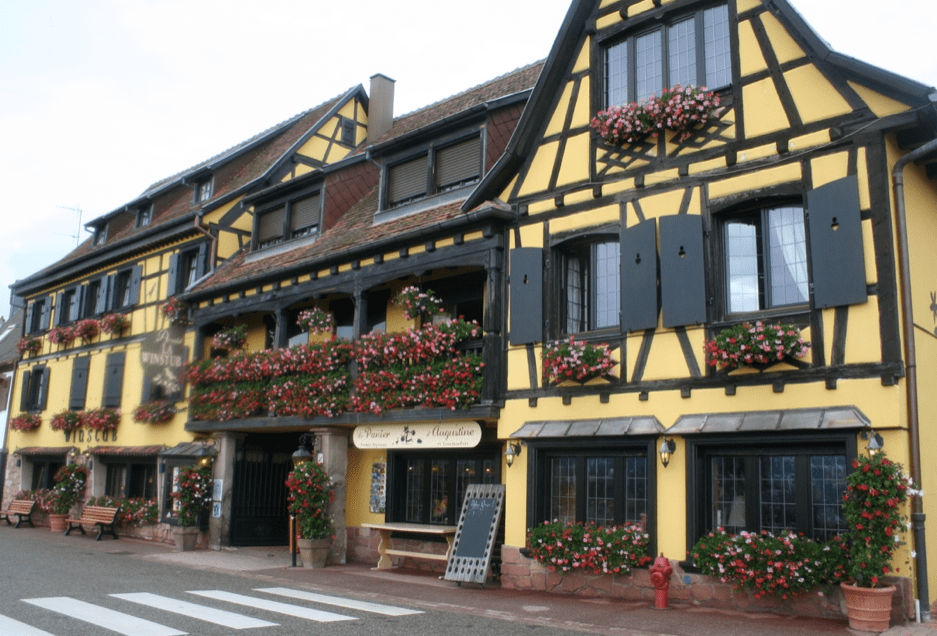
The other impression of Alsace is of road sides and borders of fields that are rich in preserved floral vegetation, whereas we label the native plants growing in the brush, between rows, in ditches, hedgerows and woods as weeds which need to be mowed or sprayed, even though they provide a steady and diverse nutritional supply to a myriad of insects, 99% of which are beneficial. We have come to believe, erroneously in my opinion, that honey bees are unlikely to survive the winter unless we feed fondant or sugar syrup in the fall, on the basis that our environment is increasingly unable to support honey bees without our intervention. First, syrup from white sugar does not have any of the minerals, proteins, amino-acids, phenols, pigments and vitamins that are in honey and which, although small in quantity are vital to the health of the bees; and secondly bees fed on sugar syrup emerge from the winter stronger in numbers but smaller in size with their immune system compromised; and thirdly, feeding a sugar substitute allows us to ignore the bigger issue – the depletion of our environment – much like the curbside recycling programs were devised by the garbage collection industry to distract the public for the real issue – the massive accumulation trash in the first place.
There seems to be a disconnect between the commercial agricultural sector and beekeepers. Mary and I were approached by a local farmer who enquired about the possibility of renting some of our acreage to plant his corn/soya bean rotation. But, he insisted, he would need to remove the trees we have planted so that his heavy machinery could access all of the land more efficiently. The majority of those trees, which he saw merely as obstacles, are black locusts (acacia) which we have planted over the years specifically for the honey bees. He seemed unaffected by the idea that the girls pollinate some 27 000 acres, much of which includes his farmland, and the discussion did not go any further.
Farmers and beekeepers complement and benefit each other. There is the potential and the need for a win:win situation, yet the necessary conversations do not seem to be happening at a local level. Is it possible that, in the days of smaller, family farmsteads, the farmer and the beekeeper were one and the same person, and there was a natural understanding of the interactions between insects and plants, to the benefit of both? Is it a coincidence that the farmer and researcher leading the restorative agricultural movement – Gabe Brown and Jonathan Lundgren respectively – are also beekeepers? Whatever the reason, we are all the poorer for the lack of dialog.

 Our Green Cathedral