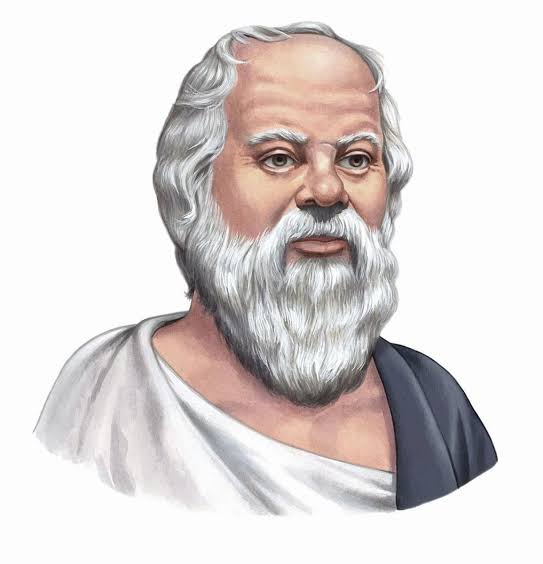
Many of the world’s greatest teachers – the Buddha, Socrates, Jesus, Mohammed, Gandhi – did not have so much as a piece of chalk for a teaching aid, yet the lessons they taught with the help of a finger in the sand and a spinning wheel, have lasted, in some cases, for thousands of years. Today it would appear that teaching equivalents are powerpoint slide programs which have become an obligatory part of presentations to the point that a conference cannot be considered effective without them.
Three inventions in the last century were predicted to ‘revolutionize teaching.’ The first was the wireless, invented during the First World War so that front line soldiers could communicate without the wires (hence the name) which were too often blown up on the battlefield. The second was the overhead projector which enabled teachers to face the students while simultaneously projecting an image on a screen behind them, and the third was the internet with it’s immediate access to a wealth of knowledge.
If this trend suggests anything at all it is that powerpoint projections will be as quaint in the classrooms of our grandchildren as radios and overhead projectors are in classrooms today. And if so, what will have replaced them?
Powerpoint is not a panacea; it is not an easy tool to use nor are the slides simple to design and produce. Too often, for example, the slides are so busy that they are either difficult for the viewer to absorb (for me graphs are particularly difficult to understand at a glance) or they distract from, rather than reinforce, the points the speaker is making, or the speaker feels obliged to read everything on the slide and since an audience tends to read faster than a presenter can talk, the former is well ahead of the latter and loses focus. Personally I would argue that reading a slide aloud is an insult to the intelligence of the audience.
Some honey bee researchers prepare and present slides very effectively. Randy Oliver comes too mind, as do Keith Delaplane and Denis Vanengelsdorp. For them a slide is a stimulus for a bigger issue rather than the whole issue spelled out; graphs and diagrams are explained thoroughly and often become the basis for future slides, thus making it easier for the audience to comprehend the significance of the various lines on the graph as they develop without having to reinterpret the axes every time.
The reliance on powerpoint presentations implies that our audience cannot stay focused unless we provide them with something to look at, a reflection perhaps of the influence of television and it’s associated media on our attention spans as well as the confusion between education with entertainment. In the old black-and-white movies the camera stayed on a scene for more that 20 seconds. Observation of almost any current television program will show that that time is now less than 2 seconds, and for commercials it can be even less.
No wonder more than 90% of ADD medication is prescribed in the US – we suffer from visual stimulation overload.
As an aside, three other observations about recent honey bee conferences I have attended. There are very few people of color among the attendees; casual observation suggests that 70% were male with an average age in excess of 50, although it was probably difficult for younger folk to get away for mid-week events; and a significant number of men had a beard, mustache or both. Explain that one!
Charlie Rose, before he was discredited by charges of sexual harassment, was asked the secret of good interviewing. There are three essentials, he suggested – prepare, listen and engage. Technology can help us with the first but not necessarily the second and third requirements. I recall a colleague describing a student in her classroom who was listless and disinterested yet when she saw him on the sports field he was a ball of energy and clearly the team leader. Her question was, “What was the coach doing that I was not doing in the classroom?” How was he getting that student engaged? The answer included shared responsibility as a team, the coach as motivator rather than judge, and a shared, agreed objective, in this case winning.
In the absence of natural materials we have to provide honey bees with the necessary technology for their survival – hive bodies, frames and foundation, for instance – after which they seem to function without the need for chalk, wirelesses, overhead projectors and power points. Certainly they ‘listen’ to each other, thanks to the marvel of those floral bouquets we call pheromones, and they are actively engaged from the day they are born to the day they die. Bees live in community. It is a common existence with shared responsibility and a clear objective – the long term survival of the colony. And as beekeepers we are coaches rather than presenters : we are invested in the same objectives as are the bees and do all we can to facilitate their success; we are, with them, a team, and prosperity comes from cooperation rather than from competition.

 Our Green Cathedral