Some strange things happened early in August, 2012. Large numbers of colonies swarmed (two of mine left their respective hives in the space of a week and I captured a third on September 5th, which is very late in the season) and there were several reports from neighboring beekeepers of bees absconding, of colonies being testy to the point of showing the traits of Africanized bees (following the beekeeper for 50 yards to his vehicle and trying to get inside the cab as he took off his veil, for example) of large infestations of wax moth and, in some cases, of beekeepers losing one third of their hives during the last two weeks of the month.
Certainly we had some very hot days with high humidity which presumably are as trying for the bees as they are for us. And a dearth of nectar. As a side bar, the bees seem to be able to anticipate the seasons and know that their survival is dependent upon building up stores in the next two months. And yet no bee, except perhaps for the queen, has lived through a full year. How do they know what is coming? Is it an intuitive reaction to the length of daylight hours?
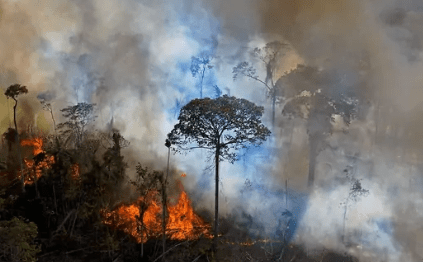
Or is it possibly something larger than this? In an article filed in The Associated Press on August 11th, 2012, Karl Ritter used the phrase, “It’s been a summer of near biblical climatic havoc across the planet.” On the same day in the local newspaper there were references to
- An island of ice more than four times the size of Manhattan that had broken away from a glacier in Greenland and is drifting across the Arctic Ocean towards major shipping lanes and Canadian off shore platforms. Apparently there is enough freshwater locked up in this island to keep the Hudson River running for more than two years.
- Major floods in Asia with 80% of the Swat Valley underwater and 20 million people displaced.
- 600 Chinese dying in floods.
- 1250 wild fires that have destroyed 20% of Russia’s wheat crops and which threaten to release radioactive particles that have settled in the soil of Chernobyl.
There were forecasts of the fifth heat wave of the season (defined as five consecutive days with a heat index in excess of 95o) and our neck of the woods recorded only 1/2” of rain during the entire month.
The US Department of Agriculture has been cited as forecasting that 40% of America’s fruit and vegetables will be imported in three years time, mostly from China, and twice in the documentary Vanishing of the Bees, Dave Hackenburg projects that within a decade all of America’s fruit and vegetables will be imported. The movie highlights the growing acres of monoculture which are so fatal for honey bees and the logic behind the statements is, that rather than diversify our crops we will import those food sources that otherwise need bees to pollinate them.
No one has yet been able to calculate the long term effects of this. For example, there is a current movement towards including more fruit and vegetables in the average diet, most of which begin with a honey bee. Less bees, less fruits and veggies. There are widespread implications for public health with associated increased medical costs.
Similarly we know that as the numbers of hives available to pollinate the almond crop in California decreased, colonies were imported by the plane-load from Australia, beginning in 2008. These shipments soon ended in the face of the risk of imported viruses, parasites and diseases, but nowhere was there the suggestion that we might reduce the size of the almond crop to suit the resources available. When it comes to almonds v honey bees, almonds (ie. $$) are the winner. It says much about our priorities.
John Terlazzo points out that one can get a sense of a civilization’s priorities by the nature of the dominant buildings. Thus the pyramids of Egypt, the Acropolis of Greece, the Pantheon of Rome, the Gothic cathedrals of the Middle Ages, the Renaissance castles and palaces of the Loire Valley … and the commercial skyscrapers or Golden M of contemporary times.
If honey bees are our proverbial canaries in the coal mine, can they sense a larger pattern or trend or is it all coincidental? Was August of 2012 the new reality or just a unique 31 days? Whatever the answer it seems that for many of us supplemental feeding of the bees in the fall has become even more vital.
Albert Einstein famously argued that it is not possible to solve problems with the mindset that created them. We cannot wait for the agrichemical industry to resolve the problems facing the bees. Rather, as Michael Pollen says in Vanishing of the Bees, each of us votes three times a day with our fork. As with the anti-smoking movement, ultimately the solution is more likely to come from informed consumers than it is from Washington DC.

 Our Green Cathedral