As a Boy Scout I was exposed to a lot of first aid theory and practice and last week it came back to me in a flash. Walking down a main street in town I heard a horrendous thump, turned around and realized that an elderly man had been hit by a car. He was clearly in a bad way – broken leg, fractured skull, lots of blood … but fortunately from my first aid training I knew exactly what to do. I bent over and put my head between my knees to stop myself from fainting.
Only the Boy Scout bit is true but hopefully the rest provided a chuckle. What is humor? Why do we laugh? In most cases it is when we are taken by surprise, when an outcome is contrary to our expectations. It’s like the environmental scientists experimenting with a vehicle fueled by peanut butter. Apparently the gas consumption is excellent but the car sticks to the roof of the garage.
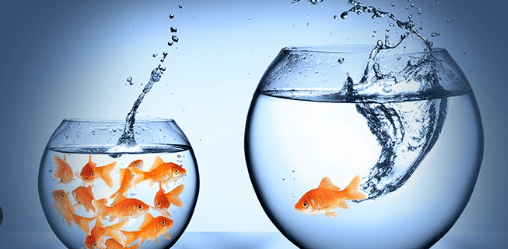
That ‘surprise’ is called a paradigm shift. A paradigm is similar to a pair of glasses through which we see the world, glasses which are put there by our life experiences with our parents, schooling and friends and by our culture. And these glasses have limitations. Sometimes our view is unexpectedly expanded, we gain a new insight, a new realization, see a new and vital piece of the puzzle … and our paradigm is said to have shifted.
Clearly the extent to which your archetypal preconceptions change depends in part on the extent to which you are exposed (or expose yourself) to new and different stimuli. Thus Diana Sammatro wrote in the April, 2011, edition of American Bee Journal, “The bees really open a lot of doors in very interesting ways. I would never have imagined just where they would take me.”
The rationalism of the Enlightenment liberated the western world from the controls of superstition and the industrial revolution began the modern age of wealth and economic progress. The downside has been resultant materialism and environmental destruction : more people died violent deaths in the twentieth century than in the rest of history combined and for the first time the majority of those deaths were civilians. It was also the century of holocaust and genocide, of climate change and global poverty in the face of plenty, of moral collapse and social indifference. For the first time we have the power to destroy the planet that is our home, our colony, our nest.
Americans today are essentially an urban/suburban people both in residence and culture. Less than 2% of the population produces the majority of the food we consume and, if projections by the USDA are correct, we will soon be a nation that not only imports all of our fruits and vegetables but most of our staples as well – corn, wheat and soya beans. Such a scenario was inconceivable one hundred years ago. The reduction in the presence of honey bees is one sign of this decline, although it is in itself a symptom of much larger issues.
Not surprisingly few of our urbanites know much about the food they eat, least of all the processes that are involved in its production. Looking at a plateful of food can be an awe-inspiring experience if one realizes it is the end product of a process that began millions of years ago with the formation of the soil and the microbiotic elements that give it life and nutrition.
We live in larger homes, drive larger cars, consume more gas and food per capita than any nation on this planet. Americans compose 4.4% of the world’s population and, by some estimates, consume 40% of the earth’s resources. That is a non-sustainable equation, a self-defeating paradigm. And this is also the only country in the world where the total debt of the average family (mortgage, car and college loans, credit card payments etc.) is greater than their total assets.
And in the midst of this cornucopia many Americans have a mystical reverence for nature based on dramatic TV footage or occasional visits to unspoiled nature parks. Not only do they oppose any proposal that threatens this idyll but they don’t make the transfer from pristine nature to their own urban habitats and behaviors.
Rather than being based on sound ecology or reasoned understanding, our perceptions of the natural world are grounded in nineteenth century Romanticism which was a reaction to the exploitation and industrialization that followed the Scientific Revolution. Emerson, Thoreau, Longfellow, Cooper and Muir expressed it in writing; Homer, Cole and Bierstadt put it on canvas, and National Geographic placed carefully staged photographs of majestic nature on our coffee tables. And because so few of us have kith and kin living on the land we uncritically accept such Romantic portrayals and verify them in cruises to Alaska or coach tours to the fall colors in New England.
Writing in the March/April 2011 edition of Tree Farmer, Steve Arno and Carl Fiedler describe how Walt Disney’s 1942 animated feature film Bambi captured viewers emotions and had a huge influence on our view of wild life. Similarly Jerry Seinfeld’s Bee Movie with its anatomically and behaviorally incorrect portrayal of bees may well influence a younger generation’s perception of these vital insects. A recent poll showed that more than 40% of Americans believe that mankind co-existed with the dinosaurs. The source of this perception? – The Flintstones. And a film version of Dr. Seuss’s story The Lorax, in which a forest of mythical trees is cut down by a greedy industrialist, is another example of the rush to the extremes without any consideration of the middle ground, the reality in which we live, eat and survive.
Hence the populace is influenced by the advocacy of the extremes, those who idolize nature or demonize technology in short sound bytes. But somewhere between the extremes of Yosemite and Los Angeles there is a gap and perhaps we are on the cusp, the tipping point, of a new paradigm in which managing honey bees is symbolic of one way of filling it.
The values of the old paradigm based on competition and fear, on a win/lose, control mindset using secrecy, conformity and obedience with benefits and arbitrary freedom for a select few. Those who are different are seen as inferior and the earth is seen as an object to be exploited. It is a traditionally ‘masculine’ paradigm in which most American teens can identify over one thousand company logos but cannot identify ten plants in their own back yards.
Several years ago, for example, I took an observation hive to the Arts and Science evening at a local elementary school. One of the worker bees was nearing the end of her six weeks of life and some of the children asked if they could hold her. The girls couldn’t wait to put out their hands while the boys pulled away in fear. What have we done to distance our young men from the innocence of nature?
The new paradigm is one of cooperation based on openness and trust, on a win/win, nurturing mind set emphasizing team work, peace and creativity. Benefits are mutual and diversity is a strength to be celebrated. The earth is seen as a living organism of which we are a part, perhaps even a superorganism.. The tipping point affects not just western civilization but global existence as we understand it. Some are still in denial, continuing to believe in the old paradigm of separation and exploitation; certainly it is very easy to do. Others feel a deep need to live sustainably on this earth, in harmony with one another, feeling connected and alive rather than fragmented and alone.
So the paradigm shift is from attempting to control the world by any means possible to one of respecting, caring for and nurturing all beings. For an increasing number of people this search can be witnessed in the groundswell of care for a threatened aspect of nature, which in this case is the honey bee. And, in the bigger picture, it reflects a deep yearning for an understanding of the natural world and all the beings that populate it.
Our modern world is here to stay; we are not going to return voluntarily to the frugal life styles of the nineteenth century. We have inherited a post war world, even a post 9/11 world, with a deliberate emphasis on consumerism which continues to increase materially despite the environmental damage and pollution which are inconsistent with our romantic ideals of nature. In public we advocate protecting the environment while in private we contribute to its decline.
Just as a good beekeeper works with the bees so we must work with the world. Control has to give way to a more loving, more ‘feminine’ approach, like the girls at the elementary school who reached out to that dying bee. Once again we need to understand, respect, rely on and trust the deep wisdom inherent in all of nature; coincidentally they are the qualities that allow a colony of bees to survive and to be successful : cooperation, interdependence, communal decision making and a society that balances individual needs with those of the colony.
Many beekeepers, once perceived as mildly eccentric old geezers, are part of this paradigm shift, and this time it is no laughing matter.

 Our Green Cathedral